Compare the four UK coffee business models: shop, van, online and roastery, with realistic costs and how to pick the right fit for you.
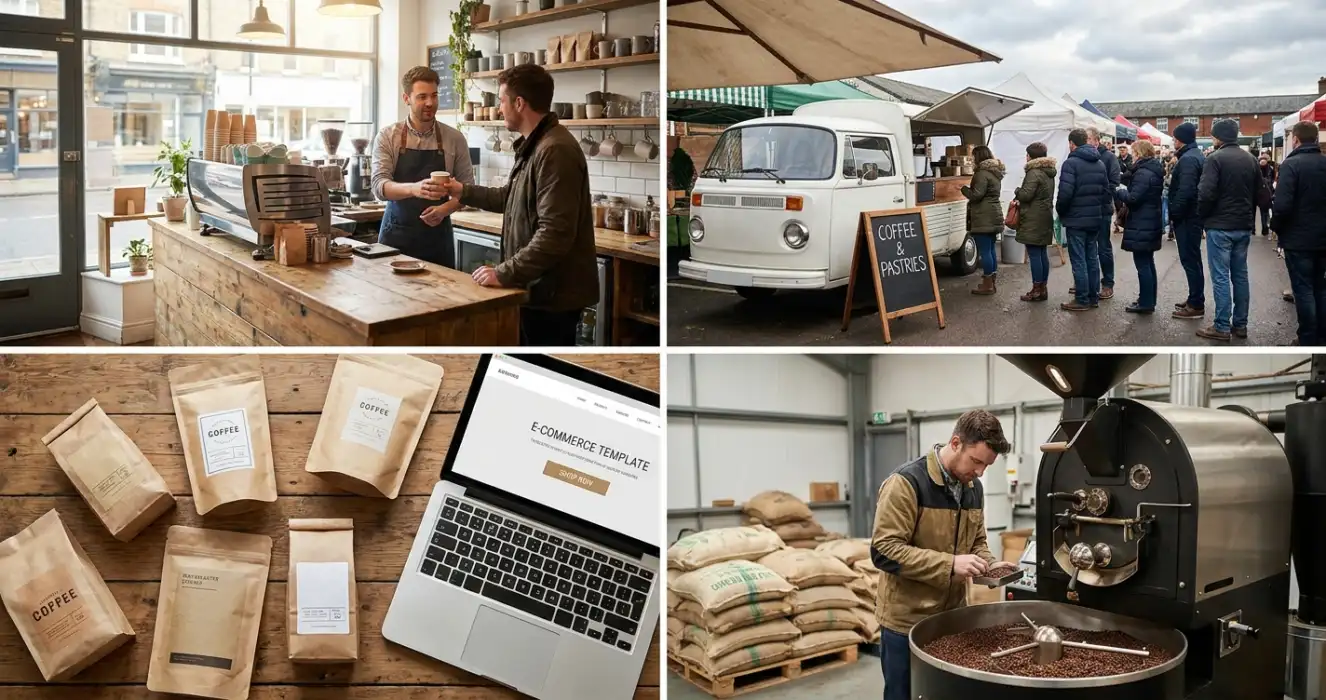
Opening a coffee business in the UK means choosing one of four operating models: a high-street shop, a mobile coffee van, an online direct-trade brand, or a wholesale roastery. Each has different startup costs, different routes to profit, and suits a different kind of operator. Picking the wrong model is the single most expensive mistake you can make.
You've been thinking about how to enter the coffee industry for months. Maybe you assumed it had to be a shop. Maybe redundancy money is sitting in the account and a unit looks affordable.
With more than 28,000 coffee outlets across the UK (Allegra World Coffee Portal, 2025), the question isn't whether the market exists: it's which model fits you. The honest first question isn't "where". It's "which one". 11 min read.
What You'll Learn
- The four UK coffee business models and what each one actually involves day-to-day
- Realistic startup costs and break-even timelines for every format
- Which model fits which kind of operator (and which to avoid for your situation)
- How to test a model cheaply before committing
- A simple decision framework for picking the right route
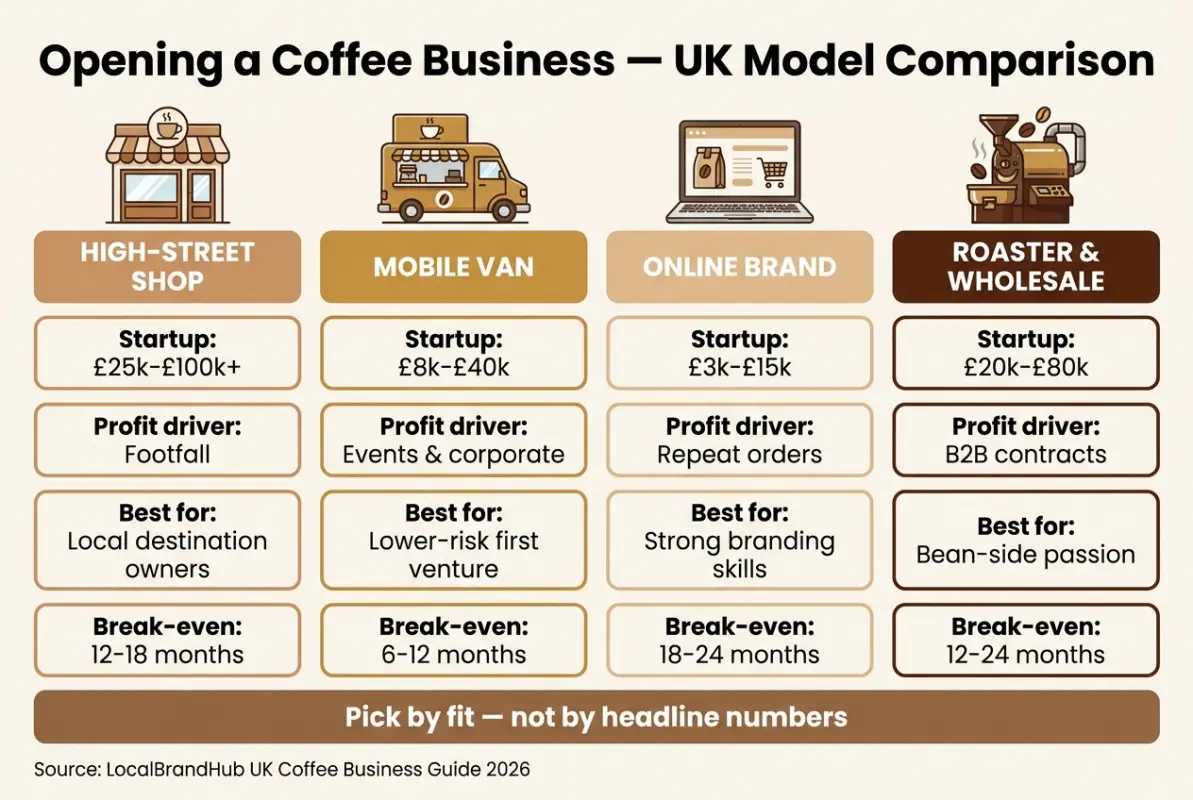
Table of Contents
- The Four Coffee Business Models
- Model 1: High-Street Coffee Shop
- Model 2: Mobile Coffee Van
- Model 3: Online Coffee Brand
- Model 4: Coffee Roaster & Wholesale
- How to Pick the Right Model
- Testing a Model Before You Commit
- FAQs About Opening a Coffee Business
- Key Takeaways
The Four Coffee Business Models
The four-model framework is a way to compare the realistic UK coffee business options side by side, so opening a coffee business becomes a deliberate decision rather than a default to "I'll open a shop because that's what coffee businesses do".
Related: How to Start a Coffee Shop
Related: Coffee Shop Business Plan Guide
The UK has more than 28,000 coffee outlets (Allegra World Coffee Portal, 2025) and the market includes thousands more mobile vans, online roasters and wholesale-only operations that don't show up in shop counts. Each model serves real demand. None of them are inherently better: they just suit different operators.
| Model | Startup Cost | Profit Driver | Best Suited To |
|---|---|---|---|
| High-street shop | £25k-£100k+ | Footfall + dwell time | Owners who want a local destination |
| Mobile coffee van | £8k-£40k | Events + corporate gigs | Lower-risk first venture |
| Online direct-trade | £3k-£15k | Repeat orders, margin per bag | Roasters with strong branding |
| Coffee roaster + wholesale | £20k-£80k | B2B contracts | Owners who love the bean side |
Cost ranges and break-even windows are typical for UK independent operators in 2026; your numbers will vary by location and ambition.
For example, a couple in Edinburgh thinking about opening a coffee business might run a mobile coffee van for two summers, proving the brand and saving £15,000 in profits, before committing to a high-street unit in year three with the cash and the customers already in place.
Pro Tip: Opening a coffee business is much easier when you know which model you're rejecting and why. Spend a weekend writing down the three you're not picking and the reason for each.
Model 1: High-Street Coffee Shop
So with the four-model framework in mind, let's walk each format. The first is the one most people default to. The high-street coffee shop is what most people picture when they think about opening a coffee business. It's also the most expensive and operationally heaviest model.
What's Involved
- A bricks-and-mortar lease (typically 5 to 10 years)
- Full fit-out including espresso machine, counter, seating, kitchen
- Council registration (gov.uk) at least 28 days before opening
- Staff hired and trained for opening day
- Marketing to drive footfall in months 1 to 6
Costs & Timeline
A typical small UK high-street unit costs tens of thousands to open and takes around six to twelve months from idea to opening day. London and prime city-centre locations push higher.
Best Suited To
Owner-operators who want a local destination and have either savings or finance to cover six months of trading at low revenue. The shop only works if you can be on-site most days for the first year.
For example, a 30-cover cafe in a regional UK town might land around £35,000 all-in with a refurbished espresso machine and a five-year lease, opening in month nine with three trained baristas and a soft-launch booking.
Model 2: Mobile Coffee Van
So the shop is one route. The next, and often the cleanest first step, is the mobile coffee van. The mobile coffee van is the most popular lower-risk entry point into the UK coffee industry. Opening a coffee business this way swaps lease commitment for vehicle and pitch flexibility.
What's Involved
- A converted van or trailer with espresso machine, water tank, generator
- Pitch agreements at markets, festivals, corporate sites or office parks
- Council food business registration (same 28-day rule as shops)
- Insurance covering vehicle, public liability, and product
- Lighter staffing, often a single owner-operator
Costs & Timeline
A coffee van setup typically costs £8,000 to £40,000 depending on the vehicle and equipment. Timeline from idea to first event is usually 8 to 16 weeks.
Best Suited To
First-time operators who want to test their coffee, brand and operations without taking on a lease. Strong fit for operators who already have a network of corporate or event contacts.
For example, a launch in Manchester might convert a small van for a five-figure spend, secure three regular weekly pitches at office parks, and clear a healthy weekly profit by month three.
If you're only chasing the highest-revenue model you'll always lose to operators who matched their model to their actual situation. That never works as a default: pick the model that fits your life, not the one with the best headline numbers.
Model 3: Online Coffee Brand
With the van covered, let's look at the digital-first option. The online coffee brand is the lowest-cost entry point but the longest road to meaningful revenue. Opening a coffee business this way leans on roasting partnerships and direct-to-consumer marketing.
What's Involved
- A roasting partner or contract roaster (most online brands don't roast their own at the start)
- Branding, packaging design, and a Shopify or similar e-commerce site
- Subscription mechanics or one-off bag sales
- Performance marketing on Instagram, TikTok and Google Shopping
- Fulfilment, either self-shipped or via a 3PL
Costs & Timeline
An online coffee brand can launch for £3,000 to £15,000 covering branding, first roast, packaging and a basic website. Timeline is short (4 to 12 weeks) but profitability typically takes 12 to 24 months of marketing investment.
Best Suited To
Operators with strong branding skills, an existing audience (even a small one), and patience. A poor fit for owners who want to be making coffee for customers face-to-face.
For example, an online subscription brand might launch with a four-figure branding and packaging budget, reach a couple of hundred monthly subscribers in year one, and only break even in the second year once customer acquisition costs settle.
Model 4: Coffee Roaster & Wholesale
The fourth and final route is wholesale-led. The coffee roaster + wholesale model serves other coffee shops, offices and restaurants rather than end consumers. Opening a coffee business this way is the most B2B of the four routes.
What's Involved
- A roastery space with extraction, ventilation and council approval
- A roasting machine (anywhere from £8,000 sample roasters to £80,000 production roasters)
- Sales activity: visiting cafes, sampling, signing supply contracts
- Green bean importing or sourcing through a UK importer
- Logistics for weekly or bi-weekly wholesale deliveries
Costs & Timeline
A wholesale roastery typically costs £20,000 to £80,000 to set up, depending on roaster size and premises. Timeline is 4 to 9 months. Profitability depends entirely on signed wholesale accounts.
Best Suited To
Operators who love the bean side more than the customer side, who have existing relationships in the hospitality industry, and who can sell B2B without flinching.
Why this matters: Wholesale is sales-led. Without ten signed cafes in your first year, the model doesn't work, no matter how good your roast is.
How to Pick the Right Model
With all four formats laid out, the decision becomes a fit question. The right model when opening a coffee business is rarely about cost alone. Three questions cut through most of the noise.
Question 1: Where Do You Want to Spend Your Days?
- Behind a counter: shop or van
- Roasting beans alone in a warehouse: wholesale roastery
- At a laptop running marketing campaigns: online brand
- Mix of all three: shop with light wholesale on the side
Question 2: How Much Capital Can You Risk?
- Under £15,000: online brand or small mobile van
- £15,000 to £40,000: mobile van or modest roastery
- £30,000 to £100,000: high-street shop or larger roastery
Question 3: What's Your Strongest Skill?
- Hospitality and people: shop or van
- Branding and content: online brand
- Sales and B2B: wholesale roastery
- Coffee craft itself: shop or roastery
If you pick just one starting point and you're new to the industry, a mobile coffee van is often the cleanest first move: lower risk, faster feedback, and the brand can travel into a shop later.
If you can't tell whether your idea is a shop business or a brand business that's usually a sign you haven't lived a day in either yet: fix that before committing capital.
Testing a Model Before You Commit
So you've narrowed down a likely model. The next step is testing it cheaply. Opening a coffee business doesn't have to mean signing a lease in month one. Each model has a cheap test version that surfaces real data without real risk.
Quick checklist before you commit:
- Have you done the four-question fit test?
- Have you tested the model with a sub-£500 trial run?
- Have you tracked daily revenue, hours worked, and repeat-customer percentage?
- Have you spoken to two operating owners in the same model?
| Model | Cheap Test | Cost | Time |
|---|---|---|---|
| Shop | Pop-up at a weekend market for two months | £500-£2,000 | 2 months |
| Van | Hire a coffee cart and run two events | £300-£800 | 2 weekends |
| Online | Sell on a friend's roastery website with your branding | £200-£1,500 | 8 weeks |
| Wholesale | Sample-roast for two friendly cafes | £200-£1,000 | 4 weeks |
For example, an aspiring shop owner might run a four-weekend pop-up at a craft market, testing whether they enjoy the volume, the early starts, and the customer interactions, before deciding whether the shop dream is real or imagined.
Pro Tip: Treat the test phase as paid market research. Track daily revenue, hours worked, and the percentage of repeat customers: those three numbers tell you whether the model has legs.
Frequently Asked Questions About Opening a Coffee Business
With the four formats compared, here are the questions UK independents ask most often before committing.
Which UK coffee business model is most profitable? For most owner-operators, a small high-street shop in the right location often delivers the highest absolute profit, but a mobile coffee van delivers the highest return on capital invested. The most profitable model is the one that matches your skills and effort.
Can I switch models later? Yes: many UK coffee brands start with one model and add others. A common path is van → shop, or online → wholesale. Switching usually requires fresh capital but the brand carries across.
What's the cheapest way of opening a coffee business in the UK? An online direct-trade brand using a contract roaster typically has the lowest cash entry point at £3,000 to £5,000. A small market-stall coffee setup (using a portable espresso machine and rented pitches) can be similar cost.
How long before each model becomes profitable? Mobile coffee vans typically reach break-even fastest at 6 to 12 months. High-street shops take 12 to 18 months. Online brands often need 18 to 24 months. Wholesale roasteries depend entirely on signed contracts and can take 12 to 24 months.
Do I need a coffee qualification to open any of these models? No formal qualification is required, but an SCA foundation barista course (Speciality Coffee Association) is strongly recommended for shop and van operators. Roastery operators usually take SCA roasting courses too.
Key Takeaways: Opening a Coffee Business
If you're reading this thinking "I assumed it had to be a shop", that's the most common assumption and the one most worth questioning. The reality for most independent owners is that the model decision shapes everything else.
- Four UK models: high-street shop, mobile van, online brand, wholesale roastery
- Pick by fit, not by headline revenue: each model suits a different operator
- Test cheaply before committing: pop-ups, cart hire and contract roasting de-risk the choice
- Most beginners benefit from the van model first: lower risk, faster feedback
- Switching models later is normal: start lean, expand once the brand earns it
Would you walk into your future business and feel like you belong there? If the answer is "not quite", you may be looking at the wrong model: try a different one before signing anything.
If you'd like a hand mapping out which coffee business model fits your situation, LocalBrandHub has free templates for independent operators, useful if you're working solo and want one place to keep the comparison together. Once you've settled on a model, you can compare our plans to see what ongoing marketing support would cost.
Weekly Action
This week, do two things to clarify the model decision:
- Day 1-3: Score yourself out of 10 on the three questions (where you want to spend your days, capital you can risk, strongest skill) and write down which model the answers point to.
- Day 4-7: Find one cheap test you can run for that model in the next four weeks: a market pitch, a pop-up weekend, or a contract roasting trial, and book it.
If you run a coffee shop and want to see how Local Brand Hub can support your marketing, explore our coffee shop marketing tools.
For restaurants, salons, and local businesses
Need help with your marketing?
We help UK businesses turn social media into real results, not busywork.
Start freeKey Takeaway
Opening a coffee business in the UK comes down to choosing between four models: high-street shop, mobile van, online brand, or wholesale roastery, each with very different costs, timelines and operator fit. Pick by your skills, capital and how you want to spend your days, not by headline revenue. Most first-timers benefit from a low-cost test (pop-up, cart hire or contract roasting) before committing real capital.
Get More Marketing Tips
Practical marketing tips for UK business owners, straight to your inbox. No spam, unsubscribe anytime.
About the Author
Local Brand Hub
Empowering UK Businesses
Local Brand Hub provides comprehensive business management tools designed specifically for UK local businesses to streamline operations, automate marketing, and grow revenue.
More articlesRelated Articles
 Business Growth
How to Start Coffee Business Without a Shop UK Guide
How to start a coffee business in the UK without opening a shop: mobile vans, online subscriptions, market stalls and small roasteries.
 Business Growth
How Much Does It Cost to Open a Coffee Shop in the UK
How much does it cost to open a coffee shop in the UK? Realistic startup costs by category, sample budgets, and where owners overspend.
 Business Growth
Launch a Coffee Shop: 12-Month UK Timeline
Launch a coffee shop with a 12-month UK timeline: month-by-month milestones from idea to opening day, plus the practical checklist independents use.