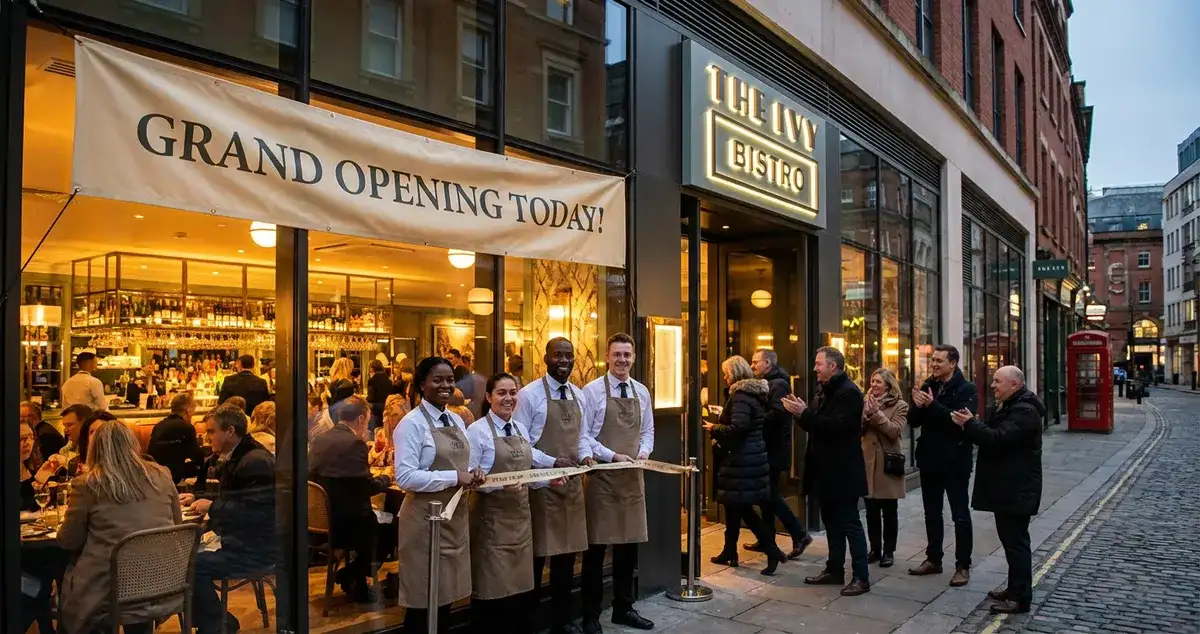
Watch the visual overview· 85 seconds
Essential marketing for new restaurants opening in the UK. Launch strategies, 90-day plans, and build buzz before and after opening. Free tactics included.
It's two weeks until opening. You've sunk your savings into the fit-out. The menu is ready. Staff are hired and trained. But your Instagram has 40 followers, all family, and nobody knows you exist yet. If this sounds like you, you're not alone. Most new restaurants face the same panic.
Short on time? Here's the quick version
- Start 8-12 weeks early: Marketing for new restaurants begins long before opening
- Soft open first: Iron out problems before the public judges you
- Reviews are everything: Your first 30 reviews establish your reputation
- 90-day plan is essential: Don't stop marketing after launch week
- Free channels first: Google, social, email cost nothing but time
Full launch plan and timeline below
Marketing for new restaurants is the work of building buzz before you open and keeping it going after launch. The goal: turn first visitors into regulars in your first 90 days. New spots must start from scratch, often with little cash.
If you're panicking about filling tables on day one, you're not alone. Most new owners focus on menus and decor. Marketing gets left until the last minute.
About 60% of new restaurants fail in year one. Bad marketing at launch is often part of the problem. Whether you're starting a food business for the first time or growing a brand, the same rules apply. Good news: building buzz early helps you survive.
This guide covers what marketing for new restaurants should look like: from pre-opening buzz through your first 90 days of trading.
Info
Why This Matters: Your first 90 days set the tone for years. Restaurants that build buzz before opening capture early momentum. Those that don't spend months playing catch-up.
Related: Restaurant marketing, the complete framework once you're up and running.
What You'll Learn
- Pre-opening marketing checklist (what to do 8-12 weeks before launch)
- How to create buzz and build an audience before you open
- Launch week strategy and soft opening tactics
- 90-day marketing plan with specific weekly actions
- Common new restaurant marketing mistakes to avoid
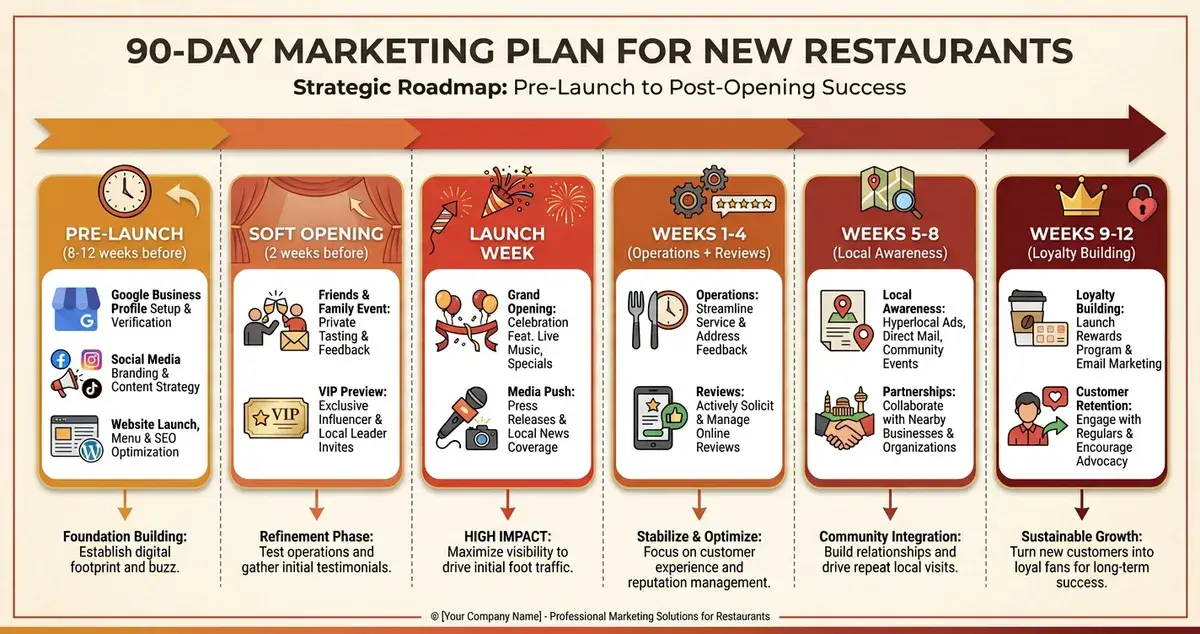
Phase 1: Pre-Opening Marketing (8-12 Weeks Before Launch)
Marketing for new restaurants starts well before you open. The weeks before launch are when you build your base.
Set Up Your Digital Presence First
Google Business Profile:
- Create and verify your listing as soon as you have a confirmed address
- Mark as "coming soon" or set opening hours for launch date
- Upload progress photos (fit-out, team, menu development)
- This takes 1-2 weeks for verification, so start early
Website:
- Simple landing page with: name, location, concept, opening date
- Email signup for "be first to know" updates
- Coming soon announcement
- Consider a simple Squarespace or Wix site (£10-15/month)
Social media:
- Choose 1-2 platforms maximum (Instagram recommended)
- Consistent branding across all platforms
- Begin posting 6-8 weeks before opening
Build Pre-Opening Buzz
Content to post before opening:
- Behind-the-scenes fit-out shots
- Menu trials and tasting clips
- Team intros
- Your origin story
Sneak peeks of dishes work well too.
Real-world example
A new Italian spot in Manchester posted weekly fit-out updates on Instagram for 10 weeks. By launch day, they had 1,200 followers and 300 emails, all before serving one customer. Their soft opening sold out in 4 hours.
Local PR and Community
Media list:
- Local newspapers and their food editors
- Regional food bloggers with engaged followings
- Local radio stations
- Community Facebook groups and newsletters
PR approach:
- Send personal emails, not mass press blasts
- Offer early preview invites
- Share your story: local ties, new jobs, what makes you different
- Follow up once (keen, not pushy)
Phase 2: Soft Opening (1-2 Weeks Before Public Launch)
A soft opening is key marketing for new restaurants. It's your chance to test operations while getting word-of-mouth going.
What Is a Soft Opening?
A soft opening is a low-key, invite-only trial run before your official public launch. It lets you test operations, train staff, and get early reviews. Goals:
- Iron out problems
- Train staff on real service
- Get first reviews and social posts
- Build buzz before you're "officially" open
Soft Opening Formats
Friends and family nights (Days 1-3):
- Free or heavily discounted food
- Feedback focus: comment cards, verbal feedback
- Photo opportunities for social media launch
VIP preview (Days 4-7):
- Local influencers, food bloggers, press
- Journalists and local personalities
- Potential regular customers (nearby office workers, residents)
- Reduced menu (test bestsellers)
Limited public opening (Days 8-14):
- Open to public but limited hours/covers
- Discount in exchange for honest feedback
- Strong ask for Google reviews
Related: Restaurant marketing on a budget, low-cost launch tactics.
Phase 3: Launch Week (Week 0)
This is the biggest week in your launch journey. Make it count.
Launch Day Strategy
Don't: Open quietly and hope people notice Do: Create an event worth talking about
Launch day tactics:
- Ribbon cutting with a local figure (councillor, MP)
- Free welcome drink for all guests
- Special launch menu or deal
- Photo spots set up
- Press release sent that morning
- Social posts all day
Staff briefing:
- Every team member should be able to tell your story
- Ask every table how they heard about you (tracking)
- Urge photo-taking and social sharing
- Push for Google reviews
Case example
A pizza spot in Leeds ran a launch day offer: free garlic bread for anyone who posted a photo. They got 45 Instagram posts that day: free marketing that reached thousands.
First Week Priorities
Daily:
- Post to social media (content from the day)
- Respond to all reviews immediately
- Track where customers heard about you
- Note operational issues to fix
End of week:
- Review first week feedback
- Adjust operations as needed
- Plan week 2 promotions
- Reach out to journalists who haven't visited
Phase 4: The First 90 Days Plan
Marketing for new restaurants takes steady effort beyond week one. Here's a week-by-week plan.
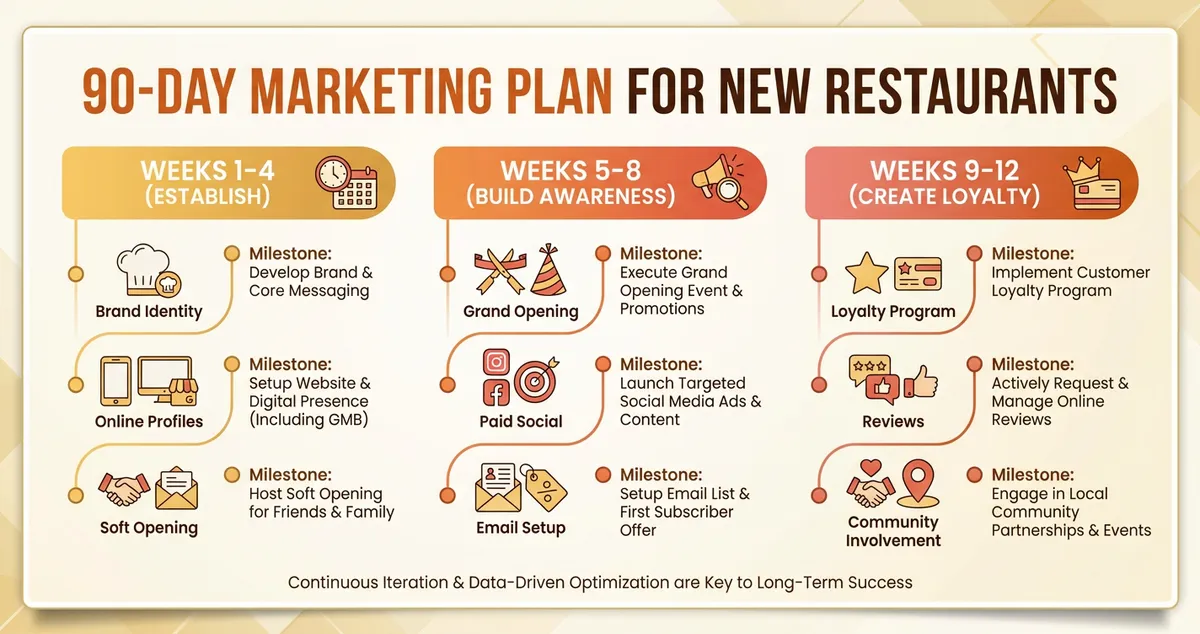
Weeks 1-4: Get Stable and Gather Feedback
If you're feeling exhausted after launch, you're not alone. Most owners run on empty for the first month. Focus on steady wins.
Focus: Steady operations while building review base
Marketing actions:
- Post 3-4x weekly on social
- Reply to every review within 24 hours
- Send weekly emails to your list
- Track how customers found you
Fix any consistent complaints fast.
Goals:
- 20+ Google reviews
- Consistent social posting rhythm
- Operational issues resolved
- Initial regular customers identified
Weeks 5-8: Build Local Awareness
Focus: Expand reach beyond initial visitors
Marketing actions:
- Partner with nearby businesses (cross-promotion)
- Local leaflet distribution (targeted streets)
- Community group engagement
- First local event or special (quiz night, tasting)
- Begin email newsletter
Goals:
- 50+ Google reviews
- First repeat customers coming back
- Local business ties locked in
- Community knows who you are
See restaurant marketing ideas for more ways to build local buzz.
Warning
If you can't tell whether your marketing brings actual bookings or just social likes, that's usually a sign you need better tracking from week one.
Weeks 9-12: Create Loyalty Schemes
If you're thinking "I can't do all this," start simple. A stamp card costs almost nothing.
Focus: Turn one-time visitors into regulars
Marketing actions:
- Launch loyalty programme (simple stamp card or digital)
- VIP list for best customers
- First seasonal menu change
- Special offer for email subscribers
- Begin planning first major event
Goals:
- 75+ Google reviews
- Loyalty scheme up and running
Real-world example
A curry house in Birmingham launched a simple stamp card at week 9. By week 12, 20% of covers were from repeat visits, customers chasing that free meal.
- 20%+ of covers are repeat customers
- Email list at 500+ subscribers
Budget Marketing for New Restaurants
New restaurants typically have tight marketing budgets, so it pays to work out how much time and money you'd save by running Google, social, email and reviews from one place. Here's how to prioritise spending.
Where to Spend (If Budget Allows)
| Priority | Item | Budget | Why |
|---|---|---|---|
| 1 | Photography | £200-400 | Essential for all marketing |
| 2 | Signage | £500-2k | Street presence matters |
| 3 | Website | £300-800 | Your digital home |
| 4 | Opening event | £200-500 | Creates buzz and coverage |
| 5 | Local ads | £100-300 | Facebook/Instagram targeting |
Where NOT to Spend
- Expensive PR agencies (do it yourself initially)
- Paid influencers (invite them for free first)
- Broad advertising (too unfocused)
- Overdesigned menus and materials (simple is fine)
Free Marketing Priorities
Even with zero budget, prioritise these:
- Google Business Profile (complete and active)
- Social media (consistent posting)
- Review collection (systematic asking)
- Email list building (from day one)
- Community engagement (local groups, partnerships)
Common New Restaurant Marketing Mistakes
Mistake 1: Waiting Until Opening to Start Marketing
Many new restaurants spend months on fit-out and menu development, then start marketing the week before opening. This leaves no time to build awareness or buzz.
Fix: Start marketing 8-12 weeks before opening. Build anticipation.
Mistake 2: Opening Too Publicly, Too Soon
A grand public opening before you've ironed out operational issues leads to bad reviews that follow you forever.
Fix: Always soft open. Use the first 2 weeks to perfect operations before going public.
Mistake 3: Neglecting Reviews in the First Month
The first 20-30 reviews establish your rating. A few early negative reviews (often from opening-week teething problems) can damage you for months.
Fix: Ask every happy customer for a review. Put this above almost everything else.
Warning
Don't assume reviews will come on their own. You'll wake up with three stars while the new place down the road has fifty 5-star reviews.
Mistake 4: Stopping Marketing After Opening
The grand opening feels like the finish line, but it's actually the start. Many restaurants market heavily for launch, then go quiet, just as momentum matters most.
Fix: Follow the 90-day plan. Marketing effort should grow, not shrink, after opening.
Warning
Never stop posting just because the doors are open. You'll lose the buzz you worked so hard to build.
Info
If you only focus on marketing until opening day and then stop, you've wasted most of your launch investment. The first 90 days are when marketing determines survival.
Key Takeaways
If you run a restaurant and want to see how Local Brand Hub can support your marketing, explore our restaurant marketing tools.
Key Takeaways
Ask yourself: Do you have a marketing plan for before opening, during launch, AND the first 90 days? Most new restaurants only plan for opening day, and wonder why momentum fades quickly.
- Start 8-12 weeks early: Marketing for new restaurants begins long before opening
- Soft open first: Iron out problems before the public judges you
- Reviews are everything: Your first 30 reviews establish your reputation
- 90-day plan is essential: Don't stop marketing after launch week
- Free channels first: Google, social, email cost nothing but time
If you pick just one thing
Set up Google Business Profile first. It's free and captures high-intent searchers from day one.
Minimum viable marketing (30 minutes a week)
- Day 1-2: Post one behind-the-scenes photo
- Day 3-4: Ask happy customers for reviews
- Day 5-7: Reply to all comments and messages
Your next step: If you're opening soon, set up your Google Business Profile today. Already open? Audit your first 90 days against this framework. It's not too late.
Weekly Action
This week, build your launch foundation:
- Day 1-2: Set up or audit your Google Business Profile: is it complete and verified?
- Day 3-4: Create social media accounts with consistent branding across platforms
- Day 5-7: Write your first "coming soon" or progress update post and publish it
Pre-Launch Checklist:
- Google Business Profile created and verification started
- Instagram account set up with consistent branding
- Website or landing page live with email signup
- First behind-the-scenes content posted
- Local press/bloggers list started
- Soft opening dates planned
- Review request process documented
Related: Restaurant marketing ideas, more tactics for your launch.
Frequently Asked Questions
How early should a new restaurant start marketing?
Begin 8-12 weeks before opening. This gives you time to build social following, collect emails, and create press buzz. Most good launches start building hype at least 2 months early.
How much should a new restaurant budget for marketing?
Plan to spend 5-10% of first-year sales on marketing, mostly in pre-opening and the first 90 days. Good marketing can be done on much less with smart choices.
What's the biggest marketing mistake new restaurants make?
Waiting until opening day to start. By then you have no audience, no reviews, and no buzz. The places that thrive build hype for weeks first.
Should new restaurants use influencers?
Yes, but be picky. Invite local food bloggers to soft openings. Don't pay them at first. Local reach matters more than follower counts.
For UK restaurant owners
Launch Your Restaurant Right
LocalBrandHub helps new restaurants manage their entire launch from day one. If you're opening soon and need to run Google, social, email, and reviews from one place, start free to avoid the common trap of launching strong then losing steam.
Start freeRelated: Seasonal restaurant marketing, plan your first holiday season.
Get More Marketing Tips
Practical marketing tips for UK business owners, straight to your inbox. No spam, unsubscribe anytime.
About the Author
Local Brand Hub
Empowering UK Businesses
Local Brand Hub provides comprehensive business management tools designed specifically for UK local businesses to streamline operations, automate marketing, and grow revenue.
More articlesRelated Articles
 Marketing Tips
3 3 3 Rule in Marketing: Restaurant Framework Guide
Master the 3 3 3 rule in marketing for your restaurant. Focus on 3 messages, 3 audiences, and 3 channels for simpler, more effective marketing.
 Marketing Tips
7 P's of Restaurant Marketing: A Complete UK Guide
Master the 7 P's of restaurant marketing: Product, Price, Place, Promotion, People, Process, and Physical Evidence to attract more diners to your UK venue.
 Marketing Tips
12 Cafe Marketing Ideas That Actually Work in 2026
Try these 12 cafe marketing ideas used by top UK independents to grow footfall, boost repeat visits, and increase average spend.