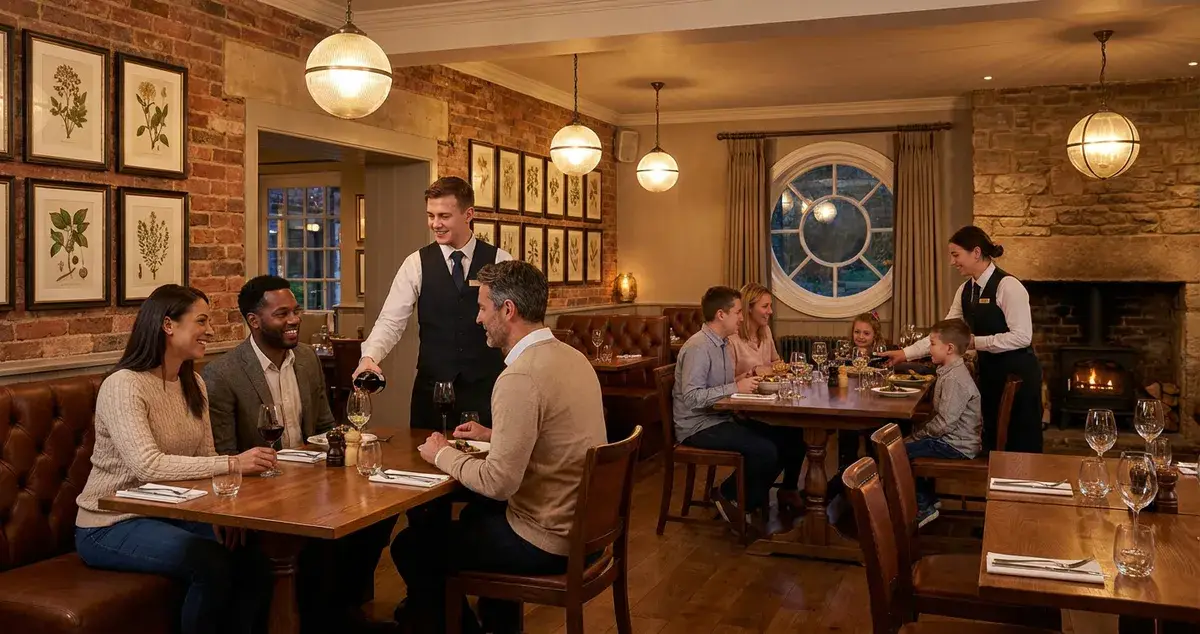
Create memorable restaurant guest experiences that drive loyalty and repeat visits. Guide covering booking to farewell for UK restaurants.
Restaurant guest experience is the complete journey a guest takes with your venue: from discovering you online through booking, arrival, dining, payment, and departure, including every interaction that shapes their perception. Guests remember feelings, not food. They might forget what they ordered, but they won't forget how you made them feel.
Short on time? Here's the quick version
- 5 stages: Discovery, Arrival, Dining, Payment, After-visit
- First 30 seconds: Set the tone: acknowledge guests immediately
- The 5 E's: Effortless, Engaging, Exceptional, Emotional, Enduring
- Many leave due to service: Experience often matters more than food
- Key mistake: Focusing on food but neglecting arrival and departure
Complete journey framework with stage-by-stage improvements below
Many guests leave restaurants because they feel uncared for, rather than because of food quality. That means guest experience is often more important than what's on the plate. If you're thinking "our food speaks for itself", the guest experience often says otherwise.
Related: Restaurant Customer Service - our complete hub guide
What You'll Learn
- The five stages of guest experience
- Quick wins for each touchpoint
- How to measure experience quality
- Budget-friendly experience improvements
The 5 Stages of Restaurant Guest Experience
Let's break the experience into stages you can improve one by one. Every guest goes through these five phases.

Stage 1: Discovery and Booking
The experience starts before guests arrive. How easy is it to find you, learn about you, and book a table? Getting the basics right (an accurate Google Business Profile, current photos, and steady reviews) is where a local SEO checklist earns its keep.
Key Touchpoints:
- Website (mobile-friendly, menu visible, contact clear)
- Google Business listing (accurate hours, photos, reviews)
- Booking process (online, phone, or walk-in)
- Confirmation (email or SMS with details)
Real example
A gastropub noticed many website visitors left without booking. They added an online booking button to every page. Bookings increased.
Quick Wins:
- Add a clear "Book Now" button on your homepage
- Ensure your Google listing has current hours and photos
- Send booking confirmations with parking info and menu links
Stage 2: Arrival and First Impressions
The first 30 seconds set the tone. Guests decide almost instantly whether they'll enjoy themselves.
Key Touchpoints:
- Entrance (clean, welcoming, easy to find)
- Greeting (warm, prompt, personal if booking exists)
- Seating (smooth, quick, at a good table)
- Initial drink order (offered within 2 minutes)
Info
If you're only focusing on food service, you'll lose to competitors who nail the arrival experience.
The 10/5/3 Rule applies here: Acknowledge at 10 feet. Greet at 5 feet. Engage at 3 feet. See our customer service tips for more on this framework.
Stage 3: During the Meal
This is where most restaurants focus, but the details matter.
Key Touchpoints:
- Order taking (clear, accurate, noting preferences)
- Food timing (starters, mains, desserts paced well)
- Check-backs (within 3 bites of food arriving)
- Atmosphere (noise, lighting, temperature, music)
Atmosphere Checklist:
| Element | What to Check | Why It Matters |
|---|---|---|
| Lighting | Bright enough to read, dim enough for ambience | Sets the mood |
| Noise | Can guests converse comfortably? | Noise is a common diner complaint |
| Temperature | Not too hot or cold | Uncomfortable guests leave faster |
| Music | Appropriate volume and genre | Affects pace of dining |
For instance, a fine dining restaurant noticed guests lingered longer when they dimmed lights 20% after 7pm. Longer stays meant more desserts and coffees ordered.
Stage 4: Payment and Departure
The ending matters as much as the start. This is your last chance to leave an impression.
Key Touchpoints:
- Bill presentation (accurate, clear, when requested)
- Payment (smooth, quick, multiple options)
- Farewell (warm, personal, invitation to return)
- Follow-up (thank you email, feedback request)
Script for Farewell: "Thank you for coming in, [name if known]. We hope you enjoyed the evening. We'd love to see you again soon."
Stage 5: After the Visit
Guest experience extends beyond the door. How do you stay in their minds?
Key Touchpoints:
- Review response (thank positive, address negative)
- Email marketing (tasteful, not overwhelming)
- Social media (engaging, authentic content)
- Loyalty programs (rewards for returning)
Would you return to a restaurant that never acknowledged your visit versus one that sent a thank-you note? Small touches create loyalty.
What Makes a Memorable Guest Experience?
Now let's look at what separates good from great. The best experiences share common elements.
The 5 E's of Memorable Experience:
- Effortless: Everything runs smoothly without the guest noticing
- Engaging: Staff connect personally, not robotically
- Exceptional: Something exceeds expectations
- Emotional: Guests feel something (welcomed, special, cared for)
- Enduring: They remember it later
Real example
A neighbourhood bistro gives every first-time guest a small amuse-bouche "on the house." It costs pennies, but guests remember it and mention it in reviews.
Info
If you can't tell whether guests are having a good experience or just an average one, that's usually a sign you need to ask them directly.
Measuring Guest Experience
You can't improve what you don't measure. Here's how to track experience quality without expensive tools.
Free Measurement Methods:
- Review analysis: Track mentions of experience keywords (welcome, atmosphere, service)
- Table observations: Managers note body language during service
- Direct feedback: Ask one specific question: "What could we do better?"
- Return rate: Track how many guests come back within 3 months
Experience Scorecard:
| Metric | Good | Average | Poor |
|---|---|---|---|
| Review rating | 4.5+ | 4.0-4.4 | Below 4.0 |
| Return rate | 30%+ | 20-30% | Below 20% |
| Complaint ratio | Under 2% | 2-5% | Over 5% |
Pro tip
If you're reading this after a negative review about experience, you're not alone. Use it as data, not defeat.
Budget-Friendly Experience Improvements
Great experience doesn't require big budgets. Here are improvements that cost little or nothing.
Free Improvements:
- Greet every guest within 30 seconds (training only)
- Use guest names when known (booking system)
- Thank guests warmly at departure (scripts)
- Respond to every online review (time only)
Low-Cost Improvements (under £100):
- Small welcome touches (amuse-bouche, bread upgrade)
- Better lighting (dimmer switches, candles)
- Staff training on the 10/5/3 rule
- Printed comment cards for tables
Real example
A café invested £50 in small chocolates served with the bill. Review mentions of "lovely touch" increased.
Why this matters
Restaurants that focus on guest experience see 25% higher repeat visit rates than those focusing on food alone, according to UKHospitality research.
Common Experience Mistakes
Watch out for these pitfalls that undermine good intentions.
- Inconsistent experience: Great on weekends, average midweek
- Staff-focused, not guest-focused: Prioritising kitchen efficiency over guest comfort
- Ignoring the edges: Focusing on food but neglecting arrival and departure
- Over-engineering: Making things complicated when simple works
Warning
If you're thinking "we don't have time for all this", start with one stage. Improve arrival this week. Move to departure next week. Small, consistent improvements beat big one-off efforts.
Minimum Viable Experience Plan
If you only have 30 minutes to improve guest experience, do these three things:
- Train the greeting: Ensure every guest is acknowledged within 30 seconds
- Check the bill moment: Make sure payment is smooth and farewells are warm
- Read your last 10 reviews: Note experience mentions and pick one to fix
That's enough to start improving. Build from there.
Key Takeaways
If you run a restaurant and want to see how Local Brand Hub can support your marketing, explore our restaurant marketing tools.
Key Takeaways
In summary, here's what matters most. Restaurant guest experience spans every touchpoint from discovery to follow-up. Food quality matters, but experience often matters more.
- Map your current experience across all five stages
- Pick the weakest stage and focus there first
- Apply the 5 E's to create memorable moments
- Measure with reviews and return rates
- Start small and improve consistently
Weekly Action
This week, audit your guest experience
- Read last week's reviews and note experience mentions
- Pick one stage to improve (arrival or departure are good starts)
- Brief staff on the specific improvement
- Observe changes during service
For deeper learning:
- Set clear service standards for each stage
- Train your team with our training guide
- Handle issues with our complaints guide
For UK restaurant owners
Elevate Your Guest Experience
LocalBrandHub works with UK restaurants to create memorable guest experiences that drive loyalty and repeat visits.
Start freeGet More Marketing Tips
Practical marketing tips for UK business owners, straight to your inbox. No spam, unsubscribe anytime.
About the Author
Local Brand Hub
Empowering UK Businesses
Local Brand Hub provides comprehensive business management tools designed specifically for UK local businesses to streamline operations, automate marketing, and grow revenue.
More articlesRelated Articles
 Marketing Tips
Restaurant Customer Service: UK Guide
Master restaurant customer service with proven frameworks. Learn the 7 steps of service and strategies that turn diners into regulars.
 Marketing Tips
How to Improve Restaurant Customer Service: 7 Proven Steps
Train your team with the 10/5/3 greeting rule and 7 C's framework to lift restaurant customer service without spending more on staff.
 Marketing Tips
Restaurant Customer Complaints: How to Handle Them
Handle restaurant customer complaints with proven scripts and the LAST framework. Turn upset guests into regulars with these UK approaches.