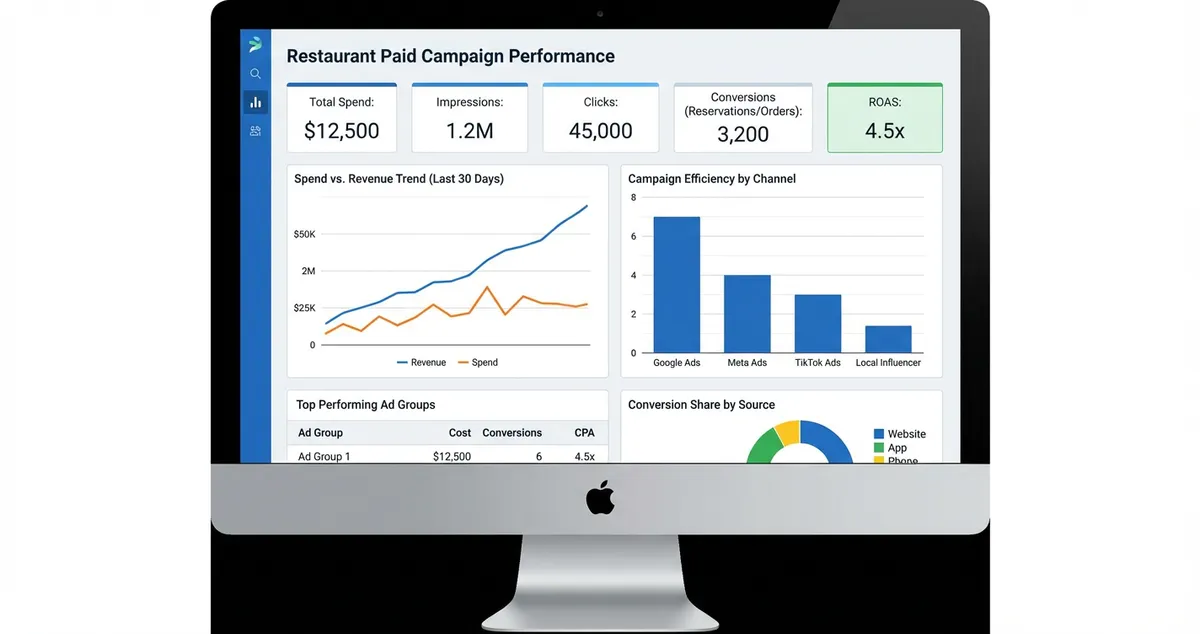
Where to invest your restaurant marketing budget. Compare Google, Facebook, Instagram, TikTok ad costs with real UK benchmarks.
You've spent £500 on restaurant paid marketing this month. The ads looked great. Your reach numbers went up. But the tables? Still empty on Tuesday nights. Meanwhile, the café down the road seems to be thriving, and you know their food isn't better. The truth is, restaurant paid marketing isn't about spending more. It's about spending smarter on channels that fill tables.
Info
Related: For a complete overview of advertising options, see our restaurant advertising guide.
What You'll Learn About Restaurant Paid Marketing
- Which paid channels work best for different restaurant types
- How to allocate your marketing budget effectively
- Realistic cost benchmarks for UK restaurant advertising
- The difference between brand awareness and direct response
- A starter framework if you're new to paid marketing
What Is Restaurant Paid Marketing?
Restaurant paid marketing is a strategy where you pay platforms to show your restaurant to potential customers. Unlike organic posts or SEO, you pay money to appear in front of diners right now. This includes Google Ads, Facebook and Instagram ads, TikTok promotions, and display advertising.
The key difference? Paid ads work fast. You don't wait months for SEO to kick in. You pay, your ad appears, diners see your restaurant.
For example, a Thai restaurant might start their restaurant paid marketing with a simple Google Ads campaign. They target "Thai food near [their area]": within hours, they appear when hungry locals search.
According to UKHospitality industry data, UK restaurants often allocate 3-6% of revenue to marketing. About half typically goes toward digital advertising. Scale your restaurant paid marketing budget based on your revenue and goals. Meta for Business and Google Ads offer free resources to help small businesses start with paid advertising.
From helping UK restaurants navigate their first paid campaigns, we've learned that the platform choice matters less than the commitment: pick one, learn it properly, prove ROI, then expand.
Paid Marketing Channels for Restaurants
Now let's compare your restaurant paid marketing options. Not all paid channels deliver equal results. Here's how they compare for UK restaurants.
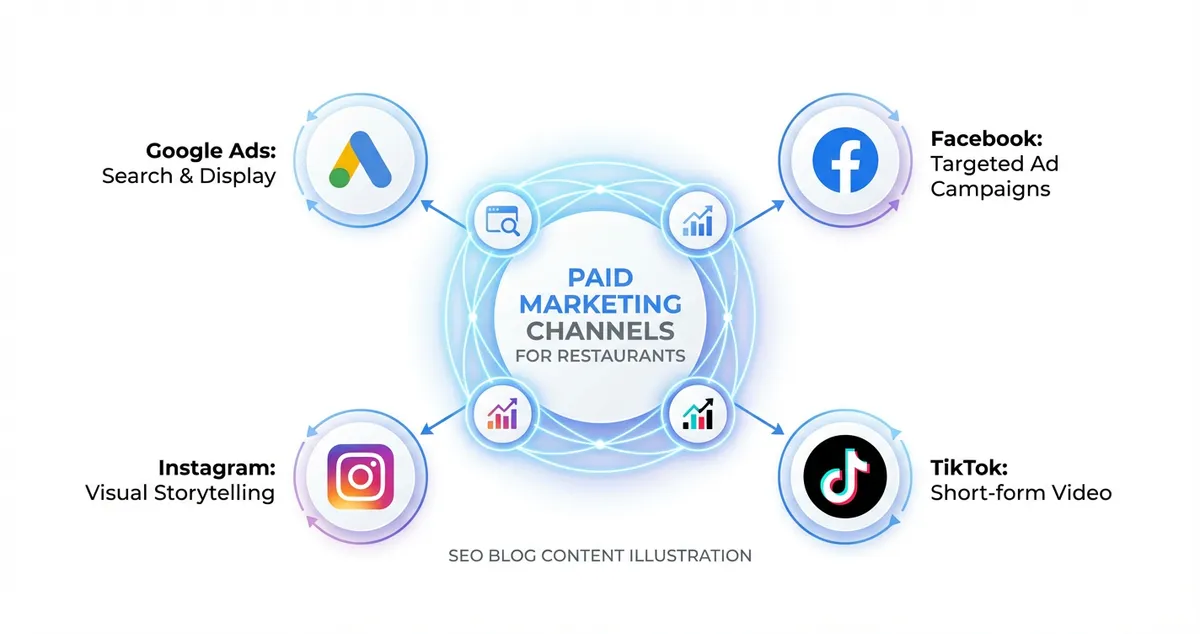
Choose the right channel based on your goals
Google Ads
Best for: Reaching people actively searching for somewhere to eat
Google Ads puts your restaurant at the top of search results. When someone types "Italian restaurant near me," you appear first. You pay per click: often £1.50-£2.50 for restaurant keywords.
Strengths:
- Often high intent: searchers are typically ready to eat
- Local targeting with Google Maps integration
- Measurable cost per booking
When to use: When you want immediate bookings from people already looking.
Facebook Ads
Best for: Building awareness and promoting special offers
Facebook reaches over 3 billion users globally. You can target by location, interests, and demographics. Average cost per click for paid marketing for restaurants: often £0.60-£1.00.
Strengths:
- Visual format works well for food photography
- Detailed local targeting (down to postcode)
- Often lower cost than Google for brand awareness
When to use: Promoting events, seasonal menus, or building general awareness.
Simply boosting posts without clear targeting rarely delivers real bookings: you need proper campaign structure.
Instagram Ads
Best for: Reaching younger diners with visual content
Instagram runs through Meta like Facebook but attracts younger diners. Stories and Reels ads often perform well for paid ads.
Strengths:
- Highly visual, works well for food content
- Often good engagement rates
- Direct booking via Instagram actions
When to use: Trendy restaurants, brunch spots, or anywhere targeting under-40s.
Running ads with generic stock food photos rarely works as well as authentic shots of your actual dishes. Audiences can spot the difference.
| Platform | Best For | Typical Starting Budget |
|---|---|---|
| Google Ads | Immediate bookings | Higher (captures intent) |
| Awareness + offers | Medium | |
| Visual engagement | Medium | |
| TikTok | Younger audiences | Lower |
TikTok Ads
Best for: Viral potential and Gen Z audiences
TikTok is newer to restaurant paid marketing but growing rapidly. UK users tend to spend more time on TikTok compared to many other markets.
Strengths:
- Good organic reach potential
- Often lower cost per impression than Meta
- Authentic, less polished content often performs well
When to use: Often best if your target audience is under 35 and you can create video content.
Master One First
Don't chase every new platform. Master one channel before adding another. Spreading thin means none of your restaurant paid marketing campaigns get enough budget to optimise properly.
With the channels clear, let's talk about how to divide your budget between them.
How to Allocate Your Restaurant Marketing Budget
Here's where strategy matters most for your restaurant paid marketing. Budget allocation depends on your goals. Are you filling quiet nights or building long-term brand recognition?
For immediate bookings (direct response focus):
- Google Ads: 50-60%
- Facebook retargeting: 20-30%
- Instagram/Facebook prospecting: 20%
For brand building (awareness focus):
- Instagram/Facebook: 50-60%
- Google Ads: 25-30%
- TikTok/YouTube: 15-20%
Starter allocation for new restaurants:
- Focus 80% on one channel until you prove ROI
- Use remaining 20% to test alternatives
- Move budget toward what works after 30 days
For example, a bistro using this approach might put 60% into Google Ads targeting "romantic dinner [area]." They'd use 25% on Facebook retargeting for website visitors. The rest goes to Instagram for weekly specials.
If you're only spending when it's quiet in the restaurant, your paid marketing will always lose to competitors who treat advertising as part of operations, not an afterthought.
Budget allocation checklist:
- Determine primary goal (bookings vs awareness)
- Set monthly budget based on 3-6% of revenue
- Allocate 70-80% to your primary platform
- Reserve 20-30% for testing alternatives
- Review and adjust allocation monthly based on results
Paid Marketing Costs for UK Restaurants
Understanding typical restaurant paid marketing costs helps you budget realistically and spot problems early.
Here's what you can expect to pay on each platform:
- Google Ads: Higher cost per click (often £1.50-2.50) but reaches people ready to book. Often worth the premium for immediate bookings.
- Facebook/Instagram: Typically lower costs (often under £1 per click) make these good for awareness campaigns and special offers.
- TikTok: Often lower costs per impression, commonly good for reaching younger diners with video content.
- Google Display: Affordable clicks make it good for retargeting website visitors.
What's a good cost per acquisition? Many restaurants aim for under £15 per new customer. Calculate your acceptable cost by considering lifetime value, or use our ROI calculator to work out what each new customer is really worth. If a customer returns three times at £50 per visit, paying £20 to acquire them makes sense.
Understanding these costs leads to an important strategic question: should you focus on immediate bookings or long-term brand building?
Brand Awareness vs Direct Response
Restaurant paid marketing serves two distinct purposes. Understanding the difference prevents frustration.
Direct response advertising:
- Goal: Immediate bookings or orders
- Channels: Google Ads, Facebook with booking objective
- Metrics: Cost per booking, ROAS (return on ad spend)
- Timeline: Results within days
Brand awareness advertising:
- Goal: Long-term recognition and consideration
- Channels: Instagram, TikTok, YouTube, display
- Metrics: Reach, impressions, engagement rate
- Timeline: Results over months
For example, a tapas restaurant might run:
- Direct response: Google Ads targeting "tapas restaurant [area]" during lunch hours
- Awareness: Instagram Reels showcasing their chef preparing signature dishes
Most restaurants benefit from both types of restaurant paid marketing. Direct response fills tables now. Awareness ensures people think of you when planning future meals.
If you're thinking "I don't know which one I need," start with direct response. You can always add awareness campaigns once you've proven ROI.
If you're reading this after a long shift thinking "I barely have time to run the restaurant, let alone manage ads," you're not alone. That's exactly why direct response works: you see results quickly and can decide whether it's worth continuing.
If you can't tell whether your paid marketing brings bookings or just likes, that's usually a sign you need clearer campaign objectives. Ask yourself: would I be happy if all my ads got 10,000 impressions but zero bookings?
Info
Related: Learn about specific platforms with our guides on Google Ads for restaurants and Facebook Ads for restaurants.
Minimum Viable Paid Marketing
If you only have 30 minutes a week and a small budget, start here:
This week, launch your first paid campaign:
- Day 1-2: Choose one platform (Google Ads for bookings, Facebook for awareness)
- Day 3-4: Set up a simple campaign with £10-15 daily budget targeting your local area
- Day 5-7: Create one ad with your best food photo and a clear call-to-action
Run for 14 days before making changes. Algorithms need time to optimise. You need data to make decisions.
If you're only launching restaurant paid marketing campaigns when it's quiet you'll always lose to competitors who plan their advertising in advance.
Minimum monthly investment: Concentrate your restaurant paid marketing budget on one channel. Don't spread thin across many platforms. Concentration beats fragmentation when you're starting out. Tools like LocalBrandHub can help manage campaigns alongside other marketing channels from one dashboard.
Quick Test
Would you click on your own restaurant's ads? If not, start there.
Your Paid Marketing Checklist
Before launching your paid marketing campaigns, ensure you've completed these essentials:
- Set your monthly marketing budget (3-6% of revenue)
- Choose ONE primary platform to start (Google or Facebook)
- Install tracking pixels (Meta Pixel, Google conversion tracking)
- Define your target audience and location radius
- Create at least 2-3 ad variations to test
- Set up a booking or order tracking system
- Commit to a minimum 30-day test period before evaluating
Jumping between platforms every week without giving campaigns time to optimise rarely produces meaningful results.
Paid Marketing Channels: Quick Comparison
| Channel | Best For | Starting Budget | Intent Level | Learning Curve |
|---|---|---|---|---|
| Google Search | Immediate bookings | £500+/month | Very High | Medium |
| Facebook Ads | Awareness + offers | £300+/month | Low-Medium | Low |
| Instagram Ads | Visual engagement | £300+/month | Low-Medium | Low |
| TikTok Ads | Gen Z audiences | £200+/month | Low | Medium |
| Google Display | Retargeting | £150+/month | Low | Low |
For most UK restaurants new to paid marketing, starting with either Google Ads (for immediate bookings) or Facebook Ads (for awareness) and mastering one platform before expanding typically delivers better results than splitting budget across multiple channels.
Key Takeaways: Restaurant Paid Marketing
If you run a restaurant and want to see how Local Brand Hub can support your marketing, explore our restaurant marketing tools.
Key Takeaways: Restaurant Paid Marketing
Restaurant paid marketing accelerates your visibility, but only if you spend strategically. Here's what matters:
- Google Ads often reaches high-intent searchers ready to book
- Facebook/Instagram typically builds awareness and promotes offers visually
- Start with one channel, prove ROI, then expand
- Budget 3-6% of revenue for marketing, with roughly half on paid
- Track cost per acquisition: know your acceptable customer acquisition cost
- Give campaigns 2 weeks before judging performance
Weekly Action
Review your current marketing spend. Are you tracking which channel brings actual bookings? If not, add UTM parameters to your ad links or use unique booking codes per channel. You can't improve what you don't measure. Next week, double down on your highest-performing channel and pause anything that isn't delivering.
For UK restaurants
Need Help With Paid Marketing?
Local Brand Hub helps UK restaurants plan and manage paid marketing campaigns that actually fill tables.
Start freeGet More Marketing Tips
Practical marketing tips for UK business owners, straight to your inbox. No spam, unsubscribe anytime.
About the Author
Local Brand Hub
Empowering UK Businesses
Local Brand Hub provides comprehensive business management tools designed specifically for UK local businesses to streamline operations, automate marketing, and grow revenue.
More articlesRelated Articles
 Marketing Tips
Restaurant Advertising Budget: How Much to Spend
Set a realistic restaurant advertising budget using UK CPM benchmarks, platform-by-platform ROI data, and the 30/30/30 budget allocation framework.
 Marketing Tips
Restaurant Marketing Agency Cost: What to Budget
What does a restaurant marketing agency cost in the UK? Monthly retainers, project fees, hidden costs, and budgeting tips for independent owners.
 Marketing Tips
Restaurant Marketing Agency London: Find the Right Partner
Compare London's top restaurant marketing agencies by specialism, pricing, and client type. Budget tips and a framework for choosing the right partner.