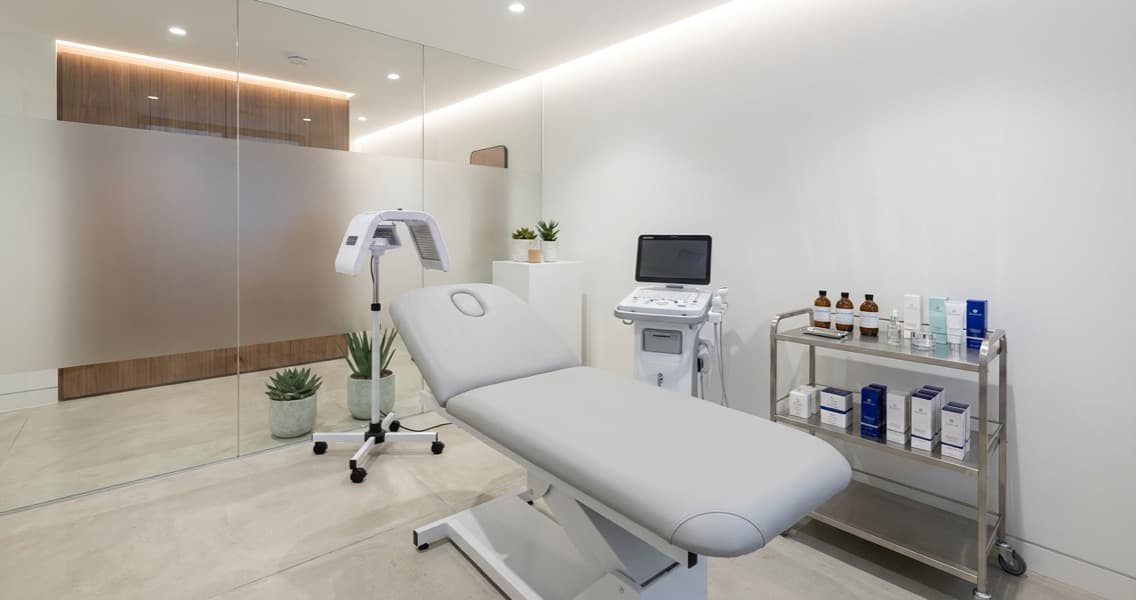
Running an aesthetics business in the UK? Explore market trends, business models, revenue streams beyond treatments, and tools well-run clinics rely on.
What you'll learn in this guide:
- How the UK aesthetics market is shaped in 2026
- The main business models and which suits different practitioners
- Revenue streams beyond treatment bookings
- The real challenges clinic owners face, and how to address them
- Technology that reduces admin and protects revenue
You trained for months, possibly years. You passed the exams, sourced the products, set up the treatment room. Then you realised nobody told you how to actually run the business side. Marketing, pricing, retention, compliance, cashflow. That's where most aesthetics practitioners hit a wall.
Running an aesthetics business in the UK in 2026 requires two skill sets. The clinical knowledge gets you through the door. The business knowledge determines whether you stay.
This guide covers the foundation: the UK market landscape, the business models, the revenue streams that reduce reliance on the treatment chair, and the practical challenges clinic owners face. If you're thinking about a detailed aesthetics business plan, or want to understand how to start an aesthetics business from scratch, start here.
The UK Aesthetics Market in 2026
The UK aesthetics industry has grown significantly over the past decade. Broader acceptance of non-surgical procedures, improving technology, and a shift toward preventative rather than corrective treatments have all driven that growth.
The market spans tens of thousands of practitioners:
- Solo mobile aestheticians working from client homes
- Home-based clinics converting a spare room into a treatment space
- Standalone clinics with dedicated commercial premises
- Medically-led practices run by doctors, nurses, and dentists
- Multi-room salons offering aesthetic treatments alongside beauty services
Four trends define where the market sits in 2026:
Regulation Tightening
Prescription-only treatments like Botox require prescriber involvement following significant legislative changes, a structural shift for solo non-medic practitioners. Understanding current aesthetics regulations in the UK is non-negotiable for any aesthetics business. Compliance is a prerequisite, not an afterthought.
Consumer Sophistication
Clients arrive informed. They've researched treatments on social media, seen before-and-after content, and often have specific products in mind. This raises expectations for consultation quality, which rewards practitioners who take clinical communication seriously.
A Growing Male Market
Male clients represent an increasing share of aesthetics bookings across the UK, particularly for skin treatments, anti-wrinkle injections, and body contouring.
Premiumisation
Budget aesthetics is losing ground to clinics that invest in environment, aftercare, and brand. Clients increasingly choose reputation and safety over headline price, particularly following media coverage of unregulated practice.
The market is competitive. However, it's far from saturated for well-run clinics with clear positioning. The question is: what kind of business do you want to build?
Aesthetics Business Models
There is no single template for an aesthetics business. The model you choose shapes everything: your overheads, your growth ceiling, and how you spend your time.
Note: overhead and growth ratings are approximate indicators; your mileage varies by location, treatment mix, and business setup.
| Model | Suited To | Overhead Level | Growth Ceiling |
|---|---|---|---|
| Solo / Mobile | Early-stage, flexibility-focused | Low | Limited |
| Home-Based Clinic | Low-cost start, suburban clients | Low-Medium | Moderate |
| Standalone Clinic | Brand-building, team growth | Medium-High | High |
| Treatment Room Rental | Risk reduction, footfall access | Low-Medium | Moderate |
| Medically-Led Practice | Prescribers, premium positioning | High | High |
| Multi-Practitioner | Wider treatment menu, shared costs | Medium | High |
Solo or Mobile Practitioner
The lowest barrier to entry. Minimal overheads, but limited scalability. Works well as a starting point or for practitioners who prioritise flexibility. Challenges include professional environment perception, home insurance complications, and CQC registration depending on treatments offered.
Standalone Clinic
A dedicated commercial space, rented or owned. This model creates the environment that supports higher pricing and builds brand credibility. Costs are higher, but it enables hiring, treatment expansion, and long-term asset building.
Treatment Room Rental and Medically-Led Practice
Renting a room inside an existing beauty salon or wellness centre reduces risk and provides footfall. However, you're building client habits inside someone else's premises: if the relationship ends, your clients may not follow.
For prescribers (doctors, nurses, dentists), a medically-led model enables the full range of prescription-only treatments in-house. As regulations tighten, clinical credibility has become a genuine differentiator. Overheads are higher, but premium pricing reflects it.
For example, a nurse prescriber setting up in Leeds might start as a treatment room renter at an existing salon, build a client base, then move into a standalone clinic once monthly bookings justify the fixed cost, a common progression for medically-led aesthetics businesses.
So you've picked your model. Now the question is: what do you actually make money from?
Revenue Streams Beyond Treatments
If you're only making money when a client is in the treatment chair, that's worth examining. A treatment-only model means revenue stops when you're ill, take a holiday, or hit a quiet patch.
The aesthetics businesses that sustain year-round income typically run multiple streams:
Skincare Retail
Recommending a home-care routine is good clinical practice. Retailing the products converts that advice into margin. Whether you hold stock or use a professional brand's drop-ship arrangement, product sales supplement treatment income, particularly during seasonal dips like quiet January or slow midweeks.
Training and Education
Experienced practitioners increasingly offer training to new entrants. One-day foundation injectables courses through to longer clinical programmes: training is high-margin with minimal consumable cost. It builds your authority and profile in the field. An aesthetics clinic owner who trains four practitioners per month can add a meaningful secondary income stream with no additional treatment capacity required.
Memberships, Virtual Consults, and Gift Cards
- Membership Programmes. A monthly membership creates predictable recurring revenue. A skin clinic might offer a "Skin Health Membership": monthly facial plus a retail discount, locking in cashflow and reducing churn.
- Virtual Consultations. A paid 30-minute video session converts clinical knowledge into income not tied to physical capacity, useful for clients who can't travel or need triage before in-person treatment.
- Gift Cards and Packages. Seasonal gift cards (Christmas, Mother's Day, wedding season) capture spending that might otherwise go elsewhere. Pre-paid packages incentivise advance booking and improve cashflow.
Multiple streams matter. A solo practitioner running only bookings has a single point of failure. Add retail, a membership tier, and a virtual consult option, and you have three revenue lines that don't all go quiet at the same time.
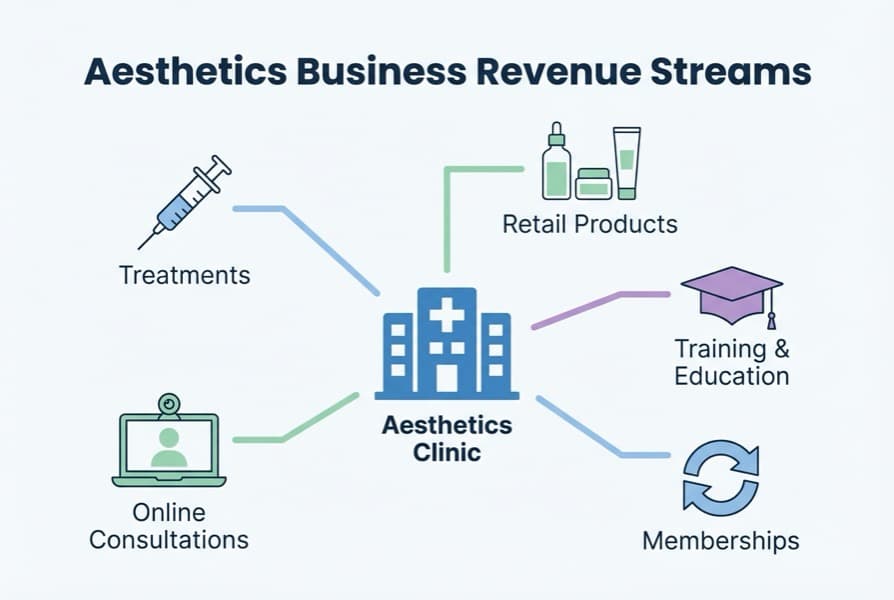
Diversifying revenue beyond the treatment chair protects your aesthetics business from seasonal dips.
Key Challenges for UK Aesthetics Businesses
Running an aesthetics business sounds straightforward. The challenges arrive once you're actually in it.
Regulatory Complexity
The regulatory environment has evolved significantly and continues to shift. For non-prescribers, accessing Botox legally requires a prescriber arrangement, which adds cost and coordination. If you're only offering treatments without tracking regulatory changes, that's usually a sign your compliance process needs a proper audit.
For example, an aesthetics clinic might discover mid-year that its prescriber arrangement doesn't comply with updated guidance, requiring a complete review of client records, consent forms, and treatment documentation. That's a costly fix that a regular compliance audit would have caught early.
What a compliant non-prescriber arrangement typically involves:
- A named prescriber who has assessed and prescribed for each client
- A clinical governance framework documenting the prescriber relationship
- Clear records of every consultation and consent
- Insurance that specifically covers the treatments you're delivering
Keep up with the new regulations for aesthetics 2025 and beyond: the landscape is still evolving.
Client Acquisition and Retention
New aesthetics businesses rely heavily on word of mouth: high trust, but unpredictable. Building a consistent new-client pipeline requires deliberate aesthetics clinic marketing:
- An active Google Business Profile with recent reviews
- Social media content that demonstrates clinical results, not only promotions
- A website that converts visitors who find you via search
If you're only posting when it's quiet in the treatment room, you'll always lose to competitors who treat marketing as part of operations, not an afterthought. Explore aesthetics marketing ideas that fit around a busy clinic schedule, or consider whether an aesthetics marketing agency could handle the heavy lifting while you focus on treatments.
Retention is a separate challenge. Aesthetics results are often seasonal or gradual: clients don't always rebook automatically. A structured rebooking prompt, CRM follow-up, and post-treatment check-in improve retention meaningfully. An aesthetics clinic owner in Bristol found that adding an automated "time for your top-up" message at six weeks increased rebooking rates, without any manual effort from the team.
Insurance and Positioning
Professional indemnity for aesthetics is a significant ongoing cost. Rates vary by treatment type and clinical background. Without adequate cover, a single adverse event can end the business. This is not an area to economise.
Clinics that compete on price alone face a race they rarely win. In practice, successful aesthetics businesses compete on trust, clinical outcomes, and client experience, not headline price. The challenge is articulating that clearly enough for clients to feel it before they even book.
Positioning Check
If you can't articulate in one sentence what makes your aesthetics business the right choice for your ideal client, that's usually a sign your positioning needs work before your marketing budget does.
If you're reading this thinking "I've got the clinical side sorted but the business side feels chaotic", that's the experience of most independent clinic owners at some point. It doesn't mean the business is failing. It means the operational foundation needs the same attention you gave your training.
Technology and Tools for Modern Clinics
The admin burden of running an aesthetics business (bookings, consent forms, client records, patch test tracking, rebooking reminders) absorbs hours every week. Technology reduces this significantly.
Booking and Appointments
Self-booking with automated reminders and deposit collection at booking is standard in well-run clinics. For no-shows and late cancellations, a persistent issue across the beauty salon sector, deposit requirements address the majority of the problem.
Key features to look for:
- Online self-booking available 24/7
- Automatic deposit collection at booking
- Reminder messages at 48h and 24h before appointment
- Client-managed cancellation and rebooking
Client Records and Consent
Aesthetics practices need robust client records: consultation notes, treatment history, signed consent, patch test records, before-and-after photos. Purpose-built aesthetics software manages records compliantly: paper-based systems are increasingly inadequate for clinical governance as the regulatory environment tightens.
Marketing and CRM
Consistent social media and automated follow-up reduce the time cost of staying visible. A good aesthetics marketing strategy combines scheduling, promotions, and local SEO tools in one system like our all-in-one marketing platform, so the marketing runs without a dedicated hire. Knowing which clients are overdue a rebooking and acting on that data is one of the simplest revenue-protection habits a clinic can build.
For example, a solo aesthetician in Birmingham used her booking system's retention report to identify 23 lapsed clients and sent a single reactivation message. Eleven booked within a week, zero ad spend.
Assess Your Aesthetics Business Health This Week
Here's a practical health check to run this week:
- Revenue audit. List every active income stream. If you have only one (treatment bookings), what could you realistically add in 90 days?
- Compliance check. Confirm insurance cover is current for every treatment you offer. Verify your prescriber arrangement if applicable.
- Retention check. What percentage of clients from the past three months have rebooked? If it's below 50%, retention is the first priority.
- Marketing audit. Where are your new clients coming from? If it's entirely word-of-mouth with no online channel, you're vulnerable to a dry patch.
- Tech review. Are you still taking bookings by DM or phone? That's the first thing to fix: it's costing you bookings you never see.
Would you book a treatment at your own clinic based purely on your online presence? If the answer is "probably not," that's usually a sign the client experience starts breaking down before anyone walks through the door.
Weekly Action
This week, do one thing:
- Open your booking system and filter for clients who haven't booked in the past four months.
- Send five of them a personal message, not a promotion, just a check-in. "Haven't seen you in a while, how's your skin doing?"
- Note how many respond. Even two or three reactivated clients from a five-minute task is a return worth building on.
No discount. No campaign. Just a message.
Ready to go deeper? Build your numbers with the aesthetics business plan guide, or if you're earlier in the journey, start with how to start an aesthetics business. For medical aesthetics marketing strategies specific to prescriber-led clinics, we've covered that too.
For UK aesthetics businesses
Simplify Your Aesthetics Business Marketing
LocalBrandHub helps UK aesthetics clinics manage social media, local SEO, and client communications from one dashboard, no marketing hire needed.
Try it freeKey Takeaway
Key Takeaways
- The UK aesthetics market in 2026 is growing but more regulated: compliance is a competitive advantage.
- Business model choice shapes overheads, growth potential, and daily operations, choose deliberately.
- Treatment-only revenue is fragile. Sustainable clinics build multiple streams: retail, memberships, training, virtual consults.
- The biggest operational challenges are regulation, client retention, and differentiated positioning.
- Technology (booking systems, consent management, CRM, marketing automation) converts hours of admin into minutes.
Get More Marketing Tips
Practical marketing tips for UK business owners, straight to your inbox. No spam, unsubscribe anytime.
About the Author
Local Brand Hub
Empowering UK Businesses
Local Brand Hub provides comprehensive business management tools designed specifically for UK local businesses to streamline operations, automate marketing, and grow revenue.
More articlesRelated Articles
 Business Growth
Running a Lash Business in the UK: Services and Growth
Run a lash business in the UK: classic, hybrid, volume and lash lift explained, realistic earning potential, infill cycles, and client retention.
 Tutorials
How to Start an Aesthetics Business UK (Step-by-Step)
Step-by-step guide to starting an aesthetics business in the UK: qualifications, insurance, licensing, premises, equipment, and launch marketing explained.
 Industry Insights
Nail Business UK: Models, Revenue and Growth
Running a nail business in the UK? Compare salon, mobile, home-based and chair rental models with realistic revenue, challenges and growth paths.