~0 min left
Marketing Tips

Aesthetics Clinic Marketing: The Complete UK Guide

19 min read
LLocal Brand Hub
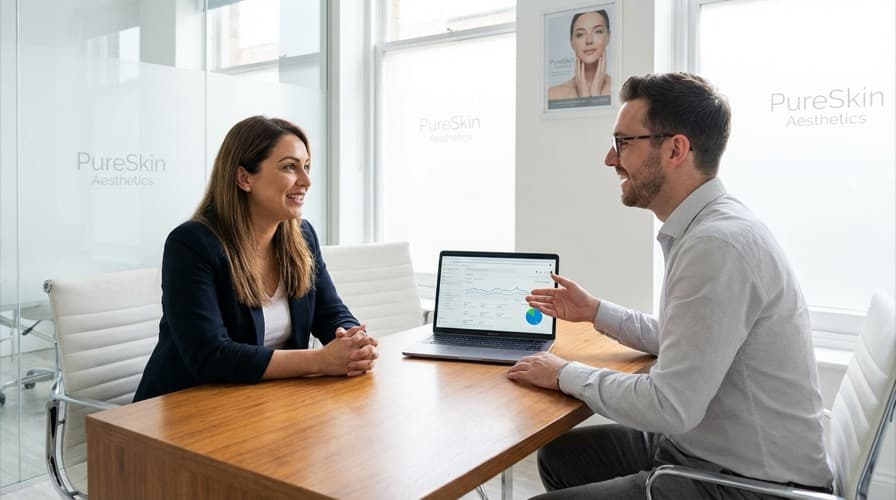
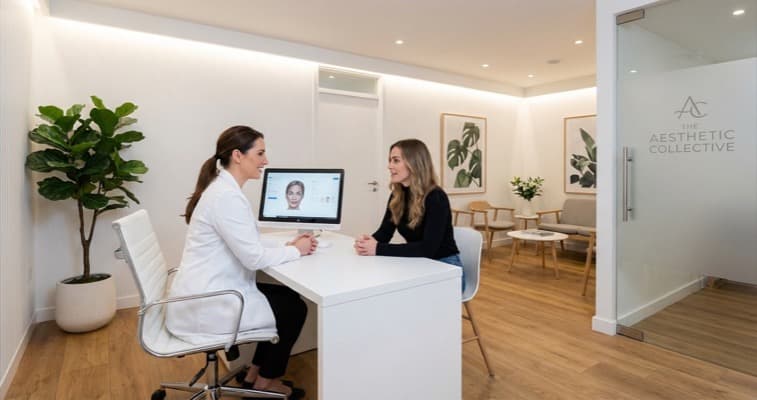
Professional aesthetics clinic consultation — practitioner and client at clean clinical reception desk
TLDR

Aesthetics clinic marketing guide for UK clinic owners. Build trust, navigate ASA/CAP rules, and fill your calendar with proven digital strategies.

Aesthetics clinic marketing is the process of attracting, educating, and converting patients for non-surgical cosmetic treatments — using local search, social media, content, and paid advertising — while meeting the strict UK advertising regulations set by the ASA and CAP.

You post the results. The lighting is perfect, the outcome is genuinely impressive, your caption explains the treatment clearly. Three days later the ASA guidance email lands in your inbox. Meanwhile the clinic two postcodes away has a waiting list. If you're spending more time second-guessing your aesthetics clinic marketing than actually growing your practice, you're not alone — and this guide exists to change that.

The UK aesthetics industry is worth an estimated £3.6 billion (PolicyBee, 2026) and growing at a 14.3% compound annual growth rate through to 2030 (Grand View Research, 2025). Patients are out there. They're searching, scrolling, and asking friends. Getting in front of them — compliantly and consistently — is what effective aesthetics clinic marketing achieves.

What You'll Learn

Here's what this guide covers across the full scope of aesthetics clinic marketing — from the foundational differences to the practical channel-by-channel breakdown:

  • Why aesthetics clinic marketing is fundamentally different from standard beauty promotion — and why that matters for every decision you make
  • How to build patient trust before they ever book a consultation
  • Which digital marketing channels genuinely work for UK clinics
  • How to create content without running into regulatory problems
  • What ASA/CAP rules mean for your day-to-day marketing activity
  • How to measure the metrics that matter — not just follower counts
  • A minimum viable 30-minute weekly action plan

Why Aesthetics Clinic Marketing Is Different

You're not marketing nail extensions. You're marketing decisions that affect someone's face, their safety, and in many cases their mental wellbeing. That distinction changes everything about how you approach aesthetics clinic marketing — and why a compliance-first, trust-led strategy consistently outperforms promotional-first approaches.

Marketing an aesthetics clinic sits in a category the industry calls YMYL — Your Money or Your Life. Standards are higher. Scrutiny is greater. The regulatory risk is real. A restaurant can post a photo of a dish and move on. An aesthetics clinic that posts a before-and-after photo without proper context can face an ASA investigation.

Would you book a treatment at your own clinic based on your current online presence? If the answer isn't an immediate yes, that's your starting point.

Three things make aesthetics clinic marketing fundamentally different from general beauty promotion:

  1. Procedure, not product. Patients aren't buying something they can return. They're undergoing an intervention with real clinical risks. Responsible aesthetics marketing acknowledges this — and patients increasingly expect transparency before they ever step through the door.
  2. Prescription treatments cannot be advertised to the public. Botulinum toxin and similar injectable treatments are classified as prescription-only under UK law. Under the CAP Code, you cannot directly promote these treatments to consumers. This rules out Google Ads for Botox by name. It also restricts how certain treatments are shown on social media.
  3. Trust typically drives conversion more than any other factor. Over 50% of new aesthetic patients cite online reviews and social proof as their main reason for choosing a clinic (Consentz, 2025). Price rarely drives the final choice in aesthetics. The deciding question is often: "Do I trust this person with my face?"

For example, a skin clinic in Manchester added their practitioner's GMC registration to their Instagram bio — plus a single pinned educational post explaining the consultation process — and saw a clear increase in qualified enquiries within 60 days. No advertising spend. Just visible trust signals.

That trust gap is your aesthetics clinic marketing opportunity — and the rest of this guide explains how to close it.

Trust Before Traffic

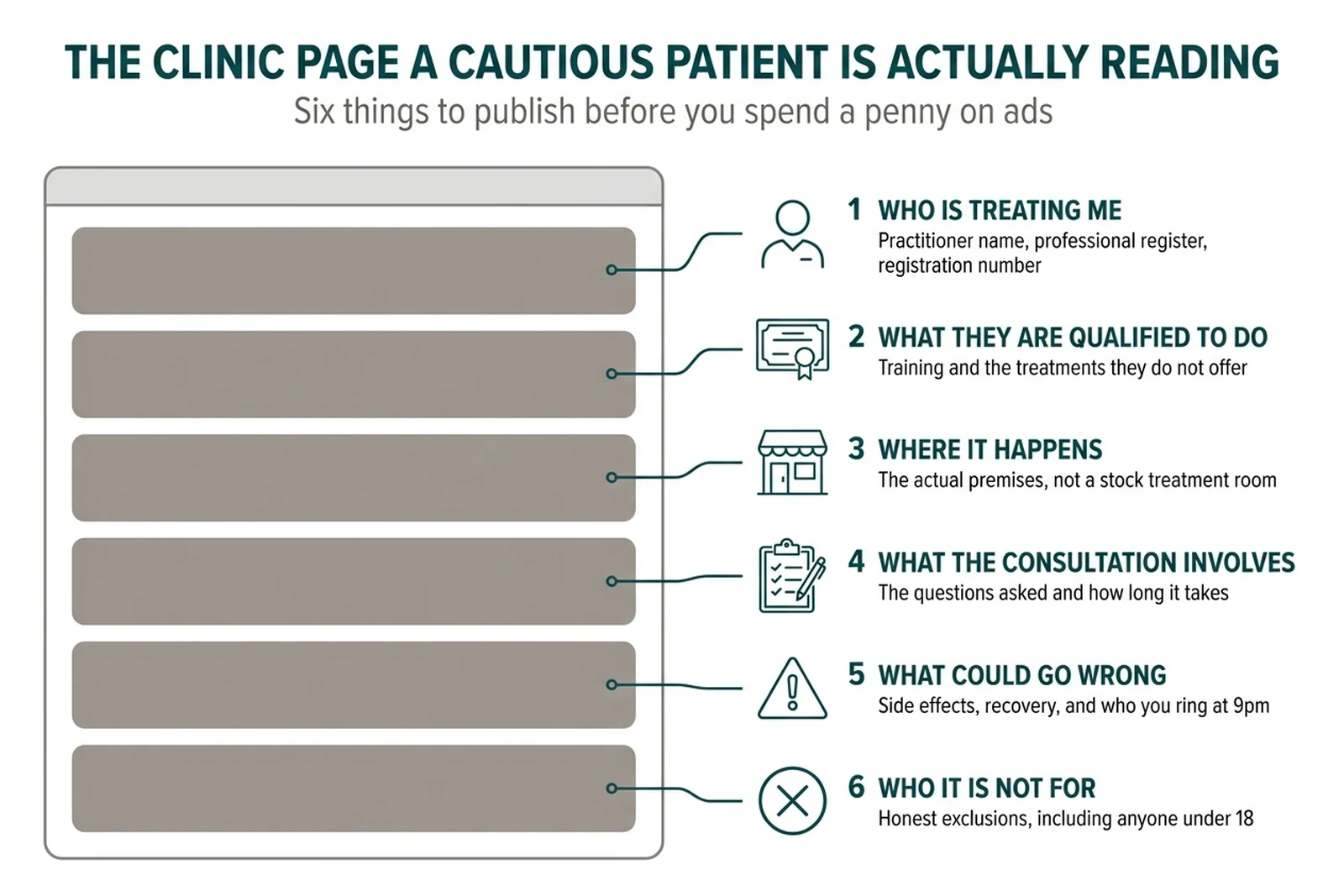
Before investing in any paid advertising, make sure your trust signals are in place. Sending paid traffic to a clinic website without visible credentials and reviews is often money spent on convincing people to leave.

Related reading: Aesthetics Marketing | Medical Aesthetics Marketing

Building Trust: The Foundation of Aesthetics Marketing

Now that you understand why aesthetics marketing operates differently, let's get into the practical mechanics. How do you actually build trust in a regulated, high-stakes environment? If you're only posting promotional content, you'll always lose to the clinic that leads with education. Trust isn't built with discounts. It's built with consistent evidence of expertise, transparency, and clinical care.

Aesthetics marketing trust framework diagram — base: Qualifications and Insurance, middle: Reviews and Results, top: Content and Community
Click to enlarge

The aesthetics trust pyramid — each layer builds on the one below

Think of trust-building in aesthetics clinic marketing as a three-layer pyramid:

Each layer builds on the one below. You can't skip straight to content marketing if your credentials aren't visible.

Base layer: Qualifications and insurance. Your GMC, NMC, GDC, or JCCP registration should be visible on every platform — website, Google Business Profile, Instagram bio. Medically led practices hold a clear advantage in patient loyalty (Acquisition Aesthetics, 2025). Patients who see credentials before booking are more committed. Patients who discover a lack of insurance after booking don't come back.

Quick action: Check your Instagram bio right now. Is your registration number or professional body visible?

Middle layer: Reviews and results. Google reviews are not a nice-to-have — they're infrastructure. Clinics with more detailed reviews tend to appear higher in local search results (Google Business Help, 2025). Build a simple process: a post-appointment text, an aftercare email with a review link, or a card at reception. A Bristol aesthetics clinic doubled its monthly review volume within 90 days by adding a review request to its aftercare message (Consentz, 2025).

Top layer: Content and community. Educational content that explains procedures and sets realistic expectations is a high-return, long-lasting pillar of any aesthetics clinic marketing strategy. It also keeps you on the right side of ASA guidelines. Content that explains rather than sells builds a different kind of trust with potential patients.

Related reading: Aesthetics Business | Aesthetics Business Plan

What "trust content" actually looks like

For example, an aesthetics clinic specialising in skin treatments might create:

  • Educational: "What happens to your skin during a chemical peel — the process, the healing stages, and what results look like over 4 weeks"
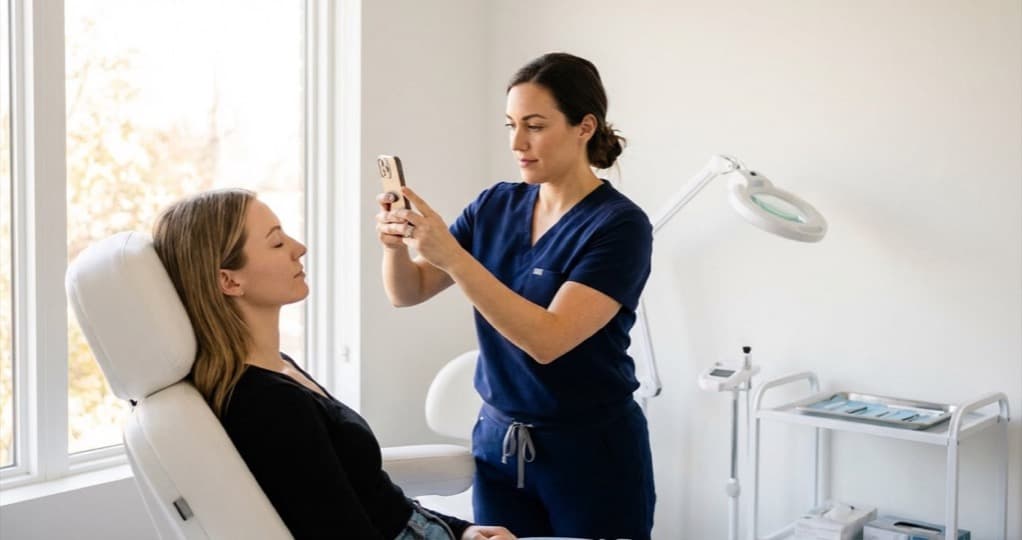
  • Transparency: A short video showing the practitioner's full consultation process, including the questions they ask and why
  • Realistic outcomes: A patient story (with written consent) that includes the recovery period and individual context, not just the polished final result

That's the substance of aesthetics clinic marketing done right. Compare it to a clinic that only posts results photos with £30 off discount codes. Patients increasingly spot the difference — and choose the practitioner who treats them like an adult.

Info

Trust content doesn't just convert patients — it pre-qualifies them. Patients who engage with your educational content before booking typically ask better questions, have more realistic expectations, and cancel less often.

Digital Marketing Channels That Work for Clinics

With trust as your foundation, the question becomes: where should you actually invest your aesthetics clinic marketing time and budget? Not every platform deserves your attention. Here's where UK aesthetics clinics are winning patient enquiries in 2026.

Google Business Profile

For many UK aesthetics clinics, Google Business Profile is often the highest-return local marketing asset available. When a patient searches "aesthetics clinic near me," your GBP listing often decides whether they call you or your competitor.

Optimise it fully. Use accurate categories (try "Medical Spa" or "Skin Care Clinic"). Add complete treatment descriptions and up-to-date hours. Build towards 10+ detailed Google reviews. Post regular updates — treatment spotlights, team introductions, seasonal offers — to show an active, professional practice.

For a deeper dive into local search optimisation, see our guide to Beauty Salon Google My Business — the core principles apply directly to aesthetics clinic marketing. You can also explore our beauty salon industry page for more resources tailored to the sector.

Instagram

Instagram remains the dominant visual platform for UK aesthetics clinic marketing. It's where patients research practitioners, browse treatment outcomes, and make initial trust decisions before they've ever visited your website.

For example, a London skin clinic posting weekly educational carousels about skin boosters — how they work, what results to expect, and what the treatment process involves — consistently generates qualified enquiries with no paid spend.

What works in 2026: Reels showing treatment processes (with patient consent), educational carousels explaining procedures step by step, practitioner Q&A Stories. What doesn't work: posting only polished results shots with no context, or promotional copy that reads like pressure-selling.

TikTok

TikTok skews younger but has a growing audience researching aesthetics. Short educational videos — "What to expect from your first consultation" or "How I assess lip symmetry before treatment" — often perform well. The platform rewards genuine personality and clear information over production quality.

One caution worth noting: approximately 57% of influencer ads on Instagram and TikTok failed to meet ASA disclosure standards in 2025 (Hamilton Fraser, 2025). If you're working with influencers or creating sponsored content, the rules apply regardless of platform.

Email Marketing

Under-used by most practices, email is genuinely high-value in aesthetics clinic marketing. Patients who've had a positive experience and opted into your list are warm, qualified contacts. A monthly newsletter — treatment education, seasonal offers, practitioner updates — can drive significant rebooking without advertising spend.

PPC advertising for aesthetics is legal but restricted. You cannot advertise prescription-only treatments by name in Google Ads. You can advertise consultations, the clinic, and non-prescription treatments. If you're running paid campaigns, work with someone who understands the CAP Code — see our guide to Aesthetics Marketing Agency for what to look for when hiring specialist help.

If you're starting out and can only focus on one channel, start with Google Business Profile. It's free, it directly captures patients actively searching for treatments, and a well-optimised profile with strong reviews often outperforms paid advertising for new patient acquisition.

Related reading: Aesthetics Marketing Ideas

Content Marketing for Aesthetics

So you've chosen your channels — now what do you put on them? Content is where aesthetics clinic marketing earns its keep: every guide, Q&A, and treatment journey post reduces the gap between "I'm curious" and "I trust this clinic enough to book."

The patient journey for aesthetic treatments is rarely quick. Someone sees a result they like. They spend weeks researching, read reviews, visit three clinic websites, watch practitioner videos, and then book. Your content needs to be useful at every stage — not only at the "book now" end.

The three content formats below are designed for each stage of that journey — awareness, consideration, and trust.

Three content formats that build the aesthetics marketing pipeline:

FormatWhat it doesExample
Procedure guidesAnswers "what is it, does it hurt, how long does it last""Dermal fillers: what to expect, how long they last, and who's a suitable candidate"
Practitioner Q&AsBuilds personal trust and clinical credibility"I've been asked about dissolving fillers 50 times — here's everything I tell patients"
Treatment journeysShows realistic outcomes across the full timeline"What skin boosters looked like at day 1, week 2, and month 3 for one patient"

Each format serves a different stage: guides attract searchers, Q&As build rapport, treatment journeys convert.

For example, an aesthetics clinic running a weekly "Ask the Practitioner" Instagram Story series — covering questions like "Is this treatment right for me?" — often gets more qualified enquiries than clinics spending heavily on paid ads.

The One Rule

Every piece of content should serve the patient first. Not your booking calendar. Patients who feel educated and respected convert to bookings at a higher rate — and they tend to refer more as well.

Related reading: How to Start an Aesthetics Business

Your content strategy is working, your channels are active — but are you staying on the right side of the rules? This is the section most aesthetics clinic marketing guides skip — which is precisely why clinics get caught out. Get this wrong, and your marketing doesn't just fail; it creates reputational and regulatory risk.

The ASA and CAP Code govern all UK advertising. The aesthetics sector gets specific scrutiny. Here are the non-negotiables.

Prescription-Only Treatments

You cannot advertise botulinum toxin (Botox) or other prescription-classified treatments directly to consumers. This applies to:

  • Paid ads (Google Ads, social media ads)
  • Organic social media posts
  • Website content and landing pages

You can describe outcomes ("reduce the appearance of fine lines"), reference the consultation, or discuss clinical expertise. But advertising a prescription-only treatment to the public by name is a CAP Code breach.

For example, a clinic can run an ad for "Free skin consultation at our London clinic" — but not "Book Botox £150."

Before-and-After Photographs

The ASA treats before-and-after images as efficacy claims. For cosmetic interventions, before-and-after photography used as a direct marketing claim — implying guaranteed results — is likely to breach the code.

If you use this content, it must:

  • Be genuine and unmanipulated
  • Include context about individual variation
  • Not suggest the outcome is typical or guaranteed

Any framing that suggests results are typical consistently fails in compliant aesthetics marketing (ASA, 2025) — individual variation is real, and your content should reflect that.

Age Restrictions and Licensing

Administering dermal fillers or anti-wrinkle injections to anyone under 18 is illegal in the UK. Your marketing should not target under-18s or imply suitability for younger patients.

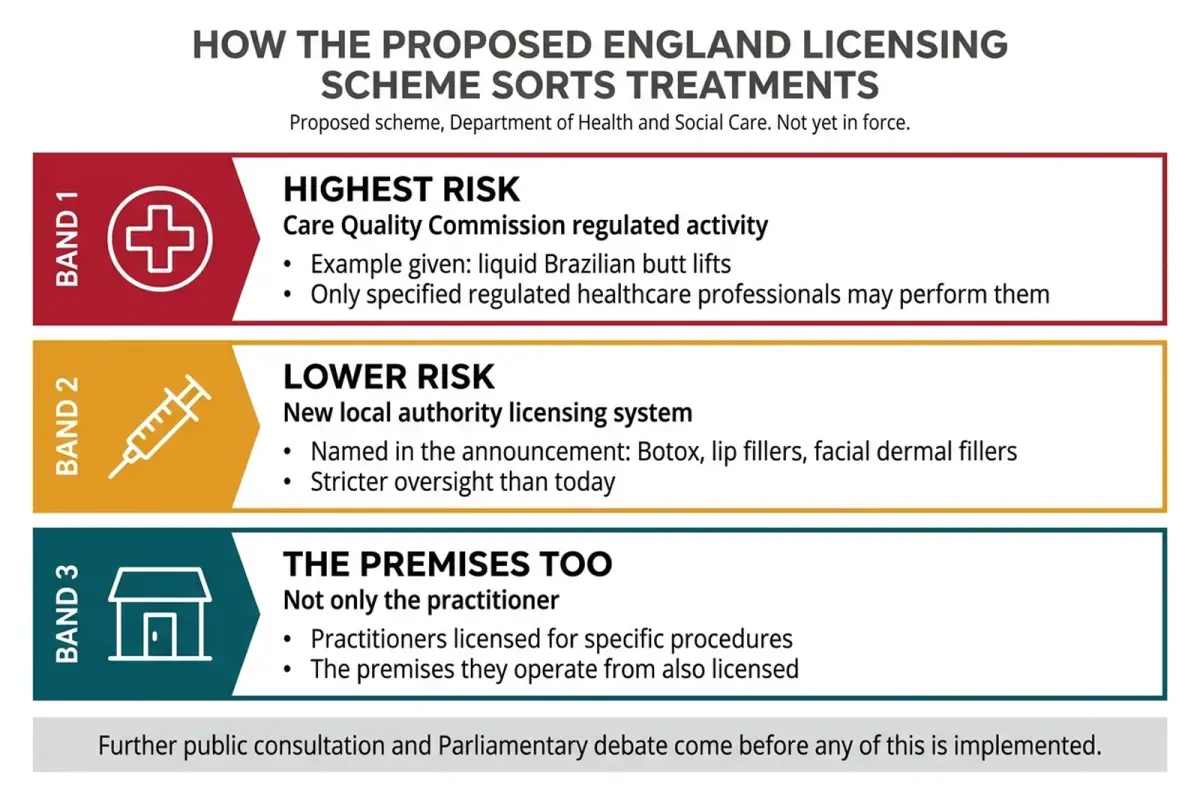
Licensing changes: As of August 2025, the UK government confirmed that non-surgical cosmetic procedures will require practitioner licensing under a tiered risk framework. Clinics administering fillers and botulinum toxin will need to meet strict standards to obtain a licence. A formal DHSC consultation was expected in early 2026.

For a full breakdown, see our guides to New Regulations for Aesthetics 2025 and Aesthetics Regulations UK — understanding this framework is an essential part of building a compliant aesthetics clinic marketing strategy and should feature in your aesthetics business plan.

Warning

Regulatory issues in aesthetics clinic marketing don't typically result in fines on first occurrence — but ASA adjudications are published publicly, and an upheld complaint can damage patient trust far more than any advertising budget can repair.

Measuring What Matters

You've built the trust foundation, you're creating content, and you're staying compliant — but how do you know if your aesthetics clinic marketing is actually working? If you're measuring success by Instagram followers, you're tracking the wrong number.

Here are the five metrics that tell you the truth:

New patient enquiries per month. For most clinics, this is the core metric to track. Record where each enquiry originates — Google search, GBP, Instagram, word of mouth, referral. After three months, you'll have a clear picture of which channels are actually delivering new patients.

Start by just asking: "How did you hear about us?" You don't need software to begin. A simple spreadsheet works.

Conversion rate from enquiry to consultation. If you're getting enquiries but few bookings, the issue is usually response time, information quality, or your consultation process. Clinics that reply within two hours typically convert better than those that respond the next day (InDesk, 2025).

Google review volume and rating. Track your review count monthly. A systematic request process should add 4–8 reviews per month for an active clinic. Aim for a minimum 4.7-star rating with 30+ reviews before local search visibility becomes consistent.

The first three metrics above tell you if patients are arriving. The next two tell you if they're staying.

Rebooking rate. What percentage of first-time patients return within 90 days? A strong rebooking rate takes pressure off your new-patient marketing. Your existing patients generate referrals and return for follow-up treatments.

Organic search traffic. If your aesthetics clinic marketing includes procedure guides and educational content on your website, this is the compound return channel — it builds slowly but delivers consistently. That's usually a sign your content strategy is genuinely working when organic enquiries mention reading your guides before booking.

For example, a clinic that tracked enquiry sources for 90 days found that 38% of new patient bookings came from Google search — and of those, over half mentioned reading a procedure guide on the clinic website before calling. That's organic content paying dividends without ongoing advertising spend.

Track Your Sources

Use a simple enquiry form or phone triage question — "How did you hear about us?" — to track source data manually. Most clinic management software allows you to add custom fields to patient records.

If You Only Have 30 Minutes This Week

Now let's bring all of this into a realistic weekly plan. Running a clinic and managing your aesthetics clinic marketing at the same time is the reality for most independent practitioners. If you're reading this thinking "I genuinely don't have time for all of this" — you're not alone, and that's exactly why a focused minimum viable approach matters more than trying to do everything.

If you only have 30 minutes a week for your aesthetics clinic marketing, do this:

This week, audit your aesthetics clinic's online presence:

  • Day 1–2: Google Business Profile — Is it fully complete? Accurate categories, treatment descriptions, opening hours? Do you have at least 10 reviews? Add one treatment update post.
  • Day 3–4: Website credibility check — Does your homepage show your qualifications, registrations, and insurance above the fold? If not, fix that today. It's the fastest trust signal you can add.
  • Day 5–7: Review request process — Create one simple post-treatment message asking patients for a Google review, with a direct link. Send it to your last three patients as a test run.

Three actions. Each under 10 minutes. Each addressing the three highest-impact trust signals a new patient uses when discovering your clinic online.

If even that feels unmanageable, a well-structured aesthetics marketing agency relationship can handle execution while you focus on treatments. Tools like LocalBrandHub bring your Google Business Profile, review management, and content scheduling into one system — designed specifically for independent clinics with limited marketing time.

Aesthetics Clinic Marketing Checklist

Now that you've worked through the strategy, here's a practical compliance and quality checklist for your aesthetics clinic marketing. Before you publish any marketing material, run through this:

  • Qualifications and insurance visible on website homepage and all social profiles
  • Google Business Profile fully complete with accurate categories and service descriptions
  • Minimum 10 Google reviews actively being acquired through a systematic process
  • No prescription-only treatment names used in paid advertising copy
  • Before-and-after content accompanied by individual variation context and consent documentation
  • Marketing does not target under-18s or imply suitability for younger patients
  • Practitioner registration (GMC/NMC/JCCP) displayed prominently
  • All sponsored/influencer content clearly disclosed per ASA requirements
  • Monthly review of review ratings and response to all new reviews

Frequently Asked Questions

What is aesthetics clinic marketing?

Aesthetics clinic marketing is a strategy that helps non-surgical cosmetic clinics attract new patients, build practitioner credibility, and convert enquiries into booked consultations. It spans digital channels including local SEO, social media, content marketing, and paid advertising — all within the UK regulatory framework set by the ASA and CAP.

Can I advertise Botox on social media in the UK?

No — botulinum toxin (Botox) is classified as prescription-only under UK regulations, and such treatments cannot be directly advertised to the public. You can reference the consultation, describe outcomes in general terms, and discuss your clinic's expertise — but advertising the treatment by name on social media or in paid ads breaches the CAP Code. See Aesthetics Regulations UK for a full breakdown.

How do I get more patients for my aesthetics clinic?

Three highly effective routes within aesthetics clinic marketing typically include: a fully optimised Google Business Profile with consistent review acquisition, educational content on Instagram that demonstrates clinical expertise, and a systematic follow-up process that turns one-time patients into repeat visitors and referrers. See our guide to Aesthetics Marketing for a channel-by-channel breakdown.

What makes aesthetics clinic marketing different from general beauty marketing?

Effective aesthetics clinic marketing operates under stricter regulatory requirements (ASA/CAP Code, prescription medicine rules), involves higher-stakes patient trust decisions, and requires a fundamentally education-first approach. Patients choosing an aesthetics clinic are making medical decisions — not purchasing decisions — and your aesthetics clinic marketing needs to reflect that distinction.

Do I need a marketing agency for my aesthetics clinic?

Not necessarily — many independent clinics successfully manage their own aesthetics clinic marketing with the right systems in place. However, for clinics running paid advertising or working with influencers, specialist aesthetics marketing agency support reduces regulatory risk and typically improves campaign performance.

For restaurants, salons, and local businesses

Need help with your marketing?

We help UK businesses turn social media into real results, not busywork.

Get in Touch

Key Takeaways: Aesthetics Clinic Marketing

  • Trust is the primary driver — over 50% of new aesthetic patients choose based on reviews and social proof (Consentz, 2025).
  • Prescription-only treatments cannot be advertised to the public across any platform, including social media and Google Ads.
  • Before-and-after photos require context and must not imply guaranteed outcomes — ASA CAP Code sections 3.47–3.50 apply directly.
  • Google Business Profile is likely your highest-ROI local asset — completeness and consistent review acquisition come first.
  • Educational content builds trust and compliance simultaneously — explain procedures, acknowledge individual variation, inform rather than pressure-sell.
  • The UK aesthetics market is growing at 14.3% CAGR (Grand View Research, 2025) — the opportunity is significant, and a well-executed aesthetics clinic marketing strategy is what separates growing practices from stagnant ones.

Weekly Action: Add one educational piece of content to your Instagram this week — a procedure explanation, Q&A, or consultation walkthrough. Then send one review request to a recent patient. Two actions. Both compliant. Both compound over time.

Explore the full aesthetics business marketing guide: Aesthetics Marketing | Aesthetics Marketing Ideas | Aesthetics Marketing Agency | Aesthetics Business | Aesthetics Business Plan | How to Start an Aesthetics Business | Medical Aesthetics Marketing | Aesthetics Regulations UK | New Regulations for Aesthetics 2025

About the Author

Local Brand Hub

Empowering UK Businesses

Local Brand Hub provides comprehensive business management tools designed specifically for UK local businesses to streamline operations, automate marketing, and grow revenue.

More articles