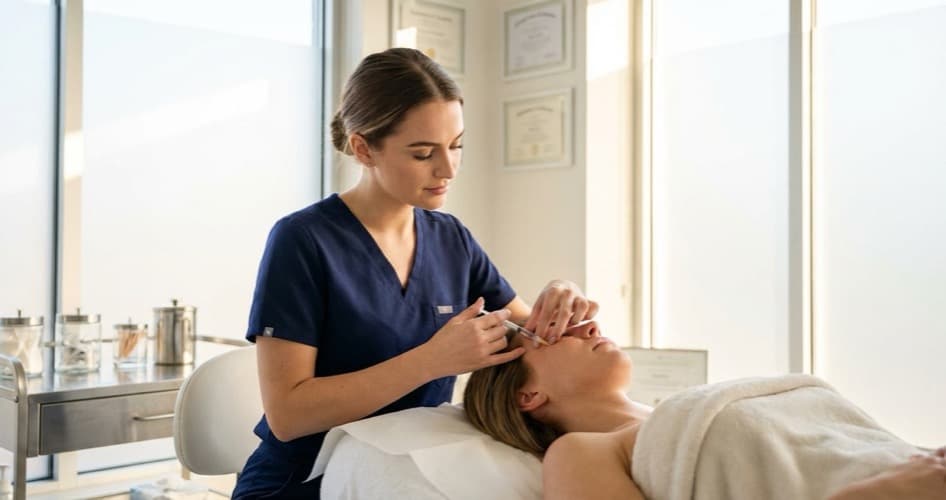
Step-by-step guide to starting an aesthetics business in the UK: qualifications, insurance, licensing, premises, equipment, and launch marketing explained.
You've spent months training. So how do you actually start an aesthetics business? The path from "qualified practitioner" to "open for bookings" has more steps than anyone tells you. Most guides cover the exciting parts. This one covers all of it.
If you're thinking "where do I even start?", that's exactly what this guide answers. How to start an aesthetics business in the UK, step by step, in the right order. No skipped steps.
In this article: Step-by-step guidance on how to start an aesthetics business in the UK: from training to launch.
What you'll learn:
- Which qualifications actually open doors (and which don't)
- The insurance and licensing landscape, including the 2025 regulatory changes
- How to find and set up your first premises without overcommitting
- Equipment budgeting that doesn't leave you broke before your first client
- Booking and payment systems that reduce no-shows from day one
- How to get your first clients without a big marketing budget
Related: Aesthetics Clinic Marketing: the complete guide to growing your practice once you're open.
Already have the setup basics covered? See our guide to writing an Aesthetics Business Plan before you go further.
Step 1: Get the Right Qualifications and Training
Here's the first question anyone asks when they want to know how to start an aesthetics business: what qualifications do I actually need? The answer depends entirely on the treatments you plan to offer. This is one of the more heavily regulated areas in the beauty and aesthetics industry, which protects clients, and ultimately protects you too.
Qualifications at a glance:
| Practitioner Type | Entry Route | Level |
|---|---|---|
| Non-medical (beauty background) | VTCT/Level 4 Certificate in Aesthetic Practice | Level 4 |
| Medical (nurse, dentist, doctor) | Level 7 Certificate in Aesthetic Medicine | Level 7 |
Non-medical practitioners (no existing clinical background)
The standard entry route is a Level 4 Certificate in Aesthetic Practice or equivalent, offered by accredited providers including VTCT, Harley Academy, and Derma Medical. These courses cover facial anatomy, skin physiology, and the practical administration of dermal fillers and anti-wrinkle injections. You'll typically need a Level 3 beauty therapy qualification as a prerequisite for most Level 4 aesthetics programmes.
For example, a beauty therapist starting an aesthetics business might complete a VTCT Level 4 Certificate over 6 to 12 months, adding injectable training to an existing skin and facial foundation.
Medical practitioners (nurses, dentists, doctors)
If you hold a professional registration with the NMC, GDC, or GMC, you can access medical-grade aesthetics training directly. Many practitioners in this route complete a Level 7 Certificate in Aesthetic Medicine, which covers advanced techniques and independent prescribing.
Can you do Botox if you're not a nurse?
Anti-wrinkle injections (Botox) are prescription-only medicines (POMs) in the UK. Non-prescribers cannot administer them independently. You'll need a prescribing partner, a GP, nurse prescriber, or dentist, who oversees your practice. Under UK legislation implemented in 2025, anti-wrinkle injections can only be carried out by regulated healthcare professionals.
Do you need a licence for aesthetics?
Yes. Under legislation that came into force in England in 2025, a range of non-surgical cosmetic treatments now require a local authority licence. Licensed treatments include:
- Anti-wrinkle injections and dermal fillers
- Chemical peels above certain concentrations
- Laser and IPL treatments
- Some skin needling procedures
Scotland, Wales, and Northern Ireland maintain separate regulatory frameworks. Check your local council's specific requirements: timelines and fees vary.
For the full picture on 2025 regulation changes, see: New Regulations for Aesthetics 2025 and Aesthetics Regulations UK.
Step 2: Secure Insurance and Licensing
Now that qualifications are mapped out, the next step is the one most practitioners underestimate. Knowing how to start an aesthetics business includes knowing that insurance comes before your first client. If you find yourself thinking "I'll sort the paperwork once I've got my first few clients", that's usually a sign that your launch timeline is running ahead of your compliance checklist. One adverse reaction without proper coverage can close an aesthetics business before it ever really opens.
For example, a newly qualified practitioner who sees friends for treatments before their insurance is active has no protection if a client has an unexpected reaction. Most aesthetics insurers will not pay out on claims that occurred before the policy start date.
Insurance types you'll need
| Insurance Type | What It Covers | Typical Annual Cost |
|---|---|---|
| Professional indemnity | Claims from treatment errors or advice | £300-£800/year |
| Public liability | Third-party injury or property damage | Included in most policies |
| Products liability | Claims related to products used | Often bundled |
| Employer's liability | Required if you have staff | Legal requirement |
Costs vary by provider, treatment types covered, and your experience level. Get quotes from at least two specialist insurers.
Specialist aesthetics insurers include Hamilton Fraser Cosmetic Insurance and Cosmetic Insure. Generic beauty therapy policies often do not cover injectable treatments. Always confirm your treatment list is explicitly covered before purchasing.
Licensing steps (England)
- Register as self-employed with HMRC, or form a limited company
- Apply for a premises licence from your local authority
- Confirm your prescribing partnership if offering POMs
- Check Care Quality Commission (CQC) registration requirements if offering any regulated medical activity
Start Your Licence Application Early
Budget 4 to 8 weeks for the local authority licensing application. Starting this process early prevents your opening date slipping.
Step 3: Find Your Premises
Now that insurance and licensing are in hand, here's the decision that shapes everything else. To start an aesthetics business properly, the premises question needs a clear answer: where you work directly affects the clients you attract and the prices you can credibly charge.
Your three premises options
- Home-based clinic: Lower overhead, but requires a dedicated treatment room, clinical-standard fit-out, a sharps disposal contract, and local authority approval. Planning permission may be needed.
- Rented treatment room: Many beauty studios rent rooms by the hour or day. You pay only for time used: no lease risk. Expect to pay £15 to £50 per hour depending on location.
- Leased clinic space: Full control. Higher commitment. Leases typically run 3 to 5 years. Fit-out costs for a single-room clinic run £5,000 to £20,000 before rent, rates, and utilities.
For most practitioners starting an aesthetics business for the first time, a rented treatment room is the right default. It keeps overheads manageable. It lets you validate demand before committing to a long-term lease. If you can't yet fill two days of bookings per week in a rented room, that's usually a sign you're not ready for a lease.
For example, a newly qualified practitioner in Leeds might rent a room in a beauty studio two days per week. They scale to four days within six months. Then consider a dedicated space once income justifies it.
The tricky part is that the right premises decision depends on where you are in your practitioner journey. In practice, most new aesthetics practitioners start smaller than they want to, and that's usually the right call.
For the broader business picture, see our Aesthetics Business overview guide.
Step 4: Equipment and Product Sourcing
Next, the physical setup. The biggest financial mistake in how to start an aesthetics business is overspending on equipment before you have clients to justify it. Costs spiral when you try to offer too many treatments from day one.
Starter equipment, realistic costs:
- Treatment couch (adjustable, with face hole): £300 to £800
- Trolley and storage: £100 to £300
- Clinical lighting: £80 to £200
- Magnifying lamp: £60 to £150
- Sharps containers and clinical waste bags: ongoing consumable
- Sterilisation equipment or single-use protocol
- Consultation device (iPad or laptop)
For injectable treatments specifically:
- Cannulas, syringes, needles (single-use, per treatment)
- Dermal fillers and neurotoxins from registered pharmaceutical suppliers (Allergan, Galderma, Merz)
- Skin prep supplies (chlorhexidine, topical anaesthetic cream)
Budget guidance:
If you're thinking "I can't afford all of this at once", most practitioners can't. A realistic starter budget for an injectable-focused aesthetics business is £3,000 to £6,000 for equipment, excluding treatment stock. For laser or advanced skin treatments, add £5,000 to £30,000+ depending on the technology. Leasing options for higher-cost equipment are worth exploring rather than buying outright at launch.
For example, an aesthetics practitioner starting with injectables only might spend £800 on a treatment couch, £200 on lighting, and £1,500 on initial product stock, keeping total start-up spend under £5,000 while they build their client base before investing in laser equipment.
Warning
Never source dermal fillers or neurotoxins from unverified online marketplaces. Doing so is a patient safety issue and will void your insurance. Only purchase injectables from licensed pharmaceutical suppliers (Allergan, Galderma, Merz direct or their authorised UK distributors). This is one of those areas where cutting corners has no upside.
Step 5: Set Up Your Booking and Payment Systems
Now let's talk about the admin layer. Most guides on how to start an aesthetics business leave out booking systems. They shouldn't.
The admin side matters more than most new practitioners expect. A slow or clunky booking experience loses clients before they arrive.
What your system needs to do:
- Online booking, available 24/7 on mobile
- Patch test appointment scheduling (mandatory before certain treatments, not optional)
- Digital consultation forms and GDPR-compliant medical history capture
- Automated appointment reminders to reduce no-shows
- Deposit collection and cancellation policy enforcement
- Post-treatment aftercare messaging
Recommended tools:
- Fresha: free tier suitable for new businesses, includes consultation forms and online booking
- Phorest: popular with established aesthetics clinics, strong client records
- Jane App: designed for medically-adjacent practices, excellent clinical notes
For example, an aesthetics practitioner starting out might use Fresha's free plan initially, moving to a paid platform (typically £30 to £80/month) once they're seeing 20+ bookings per month and need more automation.
If you're only following up with clients manually by text message, you'll always lose rebookings to practitioners who have automated reminder sequences running while they sleep. Set up your booking system before you open, not after.
If you find yourself manually chasing appointment confirmations, that's usually a sign that your booking system needs upgrading before you scale further.
Payments: Set up card payment from day one. Sumup, Square, and Stripe all work well for mobile or fixed clinic settings. Cash-only operations create accounting headaches and look amateur to clients who expect seamless checkout.
Step 6: Launch Your Marketing
Finally, the step most practitioners want to begin with, but shouldn't. Knowing how to start an aesthetics business means understanding that marketing comes last, not first. You need the systems in place before you fill them with clients.
You need consistency and the right starting channels. The reality: Instagram looks exciting but Google Business Profile brings actual bookings. It's the foundation of the local SEO tools that get you found. Start with both.
Your first 30 days of marketing, minimum viable approach:
If You Only Have 30 Minutes a Week for Marketing
- Day 1-2: Create and verify your Google Business Profile: add photos, treatments, and hours
- Day 3-4: Post your first three pieces of content on Instagram: one before-and-after (with consent), one treatment explainer, one "about me"
- Day 5-7: Personally message 10 people in your network and tell them you're open
The full first-month plan:
- Google Business Profile: Your most important local SEO asset. Verify it before you open. This is how clients find you when they search "aesthetics clinic near me."
- Instagram: Before-and-afters (with full written consent), treatment explainers, and behind-the-scenes content. Post at least three times per week to build an audience before launch.
- Opening offer: A launch promotion (complimentary consultation, or a small discount on a first treatment) gives people a reason to book now.
- Referral ask: Your first clients are typically friends, family, and their networks. Ask them directly to refer you.
- Website: Live before you open, with your location, treatment list, pricing, and booking link clearly visible.
The cautionary note on social media:
If you're only posting sporadically, you'll always lose clients to practitioners who treat marketing as part of daily operations, not an afterthought. Two hours blocked per week for content: treat it like a non-negotiable appointment.
Our full guide to Aesthetics Clinic Marketing covers Google, social, email, and local PR in detail. Read it before you launch.
Marketing only works when the rest of the business is ready: booking system live, consultation process clear, aftercare advice consistent. Clients who have a smooth experience, from the moment they find your aesthetics business online to the post-treatment follow-up, are the ones who rebook and refer others.
For example, a practitioner who opens with a verified Google Business Profile, active Instagram, and online booking live from day one will typically see their first organic enquiries within 2 to 4 weeks of opening, without paid advertising.
For more ideas on growing your client base, see our guides to Aesthetics Marketing and Aesthetics Marketing Ideas. If you're considering outside help, our guide to choosing an Aesthetics Marketing Agency covers what to look for.
Related reading: Medical Aesthetics Marketing
Your First Week Action Plan
Now let's bring it all together. This guide has covered how to start an aesthetics business from qualifications to launch.
Knowing the steps and actually doing it are two different things. The steps are achievable, but only if the foundations go in the right order. Qualifications before insurance. Insurance before clients. Licence before opening day.
If you're just starting out, here's your structured first week:
This Week: Your Minimum Viable Start
- Day 1-2: Confirm your training pathway and shortlist three accredited providers
- Day 3-4: Get insurance quotes from Hamilton Fraser and Cosmetic Insure
- Day 5-7: Check your local authority licensing requirements and application timeline
Next month:
- Enrol in your training course
- Identify your first premises option (rented room or home clinic)
- Register as self-employed with HMRC
Before launch:
- Insurance active and confirmed
- Premises licence granted
- Booking system live
- Google Business Profile verified
Would you book a treatment at your own clinic based on what you've set up so far? That's worth asking honestly before you open your doors.
Learning how to start an aesthetics business isn't about finding shortcuts. It's about doing the right steps in the right order. Qualifications open doors, but insurance, licensing, and systems keep them open.
Aesthetics isn't about talent. It's about trust, and trust starts with doing this properly.
The aesthetics industry rewards practitioners who build on solid foundations. Get that right, and the marketing and growth side becomes a much cleaner story to tell.
Your next step: Start with Day 1 of the action plan above. The most important first action when you learn how to start an aesthetics business is confirming your training pathway. Everything else follows from there.
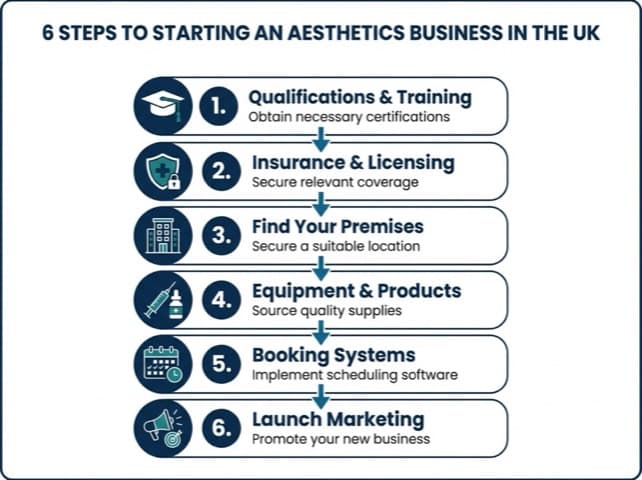
The six steps to starting an aesthetics business in the right order
Frequently Asked Questions
How much does it cost to start an aesthetics business in the UK?
The typical cost to start an aesthetics business from a home clinic or rented treatment room is £5,000 to £15,000. This covers training, insurance, equipment, product stock, and basic marketing. A dedicated leased clinic space will cost more. For example, a practitioner starting from a rented treatment room two days a week might keep initial costs under £8,000, then invest in a dedicated space once their diary is consistently full. When you start an aesthetics business from scratch, budget conservatively. Overspending on equipment before you have clients is the most common mistake.
What qualifications do I need to start an aesthetics business?
To start an aesthetics business as a non-medical practitioner, a Level 4 Certificate in Aesthetic Practice (VTCT or equivalent) is the standard entry point. Medical professionals (nurses, dentists, and doctors) typically access higher-level training through Level 7 programmes. All practitioners offering prescription-only injectables require either a prescribing partnership or independent prescriber registration.
Do I need a licence to do aesthetics in the UK?
Yes, in England. When you want to start an aesthetics business offering injectables, laser, or certain chemical peels, a local authority premises licence is required from 2025. Allow 4 to 8 weeks for the application process. Wales, Scotland, and Northern Ireland have separate regulatory frameworks.
Can I start an aesthetics business from home?
Yes. Learning how to start an aesthetics business from home is a common route. It keeps overheads low. You'll need local authority licensing approval, a compliant dedicated treatment room, and in some cases planning consent. Most practitioners move to rented or leased space once their client base is established.
Is there good money in aesthetics?
Yes. Knowing how to start an aesthetics business correctly puts you in a strong position. Anti-wrinkle injections typically retail at £150 to £300 per area. Dermal fillers at £250 to £500 per syringe. Profit margins depend on treatment volume, product costs, and premises type. Practitioners who treat marketing seriously alongside clinical training typically build faster.
How long does it take to start an aesthetics business?
From the decision to start an aesthetics business to your first paying client, most practitioners allow 6 to 18 months, longer if training is needed from scratch. The licensing application alone takes 4 to 8 weeks. Factor in training, insurance setup, premises, and launch preparation when building your timeline.
For restaurants, salons, and local businesses
Need help with your marketing?
We help UK businesses turn social media into real results, not busywork.
Start freeKey Takeaway
Starting an aesthetics business in the UK comes down to doing the right things in the right order. Get your qualifications first, then secure insurance and licensing before seeing any clients. Choose premises that match your current stage, not your aspirations. Keep equipment spend conservative until your bookings justify it. Set up proper booking and payment systems before opening day. And only then focus on marketing, starting with Google Business Profile and Instagram. The practitioners who succeed are the ones who build on solid foundations rather than rushing to open.
Get More Marketing Tips
Practical marketing tips for UK business owners, straight to your inbox. No spam, unsubscribe anytime.
About the Author
Local Brand Hub
Empowering UK Businesses
Local Brand Hub provides comprehensive business management tools designed specifically for UK local businesses to streamline operations, automate marketing, and grow revenue.
More articlesRelated Articles
 Industry Insights
Aesthetics Regulations UK: Your Compliance Guide
Aesthetics regulations UK explained. Governing bodies, training standards, ASA advertising rules, insurance needs, and a quarterly compliance checklist.
 Business Growth
Aesthetics Business Plan: What UK Clinic Owners Need
Write a business plan for your aesthetics clinic with realistic financial projections, treatment menu planning, and compliance costs for UK practitioners.
 Industry Insights
Aesthetics Business UK: Models & Revenue
Running an aesthetics business in the UK? Explore market trends, business models, revenue streams beyond treatments, and tools well-run clinics rely on.