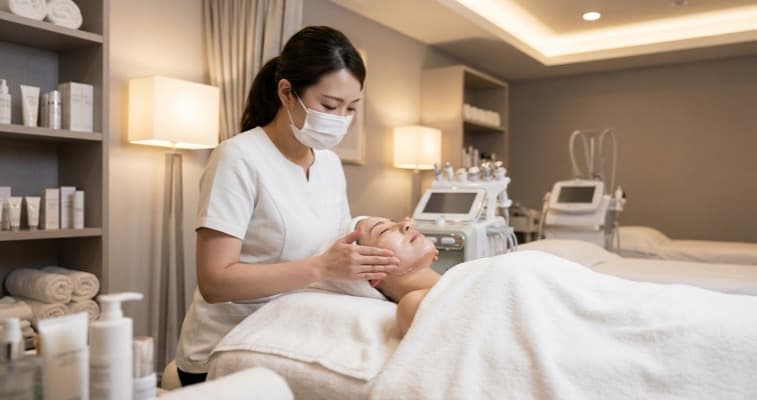
UK beauty treatment price benchmarks for 2026: facials, lashes, brow lamination, waxing, body treatments. Calculate costs and charge what you're worth.
Your treatment room is occupied. Your hands are busy. But the numbers at the end of the month don't add up. Underpricing is one of the most common ways beauty salons lose profit, not underperformance. This guide covers UK beauty salon pricing benchmarks by treatment type and how to charge what your skills are worth.
Getting your prices right starts with knowing where the market sits, and where your costs actually land.
Related: Beauty Salon Pricing Strategy: the complete guide to building and presenting your pricing framework
What You'll Learn
- UK price benchmarks for every major beauty treatment category in 2026
- How to calculate your real cost per treatment (product + labour + overhead)
- The Good/Better/Best tiering model that lifts average spend
- How to handle the "that's expensive" conversation without discounting
- A one-week beauty salon pricing audit you can do between appointments
Beauty Salon Treatment Prices: UK Overview
Here's a direct answer: beauty salon pricing in the UK is a framework for setting treatment prices that covers your costs, reflects your positioning, and delivers sustainable profit, not just what competitors charge.
The UK beauty sector is worth an estimated £5.8 billion (IBISWorld, 2025). MHA's 2026 Beauty Cost Crunch report identifies a two-speed market: cost-conscious clients shopping for value, and results-driven clients willing to pay premium. Your beauty salon pricing needs to serve both, without collapsing your margins in the middle.
For example, a beauty studio running both an express facial at an accessible entry price and a full prescriptive facial at a premium rate will capture far more of the market than one that only offers a single mid-tier option. That's not discounting. It's coverage.
The benchmarks below are drawn from published UK salon price lists covering salons outside London. London pricing typically runs 20 to 40% higher across all treatment categories.
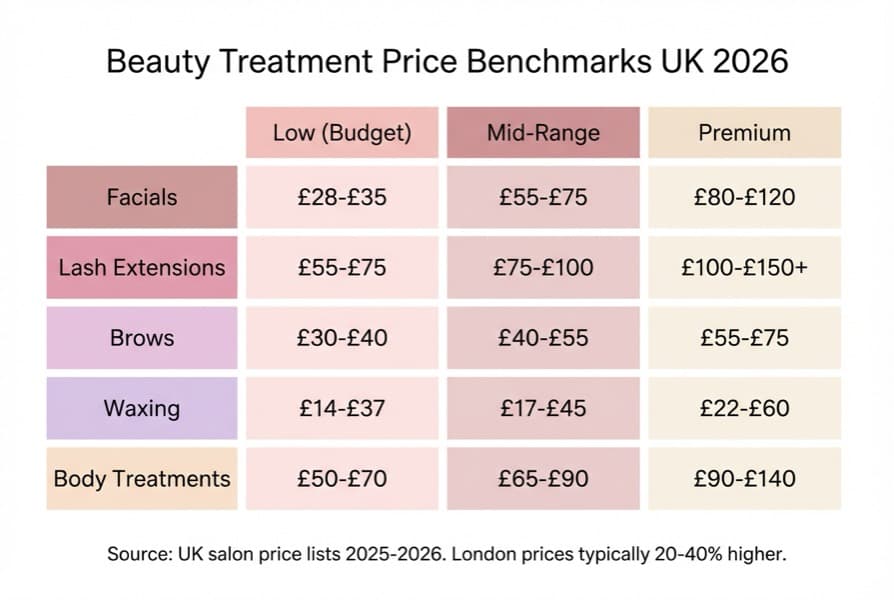
Beauty treatment price benchmarks across UK salons in 2026
Facial and Skin Treatment Benchmarks
Facial pricing is the backbone of most beauty salon menus, and where underpricing is most common.
Facial pricing is one of the most searched areas within beauty salon pricing. The benchmarks below are sourced from published UK price lists across regional salons in 2025 to 2026.
Related: Beauty Salon Pricing Strategy: the strategic framework behind these numbers
| Treatment | Mid-Range UK Price |
|---|---|
| Express facial (30 min) | £40-£55 |
| Full prescriptive facial (60 min) | £60-£75 |
| Dermaplaning | £60-£80 |
A 60-minute prescriptive facial at around £65 is standard across mid-tier independents. If you're charging under £50 for the same service, you're giving away skill on every booking.
For example, a beauty studio offering dermaplaning at a deeply discounted rate when competitors charge significantly more isn't winning extra clients. It's losing money on every appointment while doing identical quality work. Salonsearcher's 2025 research confirms UK dermaplaning typically sits in the £60 to £120 range outside London.
Lash and Brow Treatment Benchmarks
Lash and brow treatments are high-retention services where pricing is often set too low relative to the skill and time involved.
If you find yourself hesitant to quote your lash prices on the phone, that's usually a sign the number feels too high to you, not that it's actually too high for the market.
Lash Extensions
| Treatment | Mid-Range UK Price |
|---|---|
| Classic full set | £75-£100 |
| Volume full set | £95-£130 |
| Lash infill (2-3 weeks) | £45-£65 |
Lash extensions are a retention goldmine: every infill is a rebooking built into the treatment itself. UK specialist lash studios typically charge £75 to £100 for a classic full set in regional towns (Glamorous Lashes).
Note: A classic set takes 90 to 120 minutes of precise close work. If you're pricing lashes as a bolt-on, you're likely undervaluing the treatment significantly.
Brow Treatments
| Treatment | Mid-Range UK Price |
|---|---|
| Brow lamination | £40-£55 |
| Brow lamination + tint | £45-£60 |
Brow lamination has become a cornerstone treatment for independent beauty salons. Treatwell data shows treatments starting from around £30 at the lower end, with specialist brow bars charging into the mid-sixties and above.
If you're charging under the mid-range for brow lamination with a tint, run the numbers on product cost alone. Lamination solution, tint, and consumables can easily reach £10-£12 before you've covered a minute of your time.
Waxing and Body Treatment Benchmarks
Waxing and body treatments are either the most price-competitive part of your beauty salon pricing menu, or a strong upsell opportunity.
Waxing Price Guide
Waxing is one of the most competitive treatment categories. Most salons offer it, clients often shop on price, and if you're only competing on price you'll always lose to whoever is willing to work for less. That's typically a home-based therapist with zero overhead.
See also: Salon Pricing List: how to present your beauty treatment menu clearly and professionally
| Treatment | Mid-Range UK Price |
|---|---|
| Half leg wax | £17-£22 |
| Hollywood wax | £37-£45 |
| Brazilian wax | £32-£40 |
A beauty therapist who consistently delivers clean results and thorough aftercare advice builds a waxing client base that refers and returns. For example, a salon with strong repeat-booking rates on waxing services is rarely competing on price. They're competing on trust. A client who books for your technique is worth far more than one chasing the cheapest option.
Body Treatments
Body treatments are a strong upsell before wedding or party season. Sold as a course, body wraps lock in repeat bookings before your quietest period hits.
| Treatment | Mid-Range UK Price |
|---|---|
| Body wrap (60-90 min) | £70-£90 |
| Full body massage (60 min) | £65-£80 |
Pro tip: Selling a course of body wrap sessions rather than single bookings gives you predictable revenue weeks in advance, and gives clients a clear reason to commit upfront.
How to Calculate Your Beauty Treatment Costs
Now that you have the benchmarks, here's the next step: calculating your floor, the price below which you can't go and remain profitable. If you're reading this thinking "I've never actually done this calculation," you're not alone. Most independent beauty therapists set prices instinctively rather than mathematically.
The standard beauty salon pricing formula used across the industry:
Treatment Price = Product Cost + Labour Cost + Overhead Allocation + Profit Margin
Breaking Down Each Component
Product cost covers consumables: wax strips, serum, lash glue, cotton pads. For a basic facial, this is typically a few pounds. For advanced treatments like microneedling, product cost can be significantly higher once you include single-use cartridges and serums.
Labour cost is your time at your effective hourly rate. If you're the owner, this is what you'd pay a qualified therapist to do the treatment, not zero.
Overhead allocation works like this: divide your monthly fixed costs (rent, insurance, utilities, software) by your monthly treatment hours. If you have substantial monthly overheads and offer a typical number of treatment hours per week, you'll have a clear overhead per hour figure.
Profit margin should sit at 40 to 60% of the final price, according to Professional Beauty. The NHBF is clear: prices must cover costs and deliver a return on investment.
Worked Example: 60-Minute Prescriptive Facial
Working through a realistic example, a mid-tier prescriptive facial might break down like this: product cost around £7, labour cost of £14 for one hour at a basic therapist rate, overhead allocation of £15 for that same hour, giving a total cost to deliver of approximately £36. At a 45% profit margin, the sustainable selling price works out to around £65.
If you're charging significantly below that for a comparable facial, you're not making a profit. You may be making nothing once changeover time and consultation are factored in.
Would you book a treatment at your own salon if you saw your prices listed on a competitor's website? If the answer is "that seems surprisingly cheap," it probably is.
Explore more: Hair Salon Pricing: pricing benchmarks for hair services if you offer a mixed menu
Tiered Pricing: The Three-Tier Model
The Good/Better/Best tiering model is a beauty salon pricing framework that can often do the upselling for you, letting clients self-select into the right price point without you having to push.
The Three Tiers Explained
Good (entry-level): Your most accessible version. Shorter duration, core technique, standard products. For first-time clients and cost-conscious bookers.
Better (mid-tier): The standard full treatment: your benchmark price. What most clients book.
Best (premium): Extended time, upgraded products, add-ons such as LED, jade roller, scalp massage, or eye treatment. For regulars who want the full experience.
For example, a beauty salon structuring their facial menu across the three tiers might set an entry-level express facial at a welcoming price, a full prescriptive facial at their standard benchmark rate, and an exclusive facial with LED and eye treatment as a premium experience.
This structure anchors perception. A client who thought the mid-tier was expensive sees the premium option and decides the standard feels reasonable by comparison. The entry-level option converts hesitant first-timers who become regular mid-tier bookings within two visits.
The same model applies across your menu: lashes (classic / hybrid / volume), brows (shape / tint / lamination), body treatments (back massage / full body / treatment package).
See also: Salon Pricing List: how to present your beauty treatment menu clearly and professionally
When Clients Say "That's Expensive"
Even with the right pricing in place, you'll hear pushback. And the answer is never to apologise for your prices.
"That's expensive" is usually a question: why should I pay that much? The answer is in how you describe the treatment, not in lowering the number.
What to Know About Price Resistance
You will lose clients to cheaper salons. That's not always a problem. If you're consistently quiet, the issue is rarely beauty salon pricing: it's that not enough of the right people know you exist. In that case, it's worth working out how much time smarter marketing could save you before touching your prices. If you're constantly full and turning away bookings, your prices might actually be too low.
If you're thinking "but my clients genuinely can't afford more", it's worth separating two types. The price-sensitive client will always shop around. The value-seeking client wants to understand what they're getting. The second client is worth educating on what's included in your treatments.
The NHBF is clear: prices must cover costs and deliver a profit. If your beauty salon pricing doesn't do both, you are subsidising your clients' appointments.
If you're only discounting when clients push back, that's usually a sign your menu isn't communicating value clearly enough before they even ask.
Practical Responses That Work
- Explain what's included: products used, technique, timing, aftercare advice
- Offer a shorter version at a lower price point, not a discount on the full treatment
- Be confident in the number. Hesitation signals doubt, and doubt invites negotiation
Audit Your Beauty Prices This Week
Here's a practical audit you can run between appointments, no spreadsheet required.
If You Only Have 30 Minutes This Week
This week, check whether your beauty salon pricing is actually profitable:
- Day 1-2: List your five most-booked treatments and what you currently charge
- Day 3-4: Find one local competitor's published prices and compare treatment for treatment
- Day 5-7: Run the cost formula for your most popular treatment and compare against the benchmarks above
For example, if your most-booked treatment is a full facial and you've never done a cost breakdown, Day 5 might reveal you've been charging £55 for a treatment that costs £48 to deliver, a margin so thin that one no-show wipes out three appointments' profit.
A full pricing audit takes time. But running the numbers on your single highest-volume treatment will quickly tell you whether you have a gap.
See also: Salon Software Pricing: compare booking and management software to streamline your operations
Weekly Action
- Pick your single highest-volume treatment and run the cost formula (product + labour + overhead + 45% margin)
- If your current price falls below the result, you've found exactly where your margin is going, and you can fix it before your next round of new bookings
Frequently Asked Questions
What is the average cost of a facial in the UK?
The average cost of a facial varies by treatment duration, product quality, and salon positioning. For a mid-tier UK independent, a standard 60-minute facial typically costs around £60 to £75. Express facials start from around £40. Premium treatments with upgraded products often reach well over £90. Prices in London run substantially higher than regional UK averages.
How much should I charge for brow lamination?
UK benchmarks for brow lamination range from budget entry prices up to the mid-seventies at premium level. Mid-tier UK salons typically charge in the mid-forties to around £60 for brow lamination with a tint included.
What is a fair price for lash extensions in the UK?
A fair price for lash extensions reflects the time, skill, and product cost involved, not just what the salon down the road charges. A classic full set at a mid-tier UK beauty salon typically ranges from £75 to around £100. Volume sets command higher rates. London prices run notably above regional UK averages.
How do I calculate if my beauty treatment prices are profitable?
Add your product cost, labour cost, and overhead allocation per treatment. That total is your break-even price. Add a 40 to 60% profit margin to reach a sustainable selling price. If your current price falls below that total, you're running the treatment at a loss, regardless of how busy your books look.
If you run a beauty salon and want to build a full pricing framework around these benchmarks, start with the Beauty Salon Pricing Strategy hub article. For related treatment categories, see nail salon pricing, tanning salon pricing, and gender-neutral hair salon pricing. And if you're using software to manage bookings and pricing, compare options in our salon software pricing guide. For calculator tools, see our Boss Your Salon pricing calculator review.
Key Takeaway
Beauty salon pricing in the UK isn't about matching what competitors charge: it's about knowing your costs, setting sustainable margins, and presenting your menu with confidence. Use the benchmarks in this guide as a starting point, run the cost formula on your highest-volume treatment this week, and build a three-tier structure that lets clients choose their own price point. Your skills are worth more than a race to the bottom.
For restaurants, salons, and local businesses
Need help with your marketing?
We help UK businesses turn social media into real results, not busywork.
Start freeGet More Marketing Tips
Practical marketing tips for UK business owners, straight to your inbox. No spam, unsubscribe anytime.
About the Author
Local Brand Hub
Empowering UK Businesses
Local Brand Hub provides comprehensive business management tools designed specifically for UK local businesses to streamline operations, automate marketing, and grow revenue.
More articlesRelated Articles
 Tutorials
Boss Your Salon Pricing Calculator: A Complete Guide
How the Boss Your Salon pricing calculator by Maddi Cook works, what inputs it needs, and the DIY treatment pricing formula every salon owner needs.
 Marketing Tips
Salon Pricing List: Create One That Sells
How to create a salon pricing list that wins clients. Templates, layout tips, digital vs printed formats, and mistakes that cost bookings. UK guide.
 Industry Insights
Aesthetics Business UK: Models & Revenue
Running an aesthetics business in the UK? Explore market trends, business models, revenue streams beyond treatments, and tools well-run clinics rely on.