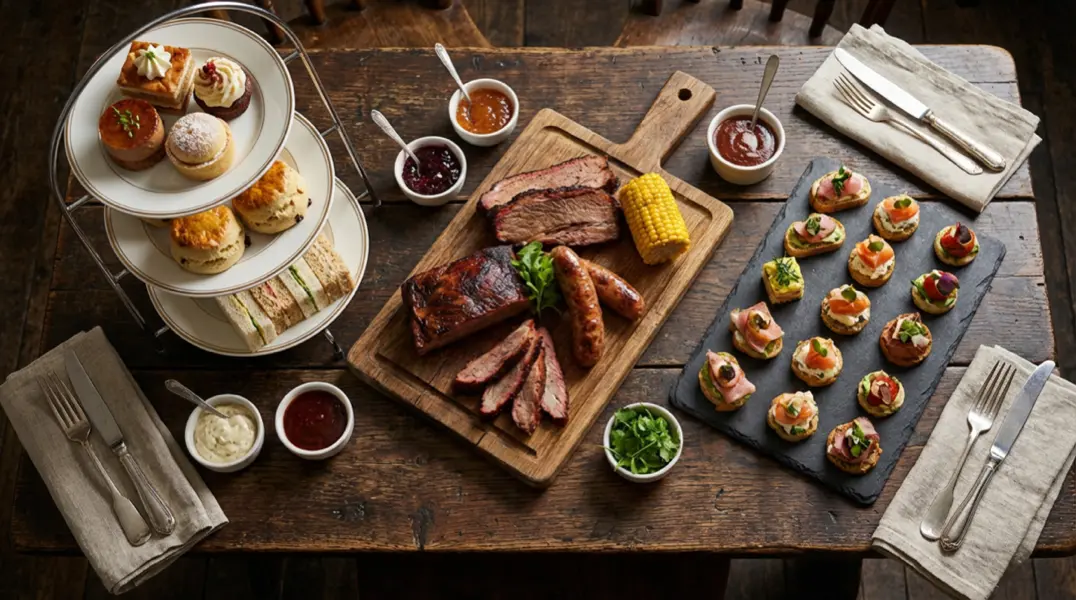
Explore 12 profitable catering business ideas for UK restaurant owners. From office lunch delivery to afternoon tea and BBQ catering, find your niche.
You're watching your kitchen sit empty between lunch and dinner. The food is good, the team is sharp, the equipment works. But overheads keep ticking whether you serve ten covers or a hundred. You have thought about catering before but never committed because there are too many directions.
The UK contract catering market is worth over £12 billion and on track for £18.68 billion by 2031 (Verified Market Research, 2025). That growth spans dozens of niches. Restaurants are better positioned than most caterers to enter them.
What You'll Learn
- 12 catering niches suited to UK restaurant owners
- Startup cost and revenue potential for each idea
- Which niches match different restaurant types
- How to choose the right niche for your kitchen and skills
- Quick-start steps for the most accessible options
How to Choose the Right Catering Niche
Before diving into these catering business ideas, here is how to evaluate which one fits your restaurant.
Info
Related: Restaurant Catering Marketing, marketing your catering service
Three questions that narrow your options:
- What does your kitchen already do well? A BBQ restaurant shouldn't pivot to delicate canapes. Play to your existing strengths
- What is the demand within your delivery radius? Office parks suggest corporate lunch. Residential areas suggest party and event catering. Wedding venues nearby suggest wedding catering
- What can your team handle without disrupting regular service? Catering that requires the same prep hours as your main service creates a bottleneck. Choose niches that use different time slots or simpler preparation methods
For example, a Thai restaurant near a business park would naturally suit office lunch delivery (idea #1). But a gastropub near wedding venues might skip straight to wedding and event work (idea #3). Match the niche to your location and strengths.
If you're thinking "I just want to start somewhere and see what sticks", that's fine, but among all the catering business ideas below, start with idea #1. If you're only picking a niche because it sounds fun you'll always lose to competitors who pick based on their kitchen's actual strengths. Office lunch delivery has the lowest barrier to entry and the fastest feedback loop.
Info
Related: How to Start a Business in Catering, launch guide
12 Catering Business Ideas
With that framework in mind, here are 12 catering business ideas ranked from lowest barrier to highest investment. Each catering business idea includes startup costs, ideal restaurant types, and a quick assessment of revenue potential.
1. Office Lunch Delivery
What it is: Regular delivery of prepared lunches to nearby offices on a scheduled basis.
Why it works: Recurring revenue, predictable volumes, and preparation during your quiet morning hours. For example, a single office ordering lunches twice a week quickly generates significant annual revenue from one client alone.
Startup cost: Under £500.
Suits: Any restaurant near office buildings or business parks.
Info
Related: Catering Corporate Lunch, daily lunch programmes
2. Corporate Event Catering
What it is: Catering for business events including conferences, training days, client entertainment, and celebrations.
Why it works: Higher per-head pricing and larger order sizes. Corporate clients have proper budgets and value reliability over bargain pricing.
Startup cost: £500-1,500.
Suits: Restaurants with experience handling large-group service.
Info
Related: Catering for Corporate, corporate catering specifically
3. Wedding Catering
What it is: Full or partial catering for wedding receptions, including sit-down meals, buffets, or specific courses.
Why it works: High per-head spending, long booking lead times, and strong referral potential. One successful wedding generates multiple enquiries.
Startup cost: £1,000-3,000.
Suits: Restaurants with strong presentation skills and experience with bespoke menus. Works particularly well if you have a venue or are near popular wedding locations.
4. Afternoon Tea Catering
What it is: Curated afternoon tea service delivered for private gatherings, corporate events, hen parties, and baby showers.
Why it works: High margins on scones, finger sandwiches, and petit fours. The presentation sells the service. Afternoon tea commands premium pricing for relatively simple logistics.
Startup cost: £300-800.
Suits: Cafes, bistros, and restaurants with pastry skills.
5. BBQ and Hog Roast Catering
What it is: On-site cooking for outdoor events, festivals, corporate fun days, and private parties.
Why it works: Visual spectacle creates its own marketing. Guests watching a hog roast generates social media content that drives future bookings. Seasonal but highly profitable.
Startup cost: £2,000-5,000.
Suits: Restaurants with grilling or smoking expertise. Seasonal but highly profitable during spring and summer.
6. Meal Prep Service
What it is: Pre-portioned, ready-to-heat meals sold individually or as weekly subscription boxes.
Why it works: Growing demand from health-conscious professionals and busy families. Weekly subscriptions create predictable revenue.
Startup cost: £500-1,000.
Suits: Restaurants with efficient batch cooking and health-focused menus.
7. Pop-Up Catering
What it is: Temporary food service at markets, festivals, corporate events, and branded activations.
Why it works: Tests new dishes, builds brand awareness, and generates revenue from temporary high-traffic locations. No long-term commitment.
Startup cost: £1,000-3,000 (portable setup, signage, permits).
Suits: Restaurants wanting to build brand recognition beyond their local area.
8. School and Nursery Catering
What it is: Daily meal provision for schools, nurseries, and after-school clubs.
Why it works: Long-term contracts (typically annual) with predictable daily volumes. Government free school meal funding (gov.uk) provides a reliable payment source.
Startup cost: £500-2,000 (compliant packaging, nutrition documentation, DBS checks for delivery staff).
Suits: Restaurants experienced with large-volume, nutritionally balanced cooking.
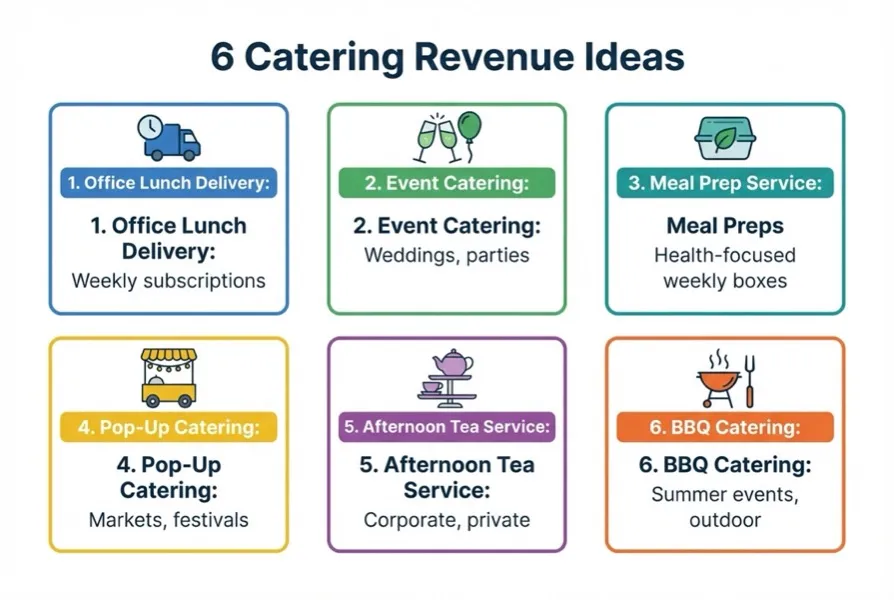
Comparison chart of 12 catering business ideas showing startup cost, revenue potential, and best fit
9. Funeral and Wake Catering
What it is: Buffet or plated food service for funeral receptions, typically at community halls, hotels, or family homes.
Why it works: Sensitive, underserved market where reliability and discretion are paramount. Families are grateful for one less thing to organise during a difficult time.
Startup cost: Under £500 (standard buffet equipment).
Suits: Restaurants with a calm, professional team and local community connections.
10. Dietary-Specialist Catering
What it is: Catering focused on specific dietary needs: fully vegan, gluten-free, halal, or kosher menus.
Why it works: Underserved market segments with loyal customers who struggle to find reliable options. Premium pricing justified by specialist expertise.
Startup cost: £300-800 (specialist ingredients, certified packaging, marketing).
Suits: Restaurants already specialising in a dietary niche.
11. Grazing Table and Platter Service
What it is: Artfully arranged charcuterie boards, grazing tables, and themed platters for parties and events.
Why it works: Instagram-friendly format drives organic referrals. Low food waste because clients choose exact quantities. Premium pricing justified by presentation quality.
Startup cost: Under £500 (boards, packaging, props for presentation).
Suits: Restaurants with strong visual presentation skills and access to quality charcuterie and cheese suppliers.
12. Festival and Market Stall Catering
What it is: Regular trading at farmers' markets, food festivals, and seasonal events.
Why it works: Cash-heavy business with immediate revenue. Builds brand awareness across a wider area. Tests menu concepts without commitment.
Startup cost: £1,500-4,000 (portable kitchen setup, gazebo, signage, market fees).
Suits: Restaurants with a signature dish or cuisine that works as street food.
If you're only launching every catering business idea that sounds exciting you'll always lose to competitors who commit to one niche and master it. Choose the idea that fits your kitchen, not the one that sounds most glamorous.
Matching Niches to Your Restaurant Type
Now that you know the full list of catering business ideas, here's how to narrow down. If you're only choosing a niche based on what sounds interesting you'll always lose to competitors who match their niche to their kitchen's strengths:
| Restaurant Type | Strong-Fit Niches | Avoid |
|---|---|---|
| Italian/Mediterranean | Office lunch, grazing platters, wedding catering | BBQ catering |
| Indian/South Asian | Corporate events, office lunch, meal prep | Afternoon tea |
| Gastropub | BBQ/hog roast, corporate events, funeral catering | Meal prep |
| Cafe/Bistro | Afternoon tea, grazing platters, office lunch | Full event catering |
| Asian (Thai/Japanese/Chinese) | Office lunch, meal prep, festival stalls | Wedding catering |
| Fine dining | Wedding catering, corporate events, dietary-specialist | School catering |
The reality for most restaurant owners is that you will probably start with one catering business idea, discover a second through customer demand, and settle into two or three catering business ideas that generate good returns for the least disruption.
Info
Related: Restaurant Marketing, broader marketing ideas
For most UK restaurants starting out, begin with office lunch delivery. It requires the least investment, generates recurring revenue fastest, and teaches you the logistics of catering without the complexity of events. Once you have that running smoothly, expand into corporate events or your chosen specialist niche.
Test Before You Commit
Before committing to any niche, run one test order for a friend's workplace. That single delivery teaches you more about packaging, timing, and transport than weeks of planning.
Are you actually choosing based on what your kitchen does well, or what sounds exciting? If you're being honest, that distinction usually separates the niches that stick from the ones that fizzle out after a month.
Whichever niche you pick, winning those first orders comes down to visibility: keeping your new catering menu in front of local businesses with regular social media posts does more than any one-off leaflet drop.
If you run a restaurant and want to see how Local Brand Hub can support your marketing, explore our restaurant marketing tools.
Key Takeaway
Key Takeaway
Choosing among these catering business ideas isn't about profit. It's about finding work your kitchen can do brilliantly without breaking your existing service.
If you can't tell whether a niche suits your kitchen or just sounds exciting, that's usually a sign you need to test it with one client before committing.
If you're reading this while juggling a dozen other priorities, that's exactly why starting small matters. Pick one catering business idea, test it, and build from there.
- These 12 catering business ideas cover the full range for UK restaurant owners, from low-investment office lunch delivery to higher-investment wedding catering
- Budget: Many of these catering business ideas launch for under £1,000 from an existing kitchen: office lunch delivery starts under £500
- Choose your catering business idea based on kitchen strengths, local demand, and operational capacity, not just interest
- Office lunch delivery is the lowest-barrier entry point with the fastest path to recurring revenue
- Most successful restaurant caterers operate in 2-3 niches, not all 12
- Startup costs for most catering business ideas range from under £500 (grazing platters, funeral catering) to £2,000-5,000 (BBQ, festival stalls)
- The UK catering market is worth £12+ billion and growing, with independent restaurants well positioned to compete
Niche selection checklist:
- List your kitchen's top 5 strengths (cuisine, volume, presentation)
- Identify businesses or venues within 3 miles that match those strengths
- Research 3 competitors in your chosen niche
- Create a simple one-page menu for that niche
- Test with one client before committing
Weekly Action
If you only have 30 minutes a week, do this:
- Day 1-2: Pick your top two catering business ideas from the list based on your kitchen's strengths and local demand
- Day 3-4: Research three competitors in those niches within your area: check their menus and pricing online
- Day 5-7: Create a simple one-page menu for your chosen niche and share it with five people for feedback
Frequently Asked Questions
Which catering business idea is the most profitable?
Wedding catering and corporate event catering offer the highest per-head margins among all catering business ideas. However, office lunch delivery often generates the most consistent annual revenue because it recurs weekly rather than relying on occasional bookings. The most profitable catering business idea depends on your capacity and local market.
How much can a restaurant make from adding catering?
Revenue varies widely by catering business idea. A conservative estimate for office lunch delivery is £15,000-30,000 per year from two to three regular clients. Corporate event catering can add significantly more depending on volume. Some restaurants report that catering becomes a major share of total revenue within two years of launching.
Can I run multiple catering niches at once?
Start with one niche and add a second once the first is running smoothly. Operating two to three complementary niches is practical: for example, office lunch delivery during the week and event catering at weekends. If you're only spreading across every niche at once you'll always lose to competitors who master one catering business idea before expanding.
Do I need separate staff for a catering operation?
Not initially. Most restaurants handle early-stage catering with existing prep and kitchen staff during quieter hours. Once catering revenue justifies it, consider hiring a dedicated catering coordinator or prep assistant. The coordination role, managing orders, client communication, and logistics, is usually the first dedicated hire for any catering business idea.
What is the biggest risk when adding catering to a restaurant?
The biggest risk is a principle that applies to every catering launch: operational overload. Taking on orders that conflict with your core restaurant service degrades both. Manage this by setting clear capacity limits, scheduling prep during non-service hours, and learning to decline orders that don't fit. Saying no to a catering order is better than delivering a bad one while your restaurant suffers.
For restaurants, salons, and local businesses
Need help with your marketing?
We help UK businesses turn social media into real results, not busywork.
Start freeGet More Marketing Tips
Practical marketing tips for UK business owners, straight to your inbox. No spam, unsubscribe anytime.
About the Author
Local Brand Hub
Empowering UK Businesses
Local Brand Hub provides comprehensive business management tools designed specifically for UK local businesses to streamline operations, automate marketing, and grow revenue.
More articlesRelated Articles
 Tutorials
How to Start a Business in Catering: UK Guide
Step-by-step guide for UK restaurant owners adding catering services. Covers licences, insurance, food safety, equipment and finding your first 10 clients.
 Tutorials
Online Gift Card Restaurant Guide: UK Setup
Learn how to sell online gift card restaurant vouchers in the UK. Compare platforms, set up your store and market digital cards year-round.
 Industry Insights
Restaurant Gift Card UK: Providers, VAT, and Rules
Compare UK restaurant gift card providers, understand Consumer Rights Act rules, VAT treatment, and expiry regulations. Setup guide for restaurants.