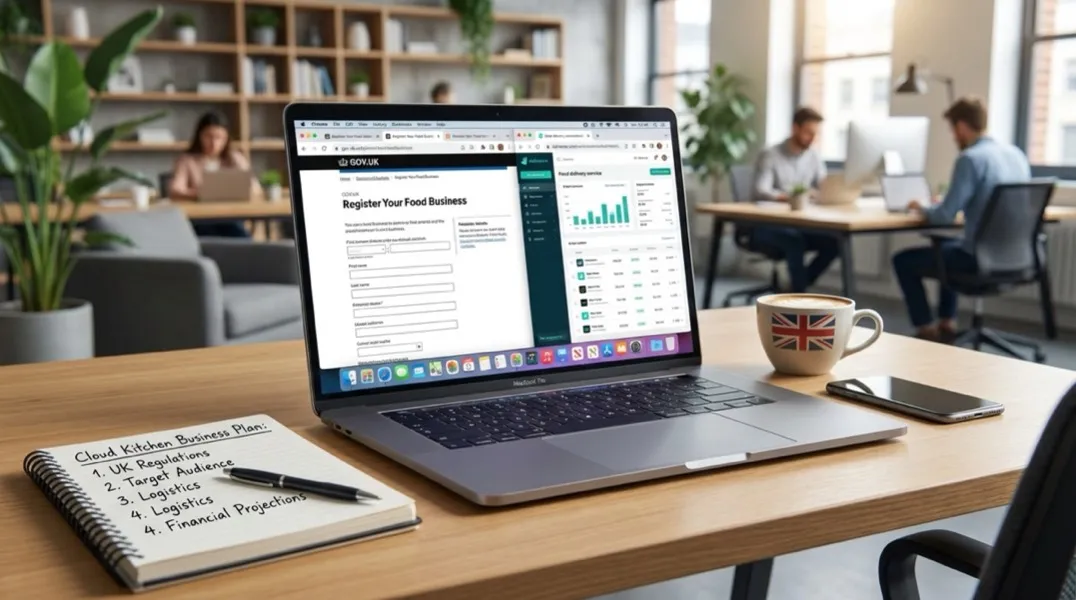
UK cloud kitchen regulations, costs, and platform commissions compared. Deliveroo vs Uber Eats vs Just Eat, FSA registration, and provider options.
You have done the research. You understand the delivery-only model and it makes sense for your next venture. But every guide you find talks about the US market: different regulations, different platforms, different costs. None of it applies to opening a cloud kitchen in the UK.
Info
Related: Ghost Kitchen Marketing: our complete hub guide to building a delivery-only brand
This guide covers everything UK-specific: FSA registration, local authority licensing, platform commission rates, cloud kitchen UK provider costs, tax obligations, and regional differences between London and the rest of the country.
What You'll Learn
- How to register a cloud kitchen UK food business with the FSA
- What licences and inspections your premises need
- Commission rates across Deliveroo, Uber Eats, and Just Eat
- Realistic startup and monthly costs for UK cloud kitchens
- Whether you can legally run a cloud kitchen from home
- HMRC and VAT considerations for cloud kitchen businesses
- UK cloud kitchen providers compared by price and contract terms
Is a Cloud Kitchen Legal in the UK?
First, the good news: cloud kitchens are fully legal in the UK. There is no separate "cloud kitchen licence" or special regulatory category. The cloud kitchen UK model is a framework that operates under the same food business regulations as any restaurant, takeaway, or catering operation. The FSA oversees food safety, while your local authority handles registration and inspections.
The key difference is planning permission. A traditional restaurant needs A3 (food and drink) planning use. A cloud kitchen preparing food for delivery typically falls under B1 (light industrial) or sui generis use, depending on your council. Check before signing a lease.
Planning Permission
Ask your local planning authority for written confirmation of the use class for your intended premises. Verbal guidance is not binding and could leave you exposed if neighbours complain later.
FSA Registration Requirements
Every cloud kitchen in the UK must register with the local authority at least 28 days before trading begins. Registration is free and takes around 15 minutes online.
You will need to provide:
- Business name and trading address: the kitchen premises, not your home address unless operating from home
- Type of food activities you will carry out
- Name of the food business operator: the person legally responsible
After registration, an environmental health officer schedules an inspection. Your premises receives a Food Hygiene Rating from 0 to 5.
For delivery platforms, this rating matters:
- Deliveroo requires a minimum hygiene rating of 2
- Uber Eats and Just Eat generally expect 3 or higher
If you're thinking "I will sort registration later," that's usually a sign your launch timeline needs adjusting. Trading without registration is a criminal offence under the Food Safety Act 1990.
For example, a cloud kitchen operator in Manchester who launched on Deliveroo before completing FSA registration had their listing suspended within two weeks when a routine check revealed no registration on file. The 28-day requirement is not a suggestion.
Licences You May Need
- Food business registration: Always required. Free.
- Premises licence: Required if delivering alcohol. Fees range from £100 to £1,905.
- Late night refreshment: Required for hot food between 11pm and 5am. Included in the premises licence.
- Companies House registration: Required if operating as a limited company. £12 online.
So registration is straightforward. But how much will the whole venture actually cost?
How Much Does a Cloud Kitchen Cost in the UK?
Now that you know it is legal, here's what it actually costs. Startup costs for a cloud kitchen UK business typically range from £15,000 to £50,000 outside London, and £20,000 to £80,000 in the capital. The biggest variable is whether you rent a fully equipped unit or fit out your own space.
Monthly Operating Costs
Your main fixed costs break down into five categories:
- Kitchen rent: £1,200 to £2,500 per month outside London, rising to £2,000 to £4,000 in the capital
- Utilities: £300 to £800 per month depending on location and usage
- Packaging and supplies: £200 to £500 per month
- Insurance: £50 to £180 per month for public liability and product cover
- Staff: £2,400 to £5,600 per month for one to two kitchen staff
Platform commissions and food costs sit on top of these fixed expenses.
If you're reading this thinking "that is a wide range", you are right. A single-brand operation in a shared Birmingham kitchen costs a fraction of a multi-brand setup in central London.
For instance, a small Indian street food brand operating from a shared kitchen in Leeds might spend roughly £5,000 per month on rent, utilities, packaging, and one cook combined. That is a realistic baseline for a single-brand cloud kitchen UK operation outside the capital.
London vs the Rest of the UK
London hosts over 60% of UK cloud kitchens. The capital offers higher order density and premium pricing, but rent and staff costs eat into those margins.
Outside London, cities like Manchester, Birmingham, Leeds, and Bristol offer growing delivery markets with significantly lower overheads. A cloud kitchen UK operation that needs £8,000 monthly revenue to break even in London might only need £5,000 in Manchester.
If you can't tell whether your concept works better in London or a regional city, that's usually a sign you need to test with a shared kitchen before committing to a lease.
With costs mapped out, the next question is which platforms to list on, and what they will charge you.
UK Delivery Platform Comparison
When it comes to margins, your choice of delivery platform matters more than almost any other decision. Here is how the three major cloud kitchen UK platforms compare.
| Feature | Deliveroo | Uber Eats | Just Eat |
|---|---|---|---|
| Commission | 25-35% | 30% (13% own drivers) | 14% + 50p/order |
| Setup fee | Free | £350 one-time | £295 one-time |
| Delivery | Platform drivers | Platform or own | Platform or own |
| Min. hygiene rating | 2 | 3 | 3 |
| Payment | Weekly | Weekly | Weekly |
Commission rates based on standard terms; negotiated rates may differ.
For most UK cloud kitchens, listing on all three platforms gives the widest reach. Just Eat often delivers the best margin per order thanks to its lower commission structure.
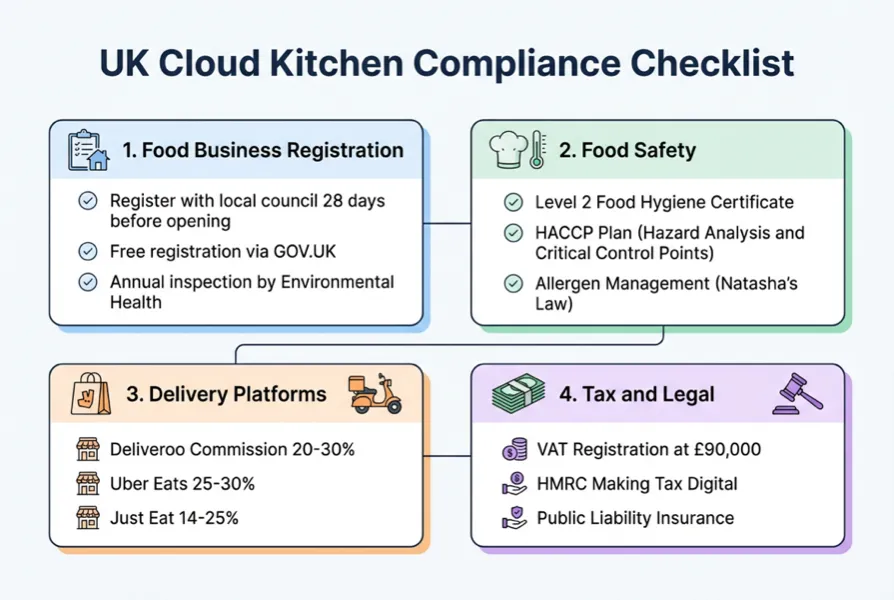
UK delivery platform commission comparison
If you're only listing on one platform you'll always lose to competitors who list on all three. A customer who cannot find you on their preferred app simply orders from someone else.
Platform Selection Tips
- Start with Just Eat if margin matters most. Their 14% commission leaves more room on every order.
- Add Deliveroo for premium urban areas. Their customers tend to spend more per order.
- Use Uber Eats self-delivery if you have your own drivers. The 13% rate is the lowest available.
- Consider aggregator tools like Deliverect or Otter to manage orders from multiple platforms through one tablet.
For example, a poke bowl brand in Bristol started on Just Eat only, then added Deliveroo after three months. Their order volume increased by 40%, but Deliveroo's higher commission meant per-order profit dropped. The key was monitoring margins per platform weekly, not just total revenue.
You know the platforms. But where will you actually cook? Here are the main UK providers.
UK Cloud Kitchen Providers Compared
Several providers offer ready-to-use cloud kitchen UK spaces. Here is how they compare.
- Karma Kitchen: From £2,600 + VAT per month, 6-month minimum. London-based, expanding. Largest operator.
- FoodStars (CloudKitchens): From £2,500 + utilities, 12-month minimum. Five London sites with tech focus.
- Dephna: From £2,000 + VAT per month, 3-month minimum. Most flexible terms across London.
- Deliveroo Editions: Revenue share instead of rent. Deliveroo-exclusive orders only.
- Independent landlords: From £1,200 per month. You handle fit-out yourself. Nationwide availability.
Deliveroo Editions stands out for zero upfront costs, but you are locked into their platform exclusively. For a multi-platform cloud kitchen UK strategy, Dephna offers the most flexibility with 3-month contracts. Karma Kitchen supports established brands like Tortilla and The Athenian.
If you're only looking at the cheapest option you'll always lose to competitors who choose based on contract flexibility and platform access. A £400 monthly saving means nothing if a 12-month lease locks you into a failing concept.
If you are exploring renting options more broadly, our guide to ghost kitchen rental covers what to look for in a lease agreement.
Pro Tip
Ask yourself: would I sign a 12-month lease for a concept I have not tested on delivery platforms yet? If the answer is no, start with Dephna's 3-month terms or a shared kitchen at hourly rates.
One question comes up repeatedly: can you skip all these costs and just cook from home?
Can You Run a Cloud Kitchen From Home in the UK?
There is another option some operators consider first. Technically, yes: the FSA confirms you can prepare and sell food from a domestic kitchen, provided you register with your local authority.
However, there are significant limitations for a cloud kitchen UK operation run from home:
- Planning permission: Frequent driver visits may constitute a change of use
- Platform requirements: Uber Eats and Deliveroo typically will not onboard home-based operators
- Insurance: Domestic insurance does not cover commercial food production
- Capacity: A home kitchen limits output to roughly 20 to 30 orders per day
If you're thinking "I will just start from home to keep costs down", you're not wrong about wanting to save. But the reality for most independent operators is that managing prep, cooking, packaging, and driver pickups from a standard home kitchen breaks down quickly once you pass 15 orders per day.
A shared commercial kitchen at £15 to £25 per hour is often the better starting point. You get the correct address for platform registration, proper equipment, and compliance without a long lease.
So you have decided on a kitchen space and platforms. Now you need to get the tax side right from day one.
HMRC and Tax Considerations
If you're thinking "I just want to cook and deliver food, not deal with tax paperwork", the reality for most independent operators is that getting the financial structure wrong early costs far more than the time spent setting it up correctly.
Business Structure
Most cloud kitchen UK operators start as sole traders: it is the simplest route, with personal tax on profits and minimal admin. If you are scaling to multiple brands or seeking investment, a limited company structure offers corporation tax rates and limited liability. Partnerships suit joint ventures where profits are shared.
For example, a couple launching a Caribbean food cloud kitchen brand might start as a partnership to share income reporting. If the business scales and profits grow, incorporating as a limited company often becomes more tax-efficient.
If you're reading this after a 12-hour shift and dreading the thought of tax admin, the good news is that registering as a sole trader takes under an hour online. Do it within 3 months of starting, or incorporate through Companies House before trading.
VAT Registration
The VAT registration threshold is £90,000 in taxable turnover over any rolling 12-month period. Most hot takeaway food is standard-rated at 20% VAT, so once your cloud kitchen hits this threshold, register within 30 days.
Consider voluntary registration earlier if your suppliers charge VAT. For a cloud kitchen spending £3,000 to £5,000 monthly on VAT-able supplies, early registration could save significant amounts through input VAT reclaims.
VAT-registered businesses must use Making Tax Digital (MTD) compatible software for records and returns. Even below the threshold, keeping digital records from day one saves headaches later.
Good record keeping is not just an HMRC requirement. It is how you track which platforms and menu items actually make money. A solid business plan should include your financial tracking approach from the start.
With regulations, platforms, and tax covered, where does the UK cloud kitchen market stand right now?
The UK Cloud Kitchen Market
Here is the bigger picture. The UK cloud kitchen market is projected to keep growing, driven by rising delivery demand and lower startup costs compared to traditional restaurants.
Industry estimates put the number of UK cloud kitchens at over 750, with London hosting the majority. That figure continues climbing as restaurant operators expand into delivery-only setups, including established brands using the model to reach new postcodes without additional dining rooms.
For example, a Birmingham-based burger brand launched virtual kitchen locations in Manchester and Leeds through Karma Kitchen spaces in 2025, reaching three new delivery zones without any new leases or fit-out costs.
Two regulatory developments worth noting:
- Food waste rules introduced in March 2025 require cloud kitchens in England to separate food waste from general waste and arrange collection by licensed carriers
- Inspection frameworks are still evolving. A study in the journal Food Control noted that EHOs are developing new approaches for multi-tenant kitchen facilities, where shared-space hygiene adds complexity
If you are considering local SEO for your delivery area, optimising your Google Business Profile for delivery radius rather than a physical dining location requires a different approach. A structured local SEO checklist helps a delivery-only brand cover the essentials (Google Business Profile, citations, and reviews) even without a dining room.
Cloud Kitchen UK Launch Checklist
With that covered, here's your complete checklist to track your progress:
- Register food business with local authority (free, 28 days before trading)
- Complete Level 2 Food Hygiene Certificate
- Choose business structure and register with HMRC
- Secure kitchen space (provider, shared, or independent)
- Obtain public liability and product insurance
- Create listings on Deliveroo, Uber Eats, and Just Eat
- Set up HACCP-based food safety management system
- Pass environmental health inspection (aim for rating 3+)
- Set up digital accounting for record keeping
- Launch and monitor per-platform margins weekly
If You Only Have 30 Minutes This Week
Finally, if you're thinking "I do not have time for all of this", you're not alone. Here's your minimum viable starting point:
This Week's Action
Start your cloud kitchen UK compliance foundations:
- Day 1-2: Register food business with local authority online (free, 15 min)
- Day 3-4: Get kitchen space quotes from 2 providers in your area
- Day 5-7: Create delivery platform accounts and review onboarding documents
Even if you are months from launching, the 28-day registration lead time catches people out. Start the clock now.
Frequently Asked Questions
How much does it cost to get a cloud kitchen licence in the UK?
Food business registration is free. There is no specific "cloud kitchen licence": you register as a food business with your local council at no cost. Additional licences for alcohol or late-night service have separate fees ranging from £100 to £1,905.
Is a cloud kitchen profitable in the UK?
A well-run single-brand cloud kitchen UK operation outside London can typically reach profitability at around 80 to 100 orders per day. In London, higher rents mean you generally need more volume to break even. Profitability depends heavily on your food costs, platform commissions, and average order value.
Do I need a food hygiene certificate to run a cloud kitchen?
At least one person must hold a Level 2 Food Hygiene Certificate. The course costs £10 to £25 online and takes around 2 to 3 hours.
What is the difference between a cloud kitchen and a dark kitchen?
The cloud kitchen/dark kitchen distinction is largely branding rather than substance. Both terms describe commercial kitchens preparing food exclusively for delivery. Some operators use "cloud kitchen" for tech-enabled, multi-brand facilities, while "dark kitchen" often describes single-brand spaces. Our guide to ghost kitchens covers the full terminology breakdown.
Can I operate multiple brands from one cloud kitchen?
Yes. Running two or three virtual brands from a single kitchen lets you target different cuisines, price points, and customer segments without additional premises costs. Each brand needs its own platform listing but can share kitchen space, staff, and equipment.
Key Takeaway
If you run a restaurant and want to see how Local Brand Hub can support your marketing, explore our restaurant marketing tools.
Key Takeaway
Cloud kitchens are not a regulatory grey area in the UK. The framework exists: it requires navigating food business registration, platform onboarding, and commercial lease terms rather than a single "cloud kitchen licence."
Your competitors do not have bigger budgets. They have fewer gaps between deciding to launch and actually registering with their local authority.
- Register your food business at least 28 days before trading, free and required by law
- Budget realistically for startup costs based on your location and kitchen model
- List on all three platforms to maximise order volume, then track margins per platform
- Start with a shared or provider kitchen: flexible terms reduce risk for cloud kitchen UK operators
- Register with HMRC and plan for VAT registration as turnover grows
- Get your Food Hygiene Rating to 3+ before onboarding with delivery platforms
For restaurants, salons, and local businesses
Need help with your marketing?
We help UK businesses turn social media into real results, not busywork.
Start freeGet More Marketing Tips
Practical marketing tips for UK business owners, straight to your inbox. No spam, unsubscribe anytime.
About the Author
Local Brand Hub
Empowering UK Businesses
Local Brand Hub provides comprehensive business management tools designed specifically for UK local businesses to streamline operations, automate marketing, and grow revenue.
More articlesRelated Articles
 Business Growth
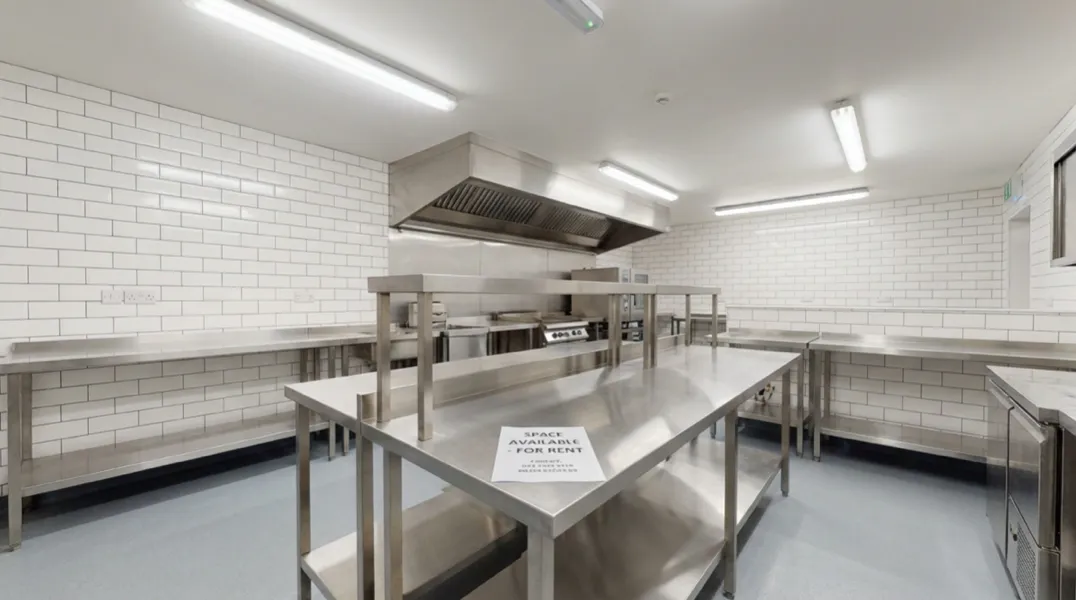
Ghost Kitchen for Rent: UK Costs and Providers
Find the right ghost kitchen for rent in the UK. Compare providers like Karma Kitchen, Deliveroo Editions and Dephna, with costs from £800 to £4,000/month.
 Tutorials
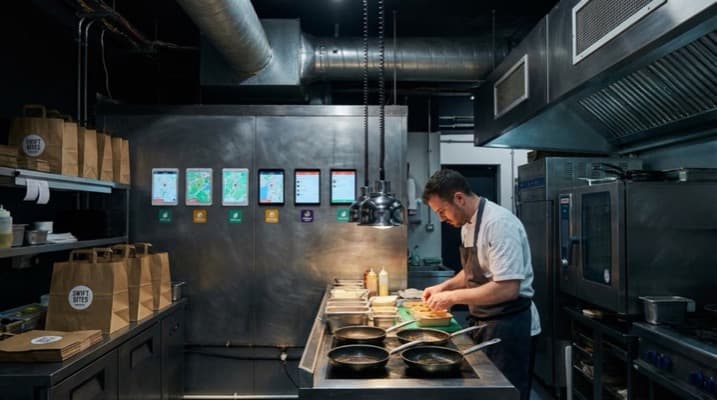
Dark Kitchen: Set Up and Run One in the UK
Learn how to set up and run a dark kitchen in the UK. Covers equipment, delivery platforms, food safety, staffing, and managing virtual brands.
 Industry Insights
What Is a Ghost Kitchen? The UK Business Guide
Discover what a ghost kitchen is, compare four types, weigh costs against traditional restaurants and decide if this model fits your UK business.