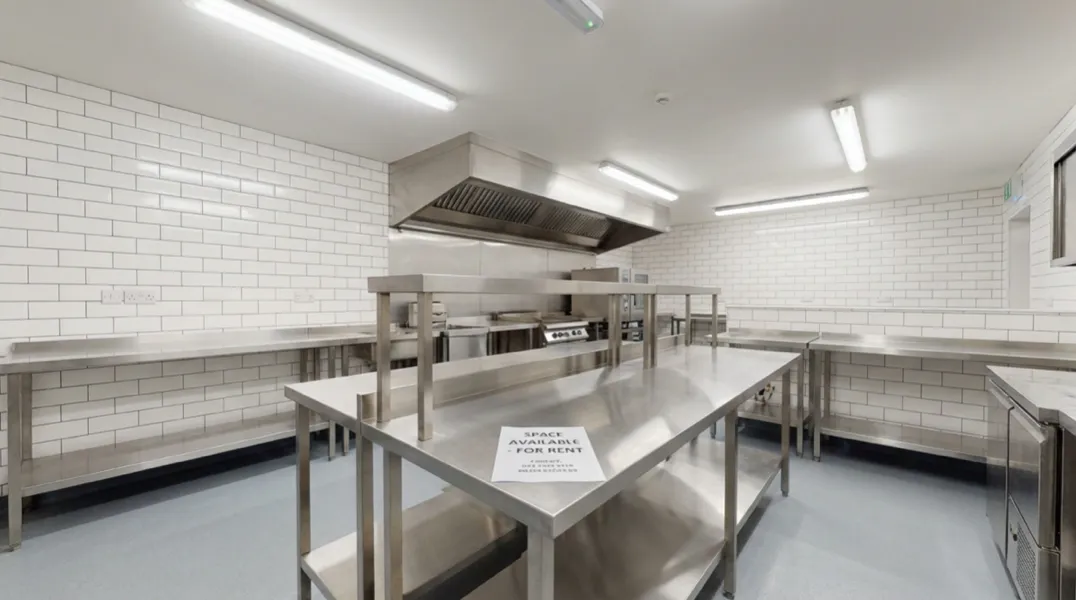
Find the right ghost kitchen for rent in the UK. Compare providers like Karma Kitchen, Deliveroo Editions and Dephna, with costs from £800 to £4,000/month.
You've been running the numbers for weeks. A traditional restaurant lease in London wants £50,000 upfront, a 15-year commitment, and a fit-out budget that makes your eyes water. Meanwhile, your delivery orders are climbing and you know the food is good enough to sell more. You just need a kitchen, not a dining room.
A ghost kitchen for rent in the UK typically costs £800 to £4,500 per month depending on location and provider. Major operators like Karma Kitchen, Dephna, and Deliveroo Editions each use different pricing models, from fixed monthly rent to commission-based arrangements with no upfront cost.
Info
Finding a ghost kitchen for rent in the UK could cut your startup costs by more than half, but the rental market is fragmented, pricing is opaque, and choosing the wrong provider locks you into a contract that quietly drains your margins.
This guide covers:
- Where to find ghost kitchen for rent spaces across the UK
- What each provider actually charges
- What is included versus what you pay extra for
- How to evaluate a space before signing anything
Related Reading
What You'll Learn
- The main UK ghost kitchen providers and how their models differ
- Realistic monthly costs for London versus regional cities
- What is typically included in rent and what catches people out
- Lease terms, notice periods, and contract red flags
- A checklist for evaluating any ghost kitchen before committing
Is a Ghost Kitchen for Rent Worth It?
First, let's answer the fundamental question. A ghost kitchen for rent is worth it if your business model centres on delivery and you want to avoid the overhead of a customer-facing premises.
Info
Ghost kitchens typically reduce fixed costs by around 50% compared to traditional restaurants because you skip prime high-street frontage, dining room fit-out, and most front-of-house staff.
For example, a dark kitchen startup in the UK might cost between £13,000 and £65,000, compared with £100,000 or more for a traditional restaurant. A curry house owner in Birmingham renting a Dephna unit at £2,000 per month could break even within 6 to 12 months if they reach £8,000 to £10,000 in monthly revenue.
If you're thinking "that still sounds like a lot of money," you're not wrong. The key difference is flexibility. Ghost kitchen for rent leases typically run 3 to 12 months, not 15 years.
Pro Tip
If a concept does not work, you can pivot or walk away without losing a six-figure deposit.
That said, if you're only doing a handful of delivery orders per week, a shared commercial kitchen hired by the hour often makes more sense. The model rewards volume. Ask yourself honestly: would you sign a 12-month lease based on 10 orders a week?
UK Ghost Kitchen for Rent Providers Compared
Now that you understand the economics, here's the next question: which ghost kitchen for rent provider actually suits your situation?
The UK rental market has several established operators, each with a different pricing model and target customer.
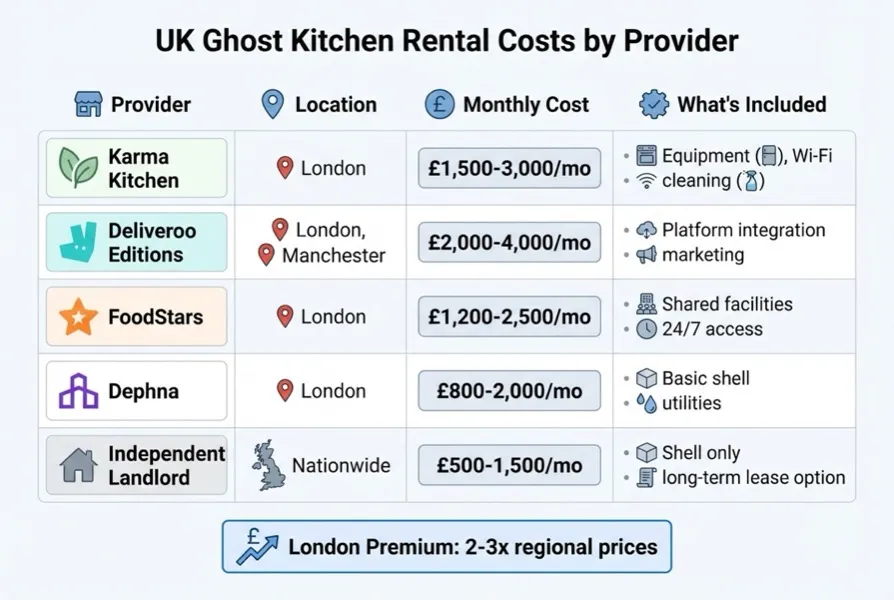
UK ghost kitchen providers comparison
Key differences: Fixed monthly rent (predictable costs), commission-based (no upfront fees), or marketplace (negotiated terms). See the table below for details.
| Provider | Monthly Cost | Minimum Term | Locations | What's Included | Suited For |
|---|---|---|---|---|---|
| Karma Kitchen | From £2,600 + VAT | 6 months | 6 London sites | Fitted unit, ventilation, drainage, Wi-Fi | Established delivery brands scaling up |
| FoodStars (CloudKitchens) | From £2,500 + utilities | 12 months | 17 UK locations (14 London, plus Birmingham, Leeds, Manchester) | Fitted kitchen, order management tech | Multi-brand operators wanting integrated tech |
| Dephna | From £2,000 + VAT + utilities | 3 months | Multiple London sites | Ventilation, drainage, waste collection, 24-hour access | Startups testing concepts short-term |
| Deliveroo Editions | No rent (commission-based) | Varies | Select UK cities | Full kitchen unit, Deliveroo platform integration | Brands wanting zero upfront kitchen costs |
| Oya | Varies by listing | Flexible | London and UK-wide | Marketplace model, varies by landlord | Those wanting to compare multiple spaces |
| ShareThere | Varies by listing | Flexible | 6,000+ vendors UK-wide | Marketplace connecting food businesses with spaces | Independent food businesses needing flexibility |
Best Starting Point
For most UK restaurant owners exploring a ghost kitchen for rent, Dephna often offers the best starting point thanks to its 3-month minimum term, reasonable London pricing, and 24-hour access. If you need regional coverage, FoodStars has the widest UK footprint.
Understanding the Pricing Models
Ghost kitchen for rent providers use three distinct pricing approaches.
Fixed monthly rent is the most common model. Karma Kitchen, FoodStars, and Dephna all charge a set monthly fee for a dedicated unit. You pay whether you cook one order or one thousand.
For instance, a street food brand specialising in loaded fries might rent a Karma Kitchen unit at £2,600 per month. Whether they fulfil 200 or 800 orders, the rent stays the same.
High volume makes the per-order cost negligible. Low volume makes it punishing.
Commission-based is Deliveroo Editions' approach. There is no rent to pay. Instead, Deliveroo takes a commission on every order. This eliminates upfront costs but means your margins shrink as revenue grows. It works well for brands testing a new area, but you still cover food costs, staff, and packaging.
Marketplace listings through platforms like Oya and ShareThere connect you with individual landlords offering cloud kitchen spaces. Pricing varies widely, and terms are negotiated directly. This route suits operators who want more control over their setup but are comfortable doing their own due diligence.
How Much Does a Ghost Kitchen for Rent Cost by Region?
With that pricing context in mind, now the question is where. Location is often the single biggest factor in what you will pay for a ghost kitchen for rent.
London commands a significant premium, but regional cities offer genuine value for operators willing to build delivery coverage outside the capital.
| Region | Monthly Rent Range | Typical Unit Size | Notes |
|---|---|---|---|
| Central London (Zone 1-2) | £2,500-£4,500 | 200-500 sq ft | Highest demand, shortest delivery radii |
| Outer London (Zone 3-6) | £1,500-£3,000 | 300-600 sq ft | Better value, still strong delivery coverage |
| Manchester | £850-£1,500 | 300-500 sq ft | Growing market, significantly cheaper than London |
| Birmingham | £800-£1,200 | 300-500 sq ft | Emerging ghost kitchen hub |
| Leeds | £800-£1,200 | 300-500 sq ft | FoodStars presence, lower competition |
| Other regional cities | £600-£1,000 | Varies | Limited dedicated providers, more independent landlords |
The savings outside London extend beyond rent. Utilities, labour, and ingredient costs are typically 20% to 30% lower in regional cities.
For example, a pizza delivery brand renting in Manchester at £1,200 per month could save over £15,000 annually compared to the same operation in central London.
If you're reading this thinking "I can't afford London rates," the honest answer is that many successful ghost kitchen operators deliberately choose outer London boroughs like Tottenham, Croydon, or Barking. Delivery apps care about radius, not prestige.
What's Included vs What You Pay Extra For
However, finding a ghost kitchen for rent at a price that looks reasonable is only half the story. Here's where operators regularly get caught out. The headline monthly figure rarely tells the full story. Understanding hidden costs before signing prevents nasty surprises three months in.
Typically Included in Rent
- Fitted kitchen unit with extraction and ventilation
- Drainage and basic plumbing
- Shared loading and waste collection areas
- Building insurance (not contents or liability)
- Basic Wi-Fi and communal facilities
Typically Charged Separately
| Extra Cost | Typical Range | Notes |
|---|---|---|
| Utilities (gas, electric, water) | £300-£800/month | Metered separately in most facilities |
| Cold storage | £100-£300/month | Essential for any food business |
| Dry storage | £50-£150/month | Often limited in dedicated units |
| Deep cleaning | £100-£200/month | Required for food safety compliance |
| Waste collection | £50-£200/month | Sometimes included, often not |
| Grease trap servicing | £50-£150/quarter | Legal requirement, easily forgotten |
| Contents and liability insurance | £50-£150/month | Your responsibility, not the landlord's |
A ghost kitchen for rent advertised at £2,000 per month can easily reach £2,800 to £3,200 once you add utilities, storage, and cleaning. Always ask for a full cost breakdown before comparing providers. The cheapest headline rate is not always the cheapest total cost.
Utility Bills
Request utility bills from the provider for a comparable unit over the last three months. Seasonal variation in gas and electric can swing costs by £200 or more between summer and winter.
Ghost Kitchen for Rent: Lease Terms and Contract Red Flags
This is the part most people skip until it is too late. Ghost kitchen leases are generally more flexible than traditional commercial property agreements, but "flexible" does not mean "without risk." Here is what to watch for.
Standard Lease Terms by Provider
- Dephna: 3-month minimum, notice periods agreed case-by-case
- Karma Kitchen: Typically 6-month minimum
- FoodStars (CloudKitchens): 12-month minimum contracts
- Deliveroo Editions: Varies by location and agreement
What to Check Before Signing
Break clauses. Can you exit early if the concept fails? Some contracts include a break clause at 6 months. Others lock you in for the full term with no exit.
Rent review mechanisms. Does the rent increase annually? By how much? Fixed increases of 3% to 5% per year are common. Open-market reviews give the landlord more power.
Deposit requirements. Expect to pay 1 to 3 months' rent as a deposit. Clarify what conditions must be met to get it back.
Exclusivity clauses. Some providers restrict you from operating similar brands in competing facilities. Read the fine print carefully.
Maintenance responsibilities. Who fixes the extraction system when it breaks? Equipment maintenance clauses vary significantly between providers.
If you're only comparing headline rent you'll always lose to the hidden costs that compound over a 12-month lease. Total cost of occupancy is the only number that matters.
If you can't tell whether maintenance costs bring savings or just surprises, that's usually a sign the contract needs closer scrutiny. Get a solicitor to review any ghost kitchen for rent agreement before signing. A £500 legal review can prevent a £5,000 dispute.
Are Ghost Kitchens Legal in the UK?
Yes, ghost kitchens are legal in the UK. However, you must meet the same food safety and business registration requirements as any other food business. The regulatory framework is straightforward, even if the planning situation is less clear.
For instance, a chef launching a Thai delivery brand from a ghost kitchen for rent in Manchester still needs every registration and certificate that a traditional restaurant requires. The kitchen is different. The legal obligations are identical.
Mandatory Requirements
- Food business registration with your local authority at least 28 days before trading (Food Standards Agency requirement)
- Food Hygiene Rating following inspection by your local Environmental Health team
- Level 2 Food Hygiene certificate for anyone handling food
- HACCP-based food safety management system documenting your processes
- Allergen information available for all menu items
If you're thinking "the ghost kitchen provider handles all this," they do not. Registration and compliance are your responsibility as the food business operator, regardless of who owns the building.
Do You Need Planning Permission for a Ghost Kitchen?
Planning permission for ghost kitchens is a grey area. There is no standard approach among UK local planning authorities and precedent remains limited. Most purpose-built ghost kitchen for rent facilities already have the correct Use Class designation, so if you are renting from an established provider, planning permission is typically their problem, not yours.
If you are converting an existing premises, you may need planning permission depending on the current Use Class and your local authority's interpretation. Contact your council's planning department early. It is free to ask, and getting it wrong can mean enforcement action.
If you only have 30 minutes this week to make progress on finding a ghost kitchen, do this:
- Day 1-2: List your three non-negotiable requirements (budget cap, location radius, minimum unit size)
- Day 3-4: Request pricing from two providers and one marketplace listing
- Day 5-7: Visit at least one space in person and ask for a full cost breakdown including all extras
How to Evaluate a Ghost Kitchen for Rent Before Committing
Next, let's cover the site visit. Not all ghost kitchens are created equal. A space that looks perfect on a provider's website can disappoint in person. Here is what to check during a site visit.
The Evaluation Checklist
Extraction and ventilation. Run the system during your visit. Is it powerful enough for your cooking style? A wok kitchen needs significantly more extraction than a salad prep operation.
Delivery driver access. Where do drivers collect orders? A smooth handoff process keeps your ratings high. Poor access means longer wait times, which means lower ratings, which means fewer orders.
Utilities infrastructure. Check gas supply capacity, electrical load rating, and water pressure. Under-specced utilities limit what you can cook and how fast you can produce.
Storage adequacy. Measure the fridge, freezer, and dry storage space. If your menu needs more storage than the unit provides, you will be paying for off-site space from day one.
Neighbours. What other operators share the facility? Late-night operators next to an early-morning prep kitchen creates noise and access conflicts.
Technology integration. Does the facility support your preferred delivery platforms? Some providers are integrated with specific apps. Others leave tech setup entirely to you.
If you're only listing on one delivery platform you'll always lose to competitors who appear on Deliveroo, Uber Eats, and Just Eat simultaneously. Multi-platform presence is not optional for serious delivery operations.
For example, a burger brand visiting a FoodStars unit in east London might discover that the extraction system cannot handle charcoal grilling. That single detail could mean redesigning the entire menu or choosing a different facility. Always cook a test batch during your site visit if the provider allows it.
Questions to Ask the Provider
- What is the total monthly cost including all extras?
- What is the notice period and are there break clauses?
- Who is responsible for equipment maintenance?
- What happens if there is a power cut or equipment failure?
- Can I see the last three months of utility bills for a comparable unit?
- What is the food hygiene rating history for this facility?
Finding a Ghost Kitchen for Rent Near You
Beyond the major providers, here's how to find available ghost kitchen for rent spaces in your area.
Online marketplaces like Oya and ShareThere list hundreds of commercial kitchen spaces across the UK. Filter by location, size, and pricing model. These platforms often include independent landlords not found through major operators.
Local authority commercial property listings sometimes include kitchen spaces, particularly in enterprise zones or regeneration areas where councils actively encourage food businesses.
Delivery platform partnerships. Deliveroo Editions operates by invitation in some areas. If you already have a strong Deliveroo presence, contact their partnerships team directly.
Property agents specialising in food premises. Agents like Savills and CBRE have commercial kitchen specialists who can source off-market opportunities, particularly useful in competitive London boroughs.
For instance, a vegan meal prep company in Bristol found their ghost kitchen for rent through a local council enterprise zone listing at £700 per month, well below the rates charged by national providers. Off-market options exist in most cities if you look beyond the obvious platforms.
Pro Tip
Good ghost kitchen for rent spaces often move quickly. Operators who act within a week of finding a suitable space are far more likely to secure their preferred unit than those who spend months comparing.
Once you have secured a space, filling it with orders comes down to marketing, so it is worth working out how much time the right marketing tools could save you before you try to juggle everything by hand. For a deeper understanding of how ghost kitchens fit into the broader delivery landscape, our guide on how to start a ghost kitchen covers the full setup process from business plan to first order. If you are still deciding whether the model suits your restaurant business plan, start there.
Frequently Asked Questions
How much does it cost to rent a ghost kitchen in the UK?
Monthly costs range from £800 to £1,500 in regional cities like Manchester and Birmingham, up to £2,500 to £4,500 in central London. Add £300 to £800 per month for utilities, storage, and cleaning on top of the base rent. Commission-based models like Deliveroo Editions have no monthly rent but take a percentage of each order.
Can I rent a ghost kitchen by the hour?
Yes, shared commercial kitchens are available from around £15 per hour in cities like Manchester, rising to £45 per hour or more in central London. Hourly rental suits low-volume operators, catering businesses, or anyone testing a concept before committing to a dedicated unit.
What is the difference between a ghost kitchen and a dark kitchen?
The ghost kitchen for rent concept is a framework that describes a delivery-only commercial kitchen with no customer-facing dining area. Ghost kitchen, dark kitchen, and cloud kitchen all refer to the same thing. Providers and regions use different terms, but the concept is identical.
Do I need a food hygiene rating to operate a ghost kitchen?
Yes. All food businesses in the UK, including ghost kitchens, receive a Food Hygiene Rating from their local authority following inspection. You must register with your local council at least 28 days before you begin trading (Food Standards Agency).
Can I run a ghost kitchen from home in the UK?
You can operate a food business from a domestic kitchen, but you must register with your local authority and meet the same food safety standards as any commercial operation. Check your home insurance policy and tenancy or mortgage terms, as some restrict commercial use.
Weekly Action
This week, start your ghost kitchen for rent search:
- List your three non-negotiable requirements: budget cap, location radius, and minimum unit size
- Request full pricing from two providers (try Dephna for flexibility or Karma Kitchen for established brands)
- Visit at least one space in person and ask for a complete cost breakdown including utilities, storage, and cleaning
Key Takeaway
If you run a restaurant and want to see how Local Brand Hub can support your marketing, explore our restaurant marketing tools.
Key Takeaway
The UK ghost kitchen for rent market offers genuine flexibility compared to traditional restaurant leases, but smart operators treat the search like any other business decision: systematically and with full visibility of true costs.
- Ghost kitchens typically cut startup and fixed costs by around 50% versus traditional restaurants
- Monthly rent ranges from £800 in regional cities to £4,500 in central London, before extras
- Always calculate total cost including utilities, storage, cleaning, and insurance
- Lease terms range from 3 months (Dephna) to 12 months (FoodStars), with Deliveroo Editions offering commission-only models
- Planning permission is the provider's problem if you rent from an established facility
- Visit any space in person before signing, and get a solicitor to review the contract
The question isn't whether you can afford a ghost kitchen. It's whether you can afford to keep paying for space you don't need.
For restaurants, salons, and local businesses
Need help with your marketing?
We help UK businesses turn social media into real results, not busywork.
Start freeGet More Marketing Tips
Practical marketing tips for UK business owners, straight to your inbox. No spam, unsubscribe anytime.
About the Author
Local Brand Hub
Empowering UK Businesses
Local Brand Hub provides comprehensive business management tools designed specifically for UK local businesses to streamline operations, automate marketing, and grow revenue.
More articlesRelated Articles
 Industry Insights
Cloud Kitchen UK: Regulations, Platforms and Costs
UK cloud kitchen regulations, costs, and platform commissions compared. Deliveroo vs Uber Eats vs Just Eat, FSA registration, and provider options.
 Tutorials
How to Start a Ghost Kitchen: UK Guide
Learn how to start a ghost kitchen in the UK with this step-by-step guide covering registration, licensing, costs, equipment, and launch strategy.
 Tutorials
Dark Kitchen: Set Up and Run One in the UK
Learn how to set up and run a dark kitchen in the UK. Covers equipment, delivery platforms, food safety, staffing, and managing virtual brands.