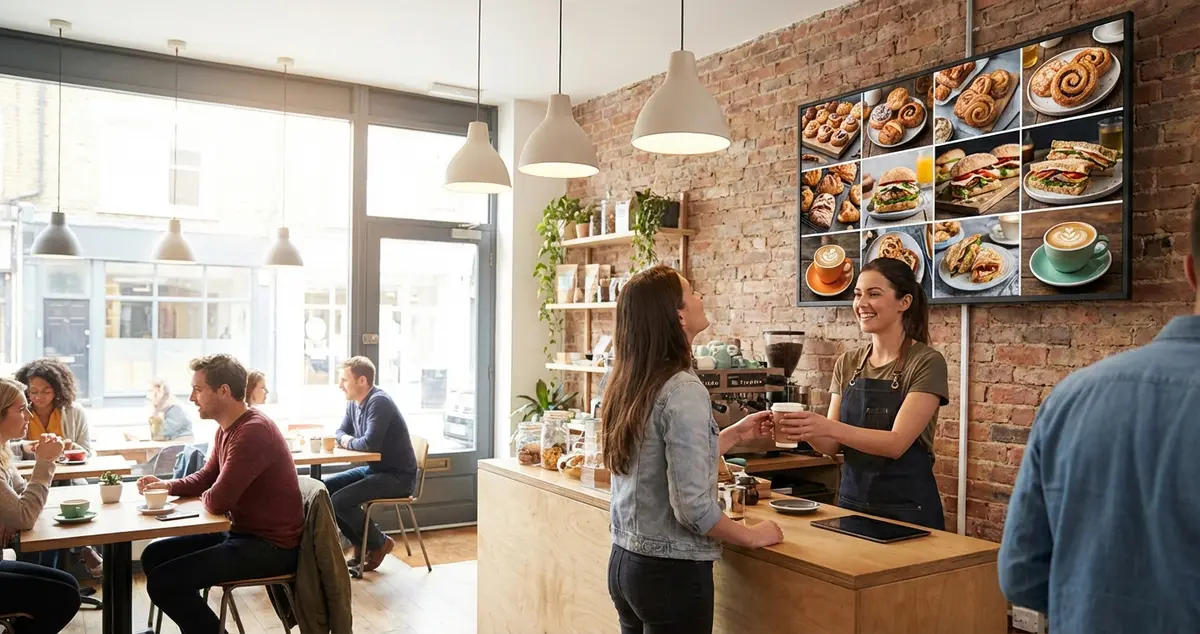
Compare digital menu board costs from £499-£7,000, see 38% sales uplift stats, and learn setup requirements. UK pricing and supplier guide for restaurants.
You are staring at the blackboard. Last month's prices. You have been meaning to update it for weeks, but between 12-hour shifts and being down two staff, it never quite happens. A customer just pointed out your lasagne is still showing £9.95 when it went up to £11.50 two weeks ago.
If you are thinking "updating my menu board shouldn't be this stressful", you are right. Static boards become a constant low-level frustration. Wrong prices. Outdated specials. Reprinting costs that add up. If you are only updating your board when it becomes embarrassingly wrong, you will always lose to competitors who treat their displays as a sales tool.
Digital menu boards for restaurants solve this problem. One update from your laptop. Every screen changes instantly. But is the investment worth it for your restaurant?
The global digital menu board market reached £1.9 billion in 2025, growing at 14.1% annually (MarketIntelo, 2025). More independent UK restaurants are making the switch.
This guide breaks down the real numbers: costs, returns, and what actually works.
What You'll Learn
- UK pricing for hardware, software, and installation (from £499 to £8,400+)
- Performance data showing 38% sales uplift on promoted items
- Setup checklist including POS integration options
- Common mistakes that waste money and how to avoid them
- Decision framework to determine if digital boards suit your business
For example, a takeaway in Manchester might start with a single 43-inch screen behind the counter at around £2,500 total cost. A gastropub in Bristol with multiple dining areas might invest £15,000+ across six screens with central management.
Info
Digital Menu Board Costs: UK Pricing Guide
So, what will this actually cost? First, let's break it down by component.
The answer depends on screen size, display quality, and software requirements. Here are the realistic UK figures.
Hardware Costs
First, consider the screens themselves. Commercial displays designed for restaurant use differ from consumer televisions. They run longer hours, offer higher brightness, and include commercial warranties.
| Screen Size | Price Range (£) | Typical Use Case |
|---|---|---|
| 32-48 inches | £2,000-£4,500 | Counter displays, small takeaways |
| 55-65 inches | £4,000-£7,000 | Main menu boards, drive-thru |
| Entry-level options | From £499 | Testing, simple setups |
Note: Prices represent typical UK supplier ranges. Actual costs vary by brand and features.
LED displays cost more than LCD but offer better image quality. For a fish and chip shop testing digital menus, entry-level options from UK suppliers like Impact Digital Signage start around £499 before VAT.
Installation and Setup
Beyond the hardware, you will need professional fitting. Professional installation adds £500 to £2,000. Costs depend on:
- Number of screens being fitted
- Wall or ceiling mounting complexity
- Cabling runs and power access
- Network connectivity requirements
Budget £1,000 to £3,000 for initial setup including configuration.
Software Subscription
In addition to hardware, you will pay ongoing software fees. Most digital menu technology operates on a monthly subscription model. You typically pay per screen or per location for:
- Cloud-based content management
- Template libraries and design tools
- Remote updates from any device
- Technical support
Expect ongoing monthly costs. The reality for most restaurants is that software costs get forgotten in initial quotes. Request detailed quotes showing year-one and year-two totals before committing.
Total Investment Example
To put this together, here is a realistic first-year budget. For a small restaurant with two 43-inch displays:
| Cost Component | Estimate (£) |
|---|---|
| 2 x 43-inch commercial displays | £4,000-£5,000 |
| Professional installation | £800-£1,200 |
| Initial setup and configuration | £500-£1,000 |
| Annual software subscription | £600-£1,200 |
| First year total | £5,900-£8,400 |
That is a significant investment. Here is what the data shows about returns.
Sales Impact: What the Numbers Show
With costs covered, next let's turn to returns. Now for the question that matters: does this actually increase revenue?
The performance data from restaurants using digital menu boards is compelling. According to industry research cited by In Ur Face Media (2026):
- 38% uplift in sales for promoted items compared to static boards
- 25% increase in sales on time-limited deals versus printed menus
- 10-15% improvement in customer recall of menu items
These figures explain why restaurant leaders are investing in digital tools. According to UKHospitality industry reports, technology adoption is a key priority for improving operations.
Why Digital Boards Drive Sales
The sales impact comes from several clear factors.
Visual appeal matters. Motion and high-quality imagery grab attention. A curry house in Birmingham using video clips of sizzling dishes reports customers ordering items they had never tried before.
Dayparting works automatically. Display breakfast items at 7am, lunch specials at noon, dinner options from 5pm.
Real-time promotions shift stock. Launch a promotion when you need to move ingredients before they spoil.
Upselling becomes visual. A burger restaurant in Leeds added "make it a meal" prompts and increased combo sales.
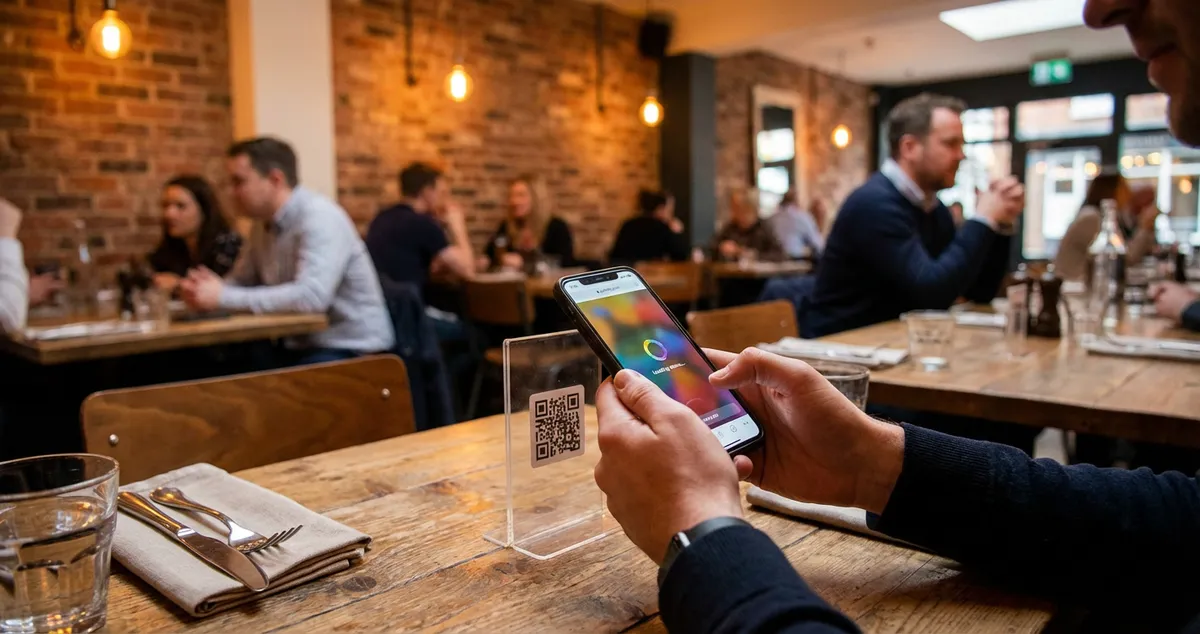
If you already use QR code menus for tableside ordering, digital boards create a consistent visual experience throughout your restaurant.
Operational Benefits Beyond Revenue
Beyond the sales figures, digital boards offer practical operational advantages.
Consistency Across Locations
For multi-site operators, this benefit is significant. A UK chicken franchise using remote updates reduced menu inconsistencies across 100+ stores. Updates execute in minutes across every location.
If you cannot tell whether your Nottingham branch is showing the same prices as your Leicester branch, that is usually a sign your current system needs upgrading.
Compliance and Risk Reduction
Equally important is regulatory compliance. If you are thinking "I already struggle to keep the allergen folder updated", this solves that problem. Allergen information, pricing accuracy, and promotional terms need regular updates. Manual processes create compliance risks. Digital systems allow immediate corrections when regulations change.
Staff Time Savings
Your team spends less time explaining specials. Clear menus reduce repetitive questions. During the Saturday rush, that time adds up. A pizza restaurant in Glasgow reported their counter staff answer fewer questions about specials since installing digital boards behind the till.
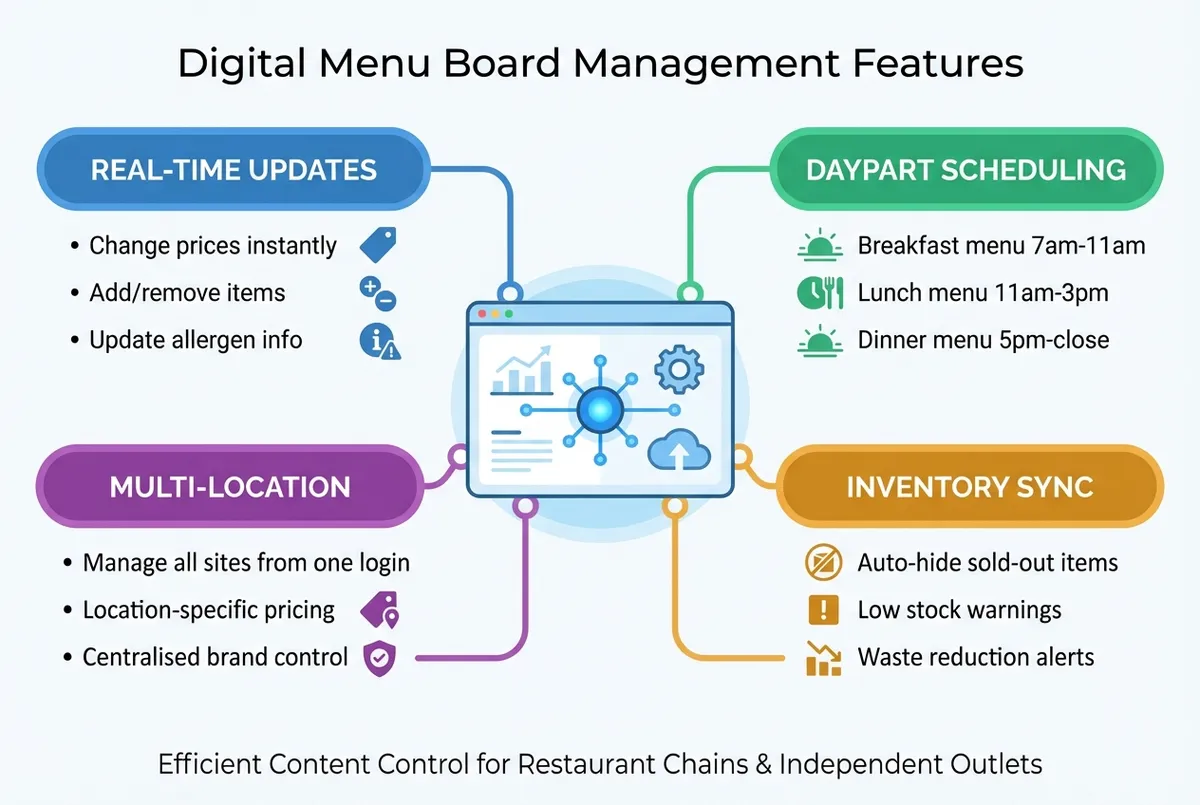
A typical digital menu board content management dashboard
Inventory Flexibility
Run out of a popular dish mid-service? Remove it from displays immediately. Received fresh produce? Feature it as today's special within minutes.
Why This Matters
A cafe owner in Edinburgh described removing an 86'd item during Friday service without any customer confusion. With a static board, she would have been writing "SOLD OUT" notes that looked unprofessional.
Setup Requirements and Integration
Now that you understand the benefits, here is what you actually need to get started. A takeaway owner in Manchester put it well: "I wish someone had told me about the network requirements before the installer arrived."
Hardware Checklist
- Commercial-grade displays rated for 12-16 hours daily use
- Media player (built-in or external) to run content
- Mounting hardware suitable for your walls or ceiling
- Network connectivity (wired preferred, WiFi acceptable)
- Power outlets positioned for clean cable management
Software Requirements
Look for content management systems offering:
- Template-based design for quick updates
- Scheduling for automatic daypart changes
- Remote access to update from your phone
- Multi-location management if needed
POS Integration
Some systems integrate with your point-of-sale to:
- Automatically sync pricing changes
- Remove out-of-stock items
- Display real-time wait times
Integration adds complexity but eliminates double-entry errors. If you are thinking "that sounds like more hassle than it's worth", for a single location with stable pricing, you may be right. But if you are considering a self-ordering kiosk later, choose a platform supporting both.
Common Mistakes to Avoid
Info
Related: Digital Menu Screens
With the basics covered, let's look at what goes wrong. After speaking with restaurant owners who have implemented digital boards, clear patterns emerge in unsuccessful deployments.
Mistake 1: Buying Consumer TVs
If you are only buying cheap consumer televisions, you will always lose to restaurants using proper commercial displays. Consumer TVs typically:
- Cannot run extended hours without overheating
- Lack brightness for well-lit environments
- Void warranties under commercial use
- Fail after 12-18 months in restaurant conditions
The initial savings disappear with replacement costs. If you can't tell whether a screen is commercial-grade just by looking at specs, that's usually a sign the supplier isn't being transparent about its limitations.
Mistake 2: Underestimating Content Needs
Another common error involves content planning. The screen is only as good as what you show. Budget for:
- Professional food photography (£200-£500 for a full menu shoot)
- Template design or customisation
- Time for regular content updates
A beautiful screen showing blurry phone photos does more harm than good.
Mistake 3: Wrong Placement
Placement is often overlooked but crucial. Position matters more than screen size. Consider:
- Viewing distance and angle from the queue
- Lighting conditions (avoid direct sunlight)
- Customer flow and natural eye lines
- Mounting height for comfortable viewing
Mistake 4: Set and Forget
Perhaps the biggest mistake is neglecting updates. Digital boards require active management. Restaurants updating content weekly see better results than those who install screens and never change them.
The reality is, if you install a digital board and show the same content for six months, you have just bought an expensive static sign. If you are reading this thinking "I barely have time to post on Instagram", content management might be your biggest hurdle, not the technology itself.
Is a Digital Menu Board Right for You?
With all this information, here is the honest assessment. Digital menu boards deliver the strongest ROI for restaurants that:
- Update menus or specials frequently
- Want to promote high-margin items more effectively
- Have multiple locations needing consistent branding
- Currently struggle with static board logistics
- Plan to expand digital menu screens across more areas
They may not suit restaurants that:
- Rarely change their menu
- Have a fixed, simple offering
- Cannot commit to regular content updates
- Lack budget for quality implementation
If you are thinking "this sounds expensive and complicated", that is a fair concern. The reality for most restaurant owners is that technology decisions feel overwhelming when you are already stretched thin. The key is matching the investment to your actual needs, not buying more technology than you will use.
Minimum Viable Approach
So, where do you start? If you only have 30 minutes a week to spend on this, here is a realistic path forward:
Week 1-2: Research UK suppliers. Request quotes from three providers. Ask about:
- Hardware warranty terms
- Monthly software costs
- Support response times
- Content template options
Week 3-4: Audit your menu photography. If quality is low, budget £300-£500 for professional shots before investing in screens.
Week 5-6: Start with one screen in your busiest area. Test for 60 days before expanding. For instance, a Thai restaurant in Oxford started with a single 43-inch screen near the counter, tracked till data for two months, then added two more screens in the dining area after seeing a 15% increase in promoted item sales.
Key Takeaway
Key Takeaway
Digital menu boards for restaurants cost from £499 entry-level to £7,000+ for larger commercial displays, with documented sales uplifts of 38% on promoted items. The key to success is quality content, strategic placement, and regular updates, not just the hardware itself. For most UK independents, start with one screen in your busiest area and test for 60 days before expanding. Budget for professional food photography alongside the screens, as blurry phone photos on a beautiful display do more harm than good.
If you run a restaurant and want to see how Local Brand Hub can support your marketing, explore our restaurant marketing tools, including menu and offers management that keeps every price and special current.
This Week's Action Plan
Monday: Count how many menu items have incorrect prices on your current board.
Tuesday: Photograph your current setup and note lighting conditions.
Wednesday: Request quotes from two UK digital signage suppliers.
Thursday: Ask a fellow restaurant owner about their experience with digital boards.
Friday: Review quotes and compare first-year total costs.
For UK restaurant owners
Build Your Restaurant's Digital Presence
LocalBrandHub helps UK restaurants manage social media, local SEO, and marketing from one dashboard, so your digital presence matches your digital menu investment.
Start FreeGet More Marketing Tips
Practical marketing tips for UK business owners, straight to your inbox. No spam, unsubscribe anytime.
About the Author
Local Brand Hub
Empowering UK Businesses
Local Brand Hub provides comprehensive business management tools designed specifically for UK local businesses to streamline operations, automate marketing, and grow revenue.
More articlesRelated Articles
 Marketing Tips
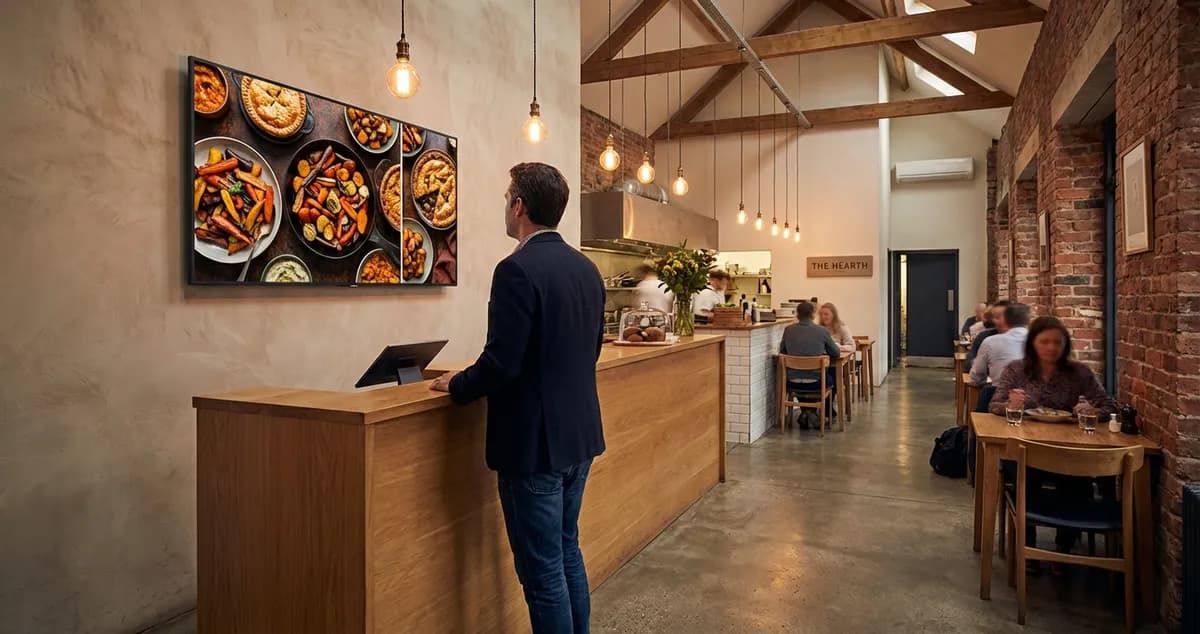
Digital Menu Screens: A Practical Guide for UK Restaurants
Learn how digital menu screens can boost UK restaurant sales by 3-10%. Get realistic costs from £2,000, ROI timelines, and honest UK supplier advice.
 Marketing Tips
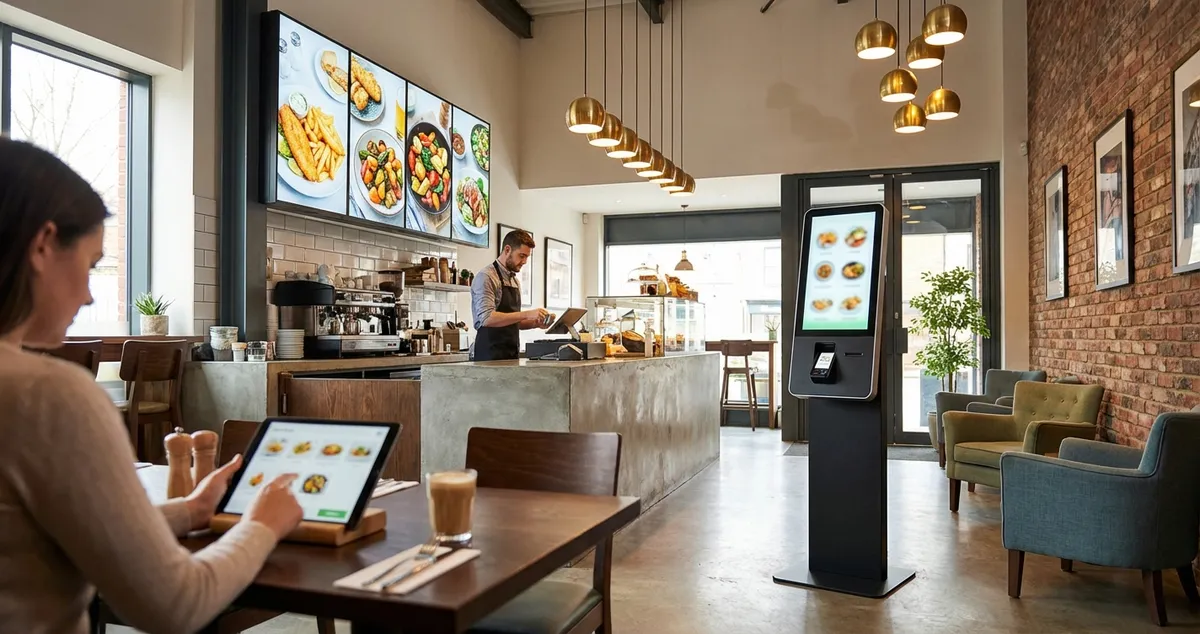
Digital Menu Technology: Guide for UK Restaurants
Digital menu technology boosts sales by 3-9% for UK restaurants. Compare QR codes, digital boards, screens and kiosks with costs and ROI.
 Marketing Tips
QR Code Menus: A Complete Guide for UK Restaurants
Learn how QR code menus can streamline restaurant operations, address customer concerns, and boost efficiency. Practical tips for UK owners.