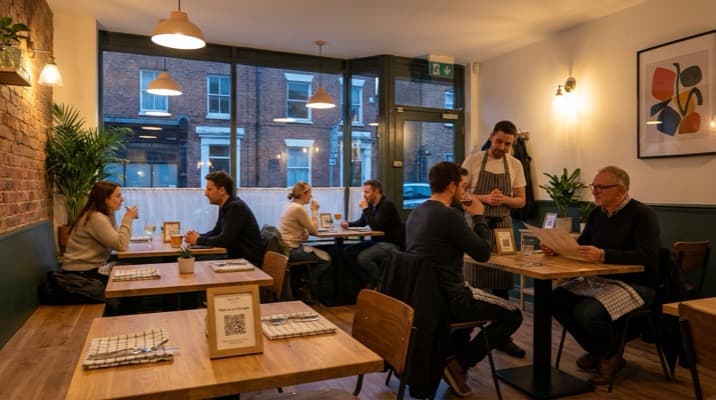
Week-by-week plan to promote a newly opened restaurant. Covers Google reviews, social media, local partnerships, and more.
The grand opening went well: decent crowd, a few local faces, some nice photos for Instagram. Then comes Tuesday afternoon. Six covers. The phone isn't ringing. Nobody told you that opening a restaurant is the easy part; filling it every night afterwards is the real job.
With 71% of UK customers checking reviews before booking a table (NowBookIt, 2025), an empty Google profile means you're invisible to most of them. Here's how to promote a newly opened restaurant in your first 30 days so those quiet Tuesdays become the exception rather than the rule.
Info
Related: Restaurant Grand Opening Marketing, your complete hub for planning a successful launch
What You'll Learn
- How to set up your Google Business Profile properly in week one so local customers can actually find you
- A review generation strategy that builds social proof fast without being pushy
- Which local partnerships deliver real covers, not just goodwill
- How to work with food bloggers and influencers on a budget that won't bankrupt your first month
- A week-by-week plan you can follow even when you're exhausted from a 12-hour shift
Week 1: Get Found
Knowing how to promote a newly opened restaurant starts with visibility, not virality. Your first week is about making sure the people already looking for somewhere to eat can find you. That means getting the basics right before anything else. A simple local SEO checklist walks you through those basics in the right order.
Google Business Profile: Your Most Important Free Tool
If you do nothing else this week, claim and complete your Google Business Profile. According to research from ChowNow, 62% of customers turn to Google when looking for a place to eat (ChowNow, 2025). If your profile is empty or incomplete, you're invisible to the majority of potential diners.
Complete these within your first three days:
- Business name, address, phone number: match these exactly to your signage and website
- Opening hours: including any soft opening or reduced hours in your first week
- Menu: upload your full menu with prices in pounds
- Photos: add 20-30 high-quality images of your interior, exterior, dishes, and team. Restaurants with photos receive significantly more engagement than those without (Google, 2025)
- Business description: mention your cuisine, location, and what makes you different
- Attributes: mark relevant options like outdoor seating, wheelchair access, reservations, and Wi-Fi
For example, a newly opened Thai restaurant in Bristol might complete their profile on day one and within 48 hours start appearing in "Thai restaurants near me" searches. Without the profile, those searches return every competitor except them.
Info
Related: Marketing for new restaurants, our complete 90-day launch marketing guide
Your First Online Reviews
The first step in how to promote a newly opened restaurant effectively is getting reviews early. Don't wait for reviews to happen organically. They won't, at least not fast enough. Your grand opening and soft opening guests tend to be a strong source of early reviews because they've already had a positive experience and they want you to succeed.
Send a personal follow-up message within 24 hours to everyone who attended your opening events:
- Thank them for coming
- Tell them you'd love their honest feedback
- Include a direct link to your Google review page
A personal text or WhatsApp message from the owner outperforms a generic email every time.
If you're thinking "I don't want to seem desperate", you're not. You're a new business asking satisfied customers to share their experience. That's normal. What's desperate is having zero reviews three weeks after opening while the pizzeria down the road has 200.
Local Press Follow-Up
You likely sent press releases before your opening. Chase them up. Journalists receive hundreds of pitches; yours might have been buried.
Knowing how to promote a newly opened restaurant to journalists makes the difference between coverage and silence. A short, friendly follow-up email converts far better than the original press release.
Include in your follow-up:
- One or two professional photos of your restaurant interior and signature dish
- A specific invitation to visit for a complimentary meal within the next fortnight
- A brief personal note about why you opened: journalists want human stories
Target your local newspaper, regional food magazines, and community newsletters. Local media coverage in your first week creates a wave of awareness that social media alone cannot match.
Social Media: Start a Rhythm
Post three to four times per week during your first month (Sprout Social, 2025). This frequency builds visibility without overwhelming you during an already chaotic opening period.
Schedule posts in advance
Use a free tool like Meta Business Suite. Batch-create a week's worth of content on a quiet Monday morning and schedule it to publish automatically.
Week 1 posting plan:
| Day | Content Type | Example |
|---|---|---|
| Monday | Behind-the-scenes | Kitchen prep, team photo, "here's what we're making today" |
| Wednesday | Best dish | Close-up food photo with a short story about the dish |
| Friday | Weekend invitation | "Tables still available this Saturday, book via the link in bio" |
| Sunday | Customer moment | A happy table (with permission), a thank-you to guests |
Don't overthink production quality. Authenticity outperforms polish in the first month. A shaky phone video of your chef plating a signature dish gets more engagement than a professionally shot image that looks like stock photography. For a deeper dive into content strategy, see our guide to restaurant social media marketing.
Week 2: Build Social Proof
By week two, you should have a handful of reviews and a few social posts live. The next step in learning how to promote a newly opened restaurant is building the kind of social proof that turns curious browsers into actual bookings.
Review Generation Strategy
The number you're aiming for: 20 or more Google reviews by the end of month one. That sounds ambitious, but it's achievable if you make it easy for customers to leave feedback.
Three methods that work together:
QR codes on receipts or table cards: link directly to your Google review page, not your homepage. Print a simple card that says "Enjoyed your meal? Tell us on Google" with a QR code. Place it with the bill.
Follow-up emails: if you collect email addresses through your booking system, send a thank-you email within 24 hours with a review link. Restaurants using structured welcome email sequences see 50-60% open rates compared to standard marketing campaigns (FoodHub for Business, 2025).
In-person asks: train your front-of-house team to mention reviews naturally during service. "If you enjoyed tonight, we'd really appreciate a Google review; we're brand new and every one helps." Most people are happy to help when asked directly.
Respond to every review within 24 hours. This isn't optional.
- 82% of diners consider review responses when choosing where to eat (RightResponse AI, 2024)
- 67% of diners expect restaurants to reply to their reviews
- A thoughtful reply to a negative review reassures 58% of consumers about quality
Generic responses disappoint a third of diners. Take two minutes per review. Make it personal. Mention something specific from their visit.
If you're only collecting reviews passively you'll always lose to competitors who ask for them systematically. The difference between a restaurant with 5 reviews and one with 50 isn't quality: it's strategy.
Info
Why this matters: Review velocity, how quickly you accumulate reviews, is a ranking signal for Google's local algorithm. A newly opened restaurant that collects 20 reviews in its first month signals relevance and activity. One that collects 3 reviews over three months looks dormant.
The first 30 days are when you have the most goodwill from guests who want to support your launch. Use that window aggressively.
TripAdvisor: Don't Ignore It
Part of learning how to promote a newly opened restaurant includes TripAdvisor. Claim your listing in week two if you haven't already. While Google dominates local search, TripAdvisor remains influential for UK restaurants, particularly in tourist areas and city centres. The same review generation principles apply: make it easy, ask directly, respond promptly.
Food Photography and User-Generated Content
Your customers are already photographing their food. Make it easy for them to share it:
- Good lighting at tables: if your lighting is too dim for phone cameras, you'll get fewer shares
- A branded hashtag: something simple like #YourRestaurantName that you include on menus and table cards
- Repost customer content: ask permission and share their photos on your own channels. It's free content that builds community
For example, a new seafood restaurant in Edinburgh created a simple "Share your plate" card on each table with their Instagram handle and hashtag. Within three weeks, they had over 40 user-generated posts, each one reaching that customer's entire social network at zero cost.
Week 3: Local Partnerships
Week three is when you start looking beyond your own four walls. If you're figuring out how to promote a newly opened restaurant on a tight budget, the fastest way to fill tables isn't advertising: it's borrowing someone else's audience.
Nearby Business Cross-Promotion
Walk down your high street and introduce yourself to neighbouring businesses. This sounds simple because it is. Most independent businesses are happy to support each other.
The relationships you build during your first month will pay off for years. Here is how to promote a newly opened restaurant through local partnerships:
Partnership ideas that actually work:
- Leave menus or flyers in complementary businesses: hair salons, estate agents, gyms, boutiques
- Offer a discount for employees of nearby businesses: they eat lunch somewhere every day, and it might as well be with you
- Create a reciprocal deal: "Show a receipt from [nearby shop] and get 10% off your meal" while they offer a similar deal pointing back to you
If you're thinking "this sounds old-fashioned", it is. And it works. Digital marketing reaches people scrolling on their phones. Physical partnerships reach people who are already on your street, hungry, and looking for somewhere to eat.
Hotel Concierge Relationships
If there are hotels near your restaurant, visit the concierge desk. Introduce yourself, leave menus, and offer a standing invitation for staff meals. Hotel concierges recommend restaurants dozens of times per week. A personal relationship with the concierge team puts you on their shortlist, and their guests become your customers.
For example, a newly opened Mediterranean restaurant near a city-centre Premier Inn built a relationship with the front desk team by dropping off complimentary starters every Friday. Within a month, the hotel was recommending them to guests as a "local favourite", and those guests arrived already trusting the recommendation.
Local Food Bloggers and Influencers
You don't need celebrity influencers. You need local ones. Micro-influencers with 1,000 to 10,000 followers typically have highly engaged local audiences and more authentic credibility than larger accounts (TheForkManager, 2025).
How to approach them:
- Find them: search Instagram and TikTok for food content tagged in your area. Look for creators who post regularly about local restaurants.
- Make a specific offer: "We'd love to invite you for a complimentary meal for two. No obligation to post, but we'd appreciate an honest review if you enjoy it."
- Don't script their content: authentic reactions perform better than staged posts. Let them photograph what they want and say what they think.
- Budget for it: set aside £200-£400 for influencer meals in your first month. That's two to four complimentary dinners that could each reach thousands of local followers.
That's usually a sign of a restaurant that understands effective marketing: investing in relationships rather than paid advertising during the early days when credibility matters more than reach.
Community Events and Groups
Join your local Facebook community groups. Don't spam them with promotions; contribute genuinely. Answer questions, share useful information, and mention your restaurant only when it's naturally relevant. When someone asks "any new restaurant recommendations?" in a local group with 5,000 members, one genuine reply from a fellow member is worth more than any paid advertisement.
Info
Related: Restaurant events, how to use events to build your customer base
Week 4: Assess and Adjust
You've been open a month. You're exhausted. But understanding how to promote a newly opened restaurant isn't just about the launch: it's about what you do next. This is the most important week because it determines whether your second month repeats the first or improves on it.
Track What's Working
If you haven't been tracking where customers heard about you, start this week.
Pro Tip
A simple question ("How did you find us?") asked at the point of booking or payment gives you data that no analytics dashboard can match.
Review these numbers (as a rule of thumb, track these weekly from day one):
| Metric | Where to Find It | What It Tells You |
|---|---|---|
| Total covers (week by week) | Your booking system or POS | Are numbers growing, flat, or declining? |
| Google review count and average rating | Google Business Profile dashboard | Social proof momentum |
| Social media followers and engagement | Instagram/Facebook insights | Is your content reaching people? |
| Website visits | Google Analytics (free) | Are people finding you online? |
| Repeat customers | POS data or staff observations | Are first-timers coming back? |
Double Down on Winners
Look at your data honestly. If Instagram is driving bookings but your TripAdvisor presence isn't generating traffic, spend more time on Instagram. If the hotel partnership is sending you three tables a week but your leaflet drop generated nothing, stop printing leaflets.
The reality for most independent restaurants: you can't do everything. Pick two or three channels that are working and commit to them properly rather than spreading yourself across ten channels poorly.
For example, a newly opened curry house in Leeds found that their Instagram Reels of the tandoor oven were generating three times more engagement than any other content. They stopped posting generic food photos and focused entirely on behind-the-scenes kitchen content. Bookings from Instagram doubled within two weeks.
Cut What's Not Working
This is harder than it sounds because you've invested time and sometimes money into tactics that aren't delivering. But a promotion that isn't generating covers isn't a promotion: it's a cost.
If your opening month discount voucher generated 50 redemptions but zero repeat visits, that's usually a sign the offer attracted deal-hunters rather than future regulars. Adjust the offer to reward return visits instead: "20% off your second visit within 30 days" targets people who already liked your food enough to come back.
Case Example: A First Month That Worked
Consider a neighbourhood Italian restaurant that opened in Manchester in early 2025. Here is how to promote a newly opened restaurant the way they did it:
- Week 1: The owner completed their Google Business Profile and personally messaged 30 soft opening guests asking for reviews. Result: 18 Google reviews by day seven.
- Week 2: QR code review cards on every table. Result: 35 reviews by day fourteen.
- Week 3: Invited two local food bloggers and partnered with the nearby boutique hotel for cross-referrals.
By day thirty, they had 52 Google reviews, a 4.7-star average, and were appearing consistently in the local pack for "Italian restaurant Manchester." Mid-week covers went from an average of 15 to 38. No paid advertising, just consistent, systematic promotion using every tactic in this guide.
Plan Month Two
The restaurants that succeed in month two are the ones that use data from month one. Based on your first 30 days of data, create a simple plan for what comes next:
- Keep doing: List the two or three tactics that generated actual covers
- Stop doing: List anything that consumed time without results
- Start doing: Pick one new tactic to test: perhaps a lunch offer for local workers, a mid-week event, or a partnership you haven't explored yet
Info
Related: Restaurant advertising, paid promotion strategies for when you're ready to scale
The Tactics That Drive Results
Not every tactic for how to promote a newly opened restaurant delivers equal results. Based on evidence from UK hospitality marketing in 2025 and 2026, these five activities generate the highest return for newly opened restaurants.
The Five Highest-ROI Activities
Google Business Profile optimisation: free, immediate, and reaches 62% of diners actively searching for somewhere to eat (ChowNow, 2025). This is the single highest-ROI activity for any new restaurant.
Systematic review generation: 71% of UK customers check reviews before making a restaurant reservation (NowBookIt, 2025). Twenty reviews with a 4.5+ rating in your first month creates more trust than any advertisement.
Local influencer partnerships: one well-connected food blogger with 5,000 local followers can drive more first-time visits than a month of paid social media advertising, at a fraction of the cost.
Social media consistency: up to 47% of diners use social media to discover restaurants (NowBookIt, 2025). Three to four posts per week, consistently, beats sporadic bursts of content.
Neighbouring business partnerships: zero cost, high trust, and they reach people who are physically near your restaurant and already in a spending mindset.
For most newly opened UK restaurants, Google Business Profile optimisation combined with systematic review generation offers the best return on time invested. These two tactics address the biggest barrier: being invisible to people actively searching for somewhere to eat.
For example, a new brunch spot in Brighton focused exclusively on their Google profile and QR code review cards during their first month. By day 30, they had 28 reviews, a 4.6-star average, and were ranking in the local pack for "brunch Brighton", without any paid advertising.
What This Costs (February 2026 Estimates)
| Tactic | Estimated Cost | Time Investment |
|---|---|---|
| Google Business Profile | Free | 20-30 minutes setup |
| Review generation (QR cards) | £20-£50 for printing | 5 minutes per day |
| Social media posting | Free | 2-3 hours per week |
| Local influencer meals | £200-£400 per month | 1-2 hours for outreach |
| Business cross-promotion | Free | 1-2 hours for introductions |
| Total first-month budget | Under £500 | 5-6 hours per week |
Most of these tactics cost nothing beyond your time. Even the paid elements, printed QR code cards and complimentary influencer meals, are a fraction of what a single paid advertising campaign would cost.
Info
For a newly opened restaurant, this represents some of the lowest-cost, highest-return marketing available.
If you pick just one: complete your Google Business Profile. It's free, takes 20 minutes, and puts you in front of the highest-intent audience: people actively searching for somewhere to eat near you right now.
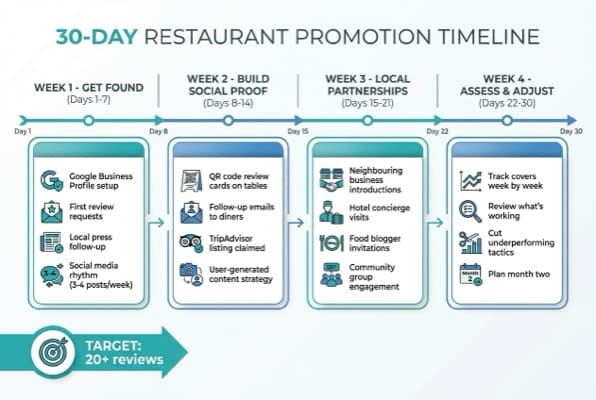
Your 30-day promotion timeline: key activities for each week
If You Only Have 30 Minutes a Week
If you're reading this thinking "I don't have time for all of this", you're not alone. You're running a brand-new restaurant, probably doing 12-hour shifts, and marketing feels like the thing that can wait. It can't, but it can be simpler.
This week, start promoting your newly opened restaurant
- Day 1-2: Complete your Google Business Profile: name, hours, photos, menu. This takes 20 minutes and is the single most impactful thing you can do.
- Day 3-4: Send a personal text or WhatsApp to 10 guests from your opening events asking for a Google review. Include the direct link.
- Day 5-7: Walk into three neighbouring businesses, introduce yourself, and leave a menu. Offer their staff 15% off their first meal.
Your competitors don't have bigger budgets. They have smaller gaps between opening day and their first review.
Frequently Asked Questions
How long does it take for a new restaurant to get busy?
Most newly opened restaurants take three to six months to build a steady customer base, though knowing how to promote a newly opened restaurant in those first 30 days sets the trajectory. Restaurants that actively promote themselves from day one, collecting reviews, posting on social media, and building local partnerships, typically see consistent growth from month two onwards.
Knowing how to promote a newly opened restaurant from day one makes a significant difference. Restaurants that wait for word-of-mouth alone often struggle for much longer.
How many Google reviews does a new restaurant need?
Aim for at least 20 Google reviews within your first month. Understanding how to promote a newly opened restaurant means treating reviews as a priority, not an afterthought. This provides enough social proof to appear credible to potential diners while building your visibility in local search results. The average rating matters as much as the quantity: a 4.5-star average with 20 reviews typically outperforms a 5-star average with just three reviews because Google considers review volume alongside rating.
Should a new restaurant use paid advertising?
Not necessarily in your first month. When figuring out how to promote a newly opened restaurant, focus on free and low-cost tactics first: Google Business Profile, review generation, social media, and local partnerships. These build organic credibility that paid advertising cannot replicate. Once you've established a baseline of reviews and social proof (typically after month one or two), paid advertising on platforms like Instagram or Google Ads can amplify what's already working. Spending money on ads before you have reviews is like inviting people to a party with no guests yet.
How often should a new restaurant post on social media?
Three to four times per week is the recommended frequency when you're learning how to promote a newly opened restaurant through social media. This is enough to stay visible without overwhelming your schedule during an already demanding period. Focus on Instagram and Facebook for UK restaurants, as these platforms have the highest engagement for food content. Consistency matters more than frequency: three posts every week beats seven posts one week and none the next.
What is the best way to get local press coverage for a new restaurant?
The local press coverage strategy is a framework that combines a well-timed press release with personal follow-up and a compelling human-interest angle. Send a concise press release to local journalists the morning of your opening, then follow up within a week with a personal invitation for a complimentary meal.
Include two or three professional photographs of your restaurant and a brief story about why you opened: journalists want a human angle, not a menu list. Target your local newspaper, regional food magazines, and community newsletters. A single article in your local paper can drive more first-week covers than a month of social media posts.
If you run a restaurant and want to see how Local Brand Hub can support your marketing, explore our restaurant marketing tools.
Key Takeaway
Key Takeaways
- Week 1 is about getting found: complete your Google Business Profile, chase your first reviews, post on social media, and follow up with local press
- Week 2 is about building social proof: aim for 20+ Google reviews by month end using QR codes, follow-up emails, and direct asks. Respond to every single review within 24 hours
- Week 3 is about borrowing audiences: partner with nearby businesses, build hotel concierge relationships, and invite local food bloggers for complimentary meals
- Week 4 is about honest assessment: track what's generating covers, double down on winners, and cut tactics that aren't working
- The five highest-ROI activities are Google Business Profile, review generation, influencer partnerships, consistent social media, and neighbouring business partnerships
- Every tactic in this guide costs less than £500 total for the month; most cost nothing but your time
Marketing a newly opened restaurant isn't about grand gestures. It's about showing up consistently in the places where hungry people are already looking.
For restaurants, salons, and local businesses
Need help with your marketing?
We help UK businesses turn social media into real results, not busywork.
Start freeGet More Marketing Tips
Practical marketing tips for UK business owners, straight to your inbox. No spam, unsubscribe anytime.
About the Author
Local Brand Hub
Empowering UK Businesses
Local Brand Hub provides comprehensive business management tools designed specifically for UK local businesses to streamline operations, automate marketing, and grow revenue.
More articlesRelated Articles
 Marketing Tips
Opening Soon Restaurant: Build Pre-Launch Buzz
Market your opening soon restaurant with an 8-week pre-launch plan covering signage, social media teasers, email capture, and local PR.
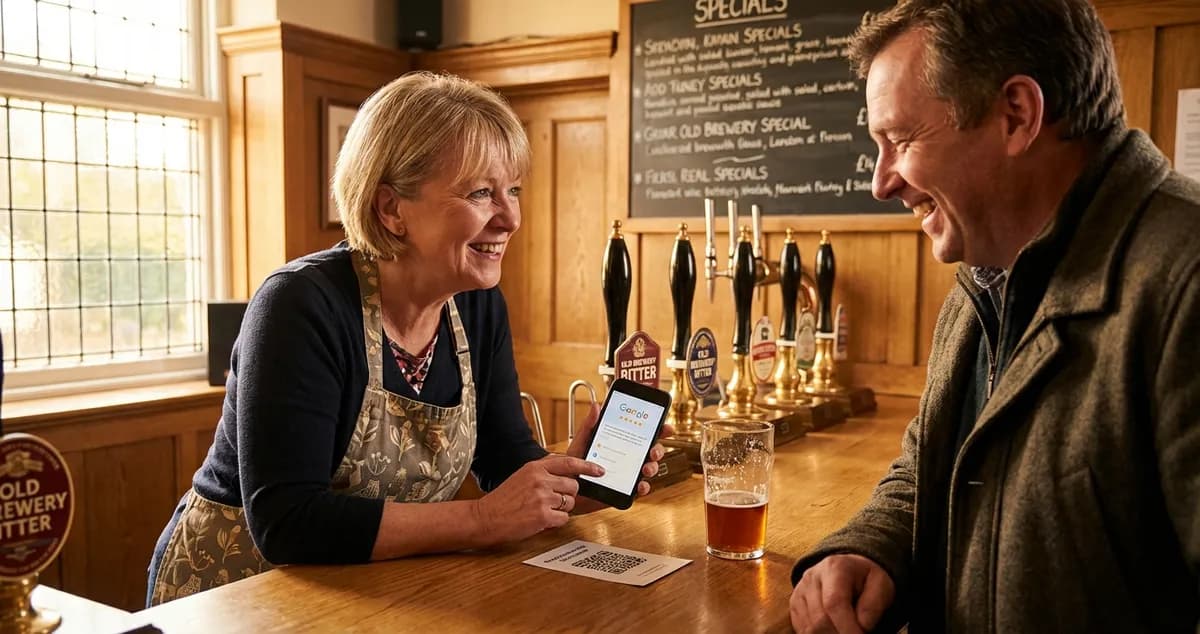 Marketing Tips
How to Get More Google Reviews: 7 Proven Strategies
How to get more Google reviews for your UK business. 7-step system covers legal methods, optimal ratings, and strategies that fit your busy schedule.
 Marketing Tips
Google Restaurant Reviews: Complete UK Guide
Discover why 75% of consumers regularly check reviews before dining out. Get actionable tips to boost reviews, respond professionally, and handle fakes.