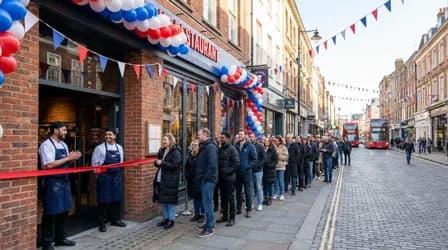
Plan a restaurant grand opening that fills tables from day one. Covers the 8-week marketing timeline, soft openings, budgets, and first-week tactics.
You've spent months on the fit-out, trained your team, and finalised the menu. Opening day is three weeks away and your Instagram account has 43 followers. That is not going to fill 60 covers on a Saturday night, and hoping people simply notice is not a marketing strategy.
Info
Related: Marketing for New Restaurants — broader 90-day launch plan beyond the opening event
A grand opening isn't a party. It's a first impression that hundreds of people will describe to their friends, post about online, and use to decide whether they ever come back.
Restaurant grand opening marketing is the strategic process of building pre-launch buzz, executing a memorable opening event, and converting that initial attention into sustained footfall. Done well, it sets the tone for your entire first year. Done poorly, you spend months recovering from empty tables and zero online presence.
What You'll Learn
- The 8-week pre-opening marketing timeline that builds genuine anticipation
- How to run a soft opening that catches problems before your real launch
- What a grand opening event actually needs to generate buzz and media coverage
- Where to allocate your marketing budget for maximum first-week impact
- Post-opening tactics that turn opening-night guests into regulars
Why Your Grand Opening Makes or Breaks Year One
The myth that 90% of restaurants fail in the first year is exactly that — a myth. According to Restroworks' analysis of UK restaurant failure rates (2025), roughly 83% of restaurants survive their first twelve months — actually better than the average UK small business.
But surviving and thriving are different things. A strong grand opening doesn't just fill your dining room once — it creates the social proof, reviews, and local awareness that keep tables full during the quiet months that follow.
Info
Related: Restaurant Marketing Plan — build a longer-term framework around your launch
Here's what a well-executed grand opening actually does for you:
- Generates reviews immediately. According to BrightLocal's 2025 Consumer Review Survey, 83% of consumers read Google reviews before choosing a local business. Opening without reviews means opening invisible.
- Creates shareable moments. Guests who attend a memorable event post about it. That organic social proof is worth more than any paid campaign in your first month.
- Establishes local credibility. Media coverage, influencer posts, and word-of-mouth from a single well-planned event can generate awareness that would otherwise take months of advertising.
For example, a neighbourhood bistro that runs a proper grand opening with media invitations, a soft launch, and a review-generation plan might collect dozens of Google reviews in its first fortnight. The restaurant two streets away that opens quietly with no marketing plan might wait months to reach the same number — and spend those months wondering why tables sit empty on weekdays.
If you're reading this three weeks before opening and feeling overwhelmed — you're not alone. Most restaurant owners are so deep in fit-out logistics and staff training that marketing is the last thing on the list. That's exactly why having a structured timeline matters.
The 8-Week Restaurant Grand Opening Marketing Timeline
If you're only posting on social media the week of opening you'll always lose to competitors who build anticipation months ahead. The best restaurant grand openings start their marketing at least eight weeks before doors open.
According to Foodhub for Business (2025), essential marketing expenses for a UK restaurant launch can run into thousands of pounds. Starting early gives you time to spread that spend effectively rather than panic-spending the week before opening.
Info
Related: Restaurant Social Media Marketing — build your pre-launch social presence
Weeks 8-6: Foundation
- Set up social profiles. Instagram, Facebook, Google Business Profile, and TikTok if your concept suits video. Post behind-the-scenes content of the fit-out — people love watching a restaurant come together.
- Build a landing page. Even a simple one-page site with your concept, location, and an email signup captures interest early.
- Start an email list. Offer a "founding diners" incentive — first access to bookings, a complimentary drink on opening night, or a preview menu invitation. This list becomes your most reliable marketing channel.
- Claim your Google Business Profile. Set your opening date, add photos, and write your business description. This takes time to index, so doing it early means you appear in local searches by launch day.
Weeks 5-4: Build Buzz
- Increase posting frequency. Move from a few posts per week to daily. Show menu development, staff introductions, design details.
- Contact local media. Food bloggers, local newspaper food columnists, and community Facebook groups are your targets. Send a concise press release with high-quality photos and a clear story angle.
- Invite local influencers. Identify food influencers in your area with engaged followings (engagement rate matters more than follower count). Offer a complimentary preview meal in exchange for honest coverage.
- Design printed materials. Flyers, A-boards, and window signage for the venue. Your physical location is a marketing channel — use the hoarding period to tease the opening.
Weeks 3-2: Create Urgency
- Announce your opening date. Make it a proper moment — a countdown post, a short video, or a styled announcement graphic.
- Launch a soft opening invitation. More on this in the next section, but start inviting your email list and inner circle now.
- Run targeted local ads. A modest Facebook and Instagram campaign targeting people within a few miles of your restaurant. Even a small budget can reach tens of thousands of local potential customers.
- Finalise media invitations. Send specific invitations to journalists and bloggers for your grand opening event, with a clear RSVP process.
Week 1: Final Push
- Post daily countdowns. Stories, reels, posts — keep the momentum high.
- Confirm all event logistics. Entertainment, photographer, any special offers or giveaways.
- Brief your entire team. Every staff member should know the marketing plan. They're your front-line ambassadors.
- Test everything. Your booking system, your Google listing, your social media links. A broken booking link on opening day is a preventable disaster.
For example, a seafood restaurant in Bristol might start posting fit-out progress photos at week eight, revealing the menu concept at week five, announcing the opening date with a short video at week three, and running a "founding diners" email campaign at week two. By opening day, they've built a solid email list and an engaged Instagram following — all before serving a single plate.
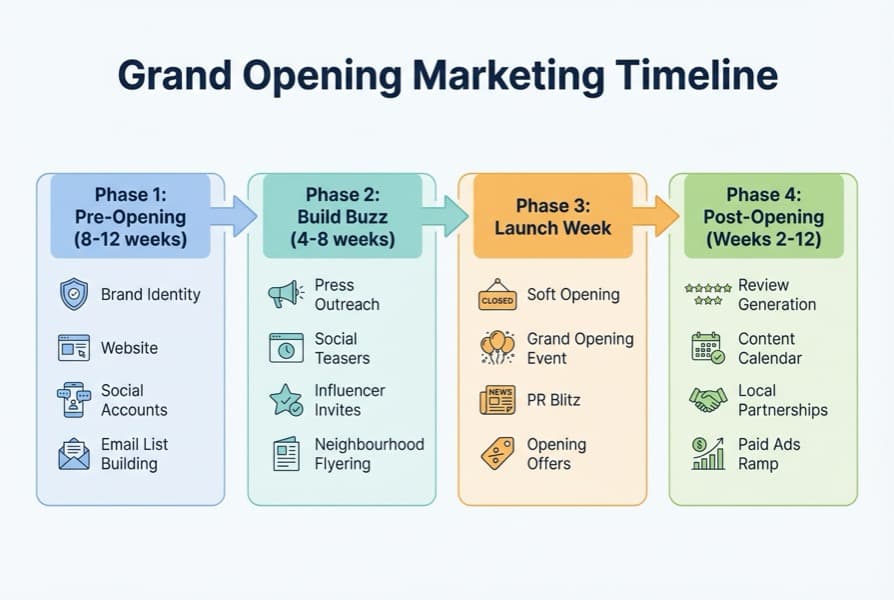
The 8-week timeline breaks your grand opening marketing into manageable phases
Running a Soft Opening: Testing Before the Spotlight
A soft opening is a controlled trial run — typically 1-7 days before your grand opening — where you serve real guests under real conditions but without the full pressure of a public launch. It's an essential part of any restaurant grand opening marketing plan.
According to Orderable (2025), roughly 70-80% of restaurants use soft openings as operational trial runs to train staff and refine workflows before their public launch. There's a reason the practice is nearly universal: it works.
Soft Opening vs Grand Opening: What's the Difference?
| Soft Opening | Grand Opening | |
|---|---|---|
| Purpose | Test operations, gather feedback | Generate buzz, attract media |
| Guest list | Invite-only (friends, family, influencers) | Public or curated event |
| Capacity | Reduced | Full |
| Menu | Limited, strongest dishes | Full or tasting format |
| Marketing goal | Early reviews, word-of-mouth | Media coverage, social sharing |
| Duration | Several days | One event |
Both play a role in your restaurant grand opening marketing strategy. The soft opening catches problems; the grand opening converts attention into momentum.
What a Soft Opening Achieves
- Identifies operational problems. Kitchen bottlenecks, service timing issues, and POS system glitches all surface when you have real guests ordering from a real menu.
- Builds staff confidence. Your team gets to practise under pressure without the stakes of opening night. That confidence shows when the cameras are rolling on the big day.
- Generates early reviews. Happy soft-opening guests often leave your first Google reviews, giving you social proof before you've officially opened.
- Creates word-of-mouth. Guests who feel like insiders — who got to experience something before everyone else — become your most vocal advocates.
How to Structure Your Soft Opening
Duration: 2-5 days works well for most independent restaurants. One day feels rushed; more than a week risks losing the "exclusive" feeling.
Guest list: Friends and family on day one, then expand to your email list, local business neighbours, and selected influencers. Keep capacity well below maximum so your kitchen isn't overwhelmed.
Menu: Offer a limited menu featuring your strongest dishes. This lets your kitchen focus on execution rather than trying to deliver the full menu under pressure.
Feedback mechanism: Place comment cards on tables, or use a simple QR code linking to a short feedback form. Ask about food quality, service speed, and atmosphere specifically.
Pricing: Most soft openings offer a significant discount or a prix fixe menu. Some restaurants invite guests free in exchange for honest feedback. Either approach works — the goal is data, not revenue.
Quick Feedback Cards
Print a simple feedback card with three questions: "Rate the food (1-5)", "Rate the service (1-5)", and "What would you change?" Keep it short and you'll get honest answers.
For example, a neighbourhood Italian might run a three-day soft opening: Monday for close friends and family (free), Tuesday for email subscribers (discounted), and Wednesday for local influencers and press (complimentary tasting menu). Each day tests the operation at increasing complexity while building word-of-mouth through different audience segments.
This sounds great in theory. In practice, when you're juggling contractors finishing the patio, staff who started training four days ago, and a licensing inspection on Thursday — the temptation is to skip the soft opening and go straight to the grand event. Resist that temptation. If you're only testing your restaurant on opening night you'll always lose to competitors who iron out problems during a soft launch. The problems you catch in a soft opening are the ones that would become your first negative reviews.
Grand Opening Day: Planning the Event That Builds Buzz
Your grand opening event is the centrepiece of your restaurant grand opening marketing. It's not just dinner service — it's a marketing event disguised as a meal.
Essential Event Elements
The guest list matters more than the headcount. Invite people who amplify your message: local food bloggers, journalists from your town's newspaper or magazine, active community group members, neighbouring business owners, and your council representative. A smaller room of people who post, write, and talk is worth more than a packed venue of guests who eat and leave.
Create photographable moments. A ribbon-cutting with a local dignitary. A signature cocktail in branded glassware. A dramatic dish presentation that begs to be filmed. According to SevenRooms' UK Restaurant Trends report (2025), 45% of UK diners discover new restaurants through social media — your restaurant grand opening marketing content needs to make people wish they'd been there.
Free Advertising
Every photo a guest posts becomes free advertising. One well-lit dish photo shared by a local influencer can reach thousands of potential customers overnight.
Book a photographer. Professional photos of your opening night serve three purposes: social media content for weeks to come, press kit material, and website imagery.
Plan entertainment carefully. Live music, a DJ, or even a cooking demonstration adds atmosphere, but it shouldn't overpower conversation. The goal is a buzzing room where people can still talk about your food. If you're only spending money on decoration and entertainment you'll always lose to restaurants that invest in getting the right people through the door first.
Info
Related: Restaurant Events Guide — detailed event planning for all types of restaurant occasions
The Grand Opening Checklist
Use this checklist to ensure nothing falls through the cracks:
- Opening date confirmed and announced across all channels
- Guest list finalised with RSVP tracking
- Press releases sent to local media at least 2 weeks prior
- Photographer or videographer booked
- Special menu or tasting portions planned
- Staff briefed on event format and key guests
- Branded elements ready (menus, signage, social media handles displayed)
- Opening offer or incentive prepared (loyalty card, return visit discount)
- Google Business Profile updated with opening hours and photos
- Social media hashtag created and communicated to guests
What to Offer Guests
Your opening offer should encourage two things: social sharing and return visits.
- A "share and save" incentive. Post a photo with your hashtag and receive a complimentary starter or dessert on their next visit. This generates content and guarantees a second visit.
- A founding member card. Give opening-night guests a physical card entitling them to a discount for the first few months. People keep physical cards and they become conversation starters.
- A signature welcome. A complimentary welcome drink or amuse-bouche that showcases your kitchen's identity. This sets the tone and gives everyone something to photograph.
First-Week Restaurant Grand Opening Marketing Tactics
Opening night is the peak of your restaurant grand opening marketing, but the first week is where you convert that energy into lasting momentum. If you can't tell whether your pre-opening buzz is actually reaching potential customers, that's usually a sign you need a more structured approach to your first seven days.
Day 1-2: Capture and Share
- Post your best opening night photos. Stories, reels, and a curated gallery post. Tag every influencer and media guest who attended.
- Thank guests publicly. A simple thank-you post naming key supporters builds community and encourages shares.
- Monitor and respond to every review. According to BrightLocal's Consumer Review Survey (2025), consumers are nearly twice as likely to use a business that replies to all its reviews compared to one that ignores them. In your first week, respond to every single review within 24 hours.
Day 3-5: Generate Reviews
- Email your soft-opening and opening-night guests. Thank them for coming and politely ask for a Google review. Include a direct link to make it easy.
- Use table cards or receipts. A small note saying "Enjoyed your meal? We'd love a Google review" with a QR code works surprisingly well.
- Incentivise staff. A small team bonus when you hit a review milestone motivates everyone to mention it naturally in conversation.
According to Virtual College's research on restaurant reviews, the vast majority of UK customers read online reviews before choosing where to eat. Reaching a solid number of genuine reviews in your first week makes you visible in local search results and gives potential customers the confidence to book.
Info
Related: Restaurant Advertising — paid strategies to amplify your opening buzz
Day 5-7: Build Local Partnerships
- Visit neighbouring businesses. Drop off menus, introduce yourself, and offer a neighbour discount. Local businesses become regular lunch customers and referral sources.
- Contact local event organisers. Offer your space for community meetings, charity events, or networking groups. This builds goodwill and brings new faces through the door.
- Follow up with media. If journalists attended your opening, check in to see if they need any additional information for their coverage. A gentle nudge often turns attendance into an article.
For example, a tapas bar might spend the first two days posting a carousel of opening-night photos and tagging every food blogger who attended. By midweek, they email all opening-night guests asking for a Google review with a direct link. By the weekend, the owner walks next door to neighbouring businesses to drop off menus and offer a neighbour discount. Simple actions, but each one builds a layer of local awareness that compounds over weeks.
Grand Opening Marketing Budget: Where to Spend
How much should you spend on restaurant grand opening marketing? The answer depends on your overall launch budget, but here's a realistic framework for UK independent restaurants.
According to Restroworks (2025), total marketing costs for a UK restaurant launch typically range from several thousand to tens of thousands of pounds depending on scale. For a focused restaurant grand opening marketing campaign, most independent UK restaurants should budget roughly £3,000-£5,000 covering digital ads, printed materials, photography, media hosting, and the event itself.
Where the Money Goes
Your budget breaks down into a few key areas. Social media advertising and printed materials (flyers, A-boards, window graphics) form the foundation. Professional photography or videography of your opening night gives you weeks of social content and press kit material. Hosting press and influencer guests costs whatever their meals come to. The opening event itself — drinks reception, entertainment, branded elements — is typically the largest single expense. Email marketing platforms and Google Business Profile are largely free but essential.
If you're thinking "I don't have thousands for marketing on top of everything else" — you're not wrong to worry. But the Chartered Institute of Marketing recommends UK restaurants allocate 3-6% of projected annual revenue to marketing, with new restaurants investing at the higher end. Your grand opening is the single most important moment to invest a portion of that annual budget.
The 30/30/30 Rule for Restaurant Budget Planning
The 30/30/30 rule is a framework that helps restaurant owners allocate their overall operating budget: roughly a third on cost of goods, a third on labour, and a third on overhead (rent, utilities, marketing, and operating expenses), with the remaining slice representing your target profit margin.
Your restaurant grand opening marketing budget sits within that overhead third. For a new restaurant, dedicating a larger portion of overhead to marketing in the first three months is a smart investment that pays dividends once word-of-mouth takes over.
For example, a casual dining restaurant might allocate a few thousand pounds from its overhead budget to a comprehensive grand opening campaign — a modest investment for the single event that generates the most first-year awareness.
What Are the 5 C's of a Marketing Plan?
The 5 C's of a marketing plan is a framework that provides a structured approach to analysing your business environment before spending money on promotion. Applied to restaurant grand opening marketing, the five elements are Company, Customers, Competitors, Collaborators, and Climate.
For restaurant grand opening marketing, here's how each applies:
- Company: What's your unique selling point? Are you the first Peruvian restaurant in town, the most affordable brunch spot, or the only venue with a private dining room and garden? Your grand opening marketing should lead with this.
- Customers: Who lives and works nearby? Young professionals, families, office workers? Your pre-opening social content and event format should reflect who you're trying to attract.
- Competitors: What are nearby restaurants doing well — and what are they missing? If every local venue is casual dining, a premium opening event positions you differently.
- Collaborators: Local businesses, food bloggers, community groups, and suppliers who can amplify your launch. These partnerships cost nothing but deliver significant reach.
- Climate: Economic conditions, seasonality, and local events. Opening in January requires a different approach than opening in June. A grand opening during a local festival gives you built-in foot traffic.
Focus on Customers First
If you pick just one C to focus on, make it Customers. Knowing exactly who lives and works nearby determines every other decision — from your opening event format to which social platforms you prioritise.
Info
Related: Restaurant Social Media Marketing — apply the 5 C's framework to your social strategy
How to Promote a Newly Opened Restaurant
Your restaurant grand opening marketing doesn't end when the last guest leaves the opening event. Once the buzz fades — and it will fade — you need a system that keeps new customers discovering your restaurant. Here's what works in the first 30 days after opening:
- Keep posting consistently. Several times per week across Instagram and Facebook. Behind-the-scenes content, customer photos (with permission), and daily specials keep your feed active.
- Run a "tell a friend" promotion. Offer existing customers a discount when they bring someone new. Word-of-mouth remains the most trusted form of marketing.
- Optimise your Google Business Profile weekly. Add new photos, respond to reviews, and post updates. According to Foodhub for Business (2025), restaurants that actively manage their Google profile receive significantly more direction requests and website clicks.
- Launch a simple loyalty programme. Even a paper stamp card works. The goal is repeat visits within the first month.
- Partner with delivery platforms. If delivery suits your concept, the visibility on Deliveroo, Uber Eats, or Just Eat introduces you to customers who might later dine in.
- Collect email addresses from every booking. A monthly newsletter with specials, events, and behind-the-scenes content keeps you in customers' minds without relying on social media algorithms.
For example, a Thai restaurant might use its first month to post three reels per week showcasing different dishes, launch a simple stamp-card loyalty scheme (buy 5 mains, get 1 free), and partner with the gym across the road for a post-workout discount deal. None of these cost more than an hour of time and a few pounds in printing.
If you're only relying on organic social media to promote your newly opened restaurant you'll always lose to competitors who combine social, local SEO, email, and community partnerships.
If you run a restaurant and want to see how Local Brand Hub can support your marketing, explore our restaurant marketing tools.
Key Takeaway
Key Takeaways: Restaurant Grand Opening Marketing
Your restaurant grand opening marketing doesn't need to be complicated, but it does need to be deliberate. Here's what matters most:
- Start restaurant grand opening marketing eight weeks before opening. Build your online presence, email list, and media relationships well before doors open.
- Run a soft opening. Use a few days of controlled service to catch problems, build staff confidence, and generate your first reviews.
- Treat the grand opening as a marketing event. Invite people who amplify your message, create photographable moments, and give guests reasons to return.
- Budget realistically. Most independent UK restaurants spend £3,000-£5,000 on a comprehensive restaurant grand opening marketing campaign.
- Prioritise reviews in week one. Your Google review count in the first week directly affects how quickly new customers find you.
- Don't stop after opening night. The first month requires consistent posting, local partnerships, and ongoing review management.
Your competitors don't have bigger budgets. They have smaller gaps between planning and execution.
Weekly Action
If you only have 30 minutes a week to prepare your grand opening marketing:
- Day 1-2: Set up your Google Business Profile and Instagram account with your restaurant name, concept, and one behind-the-scenes photo
- Day 3-4: Write a short press release (venue name, cuisine, opening date, what makes you different) and email it to three local food bloggers
- Day 5-7: Create a simple email signup form (Mailchimp's free plan works) and share the link on your social profiles with a "founding diners get first access" message
That's your minimum viable start for restaurant grand opening marketing. Each week, add one more task from the 8-week timeline above.
Related reading:
- Marketing for New Restaurants — broader 90-day launch plan beyond the opening event
- Restaurant Opening Timeline — complete opening checklist and timeline
- Building Pre-Opening Buzz — signage, teasers, and email capture
- Restaurant Opening Costs — full UK cost breakdown
- Soft Opening Guide — how to run a successful soft launch
- Post-Opening Promotion — first-week tactics
Frequently Asked Questions
How far in advance should you start marketing a restaurant grand opening?
Start your restaurant grand opening marketing at least eight weeks before your opening date. The first phase focuses on building your online presence and email list. The final fortnight shifts to creating urgency with countdowns, ads, and confirmed event invitations. If your premises have street-facing windows, use the renovation period for teaser signage — that's free marketing from day one.
How much should a grand opening marketing budget be?
For a UK independent restaurant, budget between £3,000 and £5,000 for a comprehensive restaurant grand opening marketing campaign. This covers social media ads, printed materials, professional photography, press hosting, and the opening event itself. Scale up or down based on your venue size and location.
Is a soft opening necessary before a grand opening?
A soft opening is strongly recommended. The vast majority of restaurants conduct soft openings before their public launch. Running a few days of controlled service at reduced capacity lets you identify kitchen bottlenecks, train staff under real conditions, and generate your first online reviews before the grand opening spotlight.
How do you get press coverage for a restaurant opening?
Contact local food bloggers, newspaper food columnists, and community publications several weeks before opening. Send a concise press release with professional photos, your unique story angle (why this restaurant, why here, why now), and a clear invitation to your opening event. Follow up one week before the event. Personal invitations work better than mass emails — research each journalist's coverage area and tailor your pitch.
What's the most important thing to do in the first week after opening?
Generate Google reviews. The vast majority of consumers read reviews before choosing a local business, so your review count directly affects whether new customers find and trust you. Email your opening-week guests with a direct review link, place QR codes on tables, and respond to every review within 24 hours.
For restaurants, salons, and local businesses
Need help with your marketing?
We help UK businesses turn social media into real results, not busywork.
Get in TouchAbout the Author
Local Brand Hub
Empowering UK Businesses
Local Brand Hub provides comprehensive business management tools designed specifically for UK local businesses to streamline operations, automate marketing, and grow revenue.
More articlesRelated Articles
 Marketing Tips
Medical Aesthetics Marketing: UK Compliance Guide
Medical aesthetics marketing for UK doctor and nurse-led clinics. GMC/NMC rules, before-and-after photo limits, CQC signals and patient trust strategies.
 Marketing Tips
Aesthetics Marketing Agency: A UK Clinic Buyer's Guide
How to find the right aesthetics marketing agency for your UK clinic — what to look for, red flags, costs, and when DIY is smarter.
 Marketing Tips
Aesthetics Marketing: DIY Playbook for UK Clinics
Practical aesthetics marketing strategies you can run yourself. Social media, before-and-after content, local SEO, email, and referrals for UK clinics.