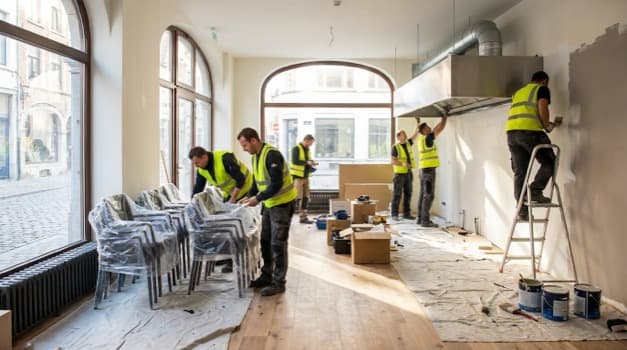
Plan your restaurant opening with our 16-24 week UK timeline, essential checklist, licences guide, and biggest mistakes to avoid.
You've signed the lease, told everyone you're opening a restaurant, and the reality hits. There are 47 things on your checklist and you've done three of them. Opening day is 16 weeks away, the kitchen isn't fitted, and you still haven't applied for your premises licence.
Info
Related: Restaurant Grand Opening Marketing, your complete grand opening strategy
A restaurant opening in the UK typically takes 16 to 24 weeks from securing your premises to serving your first customer. The timeline depends on your fit-out scale, licensing requirements, and how many regulatory boxes you need to tick. Around 60% of UK restaurants close within their first year, and poor planning during the opening phase is a major contributor.
What You'll Learn
- A realistic 16-24 week restaurant opening timeline with key milestones
- Every essential step on a restaurant opening checklist you can't afford to skip
- Which UK licences and legal requirements you need before opening day
- The biggest mistakes that derail restaurant openings and how to avoid them
- What to prioritise during your first week of trading
The Realistic Restaurant Opening Timeline (16-24 Weeks)
Most first-time restaurant owners underestimate how long a restaurant opening actually takes. The gap between signing a lease and pouring your first drink is typically 16 to 24 weeks, though complex fit-outs or listed buildings can push this past six months.
Info
Related: Restaurant Business Plan, get your financials and concept locked down first
Here's what a realistic timeline looks like, broken into four phases.
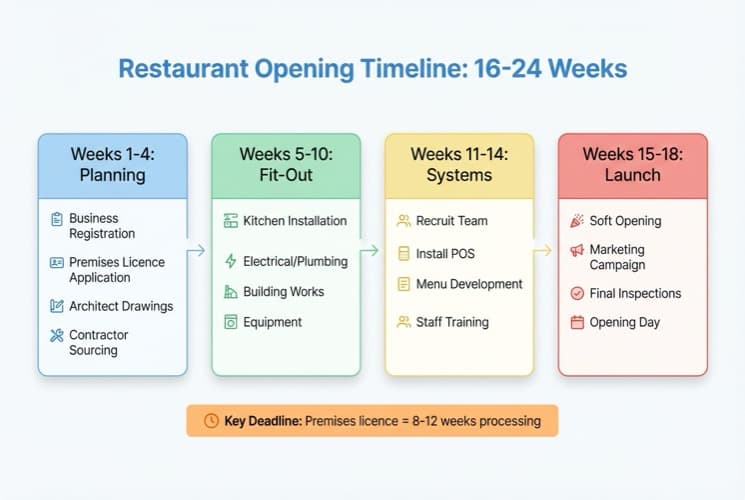
A realistic restaurant opening timeline broken into four phases
Weeks 1-4: Planning and Foundations
This is where most of your paperwork happens. You need to finalise your business plan, register your food business with the local council (at least 28 days before opening, per Food Standards Agency requirements), and submit your premises licence application.
For example, a 40-cover neighbourhood bistro in Manchester might spend weeks one and two finalising their lease and commissioning kitchen drawings, then weeks three and four submitting their premises licence and food business registration simultaneously. The licence alone takes up to eight weeks to process, so early submission is non-negotiable.
During this phase, you should also:
- Confirm your lease terms and negotiate any fit-out contribution from the landlord
- Commission architectural drawings for your kitchen and dining area
- Begin sourcing contractors for the fit-out
- Set up your business bank account and accounting systems
Weeks 5-10: Fit-Out and Build
The fit-out is where your budget meets reality. Commercial fit-out costs in the UK range from £1,000 to £3,000 per square metre. A small restaurant kitchen typically requires £25,000 to £40,000 in equipment alone.
If you're reading this thinking "I don't have time for this level of detail", you're not alone. But skipping the planning stage is exactly what pushes restaurants into that 60% failure bracket.
Weeks 11-14: Systems and Staffing
Your fit-out is nearing completion. Next come people and processes.
- Recruit and hire your team (head chef, front-of-house manager, waiting staff)
- Install your point-of-sale system and test it thoroughly
- Develop your menu with costings and supplier agreements
- Set up your booking system and website
- Create your staff handbook and training schedule
Weeks 15-18: Soft Launch and Final Prep
This is your dress rehearsal. Run a soft opening for friends, family, and local contacts. It exposes problems with your service flow, kitchen timing, and front-of-house processes before paying customers arrive.
Learn from real soft launches
A seafood restaurant in Bristol ran three soft-launch evenings at 50% capacity. On night one they discovered their pass couldn't handle more than four mains simultaneously. By night three, they'd reorganised the kitchen station layout and cut average ticket time by eight minutes. Those fixes happened with forgiving guests, not with reviewers.
During soft launch week:
- Test every dish on your menu under real service conditions
- Identify bottlenecks in your kitchen workflow
- Train staff on handling complaints and dietary requirements
- Confirm your marketing plan for opening week
Info
Related: Marketing for New Restaurants, build your customer base before you open
Restaurant Opening Checklist: Every Step You Can't Skip
So you've got the timeline. But what specific tasks need completing? A restaurant opening checklist keeps you accountable. Print this, stick it on the wall, and tick items off as you go. Missing even one of these steps can delay your opening or land you with a fine.
Business and Finance
- Register as a food business with your local authority (minimum 28 days before opening)
- Register your business with HMRC (sole trader, partnership, or limited company)
- Open a business bank account
- Secure funding or financing with a detailed business plan
- Set up accounting software and hire an accountant
- Arrange business insurance (public liability, employer's liability, contents)
Premises and Fit-Out
- Sign your lease and confirm fit-out permissions
- Commission kitchen design and equipment installation
- Complete electrical, plumbing, and gas certification
- Install fire safety systems and arrange fire risk assessment
- Complete building works to comply with Building Regulations
- Ensure disabled access compliance under the Equality Act
Licensing and Legal
- Apply for a premises licence (alcohol, late-night refreshment)
- Obtain a personal licence if you'll supervise alcohol sales
- Register for food hygiene with Environmental Health
- Complete food safety management documentation (HACCP)
- Check whether you need planning permission for change of use
- Register with the Information Commissioner's Office for data protection
Operations and Staffing
- Recruit and contract your core team
- Set up payroll and pension auto-enrolment
- Install POS system, booking system, and kitchen display screens
- Finalise your menu, pricing, and supplier agreements
- Create staff training materials and schedule induction sessions
- Develop your allergen matrix and dietary information
Marketing and Launch
- Build your website with online menu and booking capability
- Set up Google Business Profile and social media accounts
- Plan your soft launch (friends and family)
- Schedule your grand opening event and marketing campaign
- Commission photography for your menu and interiors
Watch for hidden delays
A pizza restaurant opening in Leeds completed all business registration in week one, then realised their building needed a grease trap installation before Environmental Health would approve the premises. That single oversight added three weeks to their timeline. Plan for surprises.
Licences and Legal Requirements for UK Restaurant Openings
With your checklist in hand, let's dig into the licensing detail. This is the part of a restaurant opening that catches more people out than almost anything else. Miss a deadline and your opening date slips. Serve alcohol without a licence and you're looking at an unlimited fine or up to six months in prison.
Premises Licence
If you plan to serve alcohol or provide late-night refreshment (hot food or drink after 11pm), you need a premises licence from your local council. The application process takes a minimum of 28 days for consultation, but realistically allow 8 to 12 weeks. Costs vary by rateable value, starting from around £100 for small premises.
You must display a summary of the licence on-site and name a Designated Premises Supervisor (DPS) who holds a personal licence.
Food Business Registration
Every food business in England, Wales, and Northern Ireland must register with the local authority at least 28 days before trading. Registration is free. Once registered, Environmental Health will schedule an inspection and issue your Food Hygiene Rating.
Food Hygiene Rating
Your first Environmental Health inspection typically happens within 28 days of opening. Inspectors assess three areas: food hygiene and safety procedures, structural compliance, and confidence in management. Scores range from 0 (urgent improvement necessary) to 5 (very good).
Your rating goes public fast
A cafe in Edinburgh received a score of 2 on their first inspection because their documented food safety procedures were incomplete, despite having a spotless kitchen. The rating appeared publicly on the Food Standards Agency website within days, costing them early customer trust.
Planning Permission
If your premises was previously a different type of business (say, a retail shop), you may need planning permission for change of use. Under the current Use Classes Order, restaurants fall under Class E, which also covers shops and offices. Changes within Class E generally don't require planning permission, but converting from other use classes (like residential) still requires it. Always check with your local planning authority.
If you can't tell whether your premises needs planning permission or just a licence, that's usually a sign you need 30 minutes with a licensing solicitor before you commit to a timeline.
Licence Comparison
| Licence | Cost | Processing Time | Required For |
|---|---|---|---|
| Food business registration | Free | 28 days minimum | All food businesses |
| Premises licence | From £100 | 8-12 weeks | Alcohol, late-night food |
| Personal licence | Around £37 | 2-4 weeks | DPS (alcohol supervisor) |
| Music licence (PPL PRS) | From £200/year | 1-2 weeks | Background music |
| Pavement licence | Varies by council | 2-4 weeks | Outdoor seating |
Ask yourself: would I open with incomplete paperwork and risk an enforcement visit in week one? The answer should shape your timeline.
Biggest Mistakes That Derail Restaurant Openings
Now that the regulatory side is covered, here are the mistakes that sink restaurants before they find their feet. UK food and beverage insolvencies remain among the highest of any sector, with the industry recording over 3,200 bankruptcies in the year to mid-2025.
These aren't just numbers. Behind each one is an owner who thought their restaurant opening would go differently.
Mistake 1: Underestimating Costs
Opening a restaurant in the UK typically costs between £71,000 and £1 million depending on scale and location. The mistake isn't spending too much. It's not budgeting enough contingency. Experienced operators recommend a 20-30% buffer on your total projected costs, because unexpected expenses appear at every stage of a restaurant opening.
Mistake 2: Ignoring Pre-Opening Marketing
If you're only focusing on construction you'll always lose to competitors who build their customer base before they open. Your restaurant opening marketing should start 8 to 12 weeks before launch. Build anticipation on social media, collect email addresses, and connect with local food bloggers. A social media calendar makes it far easier to plan those weeks of build-up posts around the fit-out chaos.
Info
Related: Restaurant Events, plan events that bring people through the door
Mistake 3: Hiring Too Late
Recruitment takes longer than you think. Good chefs are in demand. Waiting until two weeks before opening to hire your team means settling for whoever's available rather than who's right.
Don't leave chef recruitment because by then the best candidates have already accepted offers elsewhere. Start hiring at week 10 of your timeline.
Mistake 4: Skipping the Soft Launch
A soft launch isn't a nice-to-have. It's where you discover that your kitchen can't handle more than 30 covers at once, your booking system doesn't sync with your POS, and your signature cocktail takes four minutes to make. Fix these problems with friends and family, not with paying customers who'll leave one-star reviews.
Don't skip this step because you're worried about delaying your opening date. A two-day delay beats a month of damage control from bad reviews.
Mistake 5: No Financial Runway
The reality for most independent restaurants is that the first three to six months won't be profitable. You need enough cash reserves to cover rent, wages, and operating costs while you build a regular customer base. Running out of cash in month three is the most common reason new restaurants close.
Your Opening Week: What to Prioritise
You've done the planning, ticked off the checklist, survived the soft launch. The doors are opening for real. Opening week is chaotic. Accept that upfront. Your job isn't to be perfect; it's to be functional and learn quickly.
Before You Open the Doors
- Confirm all licences are displayed and valid
- Complete a final deep clean of the entire premises
- Run one last staff briefing covering roles, procedures, and emergency contacts
- Check all equipment is working (ice machine, dishwasher, oven timers)
- Ensure your allergen information is complete and accessible
During Opening Week
Day 1-2: Focus entirely on service execution. Keep the menu tight. Monitor kitchen timing and front-of-house flow. Don't try to serve 80 covers if your team has only practised with 40.
Day 3-5: Gather feedback from every table. Ask what worked and what didn't. Adjust portion sizes, tweak recipes, and refine your service sequence based on real data.
Day 6-7: Review your first week honestly. What needs to change before week two? Where did the bottlenecks appear? Which staff members need more training?
Adapt in real time
An Italian restaurant in Birmingham discovered during opening week that their wood-fired pizza oven couldn't recover temperature fast enough during a Saturday rush. They adjusted by limiting pizza orders to 60% of covers during peak service, keeping quality consistent while they sourced a higher-output oven.
This sounds great in theory. In practice, when you're down two staff and the extractor fan breaks on day three, you adapt. The checklist keeps you grounded when everything feels overwhelming.
Info
Related: Restaurant Opening Costs, detailed cost breakdown for every stage
Weekly Action
If you only have 30 minutes a week to progress your restaurant opening:
- Day 1-2: Identify the single biggest blocker to your timeline and take one action to resolve it (phone call, email, booking)
- Day 3-4: Review your checklist and update your project plan with any new deadlines or dependencies
- Day 5-7: Research one upcoming task you haven't started yet so you're prepared when it becomes urgent
Frequently Asked Questions
How long does it take to open a restaurant in the UK?
Most restaurant openings take 16 to 24 weeks from securing a premises to serving customers. The timeline depends on fit-out complexity, licensing requirements, and staffing. Premises licence applications alone take 8 to 12 weeks. Budget extra time for listed buildings or premises requiring change-of-use planning permission.
How much does it cost to open a restaurant in the UK?
Opening a restaurant in the UK costs between £71,000 and £1 million depending on location, size, and concept. Central London commands the highest costs. A 20-30% contingency on your total budget is standard advice from experienced operators.
Do I need planning permission to open a restaurant?
Not always. Restaurants fall under Use Class E alongside shops and offices. If your premises is already Class E, you generally don't need planning permission. However, converting from residential or industrial use still requires a planning application. Check with your local authority before committing to a lease.
What licences do I need to open a restaurant in the UK?
At minimum, you need food business registration (free, 28 days before opening) and a food hygiene inspection. If serving alcohol or hot food after 11pm, you need a premises licence and a Designated Premises Supervisor with a personal licence. You may also need a music licence (PPL PRS), pavement licence for outdoor seating, and waste disposal contracts.
What percentage of new restaurants fail in the first year?
Around 60% of UK restaurants close within their first year, with failure rates reaching nearly 80% by year five. The main causes are insufficient funding, poor location choice, inadequate pre-opening marketing, and underestimating operating costs during the initial months.
If you run a restaurant and want to see how Local Brand Hub can support your marketing, explore our restaurant marketing tools.
Key Takeaway
Key Takeaways
Your restaurant opening is a project, not an event. Treat it like one.
- Timeline: Allow 16 to 24 weeks from securing premises to opening day, with the premises licence application submitted in week one
- Budget: UK restaurant openings typically cost £71,000 to £1 million depending on scale, with a 20-30% contingency buffer recommended
- Licences: Register your food business at least 28 days before opening, and apply for your premises licence 8 to 12 weeks in advance
- Biggest risk: Running out of cash in the first three to six months kills more restaurants than bad food ever will
- Soft launch: Run at least one week of friends-and-family service before opening to paying customers
Your competitors don't have bigger budgets. They have better checklists.
For restaurants, salons, and local businesses
Need help with your marketing?
We help UK businesses turn social media into real results, not busywork.
Start freeGet More Marketing Tips
Practical marketing tips for UK business owners, straight to your inbox. No spam, unsubscribe anytime.
About the Author
Local Brand Hub
Empowering UK Businesses
Local Brand Hub provides comprehensive business management tools designed specifically for UK local businesses to streamline operations, automate marketing, and grow revenue.
More articlesRelated Articles
 Tutorials
Restaurant Tech Stack: UK Integration Guide
Build a restaurant tech stack that works together. Covers the five essential systems, integration priorities and realistic costs for UK independents.
 Tutorials
Restaurant Soft Opening: Test Before You Launch
Plan a successful restaurant soft opening with invite lists, feedback forms, menu testing and staff training tips. A practical UK guide.
 Business Growth
Restaurant Opening Costs: What You Can Actually Price
Restaurant opening costs are two budgets, not one. Price the published UK rates today, quote the rest twice, then size your reserve in months.