
What does POS mean? Guide to POS in retail, banking, and Gen Z slang. Learn how point of sale systems work for UK hospitality.
Your bank statement shows "POS" next to a charge you don't recognise. Is it fraud? Meanwhile, your teenager texts "POS" to friends, and you're wondering if it's the same thing. It's not. POS meaning shifts dramatically based on context, creating confusion for parents and business owners alike across the UK.
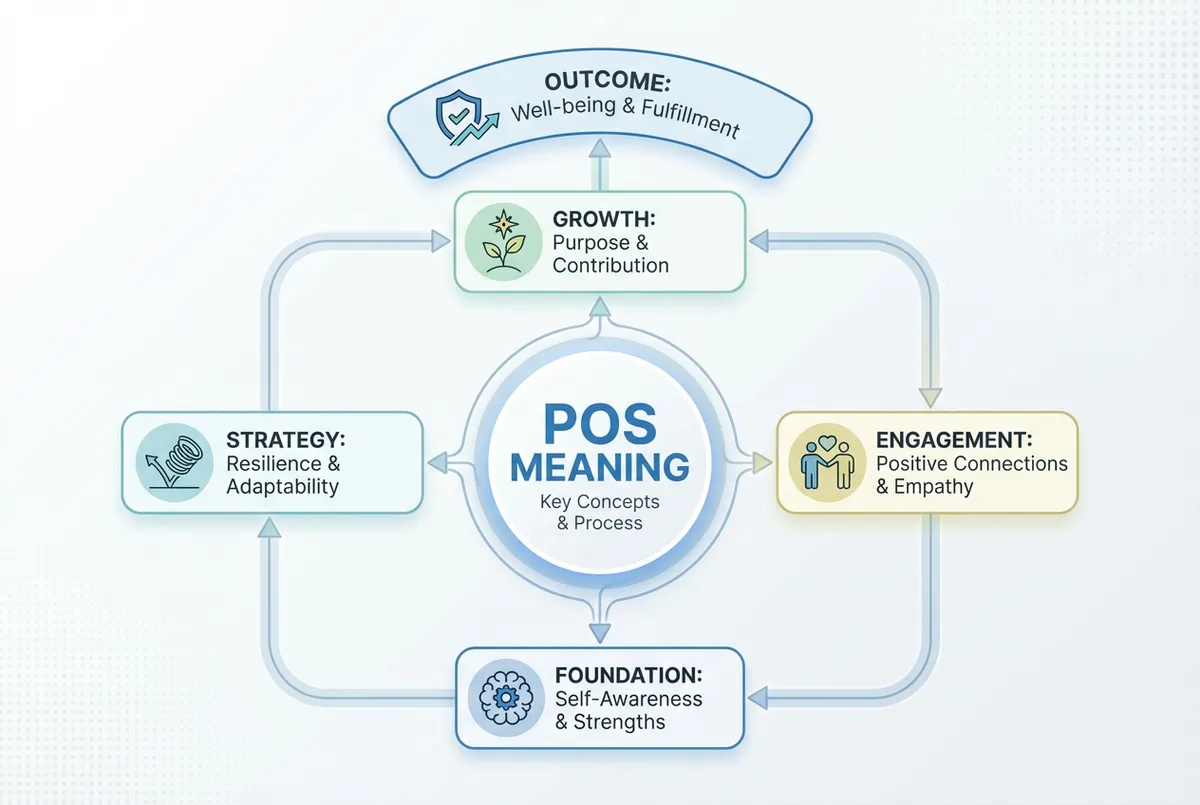
POS meaning depends entirely on context. In business and retail, POS stands for "Point of Sale": the technology that processes transactions when customers pay. In internet slang, it takes on completely different meanings that every parent and business owner should understand. This guide breaks down every meaning of POS so you'll never be caught out again, whether you're choosing a restaurant POS system for your business or decoding your teenager's messages.
What You'll Learn
- Business POS meaning: How point of sale systems work in retail, restaurants, and hospitality
- Banking POS meaning: What those "POS" entries on your bank statement actually indicate
- Teen slang meanings: "Parent Over Shoulder" and other common interpretations
- Tone indicators: Why /pos online means something completely different
- Practical examples: Real-world POS system applications across industries
Understanding POS meaning requires knowing the context. The abbreviation appears across industries, generations, and platforms with wildly different interpretations. Here's the quick breakdown:
| Context | POS Means | Example |
|---|---|---|
| Retail/Business | Point of Sale | Card machine at a checkout counter |
| Banking | Point of Sale | Transaction type on your statement |
| Teen Slang | Parent Over Shoulder | Warning in group chats |
| Vulgar Slang | Piece of Sh*t | Expressing frustration |
| Tone Indicator | /pos = Positive | Clarifying friendly intent online |
The global point of sale market was valued at USD 38.56 billion in 2025 and is projected to reach USD 138.92 billion by 2034. That's not a niche technology; it's the backbone of 2026 commerce.
Info
Related: Restaurant POS System Guide - complete breakdown of features and pricing for UK hospitality.
What Does POS Mean in Retail and Business?
Now that you've seen the POS meaning overview, let's dig into the most common business definition.
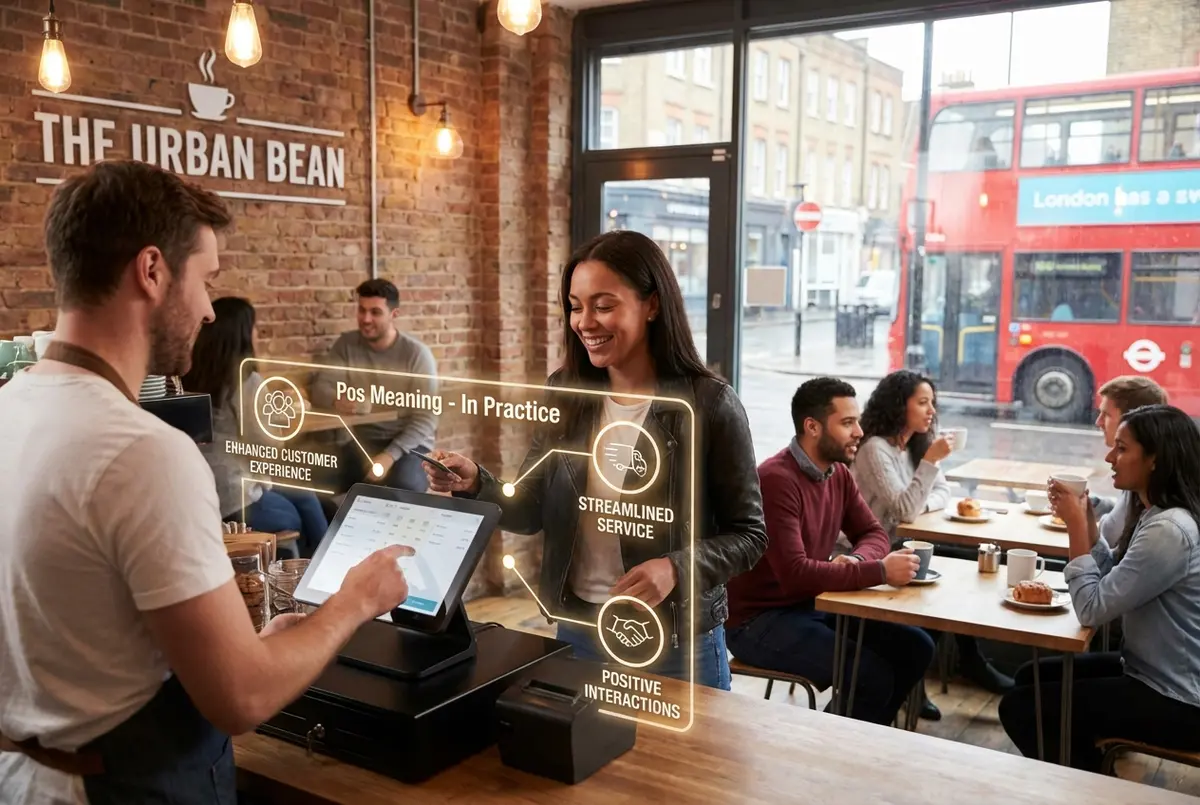
Point of Sale (POS) refers to the location and technology where a customer completes a purchase. In practical terms, it's the system that processes payments: whether that's a traditional till, a tablet with a card reader, or a self-service kiosk.
A 2026 POS system typically includes:
- Hardware: Card reader, receipt printer, cash drawer, barcode scanner
- Software: Transaction processing, inventory tracking, sales reporting
- Integration: Links to accounting, stock management, and customer databases
For restaurants, POS systems do far more than process payments. They send orders directly to the kitchen, track table status, manage staff schedules, and generate reports that show which dishes actually make money. If you're running a hospitality business, your POS is essentially the nerve centre of your operations.
Info
Related: For a deeper dive into hospitality technology, see our guide to restaurant marketing.
For example, a gastropub using a 2026-era POS might track that their Sunday roast sells 40% better when promoted via the system's customer messaging feature: data that would be impossible to gather manually.
Modern POS systems integrate hardware, software, and payment processing
Cloud-based POS systems dominate the market as of 2025, capturing 56% of revenue. These platforms offer 22% better total cost of ownership compared to traditional systems, largely because they eliminate the need for expensive on-site servers and reduce IT maintenance costs.
If you're still using a legacy till system that rarely works, you risk falling behind competitors who can process payments faster, track inventory in real-time, and turn their best-selling products into targeted promotions automatically. That's not a technology problem; it's a business survival issue.
What Does POS Mean in Banking?
So you understand POS in retail. But what about the POS meaning when it shows up on your bank statement?
When you see "POS" on your bank statement, it indicates a Point of Sale transaction, meaning you used your debit or credit card at a physical or virtual checkout.
Your statement might show entries like:
- POS TESCO EXPRESS: Card payment at a supermarket
- POS AMAZON UK: Online card transaction
- POS WITHDRAWAL: Cashback at a till
The key difference from ATM transactions: POS entries always involve purchasing goods or services, not just withdrawing cash. If you spot an unfamiliar POS transaction, it's worth checking; it means your card details were used somewhere, whether legitimately or not.
Statement Review
If you're thinking "I don't have time to check every transaction," you're not alone. Most people only notice suspicious POS entries when their balance looks wrong. But if you can't tell whether a POS charge brings value or just drains your account, that's usually a sign you need a quick monthly review of your statements.
What Does POS Mean in Gen Z Slang?
Banking and business POS meaning is straightforward. But here's where context becomes critical. In teen slang, POS has two primary meanings that shift dramatically based on the conversation.
"Parent Over Shoulder"
This is the most common interpretation among teenagers in 2026. When a teen types "POS" in a group chat, they're warning friends that an adult is watching their screen. The message essentially says: "Change the topic. Someone's looking."
This usage traces back to the early internet messaging era, where teens developed coded language to maintain privacy.
"Piece of Sh*t"
The other dominant meaning: a vulgar expression for something broken, disappointing, or low-quality. A teenager might complain "This POS phone keeps crashing" or describe a frustrating experience as "a total POS."
How to tell the difference: Look at tone and context. Complaints typically mean the vulgar interpretation. Quick messages in group chats with friends usually signal "Parent Over Shoulder."
For instance, if your teen is chatting with friends and suddenly types "POS lol gtg" (Parent Over Shoulder, laugh out loud, got to go), they're signalling that you're nearby and the conversation needs to pause.
What Is a POS Teen Slang For?
Building on those slang meanings, let's look at what this actually signals in practice.
The POS slang convention helps teenagers maintain conversational privacy without complex explanations. If you're a parent trying to decode your child's messages, understanding POS slang requires recognising the warning system it represents.
When teens use "POS" as "Parent Over Shoulder," they're signalling that:
- The conversation should shift to something appropriate
- Whatever topic was being discussed isn't meant for adult eyes
- Friends should wait before sharing anything sensitive
This doesn't necessarily indicate dangerous behaviour. Teenagers naturally seek privacy and independence. However, if you consistently notice sudden conversation shifts when you walk past, it might be worth having an open discussion about online communication, not through surveillance, but through trust-building conversation.
On social media platforms like TikTok, Discord, and Reddit, you'll also see /pos used as a tone indicator. This is completely different: /pos means "positive" and clarifies that a message is meant kindly or supportively. It's part of a broader system of tone tags that help prevent misunderstandings in text-based communication.
What Is the Full Form of POS in Abuse?
Moving away from slang entirely, POS has a completely different meaning in professional contexts.
In child welfare and social services documentation, POS stands for "Plan of Service", a formal case management term. Variations include CPOS (Child Plan of Service) and FPOS (Family Plan of Service).
This usage appears in professional child protective services contexts as part of standardised abbreviations for case documentation. If you encounter POS in official welfare paperwork, it refers to structured support planning rather than slang meanings.
For example, a social worker might note "POS reviewed and updated" in case files, meaning the family's support plan has been reassessed, completely unrelated to the business or slang definitions.
What Does It Mean If Someone Says You're a POS?
Now let's address the elephant in the room: the vulgar meaning.
Being called a "POS" directly is almost always an insult. In this context, POS means "Piece of Sh*t", a strong expression of frustration, disappointment, or contempt.
The term can be directed at:
- Objects: "My phone is such a POS; it keeps crashing"
- Situations: "That movie was a total POS; I can't believe I wasted my time"
- People: Used to express negative judgment about someone's behaviour
Context remains essential. In casual conversation among friends, it might be used lightly. In heated arguments, it's a genuine insult. Either way, it's intentionally vulgar and negative, though generally considered less severe than explicit swearing.
Context determines whether POS refers to technology or slang
What Is an Example of a POS System?
Understanding the theory is useful. But what does a POS system actually look like in practice?
A checkout counter at a retail store represents the classic POS example. The system typically combines a computer terminal, cash register, barcode scanner, receipt printer, and card reader. When customers bring items to the counter, staff scan products, calculate totals, process payments, and automatically update inventory.
As of 2026, POS systems appear across diverse settings:
Retail Examples:
- Department store checkout terminals with product scanning
- Self-checkout kiosks for independent customer transactions
- Mobile POS tablets used by shop floor staff
Restaurant and Hospitality:
- Table-side ordering systems that send requests directly to the kitchen
- Bar POS systems managing tabs and split bills
- Fast-food kiosks where customers order and pay independently
Specialised Applications:
- Hotel front desk systems managing reservations and billing
- Salon systems handling appointments and product sales
- Event venues processing tickets and concessions
The retail segment holds the largest market share at 49% in 2025. Businesses adopt POS systems for time efficiency, real-time sales data, and promotional management capabilities.
If you run a restaurant and want to see how Local Brand Hub can support your marketing, explore our restaurant marketing tools.
Key Takeaways: POS Meaning
POS meaning varies dramatically depending on where you encounter it. The business definition (Point of Sale) describes transaction processing technology worth over USD 38 billion globally. The slang definitions range from teenage privacy signals to vulgar expressions of frustration.
Quick reference:
- In your business: POS is your payment and operations system
- On bank statements: POS indicates a card purchase transaction
- In teen messages: Likely "Parent Over Shoulder" or expressing frustration
- With /pos online: A tone indicator meaning "positive intent"
For business owners: If you're evaluating POS systems for your restaurant or retail operation, focus on cloud-based solutions that integrate with your existing workflows. Ask yourself: would I trust my current system during a busy Saturday service? If the answer is no, it's time to upgrade.
For parents: Understanding POS slang helps you stay informed without being intrusive. If your teenager uses "POS" in conversation, context will tell you whether they're warning friends about your presence or just complaining about a broken charger.
This Week's Audit
Day 1-2: Review your bank statements and identify which POS transactions you recognise
Day 3-4: If you run a business, audit your current POS system's capabilities versus 2026 cloud-based alternatives
Day 5-7: Have an open conversation with teenagers about online communication (without surveillance, just curiosity)
Quick checklist for business owners:
- Audit current POS system capabilities
- Compare cloud-based alternatives (Square, Toast, Lightspeed)
- Calculate total cost of ownership including maintenance
- Check integration options with existing accounting software
- Test customer-facing features like digital receipts
Whether you're processing payments, reading statements, or decoding messages, understanding POS meaning in each context keeps you informed and avoids awkward misunderstandings.
Info
Related: Restaurant Social Media Marketing - integrate your POS data with marketing for better results.
Get More Marketing Tips
Practical marketing tips for UK business owners, straight to your inbox. No spam, unsubscribe anytime.
About the Author
Local Brand Hub
Empowering UK Businesses
Local Brand Hub provides comprehensive business management tools designed specifically for UK local businesses to streamline operations, automate marketing, and grow revenue.
More articlesRelated Articles
 Technology
Cafe POS System: UK Guide to Costs, Features & Fees
Compare UK cafe POS systems: Square, Clover, Toast costs and fees explained. Find the best system for your coffee shop with our practical comparison guide.
 Technology
EPOS Systems for Restaurants UK: A Practical Guide for 2026
Find the right EPOS system for your UK restaurant. Compare features, costs, and key benefits that help streamline your operations and serve more customers.
 Technology
Hospitality POS Systems: The Complete UK Guide for 2026
Compare UK hospitality POS systems: cloud, mobile, and kiosk options. Discover real costs, key features, and find which system fits your restaurant or bar.