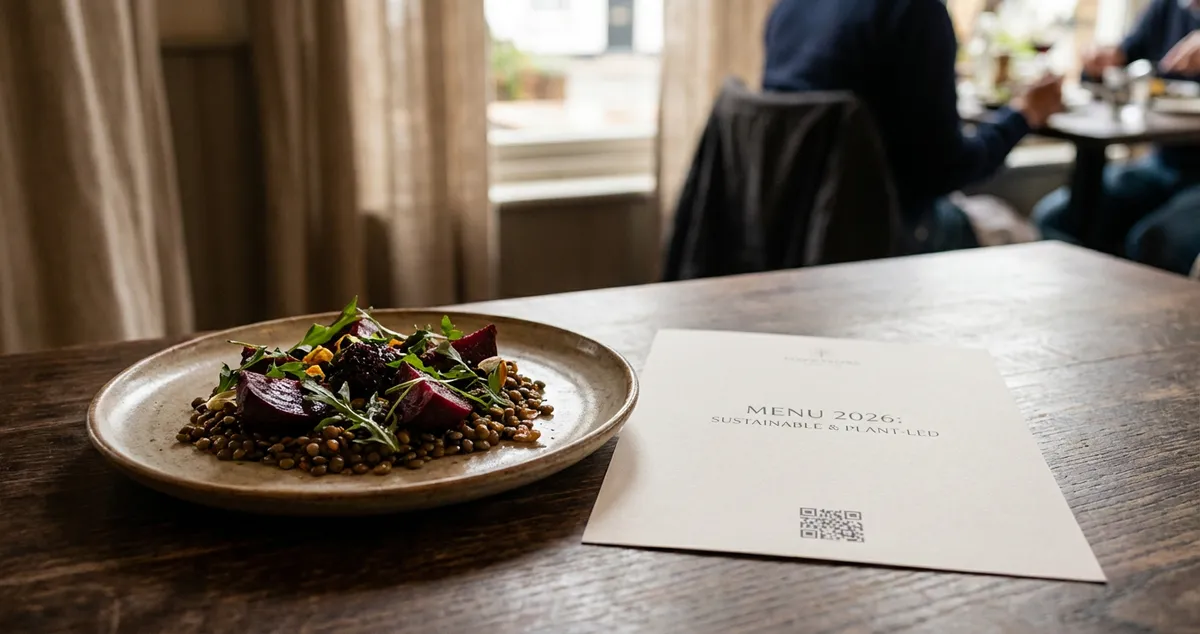
Restaurant menu trends shaping UK dining in 2026. Plant-forward options, digital menus, menu psychology: learn what works.
You've just finished a long Saturday service. Tables were full, covers up 15% on last year, but somehow the margins still feel thin. The same dishes that worked brilliantly two years ago aren't moving like they used to. Your menu is your silent salesperson, yet most restaurant owners update it once a year and wonder why profits stay stubbornly flat.
In 2026, UK dining habits are shifting faster than ever. Millions of Brits use GLP-1 weight loss medications, changing how they eat out (Lumina Intelligence, 2026). Plant-based orders at quick-service restaurants have surged over the past year (McCain Foodservice, 2026). Your menu needs to reflect what customers actually want, not what worked three years ago.
This guide covers the menu trends driving UK restaurants in 2026, from design psychology to digital integration, with practical steps you can implement this week. 9 min read.
What you'll learn:
- The five biggest restaurant menu trends shaping UK dining in 2026
- How digital menus and QR codes are changing customer expectations
- The 30/30/30 rule and why it matters for your pricing
- Menu engineering psychology that increases profits
- A practical weekly audit checklist you can start this week
What Are the Biggest Restaurant Menu Trends in 2026?
The latest restaurant menu trends in 2026 centre on health-conscious options, experiential dining, and technology integration. UK restaurants are moving away from ultra-processed meat alternatives towards whole, high-quality vegetables, while offering tasting-style menus and shareable options to accommodate changing appetites.
Here are the trends reshaping UK menus in 2026.
Plant-Forward Menus Are Mainstream
First, consider the plant-forward shift. Around a fifth of UK diners identify as at least flexitarian (Restroworks, 2025). That's not a niche market. It's your Tuesday lunch crowd.
The shift has moved beyond token vegan options. The UK plant-based food market continues to grow steadily, with projections showing significant expansion through 2033 (IMARC Group). Restaurants are responding with quality-focused dishes that deliver flavour to everyone, not just committed vegans.
What this means for your menu:
- Feature several plant-forward dishes that appeal to flexitarians, not just vegans
- Position vegetables as heroes, not sides
- Avoid processed meat alternatives in favour of whole ingredients
A neighbourhood bistro might add a roasted cauliflower steak with chimichurri as a main course, priced the same as meat options. The dish appeals to vegetarians, health-conscious diners, and anyone who just fancies something different.
Info
Related: Food Trends for Restaurants
Tasting Menus and Shareables Are Growing
Beyond plant-forward options, portion expectations are also shifting. GLP-1 medications like Ozempic are changing dining behaviour. With appetite reduction common among users, operators are updating menus to centre around tasting-style formats and shareable options (Lumina Intelligence, 2026).
This trend benefits restaurants in multiple ways:
- Higher per-head spend on premium small plates
- More menu items tried per visit
- Better margins on curated experiences
Most guests say they're willing to pay more for unique dining experiences (SevenRooms, 2025). A set tasting menu removes decision fatigue while showcasing your kitchen's best work.
Health and Transparency Drive Decisions
In addition to portion flexibility, transparency matters more than ever. A significant proportion of UK consumers say healthy dining drives their restaurant choices (Restroworks, 2025). In response, most restaurants have expanded their healthier options.
This goes beyond calorie counts. Diners want:
- Clear allergen information
- Gut-health-friendly options
- Transparent sourcing
If you're reading this thinking "I don't have time to rewrite every description," start smaller. Add symbols for dietary requirements. Note local suppliers on your specials board. These small signals build trust.
Info
Related: Restaurant Trends 2025
How Digital Menus Are Changing UK Restaurants
So you've got the food trends sorted. But how are you presenting them?
Digital menu adoption has accelerated dramatically, one of the most significant restaurant menu trends of 2026. The majority of UK restaurants have invested in QR menu, order, and payment systems (Restroworks, 2025). The convenience benefits are clear, but the design implications are often overlooked.
QR Codes Are Here to Stay
As a result of this digital shift, QR technology is no longer novel. It's expected. Restaurants using integrated QR code ordering see measurable improvements in table turnover and service time (Square, 2025).
However, a significant minority of older diners still resist QR menus due to tech barriers. Keep physical menus available for those who prefer them.
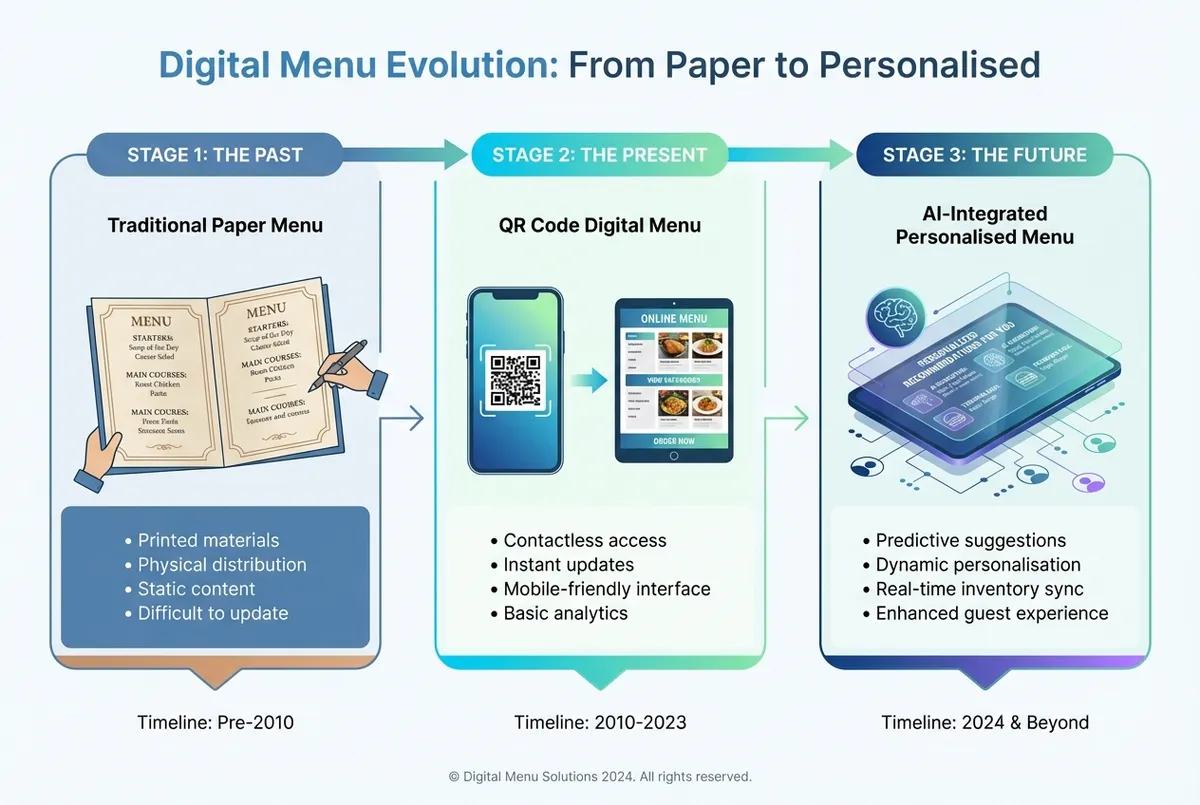
The evolution of restaurant menus from traditional paper to AI-integrated digital systems
Digital Menus Enable Better Psychology
Moving beyond convenience, digital menus offer design advantages physical menus cannot match. Restaurants using scientifically-designed digital menus report significant sales increases (Evergreen HQ, 2025).
The key differences in restaurant menu trends for digital:
- Dynamic highlighting of high-margin dishes
- A/B testing different layouts and descriptions
- Real-time updates for sold-out items or daily specials
- High-quality images that drive appetite
Customers spend less than two minutes reading a menu before deciding (Altametrics, US). Digital design helps guide those moments toward your most profitable items. The biggest mistake is treating your digital menu as a PDF replacement rather than a conversion tool. Managing your digital menu and product listings in one place makes it far easier to highlight those high-margin dishes.
If you're only thinking about digital menus as a cost-saving measure, you'll always lose to competitors who see them as a design opportunity. The technology is just the vehicle; the psychology is what drives results.
What Is the 30/30/30 Rule for Restaurants?
With an understanding of how digital menus work, let's look at the financial framework behind menu decisions. The 30/30/30 rule is a traditional framework for allocating restaurant revenue: roughly one third each for food costs, labour, and overhead, with the remainder as net profit. It helps operators maintain balanced expenses while targeting sustainable profitability.
This rule has evolved with rising costs. Many operators in 2026 focus instead on prime cost, the combined total of food and labour expenses, which should stay well under two-thirds of total sales (7shifts, US).
Why This Matters for Menu Pricing
Consequently, understanding your cost structure directly affects menu decisions. The table below shows how the traditional targets compare to current reality.
Note: Actual percentages vary significantly by restaurant concept and location.
| Cost Category | Traditional Target | Reality Check |
|---|---|---|
| Food costs | Around a third | Varies by concept |
| Labour costs | Around a third | Often higher with minimum wage increases |
| Overhead | Around a third | Highly variable by location |
| Net profit | Remainder | Industry average often lower |
If you're consistently missing margin targets, the menu is often the first place to look. Are you pricing based on costs or based on what competitors charge? These are different strategies with different outcomes. If you can't tell whether your pricing strategy follows any framework at all, that's usually a sign the menu needs a proper audit.
For example, a neighbourhood Italian might find their pasta dishes (low food cost) subsidise their premium steaks (high food cost). Understanding this balance helps you price strategically rather than reactively.
Info
Related: Restaurant Design Trends
Menu Engineering: The Psychology Behind Profitable Menus
Now for the psychology that makes it all work. Menu engineering, developed in the early 1980s, uses design principles to maximise restaurant profits (Wikipedia). The core principles still apply, but 2026 applications have evolved.
The Golden Triangle Still Works
When customers look at a menu, their eyes typically move to the middle first, then to the top right, then to the top left. This "Golden Triangle" is where you place highest-margin dishes (US) (Aaron Allen & Associates).
Additional restaurant menu trends in placement psychology:
- Customers subconsciously order the top two items in each section more often
- The last item in each section is often the third-best position
- People remember the first and last items in any list
A gastropub using this framework might structure their mains section with their highest-margin pie near the top, a mid-priced burger in the middle, and a premium steak at the bottom.
Design Elements That Drive Sales
Good menu layout can measurably increase sales just by making items easier to find (Terraslate, 2026). Key principles:
Reduce decision fatigue: Limit each menu section to a handful of options. Too many choices lead to slower decisions and lower satisfaction.
Remove currency signs: Diners spend noticeably more when prices are written without pound signs (Toast, US - though UK research shows similar patterns).
Use colour strategically: Green implies freshness. Orange stimulates appetite. Red encourages action and draws attention to high-margin items.
Create visual hierarchy: Use size, boldness, or borders to highlight signature dishes without cluttering the layout.
For instance, a craft beer pub might use a subtle gold border around their house burger while keeping other items in plain text. This simple visual cue naturally draws the eye without feeling pushy.
Why This Matters
These restaurant menu trends aren't just theoretical. Research consistently shows that psychology-informed design increases both average spend and customer satisfaction.
Descriptions That Sell
Menu descriptions have moved beyond ingredient lists. Nostalgia, comfort, and "flavour escapism" are defining consumer desires across the hospitality industry (US) (National Restaurant Association - the same restaurant menu trends apply in the UK).
Effective descriptions:
- Evoke specific memories or emotions
- Mention cooking methods that suggest care
- Reference origins or sourcing where relevant
- Stay concise
Compare: "Chocolate brownie" versus "Warm dark chocolate brownie, served with vanilla bean ice cream and a homemade salted caramel drizzle."
The second version creates anticipation. The first is forgettable.
What Your Menu Should Include in 2026
With the psychology understood, here's what to actually include. Based on current restaurant menu trends research, UK restaurants should consider these elements:
Must-Have Features
- Clear dietary labelling: Icons for vegetarian, vegan, gluten-free, and major allergens
- Quality plant-forward mains: Not afterthought sides
- Shareable options: Small plates or tasting portions for changing appetites
- QR code access: With physical menus still available
Trending Additions
- Drink-led experiences: Layered, experiential, and visually engaging beverages are growing, particularly in coffee shops and QSR formats
- Local and regional sourcing: Scottish salmon, Aberdeen Angus, Welsh lamb signal quality and support local positioning
- Curated customisation: Hero bases with controlled swaps rather than overwhelming build-your-own options
What to Avoid
- Oversized menus: The paradox of choice applies. Keep sections focused.
- Outdated pricing psychology: Customers notice when prices end in .99
- Ultra-processed alternatives: The market has moved toward whole ingredients
- Tech-only access: Many older customers still prefer physical menus
For example, a casual dining restaurant might apply these principles by featuring three signature plant-forward mains with clear allergen icons, offering a "sharing boards" section for smaller appetites, and using descriptive names that reference local sourcing.
If you're only updating your menu when seasonal ingredients change, you'll always lose to competitors who treat their menu as a living sales tool that evolves with customer feedback and margin analysis.
Key Takeaways: Restaurant Menu Trends
If you run a restaurant and want to see how Local Brand Hub can support your marketing, explore our restaurant marketing tools.
Key Takeaways: Restaurant Menu Trends
Finally, let's bring it all together. Your menu is a living document that should evolve with customer preferences, not gather dust in a drawer. The trends shaping UK restaurants in 2026 all point toward thoughtful, customer-focused design.
Here's the reality for most independent restaurants: you're too busy running service to analyse menu performance weekly. That's normal. But ask yourself honestly: when did you last look at your menu through a customer's eyes? If you can't tell whether your menu is driving margins or just filling tables, that's usually a sign something needs attention.
This Week's Menu Audit
- Day 1-2: Check your Golden Triangle. Where are your highest-margin items positioned?
- Day 3-4: Review plant-forward options. Do you have at least two dishes that appeal to flexitarians?
- Day 5-7: Examine your descriptions. Do they evoke appetite, or just list ingredients?
If you only have 30 minutes this week, do this: Pick your three highest-margin dishes and move them to premium positions (top of section, middle of page, or highlighted with a border). This single change can shift purchasing behaviour immediately.
The restaurants seeing strong results in 2026 are not chasing every trend. They're making deliberate choices based on their customers, their margins, and their concept. Your menu should do the same.
Info
Related: Restaurant Trends
Sources:
- Lumina Intelligence - UK Food and Beverage Trends
- SevenRooms - UK Restaurant Industry Trends Report
- Restroworks - London Restaurant Industry Statistics
- McCain Foodservice - The Rise of Plant-Forward Menus
- IMARC Group - UK Plant-Based Food Market
- QR Code UK - QR Code Statistics for Restaurant Usage
- Evergreen HQ - Digital Menu Design Trends
- Aaron Allen & Associates - The Psychology of Restaurant Menu Design
- Toast - Psychology of Restaurant Menu Design
- National Restaurant Association - What's Hot Culinary Forecast
Get More Marketing Tips
Practical marketing tips for UK business owners, straight to your inbox. No spam, unsubscribe anytime.
About the Author
Local Brand Hub
Empowering UK Businesses
Local Brand Hub provides comprehensive business management tools designed specifically for UK local businesses to streamline operations, automate marketing, and grow revenue.
More articlesRelated Articles
 Tutorials
Digital Restaurant Signage: Screens, Costs and Setup
How to set up digital restaurant signage in the UK. Covers screens, digital menu boards, software platforms, realistic costs and installation.
 Marketing Tips
Restaurant Brunch Marketing: UK Strategy Guide
Master restaurant brunch marketing with this UK strategy guide covering menu design, pricing, social media and promotions that fill weekend tables.
 Marketing Tips
Restaurant Brunch Menus: Design One That Sells
Design restaurant brunch menus that boost covers and profits. UK layout tips, pricing tiers, bottomless brunch options and dietary accommodations.