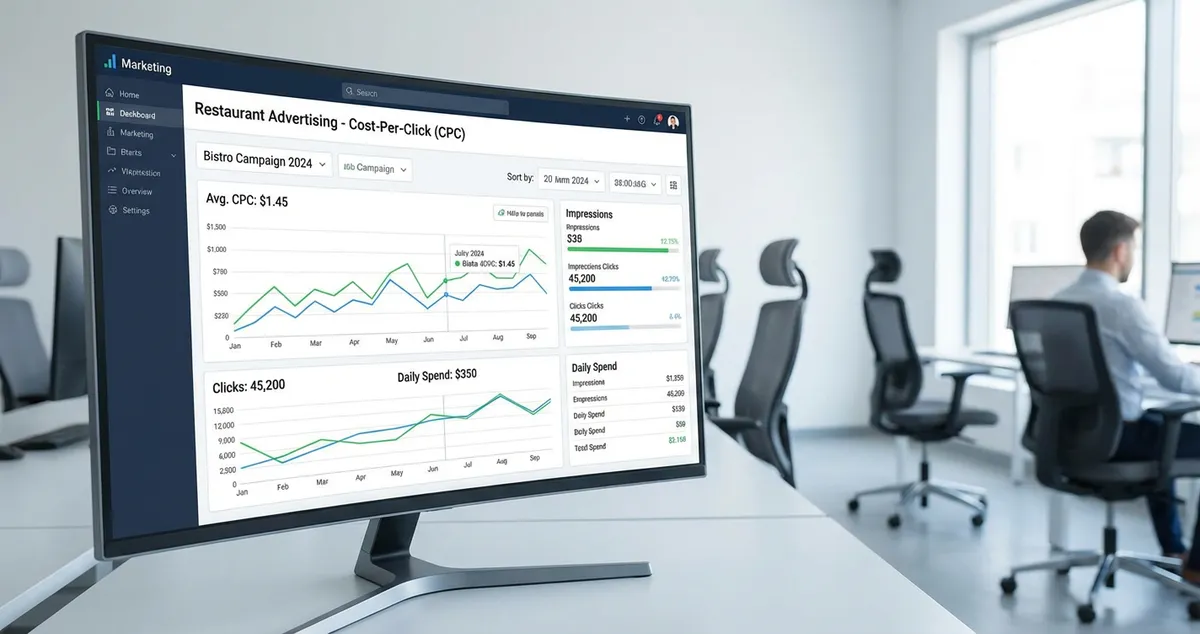
Run profitable PPC campaigns for your restaurant. Covers Google Ads setup, local keyword targeting, budget allocation, and booking-focused ad copy.
You've just finished another quiet Tuesday service. The walk-in traffic that used to fill your tables has disappeared. Meanwhile, the chain down the road seems packed every night. Their secret? They're showing up when it matters: right when hungry locals search "best curry house near me."
Restaurant PPC advertising puts your establishment at the top of that search result. You pay only when someone clicks, capturing customers at the exact moment they're deciding where to eat.
Info
Related: For a broader overview of advertising options, see our restaurant advertising guide.
What You'll Learn About Restaurant PPC
- What PPC advertising is and why it works for restaurants
- How to set up your first Google Ads campaign
- Which keywords drive the most bookings
- Realistic costs and ROI for UK restaurants
- Common mistakes that waste your ad budget
What Is PPC in Restaurants?
The PPC framework is a digital advertising approach that charges you only when someone clicks your ad, putting your restaurant in front of hungry searchers at the exact moment they're deciding where to eat. For restaurants, this primarily means Google Ads: text ads that appear at the top of search results when someone searches for places to eat.
A local gastropub using restaurant PPC might bid on "Sunday roast near me" and appear above the organic results. When a searcher clicks their ad, they pay £1.50. No click, no charge. Simple.
Unlike traditional advertising where you pay for exposure regardless of results, PPC charges only for actual engagement. If 1,000 people see your ad but only 50 click, you pay for 50 clicks.
According to Google Ads industry data, the restaurant and food industry enjoys some of the lowest costs per click across all sectors, averaging £1.60-£2.05 compared to £4-5 for most industries. That's roughly half what other businesses pay for the same visibility. Google Ads explains how to set up conversion tracking to measure actual bookings from your campaigns.
From working with UK restaurants on their PPC campaigns, we've consistently seen that proper conversion tracking is what separates successful campaigns from money pits. You can't optimise what you can't measure.
If you're reading this after yet another quiet Tuesday wondering where all the customers went, you're not alone. Most restaurant owners feel overwhelmed by digital advertising jargon. The good news: PPC is actually one of the simpler advertising methods to understand and measure.
Why PPC Works for Restaurants
Here's why it matters. PPC captures people at the exact moment they're deciding where to eat. This "high intent" traffic converts far better than passive advertising.
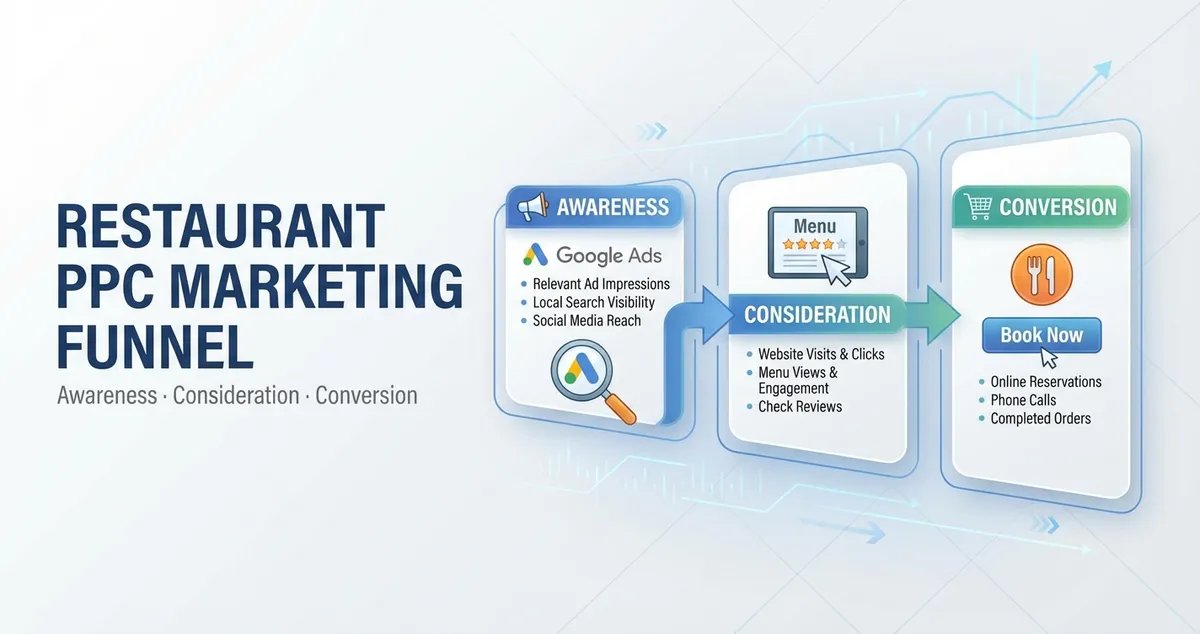
PPC captures customers at the moment of decision
The intent advantage:
When someone searches "Thai restaurant Shoreditch," they're not casually browsing. They want Thai food in Shoreditch right now. Compare this to a Facebook ad shown to someone scrolling through holiday photos. Both have value, but the Google searcher is ready to act.
Why restaurants benefit:
- Local searches have clear booking intent
- Restaurant CPCs are lower than most industries
- Results are immediately measurable
- You control exactly when and where ads appear
If you're running organic social media but not PPC, you'll always lose to competitors who capture searchers at the moment of decision. You're relying on people stumbling across your content rather than showing up when they're actively searching.
The Timing Difference
Organic social reaches people when they're relaxing. PPC reaches them when they're hungry and ready to book. Different moments, different conversion rates.
Ready to get started? Let's walk through setting up your first campaign.
How to Set Up Restaurant PPC Campaigns
Now let's get practical. Setting up Google Ads for your restaurant involves five key steps. Get these right, and your campaigns have a solid foundation.
1. Choose Your Campaign Type
For restaurants, start with a Search campaign. This shows text ads when people search relevant keywords. Later, you can add Display campaigns for retargeting.
For example, a seafood restaurant in Brighton might run a Search campaign targeting "fish and chips Brighton" and see their ads appear above organic results when tourists search for lunch.
2. Define Your Location Targeting
Set your ads to show only within a realistic radius of your restaurant:
- City centre restaurants: 3-5 miles
- Suburban restaurants: 5-10 miles
- Destination restaurants: 15-25 miles
Don't waste budget showing ads to people who won't travel to you.
3. Select Your Keywords
Focus on keywords with clear local intent:
High-intent keywords (prioritise these):
- "[cuisine] restaurant [location]"
- "best [cuisine] near me"
- "restaurants open now [location]"
- "[cuisine] takeaway [location]"
Supporting keywords:
- "where to eat in [location]"
- "dinner reservations [location]"
- "Sunday lunch [location]"
4. Write Compelling Ad Copy
Your ad needs to stand out among competitors. Include:
- Your unique selling point (fresh pasta, wood-fired pizza, etc.)
- A clear call-to-action (Book Now, Order Online)
- Location or "near [landmark]"
- Any promotions or offers
Example ad:
Authentic Italian Restaurant | Manchester
Fresh pasta made daily. Book your table online.
⭐ 4.8 stars on Google | Open 7 days
5. Set Your Budget and Bids
Start with £15-25 per day (£450-750 monthly). Use "Maximise Clicks" bidding initially to gather data, then switch to "Maximise Conversions" once you have 30+ conversions.
With your campaign structure in place, let's look at what you should expect to pay.
Restaurant PPC Costs in the UK
Additionally, understanding typical costs helps you budget realistically and spot underperforming campaigns.
Typical UK restaurant PPC metrics (benchmarks vary by location and cuisine):
| Metric | UK Average | Good Performance |
|---|---|---|
| Cost per click | £1.50-£2.50 | Under £2.00 |
| Click-through rate | 3-5% | Over 5% |
| Conversion rate | 5-10% | Over 10% |
| Cost per booking | £15-30 | Under £20 |
Monthly budget recommendations:
- Testing phase: £300-500
- Established campaigns: £500-1,500
- Competitive areas (London, etc.): £1,000-2,500
According to Google's own restaurant advertising data, restaurants using Google Ads see an average return of £2-3 for every £1 spent. Your results will vary based on competition, location, and how well your website converts visitors.
Common Restaurant PPC Mistakes
However, many campaigns fail. Avoid these errors that waste budget and kill campaign performance:
1. Targeting too broad an area A Birmingham restaurant showing ads to people in London is throwing money away. The biggest mistake is setting your radius too wide: be ruthless with location targeting.
2. Ignoring negative keywords If you're only targeting broad keywords without negatives, you'll always lose to competitors who filter out irrelevant traffic. Add negative keywords to prevent irrelevant clicks:
- "jobs" (people looking for work, not dinner)
- "recipes" (home cooks, not diners)
- "franchise" (people wanting to buy a restaurant)
3. Sending traffic to your homepage Create dedicated landing pages for your ads. Someone searching "Sunday roast" should land on your Sunday menu, not a generic homepage. Sending all traffic to your homepage often leads to high bounce rates. Searchers leave when they can't immediately find what they searched for.
4. Not tracking conversions Without conversion tracking, you're flying blind. Set up Google Ads conversion tracking for:
- Online bookings completed
- Phone calls from ads
- Direction requests
5. Giving up too early PPC campaigns need 2-4 weeks of data before you can judge them. Pausing after 3 days because you haven't seen a booking? That rarely works: give the algorithm time to learn.
If you're spending on PPC without tracking which keywords actually drive bookings, that's usually a sign your measurement needs work before your ads do. Tools like LocalBrandHub can help streamline your tracking and reporting across all your marketing channels, with automated weekly performance reports.
Minimum Viable Restaurant PPC
Here's the quickest path to get started. If you only have 30 minutes a week for marketing, focus on these essentials:
This week, launch a basic PPC campaign:
- Day 1-2: Create a Google Ads account and set up conversion tracking
- Day 3-4: Build one campaign targeting "[your cuisine] restaurant [your area]" with £15/day budget
- Day 5-7: Write 3 ad variations and let them run
Don't try to be clever with advanced features yet. A simple, well-targeted campaign beats a complex one you don't understand.
If you're reading this after a long shift and thinking "I tried PPC once and it didn't work," the reality is that most first attempts fail because of setup issues, not because PPC doesn't work for restaurants.
Minimum viable budget: £300-500/month. Below this, you won't gather enough data to optimise effectively.
Quick Test
Ask yourself: would you click on your own restaurant's ads? If not, start there.
Your Restaurant PPC Checklist
Before launching your PPC campaign, work through these essentials:
- Create a Google Ads account and set up billing
- Install conversion tracking on your booking/order page
- Research local keywords using Google Keyword Planner
- Set location targeting to your service area
- Add negative keywords (jobs, recipes, franchise)
- Create at least 3 ad variations
- Set up call and location extensions
PPC vs Other Advertising Options
Here's how restaurant PPC compares to other advertising channels:
| Channel | Intent Level | Cost Per Click | Best For |
|---|---|---|---|
| Google Search PPC | Very high | £1.50-£2.50 | Immediate bookings |
| Facebook Ads | Low-medium | £0.50-£1.00 | Awareness and offers |
| Google Display | Low | £0.20-£0.50 | Retargeting past visitors |
| Instagram Ads | Low-medium | £0.50-£1.00 | Visual engagement |
| Google Local Services | Very high | £15-£30 per lead | Service businesses |
For most UK restaurants wanting immediate bookings, Google Search PPC typically delivers the highest intent traffic and fastest results.
Key Takeaways: Restaurant PPC
If you run a restaurant and want to see how Local Brand Hub can support your marketing, explore our restaurant marketing tools.
Key Takeaways: Restaurant PPC
Finally, let's summarise. PPC puts your restaurant in front of hungry searchers at the exact moment they're deciding where to eat. Here's what to remember:
- PPC captures high-intent searches: people ready to book, not just browsing
- Restaurants enjoy lower CPCs (£1.50-2.50) than most industries
- Location targeting is critical: don't waste budget on distant searchers
- Track conversions from day one so you know what's working
- Give campaigns 2-4 weeks before judging performance
- Start with Search campaigns, add Display for retargeting later
Weekly Action
This week, take one concrete step toward restaurant PPC:
- Day 1-2: Create a Google Ads account if you haven't already (20 minutes)
- Day 3-4: Install conversion tracking on your booking page
- Day 5-7: Research 5-10 local keywords using Keyword Planner
If you're already running PPC, review your search terms report this week. You'll likely find irrelevant queries (jobs, recipes, franchises) to add as negative keywords, a quick win that improves ROI immediately.
For UK restaurants
Need Help With Restaurant PPC?
Local Brand Hub helps UK restaurants set up and manage PPC campaigns that drive actual bookings.
Start freeGet More Marketing Tips
Practical marketing tips for UK business owners, straight to your inbox. No spam, unsubscribe anytime.
About the Author
Local Brand Hub
Empowering UK Businesses
Local Brand Hub provides comprehensive business management tools designed specifically for UK local businesses to streamline operations, automate marketing, and grow revenue.
More articlesRelated Articles
 Marketing Tips
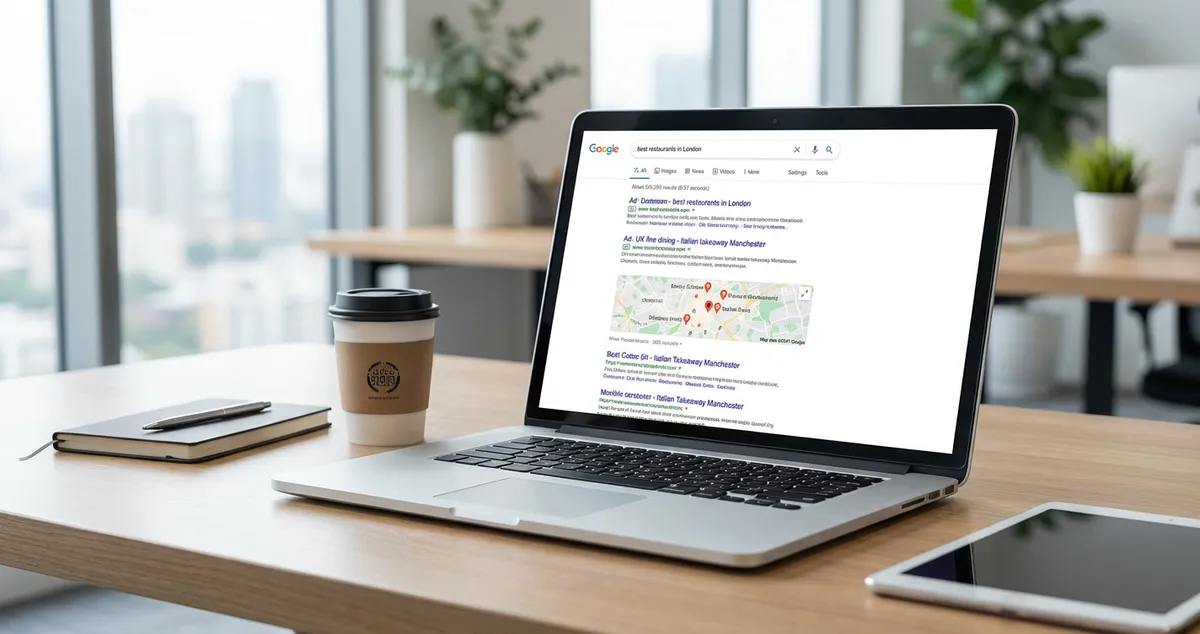
Google Ads for Restaurants: A Practical UK Marketing Guide
Run Google Ads for your restaurant with real UK cost benchmarks, realistic ROI expectations, and a clear comparison against Facebook Ads.
 Marketing Tips
Restaurant Advertising: The Complete UK Guide for 2025
Master restaurant advertising with proven UK strategies for Google Ads, Facebook, and local marketing. Budget tips and tactics to fill tables.
 Marketing Tips
Facebook Ads for Restaurants: UK Budget Guide 2025
Run effective Facebook ads for UK restaurants. Master the 3-2-2 testing method, local targeting, and budget tips that fill tables.