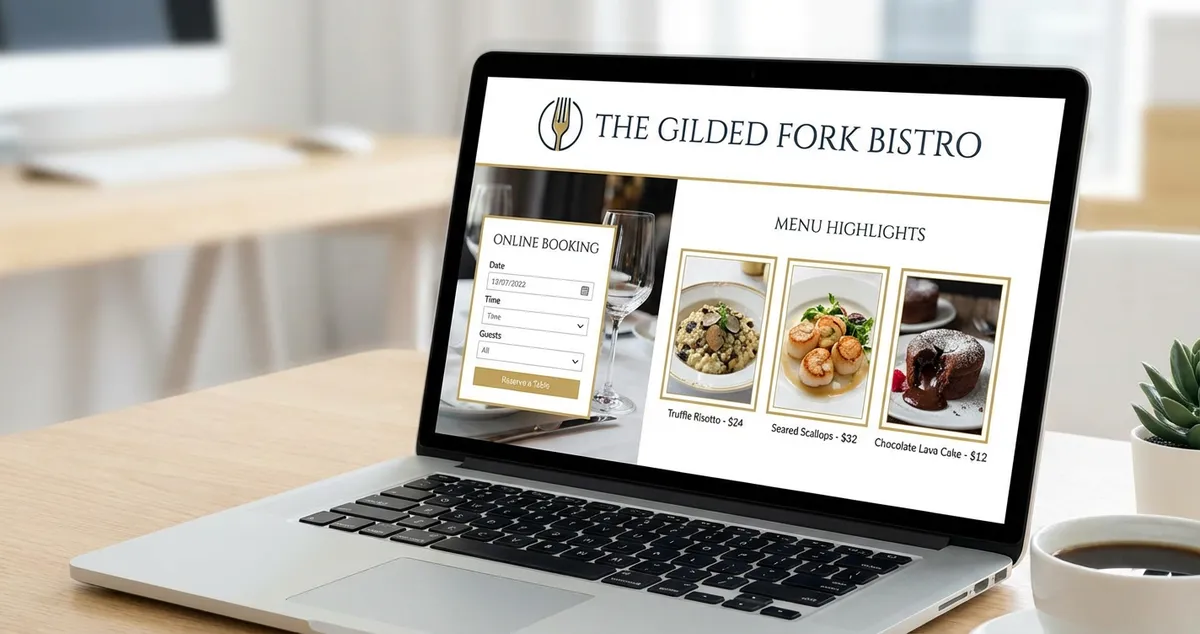
Create restaurant landing pages that turn ad clicks into table bookings. Design tips, essential elements, and conversion strategies for UK venues.
You're paying £2 per click on Google Ads. Someone clicks, lands on your homepage, gets overwhelmed by navigation options, and leaves without booking. That's £2 wasted, hundreds of times monthly. Restaurant landing pages solve this problem by removing distractions and guiding visitors toward a single action: booking a table.
Info
Related: Landing pages are essential for effective restaurant advertising and restaurant PPC campaigns.
If you're reading this wondering why your ads aren't converting despite decent click-through rates, you've likely identified the problem already. Your landing page is the missing link between paying for a click and getting a booking. Ask yourself: would you book a table at a restaurant whose website confused you?
What You'll Learn About Restaurant Landing Pages
- What makes restaurant landing pages different from homepages
- The essential elements every restaurant landing page needs
- How to match landing pages to your ad campaigns
- Conversion optimisation tips that increase bookings
- A minimum viable landing page you can build this week
What Is a Restaurant Landing Page?
First, let's define the concept. A restaurant landing page is a framework that converts ad visitors into bookings, a focused webpage designed for a single purpose: turning clicks into customers. Unlike your homepage, which serves multiple audiences and goals, a landing page removes distractions and guides visitors toward one action, typically booking a table or placing an order.
According to Unbounce's conversion benchmark data, average landing pages convert at around 4%, but restaurant landing pages often achieve significantly higher rates when optimised. That's the difference between losing most of your ad spend and turning clicks into actual bookings. Google Ads explains how landing page experience affects your Quality Score and ad costs.
From building landing pages for UK restaurants, we've consistently found that the simplest pages convert best: every extra click or scroll you add loses visitors.
The principle is simple: when someone clicks an ad for "Sunday roast near me," restaurant landing pages should show your Sunday roast, not your general homepage where visitors hunt for information.
For example, a gastropub running Google Ads for "Sunday roast" needs restaurant landing pages featuring their roast, pricing, and a booking button, not their generic homepage.
Why Restaurants Need Dedicated Landing Pages
Here's the core problem. Your homepage serves multiple purposes: introducing your restaurant, showing menus, sharing your story, listing contact details. That flexibility becomes a weakness when you're paying for targeted traffic. If you're thinking "my homepage looks fine," it probably does, but generic homepages rarely convert paid visitors into bookings.
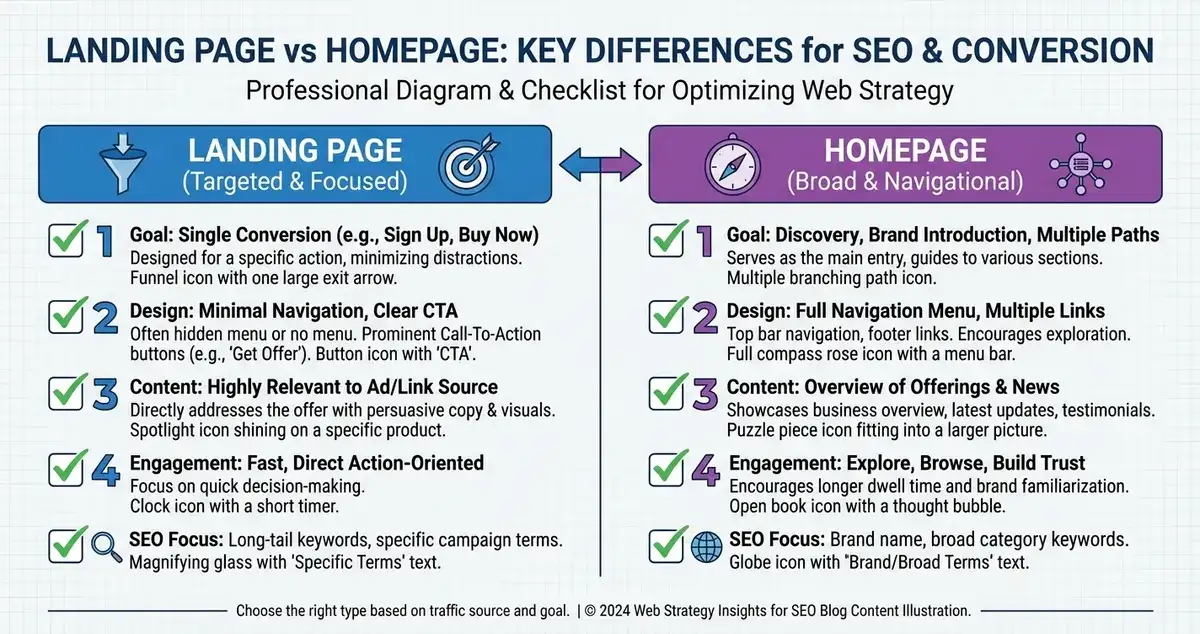
Landing pages focus visitors on a single action
Homepage problems for paid traffic:
- Too many navigation options create decision paralysis
- Generic messaging doesn't match specific ad promises
- Key information (booking, location, hours) gets buried
- Mobile experience suffers from content overload
Landing page advantages:
- Single focused call-to-action increases conversions
- Message matches ad copy for consistency
- Essential information appears above the fold
- Faster load times improve mobile experience
A restaurant running Google Ads for restaurants targeting "romantic dinner London" should have a landing page featuring candlelit table photos, private dining options, and a prominent booking button, not their standard homepage.
Protect Your Investment
You're already paying to get visitors to your site. A landing page ensures that investment converts into bookings rather than bounces.
Let's break down what every restaurant landing page needs to include.
Essential Elements of Restaurant Landing Pages
Let's get specific. Every high-converting restaurant landing page includes these components. Building restaurant landing pages without these elements means you'll always lose to competitors who include them.
1. Compelling Headline
Your headline should match your ad and immediately confirm visitors are in the right place. If your ad promises "Authentic Italian near King's Cross," your landing page headline should reinforce that.
Example: "Authentic Italian Dining | 5 Minutes from King's Cross Station"
2. Hero Image or Video
Show your best dish or venue shot. According to MGH's restaurant marketing research, 72% of diners say food photos influence their decisions. Make those photos count.
3. Clear Call-to-Action
One primary button, visible without scrolling: "Book Your Table" or "Reserve Now." Make it stand out with contrasting colours.
4. Key Information Above the Fold
Before visitors scroll, they should see:
- What cuisine/type of restaurant
- Location (area, not full address)
- Opening hours or availability indicator
- Primary call-to-action button
5. Social Proof
Include Google rating, TripAdvisor score, or customer testimonials. Trust signals reduce friction.
6. Menu Highlights
Show 3-5 signature dishes with prices. People want to know what you serve and roughly what it costs.
7. Location and Contact
Embedded map, address, phone number. Make it easy for people to find you.
Landing Pages for Different Campaign Types
Additionally, different campaigns need different restaurant landing pages. Match your landing page to your ad campaign goal.
Here's how to match your landing pages to your campaigns:
- "Near me" searches: Focus on location and quick booking. For example, a pizza restaurant targeting "pizza near Clapham" should land visitors on a page with their exact location, a map, current hours, and a prominent "Order Now" button.
- Event promotion: Create a specific page for each major event. A gastropub's Valentine's page should show the special menu, romantic ambience photos, and a booking form with the date pre-selected.
- Seasonal menu: Showcase the seasonal dishes with appetising photos, pricing, and a direct path to booking.
- Special offers: Make the offer crystal clear with terms, expiry, and an easy claim button.
- Retargeting: Remind visitors why they visited with a small incentive: "Still thinking about dinner? 10% off your first booking."
A restaurant ad campaign promoting Valentine's Day should land on a Valentine's-specific page showing your special menu, romantic ambience photos, and a booking form with date pre-selected.
Let's look at how to squeeze more conversions from every visitor.
Conversion Optimisation Tips
Furthermore, small tweaks make big differences. Small improvements to restaurant landing pages significantly increase bookings:
Speed matters. According to Google's research, most mobile visitors leave pages that take too long to load. Compress images and minimise code: every second counts.
Reduce form fields. Only ask for essentials: name, date, time, party size, contact. Every additional field reduces completions.
Add urgency appropriately. "Only 3 tables left for Saturday" works if it's true. Fake scarcity destroys trust.
Test your mobile experience. Most restaurant searches happen on mobile. If your restaurant landing pages don't work well on phones, you're losing many of your potential bookings.
Match ad messaging exactly. If your ad mentions "20% off first visit," that offer must appear prominently on the landing page. Broken promises kill conversions.
For example, a sushi restaurant running a "Lunch Special £12" ad should land visitors on a page that immediately shows the lunch special with a clear booking button, not a generic menu page where the offer is buried.
If you're paying for clicks but visitors aren't converting, that's usually a sign your landing page needs work before you increase ad spend. Our all-in-one marketing platform helps you keep your offers and branding consistent across the pages you drive ad traffic to.
Knowing what to do is half the battle: knowing what to avoid is equally important.
Landing Page Mistakes to Avoid
However, some restaurant landing page mistakes are very common. These errors waste your advertising budget:
1. Sending ad traffic to your homepage This is the most common mistake: it rarely works for paid campaigns. Create dedicated restaurant landing pages for each major campaign.
2. Too many calls-to-action "Book Now," "View Menu," "Join Newsletter," "Follow Us": pick one primary action. If you're giving visitors multiple options you'll always lose to competitors who make the path to booking crystal clear.
3. Slow load times Large, uncompressed images are the usual culprit. Use WebP format and lazy loading.
4. Missing mobile optimisation Buttons too small to tap, text too small to read, forms impossible to complete on phone.
5. No trust signals People need reassurance before committing. Reviews, ratings, and recognisable booking systems help.
6. Hidden essential information If visitors have to hunt for your location or hours, they'll leave.
For example, a wine bar made the mistake of burying their opening hours three scrolls down, once they moved hours and address above the fold, booking conversions increased noticeably.
If you're reading this after a long shift and thinking "I don't have time for all this," here's a quick-start approach.
Minimum Viable Landing Page
Here's the quickest way to start. If you only have 30 minutes, create simple restaurant landing pages using your existing website platform:
This week, build basic restaurant landing pages:
- Day 1-2: Duplicate an existing page and strip out navigation and footer links
- Day 3-4: Add: headline matching your main ad, hero image, booking button, location, hours
- Day 5-7: Set this as the destination URL for your Google Ads or Facebook Ads
Minimum elements checklist:
- Headline that matches your ad
- One compelling food/venue photo
- "Book Now" button linked to your booking system
- Address and opening hours
- Phone number
| Element | Priority | Time to Add |
|---|---|---|
| Matching headline | Essential | 5 minutes |
| Hero image | Essential | 10 minutes |
| Booking button | Essential | 5 minutes |
| Location/hours | Essential | 5 minutes |
| Social proof | Nice to have | 15 minutes |
That's enough to test whether dedicated restaurant landing pages improve your conversion rate. Refine based on results.
Quick Test
Would you click on your own restaurant's ads? If not, start there.
Your Landing Page Checklist
Before launching your landing page, ensure you've completed these essentials:
- Create a headline that matches your ad copy exactly
- Add a high-quality hero image of your food or venue
- Include ONE clear call-to-action button above the fold
- Display location, hours, and phone number prominently
- Add social proof (Google rating, reviews, awards)
- Test page load speed (under 3 seconds)
- Verify the page works well on mobile devices
Landing Page Types Comparison
| Page Type | Typically Works For | Key Elements | Conversion Focus |
|---|---|---|---|
| Booking page | Search ads | Menu highlights, booking form | Table reservations |
| Event page | Seasonal promotions | Event details, limited availability | Event bookings |
| Offer page | Special promotions | Offer terms, deadline, CTA | Redemption |
| Menu page | Cuisine searches | Dish photos, prices, booking link | Browse-to-book |
| Location page | "Near me" searches | Map, directions, hours | Walk-ins + bookings |
For most UK restaurants running Google Ads, a dedicated booking-focused landing page often converts 2-3x better than sending traffic to your homepage. If you pick just one type from this table, start with a booking page: it works for nearly every ad campaign.
Key Takeaways: Restaurant Landing Pages
If you run a restaurant and want to see how Local Brand Hub can support your marketing, explore our restaurant marketing tools.
Key Takeaways: Restaurant Landing Pages
Finally, the key points. Restaurant landing pages turn paid traffic into paying customers. Here's what matters:
- Dedicated restaurant landing pages convert better than homepages for paid traffic
- Match your page to your ad: consistency builds trust
- Include essentials above the fold: headline, image, CTA, location
- Optimise for mobile: most restaurant searches happen on phones
- Test load speed: slow pages lose over half of visitors
- One clear call-to-action beats multiple competing options
Weekly Action
Check where your current ads send traffic. If it's your homepage, create one dedicated restaurant landing page for your highest-spending campaign. Even a simple page with headline, image, and booking button will likely outperform your homepage. Measure conversion rates for 2 weeks, then expand to create restaurant landing pages for other campaigns.
For UK restaurants
Need Help With Landing Pages?
Local Brand Hub helps UK restaurants create landing pages that convert ad clicks into table bookings.
Start freeGet More Marketing Tips
Practical marketing tips for UK business owners, straight to your inbox. No spam, unsubscribe anytime.
About the Author
Local Brand Hub
Empowering UK Businesses
Local Brand Hub provides comprehensive business management tools designed specifically for UK local businesses to streamline operations, automate marketing, and grow revenue.
More articlesRelated Articles
 Marketing Tips
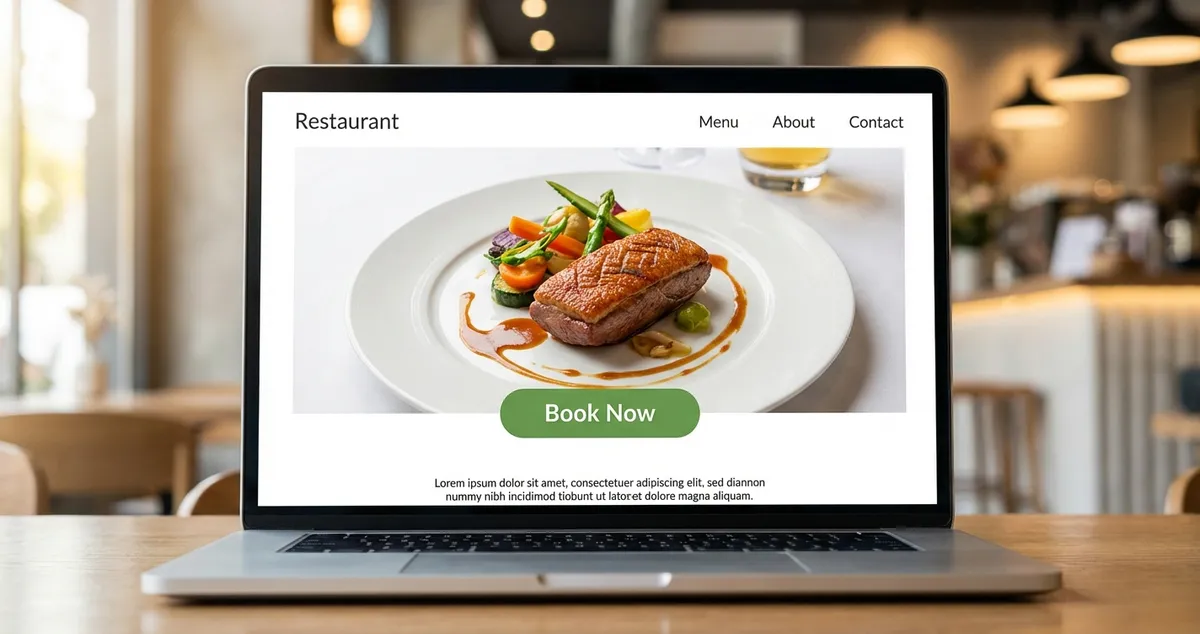
Restaurant Landing Pages: Convert Visitors to Bookings
Build restaurant landing pages that turn visitors into bookings. Covers mobile layout, page speed, CTAs, and social proof with UK examples.
 Marketing Tips
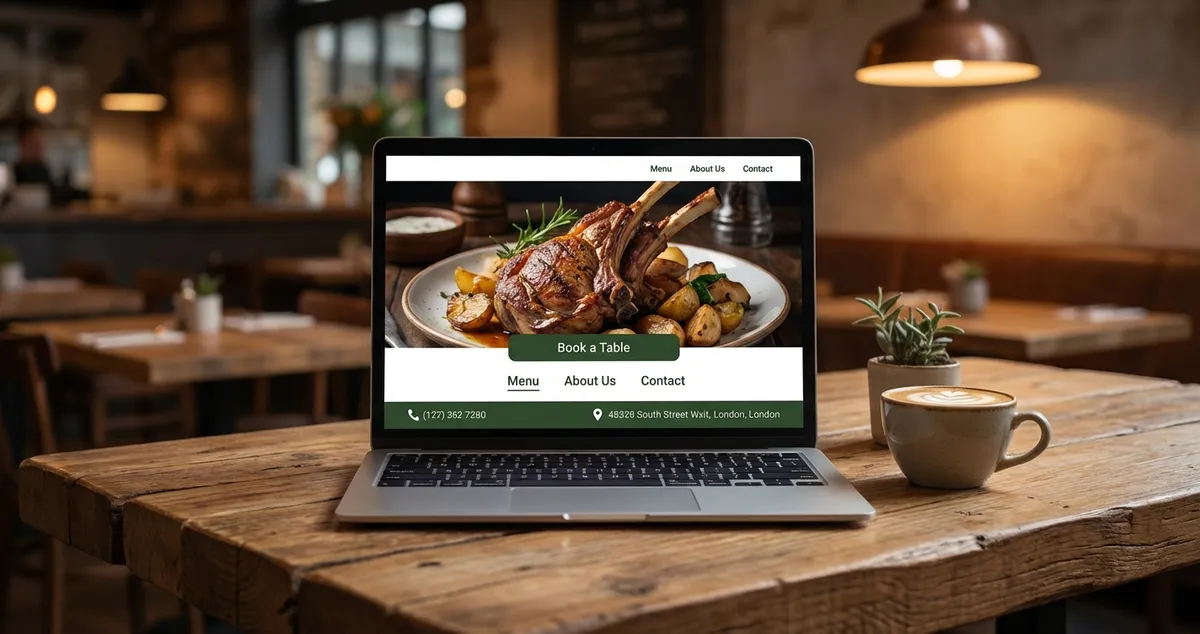
Restaurant Homepage Design: 7 Elements That Convert
Learn 7 essential restaurant homepage design elements that convert visitors into diners. Mobile-first layouts and booking buttons.
 Marketing Tips
Restaurant Menu Page Design: UK Guide for Conversions
Design a restaurant menu page that converts browsers into diners. Step-by-step guidance on layout, UX, and mobile optimisation for UK restaurants.