
Build restaurant ad campaigns that fill tables using the 30/30/30 budget rule, the 7 Ps framework, and real UK case studies with measurable results.
You've spent £500 on Facebook ads. The results? Three likes and your mum asking why you're advertising to her. Meanwhile, the chain down the road fills tables every night. Restaurant ad campaigns can feel like throwing money into the void when you don't have the right strategy in place.
Info
Related: See our complete guide to restaurant advertising for budget allocation strategies.
Restaurant ad campaigns are a marketing approach that matches targeted messages to specific audiences at the right moment, driving bookings rather than just impressions. Effective restaurant ad campaigns share a common trait. They don't rely on luck or massive budgets. They focus on strategy, not spend. This guide shows you exactly how to build campaigns that fill tables.
If you're thinking "we've tried ads before and they didn't work," that's more common than you'd expect. If you're only copying what competitors do without understanding your own audience you'll always lose to restaurants who test and learn from their data.
What You'll Learn About Restaurant Ad Campaigns
- The 30/30/30 rule for campaign budgeting
- Real examples of restaurant ad campaigns that worked
- The 7 Ps framework for restaurant marketing
- How to structure campaigns for different goals
- A minimum viable campaign you can launch this week
What Is the 30/30/30 Rule for Restaurants?
First, let's establish budgeting fundamentals. The 30/30/30 rule is a financial framework for restaurant operations. It works like this: allocate 30% of revenue to food costs. Then 30% goes to labour costs. Another 30% covers overhead expenses like rent, utilities, and marketing. The remaining 10% becomes your profit margin.
For restaurant ad campaigns specifically, marketing typically falls within that overhead allocation. According to UKHospitality industry data, established restaurants often spend 3-6% of revenue on marketing. Newer restaurants typically invest 10-15% to build awareness. Meta for Business offers free resources on building advertising strategies that work particularly well for local businesses.
Consistency tends to beat intensity. A modest budget running continuously often outperforms sporadic larger spends.
What this means for your restaurant ad campaigns: If you're turning over £500,000 annually, a 5% marketing allocation gives you around £25,000 yearly. With half of that going toward digital advertising, you're looking at roughly £1,000 monthly for ad spend.
For example, a neighbourhood restaurant with modest turnover might allocate £500-600 monthly for ads, while a busier high street venue could justify double that.
The 30/30/30 rule provides guardrails. However, don't treat it as gospel. Fast-casual restaurants often have lower labour costs. Fine dining might spend more on staff but charge higher margins. Adjust your restaurant ad campaigns based on your actual numbers.
What Is the Best Way to Advertise a Restaurant?
Now let's explore your options. The most effective approach to restaurant advertising is a strategy that combines digital precision with local relevance. Google Ads captures people actively searching for somewhere to eat. Meanwhile, social media builds awareness and showcases your food visually.
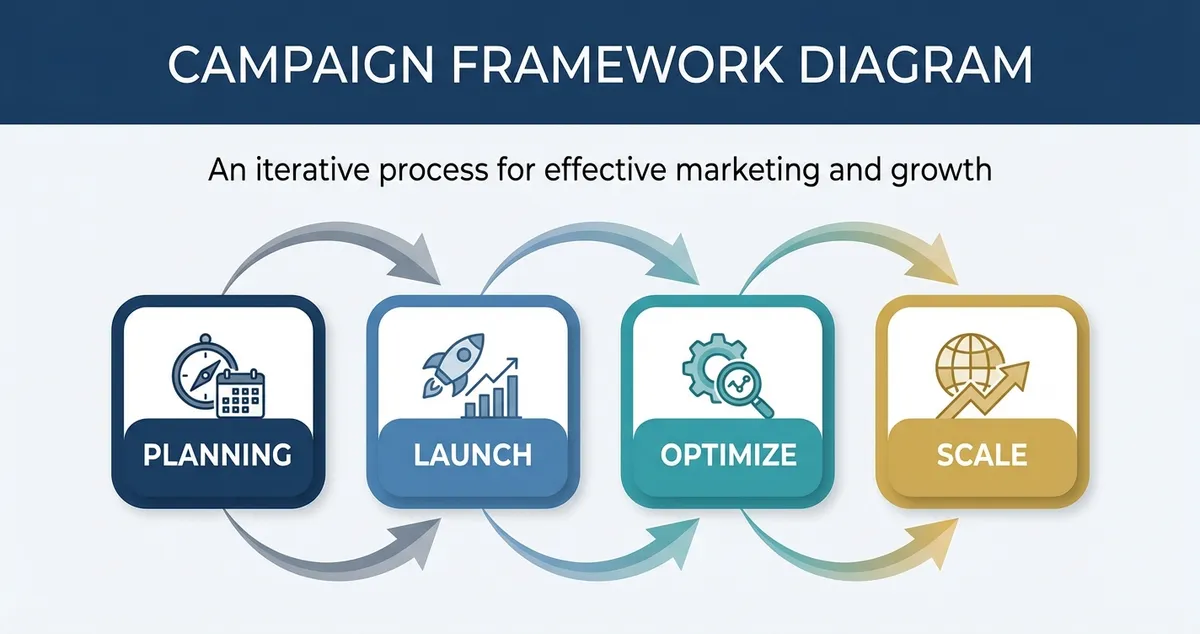
Match your campaign type to your marketing goal
According to Statista's UK dining research, 74% of consumers research restaurants online before visiting. Your restaurant ad campaigns need to appear during that research phase.
Proven restaurant ad campaign approaches:
- Search campaigns: Capture "near me" searches with Google Ads
- Social awareness: Build recognition with Facebook and Instagram
- Retargeting: Bring back website visitors who didn't book
- Event promotion: Drive bookings for specific occasions
- Loyalty campaigns: Re-engage past customers with offers
| Campaign Type | Best Platform | Expected CPC |
|---|---|---|
| Search (high intent) | Google Ads | Higher |
| Awareness | Facebook/Instagram | Lower |
| Retargeting | Both | Lowest |
If you're only running one type of restaurant ad campaign, start with Google Ads targeting local search intent. For example, a curry house might run a search campaign targeting "Indian restaurant [their area]." This captures people who are hungry and searching. Someone searching "Italian restaurant Manchester" is ready to book. That's often the easiest conversion you'll find.
With that foundation in place, let's look at real campaigns that delivered measurable results.
What Are Some Examples of Ad Campaigns?
Here's where theory meets practice. Real restaurant ad campaigns show what's possible. These examples worked because they understood their audience. They also delivered relevant messages at the right time.
Example 1: The "Empty Table" Retargeting Campaign
A Manchester bistro ran retargeting ads showing their most photogenic dishes to people who'd visited their website but didn't book. The ad copy: "Your table is still waiting. Book now and get 10% off."
Results: 340% return on ad spend over 3 months.
Example 2: The "Sunday Sorted" Search Campaign
A London gastropub targeted "Sunday roast near me" searches with Google Ads every Thursday through Saturday, when people plan their weekends.
Results: Cost per booking dropped 40% compared to running ads all week.
Example 3: The "Behind the Kitchen" Social Campaign
A Bristol restaurant ran Instagram Stories showing their chef preparing dishes, with a "Book Now" swipe-up link. Authentic, unpolished content outperformed professional photography.
Results: 67% higher engagement than static food photos.
Example 4: The "Locals' Night" Facebook Campaign
A suburban restaurant created a campaign targeting people within 3 miles, promoting "Tuesday Locals' Night" with 20% off for nearby postcodes.
Results: Filled a typically quiet night and built repeat customers.
These restaurant ad campaigns share common elements. Clear targeting. Compelling offers. Measurement of actual results, not just likes and impressions.
Generic "visit our restaurant" ads rarely deliver results. You need specific offers, targeted audiences, and clear calls to action.
Start Small
Start small and iterate. A £200 test campaign that teaches you what works is worth more than a £2,000 campaign based on assumptions.
Building on these examples, let's look at a framework that helps structure your overall marketing approach.
What Are the 7 Ps of Service Marketing in Restaurants?
Beyond individual tactics, frameworks help structure your approach. The 7 Ps framework is a marketing strategy template that covers seven areas: Product, Price, Place, Promotion, People, Process, and Physical Evidence. For restaurant ad campaigns, each P influences your messaging.
Product: What makes your food unique? This becomes your headline.
Price: Are you value-focused or premium? Your ads should match positioning.
Place: Location matters for restaurants. Local targeting is essential.
Promotion: The campaigns themselves: Google Ads, Facebook, Instagram.
People: Your team. Staff photos build trust and authenticity.
Process: Booking ease. "Book in 30 seconds" removes friction.
Physical Evidence: Your venue photos, reviews, and social proof.
For example, a family-run trattoria might lean heavily on People (showing the family behind the food) and Physical Evidence (cosy interior shots), while a premium steakhouse would emphasise Product (dry-aged beef close-ups) and Price (communicating value for premium cuts).
Ignoring any of the 7 Ps rarely works for long. A restaurant with beautiful ads but a clunky booking process will lose customers at the final step.
As a result, when building campaigns, check each P:
- Does your ad highlight what makes your food special? (Product)
- Does your offer match your price positioning? (Price)
- Are you targeting people who can actually visit? (Place)
- Is your booking process frictionless? (Process)
If you're running restaurant ad campaigns but people drop off at booking, that's usually a sign your Process P needs attention. Fix the booking flow before spending more on Promotion. For campaign landing page tips, see our restaurant ad landing pages guide. For budget help, check our restaurant ad budget breakdown.
Ask yourself: which of the 7 Ps is weakest in your current marketing? That's where to focus first.
With the strategic framework clear, let's match specific campaign types to your goals.
Campaign Types for Different Goals
So you've got the framework. But what happens when you need to choose between platforms? Different goals need different approaches. Match the structure of your restaurant ad campaigns to your objective.
Here's how to match your campaign approach to your goal:
- Fill quiet nights: Time-targeted offers on Facebook work well; for example, a burger joint might promote "Tuesday 2-for-1 burgers" to people within 3 miles
- Increase bookings: Search ads on Google capture high-intent traffic ready to book
- Build awareness: Video and Stories on Instagram or TikTok reach new audiences visually
- Promote events: Event campaigns on Facebook and Google deserve higher spend during the event period
- Win back lapsed customers: Email plus retargeting brings back people who haven't visited in months
- Launch new menu: Multi-channel campaigns across all platforms justify higher spend during launch week
Seasonal campaign calendar:
- January: Health-focused menu promotions (dry January, fitness goals)
- February: Valentine's Day booking push
- March-April: Easter and spring menus
- Summer: Outdoor seating, al fresco dining
- October-November: Christmas booking early bird
- December: Party and event bookings
Planning restaurant ad campaigns around these moments gives you natural promotional hooks, and our ready-made seasonal campaigns map the calendar out for you so nothing catches you off guard. It's far better than constant discounting.
If you're only running ads when it's quiet in the restaurant you'll always lose to competitors who plan campaigns months ahead. The ideal time to advertise Valentine's Day is January, not February 10th. Similarly, boosting spend the day before Christmas lunch rarely delivers results: by then, most people have already booked.
If you're reading this after a long shift and thinking "I don't have budget for all these campaigns," you're not alone. That's the reality for most independent restaurants. Start with just one. Successful restaurants typically build their ad strategy gradually, not all at once.
Minimum Viable Ad Campaign
That's the theory. Here's where it gets practical. If you only have 30 minutes a week and £100 for restaurant ad campaigns, focus on one platform with clear intent.
If you only have 30 minutes a week, do this:
- Day 1-2: Create a Facebook Business account if you don't have one
- Day 3-4: Set up a "Traffic" campaign targeting people within 5 miles. Focus on interests like "restaurants" and "dining out"
- Day 5-7: Use your best food photo. Write a headline with your unique selling point. Add a "Book Now" call-to-action
Budget: £10-15/day for 7-14 days Goal: Drive traffic to your booking page and measure cost per click
This won't transform your business overnight. However, it gives you real data on what resonates. If you're only boosting random posts without tracking conversions you'll always lose to competitors who measure results. Use that data to inform your next restaurant ad campaign.
Info
Related: Once you've tested basic campaigns, explore restaurant PPC for more advanced strategies.
Quick Test
Would you click on your own restaurant's ads? If not, start there.
Your Ad Campaign Checklist
Now that you understand the approaches, here's a practical checklist. Before launching any restaurant ad campaign, ensure you've covered these essentials. For example, a gastropub might spend a day on each step, while a quick-service restaurant could complete this in an afternoon:
- Define your campaign goal (bookings, awareness, event promotion)
- Calculate your budget using the 30/30/30 framework
- Choose ONE primary platform to start
- Set up conversion tracking (Meta Pixel or Google Ads)
- Create at least 2 ad variations to test
- Define your target audience (location, interests, demographics)
- Set a minimum 14-day run time before evaluating
Campaign Types Comparison
To help you decide, here's how the main campaign types compare.
| Campaign Type | Best Platform | Budget Range | Expected ROI Timeline |
|---|---|---|---|
| Search (high intent) | Google Ads | £500+/month | Days |
| Awareness | Facebook/Instagram | £300+/month | 2-4 weeks |
| Retargeting | Meta/Google Display | £150+/month | 1-2 weeks |
| Event promotion | Facebook Events | £200+ per event | 1-2 weeks |
| Seasonal | Multi-platform | Varies | 2-4 weeks |
For most UK restaurants starting their first restaurant ad campaigns, Facebook awareness campaigns often offer the lowest barrier to entry. Google Search campaigns typically deliver faster booking results.
Key Takeaways: Restaurant Ad Campaigns
If you run a restaurant and want to see how Local Brand Hub can support your marketing, explore our restaurant marketing tools.
Key Takeaways: Restaurant Ad Campaigns
With all that covered, here's what matters most. Effective restaurant ad campaigns match the right message to the right audience at the right moment. Here's what to remember:
- The 30/30/30 rule guides overall spending. Marketing typically gets 3-6% of revenue
- Google Ads capture high-intent searchers. Social media builds awareness
- Real examples show that targeted restaurant ad campaigns outperform generic ones
- The 7 Ps framework helps structure your marketing strategy
- Match campaign type to goal: different objectives need different approaches
- Seasonal planning gives natural promotional hooks
Weekly Action
This week, plan your first restaurant ad campaign:
- Day 1-2: Identify your quietest night of the week: that's your testing ground
- Day 3-4: Create a specific offer for that night (10% off, free dessert)
- Day 5-7: Set up a Facebook ad targeting people within 5 miles promoting that specific night
Run for 2 weeks. Track how many bookings mention the offer. That's your baseline for future restaurant ad campaigns. For budget guidance, see our restaurant ad budget guide. For PPC-specific strategies, explore our restaurant PPC guide.
Frequently Asked Questions
How much should a restaurant spend on ad campaigns?
Most restaurants allocate 3-6% of revenue to marketing, with roughly half going toward digital advertising. Scale your ad budget based on your revenue: established restaurants can typically commit more than newer venues still building their customer base.
What type of advertising tends to work well for restaurants?
Local search advertising (Google Ads) typically delivers strong conversion rates. It captures people actively looking for somewhere to eat. For example, a steakhouse found that Google Ads targeting "steak restaurant [their city]" converted at twice the rate of their Facebook awareness campaigns. Social media advertising works better for building awareness. It's also effective for promoting specific events or offers.
How do I measure restaurant ad campaign success?
Track cost per booking (total ad spend divided by bookings generated). Calculate return on ad spend (revenue from ad-driven bookings divided by ad cost). Then compare booking volume during campaign periods versus baseline periods without advertising.
For UK restaurants
Need Help With Ad Campaigns?
Local Brand Hub helps UK restaurants plan and run ad campaigns that actually fill tables.
Start freeGet More Marketing Tips
Practical marketing tips for UK business owners, straight to your inbox. No spam, unsubscribe anytime.
About the Author
Local Brand Hub
Empowering UK Businesses
Local Brand Hub provides comprehensive business management tools designed specifically for UK local businesses to streamline operations, automate marketing, and grow revenue.
More articlesRelated Articles
 Marketing Tips
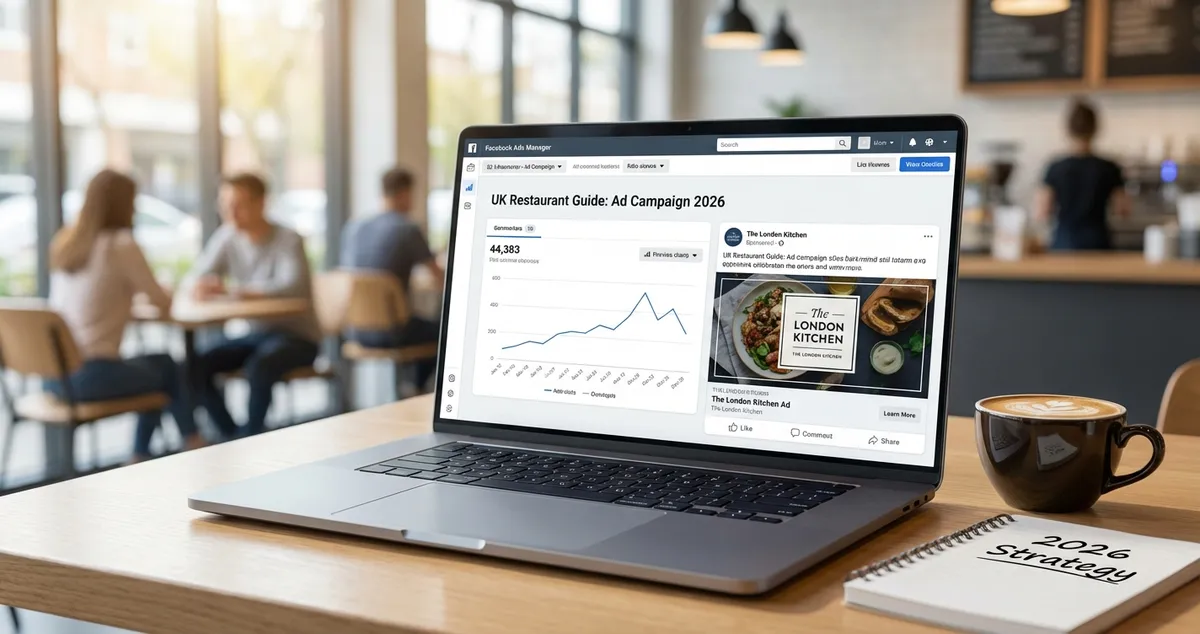
Facebook Ads for Restaurants: UK Budget Guide 2025
Run effective Facebook ads for UK restaurants. Master the 3-2-2 testing method, local targeting, and budget tips that fill tables.
 Marketing Tips
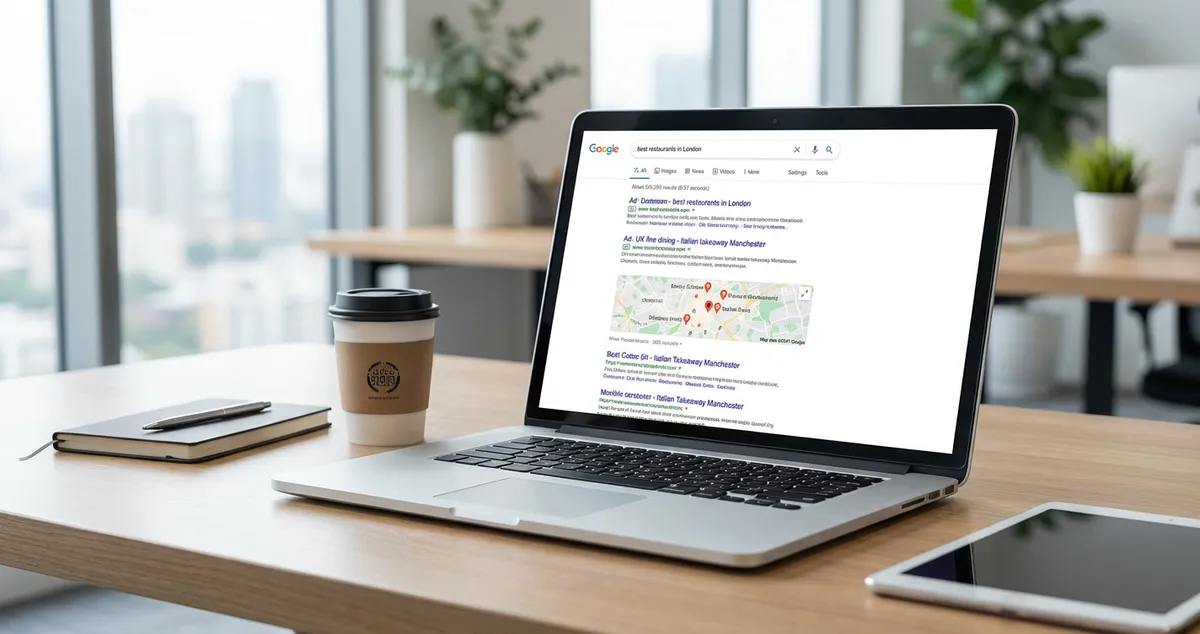
Google Ads for Restaurants: A Practical UK Marketing Guide
Run Google Ads for your restaurant with real UK cost benchmarks, realistic ROI expectations, and a clear comparison against Facebook Ads.
 Marketing Tips
Restaurant Advertising: The Complete UK Guide for 2025
Master restaurant advertising with proven UK strategies for Google Ads, Facebook, and local marketing. Budget tips and tactics to fill tables.