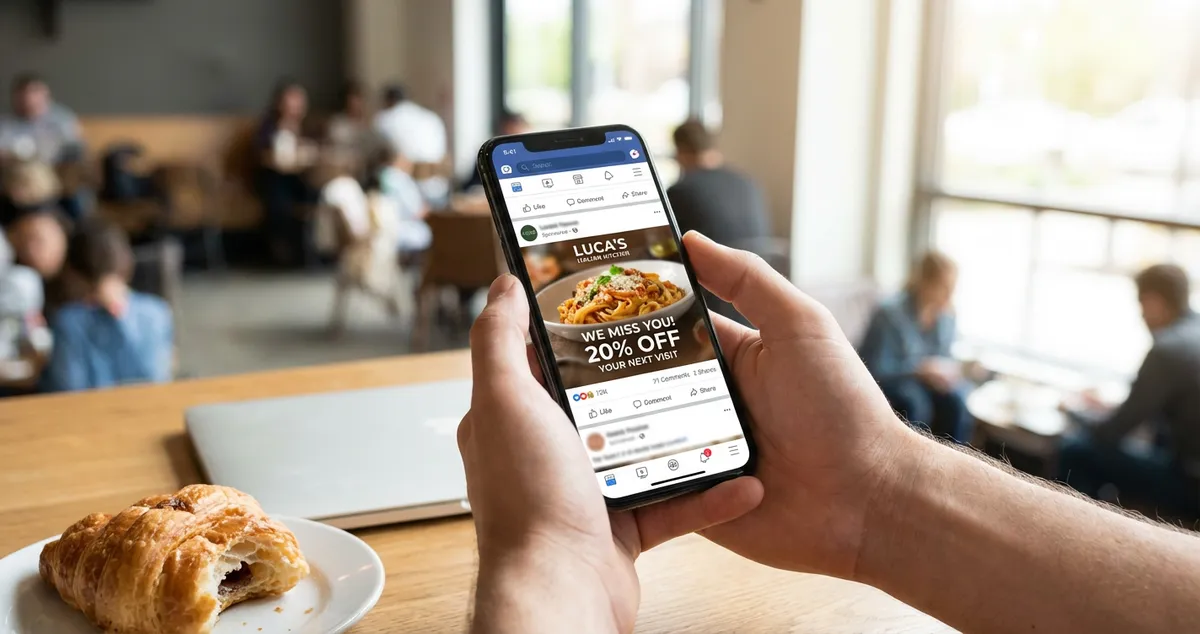
How retargeting ads help UK restaurants convert website visitors into diners. Facebook and Google remarketing setup guide.
You're spending money driving traffic to your website. People browse your menu, check opening hours, maybe even start a booking. Then they vanish. Without restaurant retargeting ads, those almost-customers are gone, probably booking somewhere else. Retargeting changes that by showing your ads to people who already showed interest, bringing them back when they're ready to book.
Info
Related: Retargeting works best as part of a broader restaurant advertising strategy that drives initial traffic.
What You'll Learn About Restaurant Retargeting Ads
- What retargeting ads are and why they work for restaurants
- How to set up Facebook and Google retargeting campaigns
- Realistic costs and ROI expectations for UK restaurants
- The types of retargeting that drive the most bookings
- A minimum viable approach if you're short on time
What Are Restaurant Retargeting Ads?
Restaurant retargeting ads is a framework that shows ads to people who visited your website but didn't book. These retargeting ads follow potential customers across Facebook, Instagram, and Google, reminding them about your restaurant.
According to Meta for Business, retargeted visitors convert at higher rates than cold traffic. Most first-time visitors leave without booking. Retargeting brings them back.
For example, a pizza restaurant might show their margherita ad to someone who viewed the menu yesterday, a gentle retargeting reminder that often converts.
Why Retargeting Works for Restaurants
Here's the psychology: retargeting works because restaurant decisions aren't instant. Someone might research Sunday lunch options on Wednesday but not book until Friday. Without restaurant retargeting ads, they've forgotten about you by then.
High-intent audience: These people already showed interest. You're not introducing them; you're reminding them to book.
Lower cost per acquisition: Retargeting ads typically cost less than prospecting because you're reaching warmer audiences.
Visual advantage: Food photos often perform well in retargeting. That dish someone drooled over on your website? Show it to them again on Instagram.
If you're thinking "I already struggle to manage the marketing I have," retargeting actually simplifies things: it's more automated than most restaurant advertising.
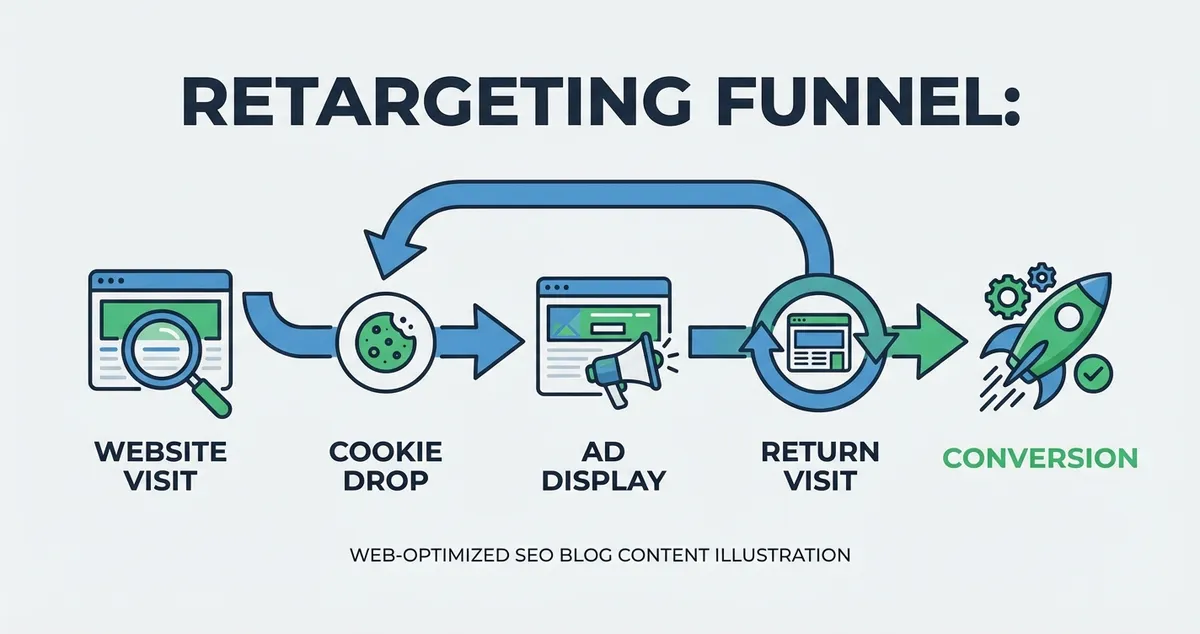
Retargeting captures visitors at every stage of the decision journey
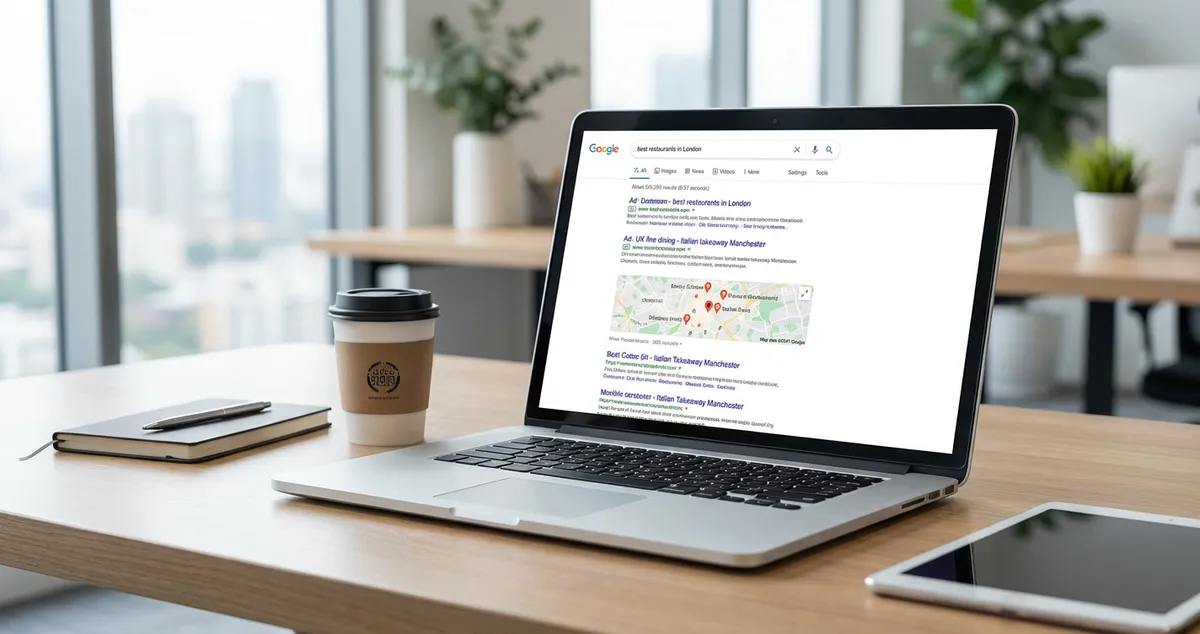
A casual dining restaurant might see this journey: customer searches "Italian restaurant Manchester," clicks your ad, views your menu, gets distracted. The next day, they see your retargeting ad on Facebook and book a table.
If you're running Google Ads for restaurants or Facebook ads without retargeting, you're paying to acquire visitors but not following up.
Recover Lost Investment
Every visitor who leaves without booking represents wasted ad spend. Retargeting recovers that investment.
How to Set Up Facebook Retargeting for Restaurants
First, let's cover Facebook. Facebook retargeting requires installing the Meta Pixel on your website. This small code tracks visitors so you can show them retargeting ads later.
Step-by-step setup:
Install the Meta Pixel: In Meta Business Suite, go to Events Manager and create a pixel. Add the code to your website header (most website builders have a dedicated field for this).
Create a Custom Audience: In Audiences, create a "Website Custom Audience" targeting people who visited your site in the last 30 days.
Build your retargeting ad: Create a campaign with the "Traffic" or "Conversions" objective, selecting your custom audience.
Set your budget: Start with £5-10 per day. Retargeting audiences are smaller, so you don't need large budgets.
Choose compelling creative: Use your best food photography with a clear call-to-action: "Still thinking about dinner? Book your table now."
For example, a Sunday roast specialist might set up Facebook retargeting showing their roast dinner to Monday-Wednesday menu viewers, catching them planning their weekend.
Segment Your Audiences
Create separate retargeting audiences: menu page visitors (30 days), abandoned bookings (7 days), and visited 3+ pages (14 days). The abandoned booking audience is gold: these people were moments from converting.
Don't make the mistake of showing the same generic ad to every retargeting audience. Someone who viewed your Christmas menu needs different messaging than someone who abandoned a Tuesday lunch booking, that never works.
If you're only running prospecting ads without retargeting you'll always lose to competitors who follow up with interested visitors.
How to Set Up Google Remarketing for Restaurants
Additionally, Google remarketing shows your retargeting ads across millions of websites, apps, and YouTube.
Setup process:
- Add the Google Ads tag: Set up via Tools > Audience Manager
- Create remarketing lists: Define audiences like "All visitors (30 days)"
- Build a Display campaign: Select your remarketing audience
- Set budget: Start modest; display ads reach huge audiences
For example, a business district restaurant might use Google retargeting to show lunch ads on news sites during the morning.
If you're reading this after a long shift thinking "this sounds complicated," setup takes less than an hour.
Types of Restaurant Retargeting Campaigns
When it comes to retargeting, different restaurant retargeting ads work for different goals:
- Menu viewers: Show ads to people who viewed your menu but didn't book. A Thai restaurant might retarget with their Pad Thai: "Your table is waiting."
- Abandoned bookings: The highest-intent audience. A simple "Still hungry? Complete your booking" often converts.
- Past customers: Bring back previous diners. For example, a wine bar might retarget customers who haven't visited in 60 days with "15% off your return."
- Event browsers: Target event page viewers with urgency: "Spaces filling up."
- Seasonal retargeting: Reach recent visitors during key moments: "Valentine's menu now available."
Ask yourself: are your current ads actually bringing bookings, or just likes? If you can't tell whether your retargeting brings bookings or just impressions, that's usually a sign you need better conversion tracking.
Retargeting Costs for UK Restaurants
Here's the good news: restaurant retargeting ads typically cost less than prospecting because you're reaching people who know your brand.
Typical UK restaurant retargeting costs: Retargeting clicks often cost 30-50% less than cold audience clicks: typically under £1 per click on Facebook, less on Google Display. A budget of £150-300 monthly is enough to test restaurant retargeting ads.
According to Google Display Network data, food and drink display ads see around 0.5% click-through rates. That sounds low, but impressions keep your restaurant top-of-mind even without clicks.
Why the ROI often works: With modest monthly spend, many restaurants generate a dozen bookings at a fraction of cold advertising costs. If average booking value is £60-80, return on retargeting investment can often exceed 500%. Use our ROI calculator to estimate your own returns. If you're only getting 100 visitors monthly, build traffic first with broader restaurant ad campaigns. LocalBrandHub can help manage retargeting alongside other channels.
Minimum Viable Retargeting Setup
Now let's get practical. If you only have 30 minutes a week for marketing, focus on Facebook retargeting. It's the easiest platform with the best visual format for restaurants.
This week, set up basic retargeting:
- Day 1-2: Install Meta Pixel (10 minutes with most builders)
- Day 3-4: Wait for pixel to collect 100+ visitors
- Day 5-7: Create one retargeting campaign with your best dish photo
Start with £5/day. That's £150/month: less than one quiet Tuesday night costs in wasted capacity.
Quick Test
Would you click on your own restaurant's retargeting ads? If not, start there.
Facebook vs Google Retargeting: Quick Comparison
This is the most common retargeting question we hear:
| Platform | Best For | Starting Budget | Key Strength |
|---|---|---|---|
| Visual food ads | £5-10/day | Precise targeting | |
| Wide reach | £10-15/day | Massive network |
For most UK restaurants, Facebook retargeting often offers better ROI for food-focused campaigns due to its visual nature and precise targeting options.
Your Retargeting Checklist
Finally, before launching your first restaurant retargeting campaign, ensure you've completed these essentials:
- Meta Pixel installed on all pages
- Google Ads tag configured
- At least 100 website visitors in the past 30 days
- Compelling food photography ready for ads
- Budget of at least £5/day allocated
- Clear call-to-action for your retargeting ads
If you're reading this thinking "I'll get to this eventually," the longer you wait, the more potential customers slip away. The pixel collects data silently while you decide.
Key Takeaways: Restaurant Retargeting Ads
If you run a restaurant and want to see how Local Brand Hub can support your marketing, explore our restaurant marketing tools.
Key Takeaways: Restaurant Retargeting Ads
As a result of everything above, retargeting turns lost website visitors into paying customers:
- Most visitors leave without booking: retargeting brings them back
- Facebook retargeting works best for visual food ads
- Google remarketing reaches people across millions of websites
- Install tracking pixels before running any retargeting ads
- Start small (£5-10/day) and scale what works
- Track conversions so you know which retargeting campaigns drive bookings
Weekly Action
This week, set up your retargeting foundation:
- Day 1-2: Check if Meta Pixel and Google Ads tags are installed
- Day 3-4: If not, add them (most builders have dedicated fields)
- Day 5-7: Let the pixels collect data while you plan your first retargeting campaign
Even if you're not ready to run retargeting ads yet, the pixels need time to build an audience. Every day you wait is potential customers you can't reach later.
Most UK restaurants see retargeting results within 2-3 weeks of launching, provided the pixels had time to collect enough visitors first.
For UK restaurants
Need Help With Retargeting?
Local Brand Hub helps UK restaurants set up retargeting campaigns that bring back lost customers.
Start freeGet More Marketing Tips
Practical marketing tips for UK business owners, straight to your inbox. No spam, unsubscribe anytime.
About the Author
Local Brand Hub
Empowering UK Businesses
Local Brand Hub provides comprehensive business management tools designed specifically for UK local businesses to streamline operations, automate marketing, and grow revenue.
More articlesRelated Articles
 Marketing Tips
Restaurant Advertising: The Complete UK Guide for 2025
Master restaurant advertising with proven UK strategies for Google Ads, Facebook, and local marketing. Budget tips and tactics to fill tables.
 Marketing Tips
Facebook Ads for Restaurants: UK Budget Guide 2025
Run effective Facebook ads for UK restaurants. Master the 3-2-2 testing method, local targeting, and budget tips that fill tables.
 Marketing Tips
Google Ads for Restaurants: A Practical UK Marketing Guide
Run Google Ads for your restaurant with real UK cost benchmarks, realistic ROI expectations, and a clear comparison against Facebook Ads.