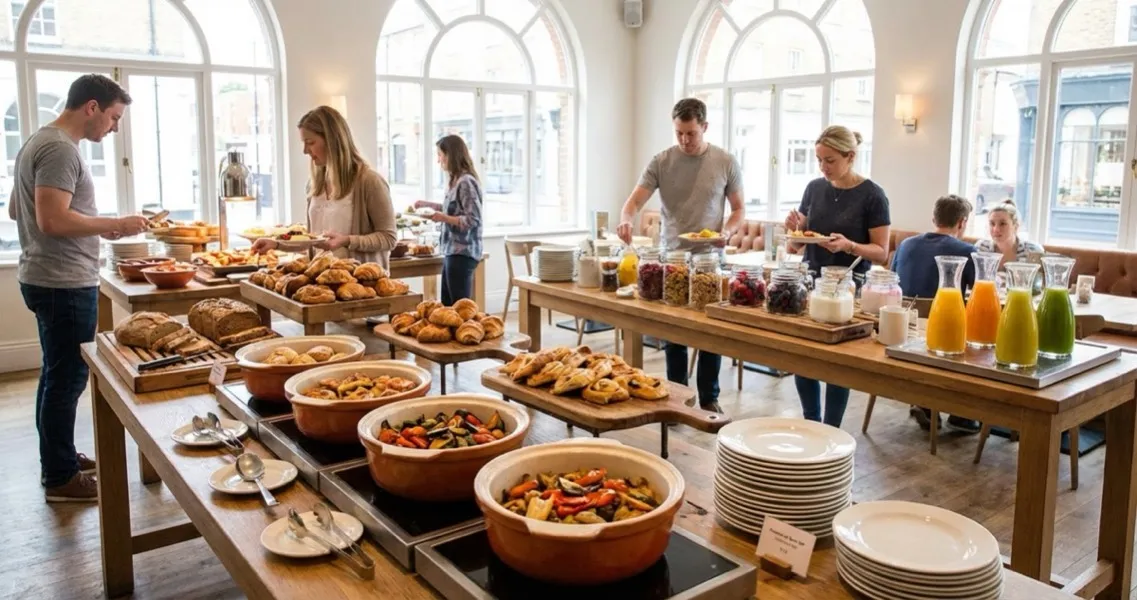
Practical brunch buffet menu ideas organised by station with cost-per-head targets, UK food safety guidance, and portion control for restaurants.
You've spent all morning prepping a brunch buffet, so why did the scrambled eggs dry out within twenty minutes? The pastry station looked ransacked by noon, and you threw away enough food to feed another sitting. Brunch buffet menu ideas are easy to find online, but almost none address the operational reality of running a profitable buffet service.
This guide covers eighteen brunch buffet menu ideas organised into five stations, with cost benchmarks, UK food safety holding times, and portion control tactics that reduce waste. Whether you're planning a weekend brunch service or a special occasion offering, the focus here is execution, not just inspiration.
What You'll Learn
- How to organise brunch buffet menu ideas into five distinct stations
- Eighteen specific dishes with cost and prep considerations
- UK food safety holding temperatures and time limits for buffet service
- Portion control strategies that cut waste
- Cost-per-head targets for independent UK restaurants
- How to adapt your brunch buffet for Easter and seasonal events
What to Serve at a Brunch Buffet
A strong brunch buffet balances hot and cold items across multiple stations, giving guests variety while keeping your kitchen manageable. The station approach is a framework that divides your brunch buffet menu ideas into themed zones, each with its own holding equipment and replenishment schedule, so nothing sits out too long and nothing runs dry.
Most successful restaurant buffets in the UK charge between £15 and £25 per head for food alone, rising higher when bottomless drinks are included. Your food cost should typically sit around 30-35% of that price point.
Info
If you're thinking "I can barely keep up with a la carte, let alone a buffet", you're not alone. Buffets actually simplify your kitchen workflow. Instead of cooking to order, you batch-prep everything and focus on replenishment timing.
Related reading
See our full restaurant brunch marketing strategies guide for promotion ideas.
Here's how to structure five stations that cover every brunch buffet menu essential.
Station 1: Eggs and Hot Proteins
First up is the centrepiece of any brunch buffet. Hot protein dishes draw guests before anything else and set the tone for quality. Under UK food safety regulations, hot foods must be held at or above 63°C, and anything that drops below that temperature should be discarded after 2 hours.
Hot protein dishes to consider:
- Eggs benedict with hollandaise: Pre-poach eggs and hold in warm water; assemble to order if staffing allows. A gastropub might offer smoked salmon benedict alongside the classic ham version.
- Scrambled eggs in small batches: Cook fresh every 20 minutes rather than one large batch. This is often the single biggest quality improvement you can make.
- Crispy bacon and Cumberland sausages: Hold in chafing dishes with drainage racks to prevent sogginess.
- Shakshuka or baked eggs: Serve in the cast-iron pan for visual impact and better heat retention.
Info
If you're only serving eggs from a single large tray that dries out within half an hour, you'll always lose to competitors who batch-cook and refresh every 20 minutes.
For example, a bistro running Saturday brunch might prep 30 poached eggs before service, hold them in a warm water bath at 65°C, then plate eggs benedict portions in batches of 6 as the previous tray empties. Total waste: nearly zero.
With your hot station sorted, the next set of brunch buffet menu ideas focuses on the highest-margin area of your spread.
Station 2: Bakery and Pastries
With your hot proteins covered, the bakery station is your highest-margin area. Pastries, breads, and baked goods cost relatively little to produce but guests perceive them as premium, especially when displayed well on tiered stands or wooden boards.
Baked goods worth featuring:
- Freshly baked croissants and pain au chocolat: Buy frozen and bake in-house for the aroma alone. That smell does more marketing than any Instagram post.
- Mini berry muffins with seasonal fruit: Using frozen berries keeps costs low year-round while tasting fresh.
- Sourdough toast with toppings bar: Offer butter, jam, honey, and Marmite. The toppings bar encourages interaction without adding labour.
- Scones with clotted cream and jam: A distinctly British touch that works beautifully at Easter brunch and beyond.
This station requires no heated holding equipment, which simplifies your setup considerably. The bakery items also last longer on display: croissants and scones hold quality for 3-4 hours at room temperature.
For instance, a small restaurant in Bath switched from buying ready-made pastries to baking frozen croissant dough in-house. The quality improved, the profit margin grew, and the baking aroma drew in passers-by from the street.
Ask yourself: would I queue for my own bakery station? If the answer is no, that's usually a sign the presentation needs work, not the recipes.
Now that you've covered the classics, the next station is where your brunch buffet menu ideas get interesting.
Station 3: Build-Your-Own and Interactive
Here's the trend reshaping UK brunch service: interactive stations. Build-your-own options are some of the strongest brunch buffet menu ideas because they add personalisation that makes guests feel they're getting a bespoke experience rather than standard buffet fare.
Interactive options that work:
- Build-your-own omelette or frittata station: Pre-chop fillings (mushrooms, peppers, cheese, ham, spinach) and cook to order. This is the one station worth staffing with a cook.
- Waffle or pancake station with toppings: Batter can be premade. Offer maple syrup, fresh berries, Nutella, and whipped cream.
- Smashed avocado toast bar: Provide mashed avocado, poached eggs, chilli flakes, seeds, and sourdough. Guests assemble their own.
- Granola and yoghurt parfait station: Layer pots with Greek yoghurt, house granola, and seasonal compote.
Info
These interactive brunch buffet menu ideas naturally control portions because guests serve themselves one item at a time.
Pairing smaller plates with signage that says "help yourself as many times as you like" means guests eat what they want without overloading.
If you're reading this thinking "I don't have the staff for a live cooking station", start with the cold interactive options. The smashed avocado bar and granola station need zero additional labour.
For example, a brunch venue in Manchester added a build-your-own waffle station with eight toppings. The ingredient cost per service was minimal, but they charged a small supplement per guest, turning a low-cost station into one of their most profitable brunch buffet menu ideas.
Related reading
Our guide to restaurant events: planning and promotion covers how to market interactive dining experiences.
Beyond interactive options, you'll also want a lighter station for guests who prefer something fresh.
Station 4: Fresh and Light
Beyond the interactive options, not every guest wants a full fry-up. A dedicated fresh station is one of the most practical brunch buffet menu ideas because it balances the heavier items and caters to dietary requirements without needing separate menus.
Fresh dishes that balance the spread:
- Seasonal fruit platter: Buy whatever is in season to keep costs low. In spring, think strawberries and melon. Winter calls for citrus and pomegranate.
- Smoked salmon with capers and lemon: Premium feel, minimal prep. Slice and arrange on a chilled platter.
- Mixed leaf salad with vinaigrette: Simple but essential for balance. Pre-dress lightly to avoid wilting.
- Charcuterie and cheese board: Offer three cheeses and two cured meats minimum. Label everything, including allergen information.
Under UK regulations, chilled buffet foods should be kept at or below 8°C. When displayed at room temperature, the 4-hour rule applies: mark the time food goes out and discard anything uneaten after 4 hours. Your local authority environmental health team can advise on compliance for your specific premises.
For example, a cafe running weekend brunch invested in a countertop chilled display unit. Before the purchase, they were discarding significant amounts of fresh items each service due to temperature concerns. The unit paid for itself within three weekends.
Budget alternative
Ice trays beneath platters work as a budget alternative if chilled display units aren't feasible yet.
Finally, the last station rounds off your spread and typically carries some of the strongest margins among your brunch buffet menu ideas.
Station 5: Sweets and Drinks
Finally, the sweets and drinks station rounds off your brunch buffet and creates the final impression guests remember. Get this right and it's what brings people back.
Sweet finishers and drinks:
- Mini dessert selection: Brownies, lemon tart slices, and fruit tartlets cut into bite-sized portions. Smaller portions mean guests try more varieties and waste less.
- Self-serve drinks station: Fresh orange juice, coffee, and tea as standard. Add a build-your-own mimosa station with prosecco and fruit juices for a premium upsell.
The drinks station is where your margins widen significantly. A gastropub might offer a standard brunch buffet at £18 per head, then add a bottomless prosecco and mimosa option for £30 per head. The food cost stays identical; only the drinks margin changes. For more on maximising drink revenue, see our guide to restaurant upselling techniques.
If you can't tell whether your drinks upsell is boosting revenue or just increasing waste, that's usually a sign you need to cap bottomless options at 90 minutes and track uptake per service.
With the menu sorted, the next question is how to run it all without haemorrhaging money.
Brunch Buffet Cost Control and Portions
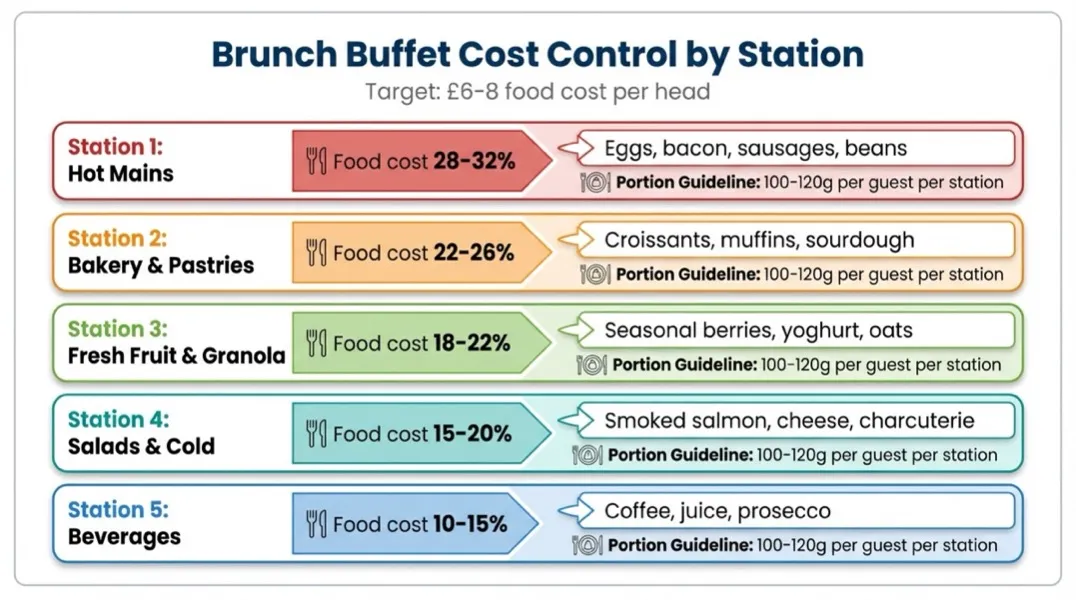
Brunch buffet cost breakdown by station with portion guidelines
Now for the financial side. The average UK restaurant can save a significant sum each year by reducing food waste. Buffets tend to be the biggest offenders, so getting your brunch buffet menu ideas right from a cost perspective matters as much as getting the food right.
Four Tactics That Cut Buffet Waste
- Batch replenishment: Never put out your full prep at once. Start with 60% and replenish based on demand. If a tray comes back half-full, your next batch should be smaller.
- Smaller serving vessels: Use smaller plates and serving dishes. Guests feel abundance even with less food on display, and that's usually a sign of good presentation rather than scarcity.
- Time-based cooking: Schedule hot items in 20-30 minute cook cycles. Scrambled eggs every 20 minutes. Bacon every 30 minutes.
- Repurpose before you bin: Leftover fruit becomes smoothie stock. Pastries become bread pudding. Egg whites become meringues for tomorrow's dessert menu. Aligning waste reduction with your restaurant menu pricing strategy keeps margins tight.
Here's a quick comparison of brunch buffet menu ideas pricing tiers:
| Tier | Food Cost Per Head | Selling Price | Target Margin |
|---|---|---|---|
| Budget | Low | £12-£15 | 30-35% food cost |
| Mid-range | Moderate | £18-£22 | 32-38% food cost |
| Premium + drinks | Higher | £28-£35 | 35-42% food cost |
These are approximate ranges as a rule of thumb: your actual costs depend on supplier pricing and location.
For most UK restaurants, the mid-range tier typically offers a strong balance between perceived value and sustainable margins. Start there unless your brand clearly sits at budget or premium level.
Related reading
See our guide to restaurant special offers: promotions that work for ideas on pricing brunch deals.
Simple Easter Brunch Buffet Menu Ideas
Easter is often the single biggest brunch occasion in the UK calendar. A good Easter brunch menu builds on your standard buffet stations with seasonal touches that feel festive without requiring an entirely new setup.
Add these simple Easter brunch buffet menu ideas to your existing stations:
- Hot cross bun French toast: Slice hot cross buns, dip in egg mixture, and griddle. A five-minute prep twist that transforms a standard bun into a premium dish.
- Spring lamb mini sliders: Use slow-cooked lamb shoulder in brioche buns with mint yoghurt. Prep the lamb the day before.
- Asparagus and goat cheese frittata: Seasonal, vegetarian, and holds well in a buffet setting.
- Simnel cake bites: Traditional Easter cake cut into small squares for the dessert station.
For example, a family-run bistro in York kept their standard five stations and simply swapped croissants for hot cross bun French toast, added asparagus frittata to the egg station, and placed simnel cake bites on the dessert table. Three changes, same setup, and they charged 20% more for the Easter weekend.
For a simple Easter brunch buffet, keep your 5 core stations intact and swap 3-4 items for seasonal versions. That's typically enough to justify a 15-20% price increase for the occasion. Our seasonal restaurant marketing guide covers how to promote these limited-time offerings effectively, and a library of ready-made seasonal campaigns takes the planning out of Easter, Christmas and every occasion in between.
So you've sorted the menu. But what about doing this consistently without it consuming your week?
If You Only Have 30 Minutes a Week
Here's the good news: putting these brunch buffet menu ideas into practice doesn't need to take hours. With the station framework in place, your weekly prep becomes a simple routine.
Info
If you only have 30 minutes a week, do this:
- Day 1-2 (ten minutes): Review last week's buffet. What ran out? What came back untouched? Adjust quantities in your prep sheet.
- Day 3-4 (ten minutes): Place orders based on adjusted prep quantities. Check seasonal availability for any station swaps.
- Day 5-7 (ten minutes): Brief your team on station responsibilities, replenishment schedules, and any menu changes. Print one-page station cards with item names, holding temps, and restock times.
For example, based on our work with UK restaurant owners, one owner-operator keeps a simple tally sheet at each station during service. At close, they photograph each sheet and spend five minutes on Monday adjusting the next week's order. No spreadsheets, no software, just a pen and a phone.
That's it. With the right brunch buffet menu ideas and systems in place, the buffet runs itself. Your job shifts from cooking everything to managing the flow.
Weekly Action
Pick one task from this list each week to sharpen your brunch buffet:
- Photograph every station at close and note which trays came back full
- Test one new dish from the interactive station and track guest uptake
- Compare your food cost percentage against the mid-range target (32-38%)
- Swap one seasonal ingredient into an existing station for freshness
- Brief one team member on replenishment timing so you're not the only one topping up
For a deeper dive into brunch menu design and pricing, our companion guide covers the full strategy from concept to launch.
Key Takeaway
If you run a restaurant and want to see how Local Brand Hub can support your marketing, explore our restaurant marketing tools.
Key Takeaway
- Organise by station, not by dish: Five themed stations (eggs, bakery, interactive, fresh, sweets) create variety while simplifying kitchen workflow
- Batch-cook hot items regularly: This single change often improves quality and reduces waste more than most other tactics
- Use smaller plates and vessels: Guests eat what they need without overloading, and you throw away less
- Hold hot food at 63°C and cold food at 8°C or below: UK food safety regulations set these as non-negotiable minimums
- Price brunch buffet menu ideas at 30-35% food cost: A mid-range offering often hits the sweet spot
- Easter brunch typically needs just 3-4 seasonal swaps: Don't rebuild your entire menu for one occasion
Brunch buffets aren't about having the longest menu. They're about having the right dishes at the right temperature at the right time. Get that combination right, and your buffet can often become one of the week's most profitable services.
Always consult your local environmental health officer if you're unsure about food safety requirements specific to your premises.
Next steps
Explore our full restaurant brunch marketing guide for strategies on promoting your brunch service and building a loyal weekend crowd.
FAQ
Here are answers to the most common questions about running a brunch buffet in the UK.
What is typically on a brunch buffet?
A brunch buffet is a self-service meal format that combines breakfast and lunch dishes across themed stations so guests can graze at their own pace. The station approach is a framework that groups items into five zones: hot proteins (eggs benedict, scrambled eggs, bacon, sausages), bakery items (croissants, muffins, scones), interactive stations (build-your-own omelettes or waffle bars), fresh items (fruit platters, smoked salmon, salads), and sweets with drinks (mini desserts, coffee, juice, and often prosecco or mimosas).
What are good brunch finger foods?
Crowd-pleasing brunch finger foods include:
- Savoury: mini quiches, smoked salmon blinis, bruschetta, cocktail sausages
- Sweet: mini muffins, scones with clotted cream, fruit skewers, bite-sized brownies
Finger foods work particularly well for standing brunches and reduce the need for full table settings.
How much does a brunch buffet cost per head in the UK?
Expect to charge between £12 and £35 per head depending on your positioning. A budget brunch buffet sits at the lower end, while a mid-range offering lands around £18-£22 per head. Premium packages with bottomless drinks push toward the top of that range. Aim for food costs of 30-35% of your selling price to maintain healthy margins.
How long can food sit out on a brunch buffet?
Hot items held at 63°C or above can stay on display for the full service under UK food safety rules. Once the temperature dips below 63°C, you have a 2-hour window before the food must be discarded. Cold dishes kept at 8°C or below are safe throughout, but at room temperature the 4-hour limit applies: label everything with the time it went out.
How do I reduce waste at a brunch buffet?
Four strategies make the biggest difference:
- Batch replenishment: start with 60% of your prep and top up based on demand
- Smaller serving vessels: guests take what they need without overloading plates
- Timed cook cycles: hot items cooked in 20-30 minute batches stay fresher
- Repurpose leftovers: fruit becomes smoothies, pastries become bread pudding, egg whites become meringues
For restaurants, salons, and local businesses
Need help with your marketing?
We help UK businesses turn social media into real results, not busywork.
Start freeGet More Marketing Tips
Practical marketing tips for UK business owners, straight to your inbox. No spam, unsubscribe anytime.
About the Author
Local Brand Hub
Empowering UK Businesses
Local Brand Hub provides comprehensive business management tools designed specifically for UK local businesses to streamline operations, automate marketing, and grow revenue.
More articlesRelated Articles
 Marketing Tips
Healthy Brunch Menu Ideas for Restaurant Owners
Healthy brunch menu ideas for restaurants with GP% targets, plant-based and gluten-free dishes, plus Natasha's Law compliance tips for UK owners.
 Marketing Tips
Mother's Day Brunch Menu for Restaurants
Plan your Mothering Sunday brunch menu with this UK guide. Covers menu design, promotion timelines, pricing strategies, and gift add-ons.
 Marketing Tips
Summer Brunch Menu Ideas for UK Restaurants
Summer brunch menu ideas restaurant owners need: British seasonal produce, al fresco setup tips, and bank holiday brunch specials to fill tables.