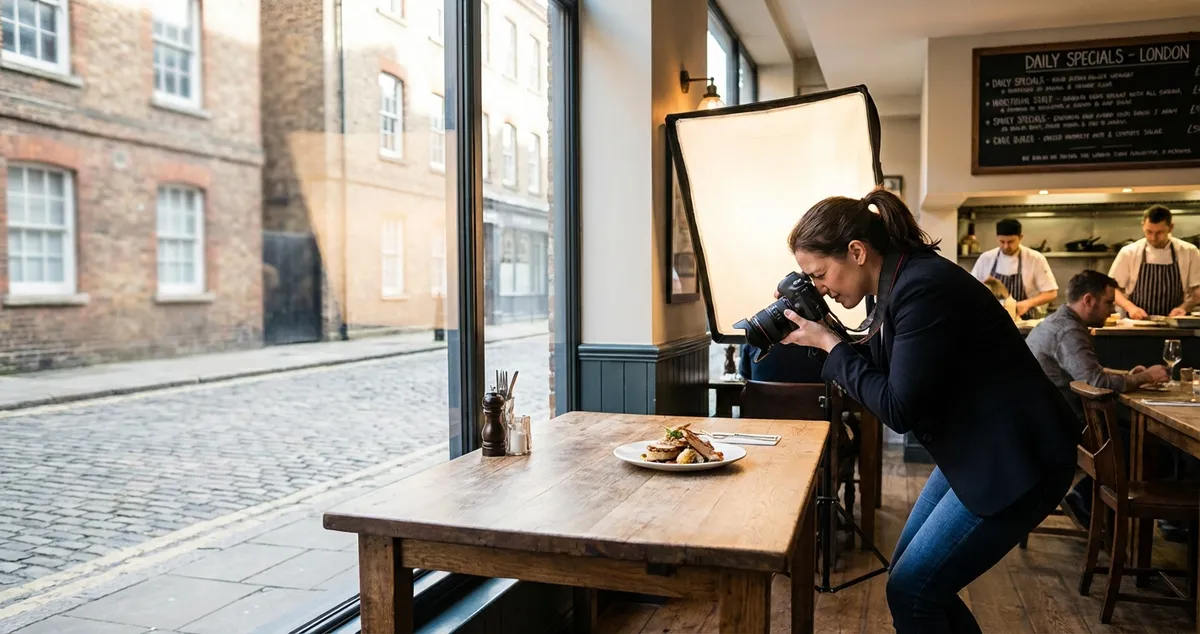
Find the perfect restaurant photographer near you. UK pricing (£150-£250/hour, £600-£1,200/day), portfolio tips, and essential hiring questions.
74% of diners use social media to choose where to eat. Your competitor's Instagram is full of jaw-dropping food shots. Yours looks like it was photographed in a cave. You know professional photos would help fill seats, but you've no idea what to pay or whether £200 an hour is a bargain or a rip-off.
You don't know what to look for, what questions to ask, or whether quoted rates are reasonable.
Professional restaurant photography isn't just about making food look good. It's about making people hungry before they're hungry. Based on our experience helping UK restaurants with visual marketing, the pattern is consistent: when done right, a single image can fill tables for weeks. When done wrong, you've just spent £300 on photos you'll never use.
This guide walks you through finding, vetting, and hiring a restaurant photographer near you who actually understands food.
Table of Contents
- What You'll Learn
- How much should a photographer charge for 1 hour?
- What is the 20 60 20 rule in photography?
- How much is a day rate for a photographer?
- How many pictures should be expected from a 1 hour shoot?
- Best Restaurant Photographer Near Me
- Restaurant Photographer Hiring Checklist
- Key Takeaways
- Frequently Asked Questions
What You'll Learn About Restaurant Photographer Near Me
Finding the right restaurant photographer means understanding what separates someone who can take nice pictures from someone who can sell your food. You'll learn:
- How much photographers typically charge (and what affects pricing)
- The 20/60/20 rule professional photographers use
- What to expect from a one-hour shoot versus a full-day booking
- How to evaluate portfolios and spot food photography specialists
- Questions to ask before you book
By the end, you'll know exactly what to look for and how to avoid hiring someone who treats your restaurant like a wedding venue.
Info
Related: Restaurant Photography Guide
So what does professional restaurant photography actually cost? Let's start with hourly rates.
How much should a photographer charge for 1 hour?
First, let's break down typical hourly rates. A restaurant photographer typically charges £150-£250 per hour in the UK, though rates vary significantly based on experience, location, and what's included. That hourly rate usually covers shooting time only, not editing, travel, or usage rights.
| Service Type | Price Range | What's Included |
|---|---|---|
| Hourly (shooting only) | £150-£250 | Camera time, basic setup |
| Hourly + Editing | £200-£350 | Shooting + post-production + delivery |
| Half Day (4 hours) | £400-£600 | 4 hours shooting + 15-30 images |
| Full Day (6-8 hours) | £600-£1,200 | Full day + 30-80 edited images |
Here's what affects the price:
Location and Experience
Location matters. Central London photographers often charge significantly more. Regional cities like Manchester, Leeds, or Birmingham typically sit in the middle range. Smaller towns and rural areas tend to offer more competitive rates.
Experience changes everything. A photographer with several years of restaurant-specific work typically charges less than someone with a decade of experience and high-profile clients. But experience doesn't always equal better results for your specific needs. Sometimes a newer photographer hungry for portfolio work delivers exactly what you need at a better price.
For example, a casual brunch spot might get excellent results from a photographer with 2-3 years' experience charging £175/hour, while a Michelin-starred restaurant launching a tasting menu might need someone with fine-dining expertise at £350/hour.
What's Included in the Rate
What's included. Some photographers quote shooting time only. Editing, colour correction, and file delivery are charged separately. Others offer package rates that bundle everything together.
Understanding Usage Rights
Usage rights. Are you buying the images outright, or licensing them? Full commercial rights typically cost more than personal/social media use only according to industry licensing standards. If you're only asking about the hourly rate without clarifying usage rights you'll often end up with photos you can't legally use for print ads or packaging.
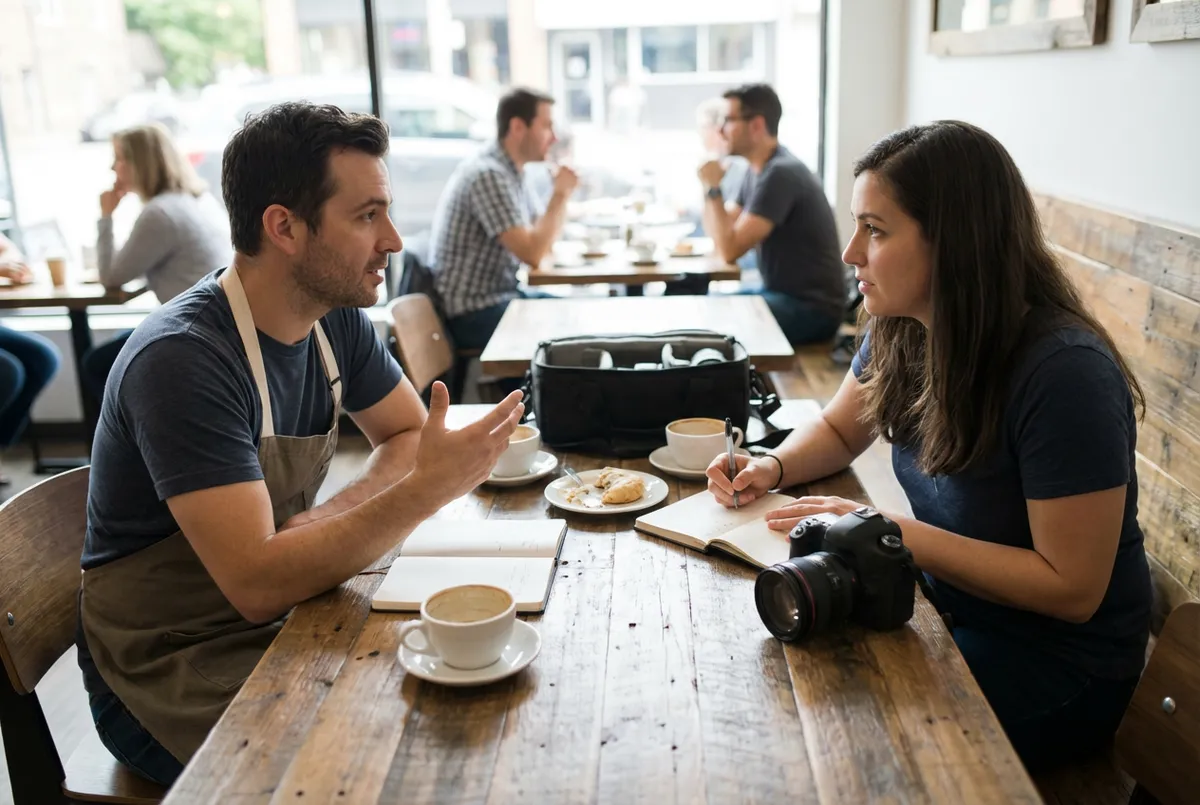
Discussing pricing and packages with a photographer helps clarify what's included
The reality for most independent restaurants: the mid-range hourly rate is the sweet spot for someone who knows food photography and won't waste your time learning on the job. If you're only comparing hourly rates without asking what's included you'll likely end up overpaying for photos you can't use.
Info
Related: Restaurant Photography Pricing Guide
However, pricing matters less if your photographer doesn't understand composition. Here's a framework professionals use to ensure your food actually looks appetising.
What is the 20 60 20 rule in photography?
Here's a composition framework professional food photographers use. The 20/60/20 rule is a composition technique where 20% of your image is background, 60% is your main subject, and 20% is foreground or supporting elements. For restaurant photography, this translates to making the food the hero while keeping the setting visible enough to create context and atmosphere.
How Professionals Apply It
Here's how professional food photographers apply it:
20% background: The restaurant interior, a soft-focus wall, a glimpse of the kitchen, or ambient lighting that establishes the mood without competing for attention.
60% main subject: Your dish. The hero. The thing people are clicking on the photo to see. This is where focus, lighting, and styling matter most.
20% foreground: A fork, a napkin, a drink just out of focus, or a hand reaching in. These elements add depth and suggest a story without distracting from the food.
A gastropub using this framework might photograph a Sunday roast with 60% of the frame on the perfectly plated beef and Yorkshire pudding, 20% showing the rustic wooden table and soft natural light from a window (background), and 20% capturing a glass of red wine slightly out of focus in the foreground.
Using This to Evaluate Photographers
Not every shot needs to follow this rule religiously, but it's a useful framework to evaluate whether your photographer understands composition or is just pointing and shooting.

The 20/60/20 rule helps create balanced, appetising food photography
If you're reviewing a portfolio and every photo is either 100% food (no context) or 50% food and 50% random background clutter, that's usually a sign they don't understand composition, and your photos will feel unbalanced.
Next, let's explore day rates versus hourly bookings.
How much is a day rate for a photographer?
Now let's talk about full-day bookings. A full-day restaurant photographer typically charges £600-£1,200 in the UK, covering 6-8 hours of shooting plus basic editing and delivery of 30-80 final images. Day rates are usually more cost-effective than hourly bookings if you need to photograph multiple dishes, spaces, or marketing materials in one session.
Here's the breakdown:
What's included in a day rate:
- 6-8 hours of shooting time (though actual "camera up" time is often 4-5 hours with breaks and setup)
- Pre-shoot consultation to discuss shot list and goals
- Basic editing and colour correction
- Delivery of 30-80 high-resolution images (depending on complexity)
- Usage rights for social media and website (commercial rights may cost extra)
What's Not Typically Included
What's NOT included:
- Food styling (some photographers offer this, others expect you to plate and style)
- Props or backgrounds beyond what's already in your restaurant
- Rush delivery (next-day turnaround often costs 20-30% more)
- Licensing for print ads, billboards, or packaging (that's usually negotiated separately)
When to Book a Full Day
When a day rate makes sense:
- You're launching a new menu and need 15-25 dishes photographed
- You want interior shots, team photos, and food photography in one session
- You're refreshing your entire visual identity for a rebrand
When hourly makes more sense:
- You need 3-5 hero shots for a seasonal promo
- You're testing a photographer before committing to a larger project
- You're updating a handful of dishes rather than an entire menu
Typical Day Rate Value
A typical independent restaurant pays around the mid-range for a day rate and walks away with sufficient images covering their menu, interiors, and key branding shots: enough content for months of social media and marketing according to typical usage patterns.
Why this matters
Many restaurants book hourly sessions when they need a full day. They run out of time, rush through the shot list, and end up with half the images they need. If you're photographing more than 8-10 dishes or need interior shots, a day rate typically offers better value and less stress than trying to cram everything into 2-3 hours.
You've got a sense of pricing, but how many finished photos should you actually expect from your session?
How many pictures should be expected from a 1 hour shoot?
Here's what you'll actually receive from a one-hour session. From a 1-hour restaurant photography session, expect 8-15 fully edited, high-quality final images. The photographer will likely take 50-100+ shots during the hour, but you're paying for the curated, polished final selection, not every test shot and lighting adjustment.
Professional photographers typically spend significant time on post-production to ensure consistency and quality according to industry editing standards.
Factors Affecting Image Count
Here's what affects the final count:
Complexity of the subject. Photographing several plated dishes with multiple angles typically yields more final images than photographing a single complex dish that requires extensive setup and precision.
For example, a burger restaurant might book an hour to photograph three signature burgers from two angles each (six final shots), while a fine-dining establishment might spend that same hour perfecting just one intricate tasting menu plate with multiple compositions.
Post-Production Time
Editing time. Professional food photographers don't just hand over raw files. They colour-correct, adjust exposure, remove distractions, and ensure consistency across the set. That post-production work is built into your cost, and it's why you're getting curated final images instead of dozens of mediocre ones.
Different Working Styles
Shooting style. Some photographers work quickly, relying on experience to nail the composition in fewer frames. Others shoot many variations per dish and select their strongest shots in post-production. Different approaches can often deliver great results: the outcome matters more than the method.
Planning Your Shot List
Your shot list matters. If you book an hour but ask for too many dishes, multiple angles, and interior shots, you're setting yourself up for disappointment. A realistic shot list for 1 hour: a few dishes with multiple angles each, plus one or two wide shots of the space.
For example, a Thai restaurant might book an hour to photograph their signature pad thai, massaman curry, and som tam from two angles each, plus one interior shot of their dining area, resulting in around ten polished final images.
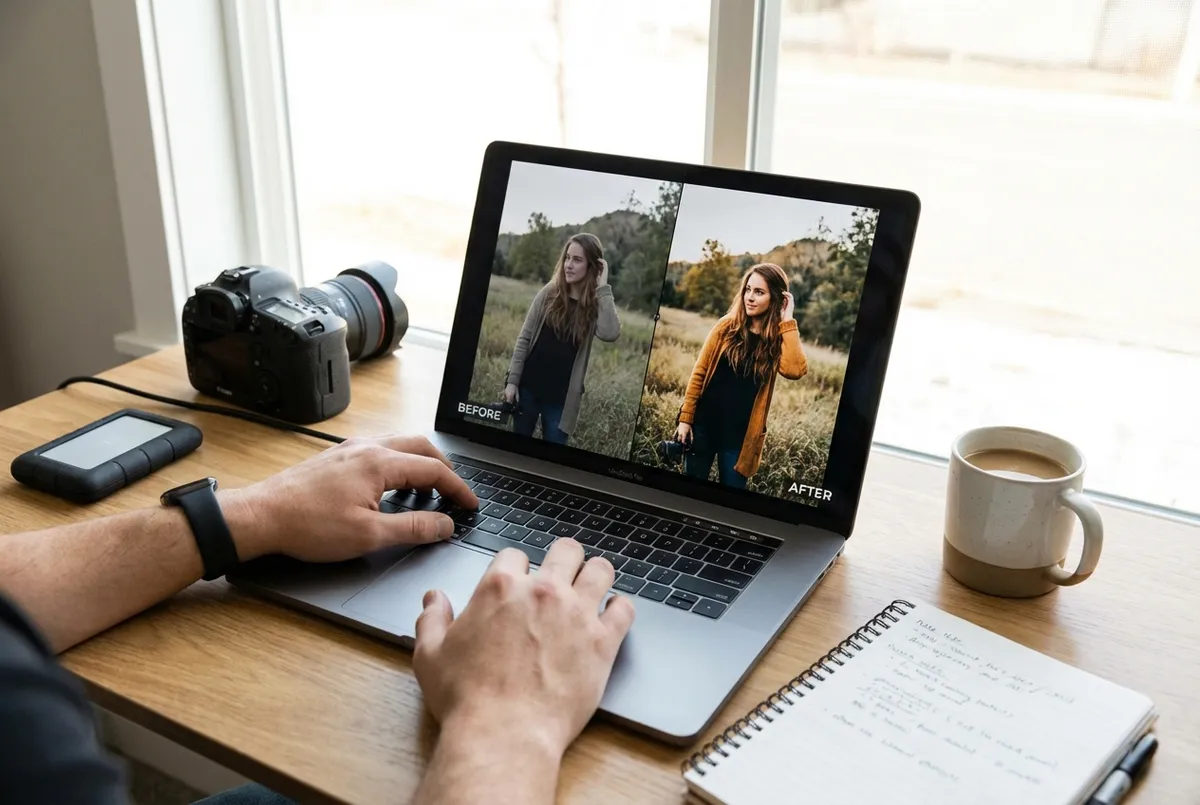
Post-production is where good photos become great ones
Managing Expectations
If you're reading this thinking "I don't have time to micromanage this," you're not alone. The best photographers will guide you through a realistic shot list during the booking conversation. If they promise an unusually high number of final images from a short shoot, that's usually a sign they're either rushing through editing or setting unrealistic expectations.
Now that you understand pricing and deliverables, here's how to actually find the right person.
Best Restaurant Photographer Near Me
Now that you understand the numbers, here's how to find the right person. Finding the best restaurant photographer near you isn't about who has the fanciest website or the highest Instagram follower count. It's about finding someone who understands food, works efficiently under pressure, and delivers images you'll actually use.
Review Their Portfolio
Start with portfolio review. Based on conversations with restaurant owners and photographers across the UK hospitality sector, the most reliable indicator is specialisation. Look for photographers who focus on food and drink photography, not generalists who shoot weddings, products, and restaurants all at once. A strong restaurant portfolio shows:
- Consistent lighting and colour grading
- Multiple examples of the same types of dishes you serve (if they've never shot Asian cuisine, they might struggle with your dim sum)
- Context shots that show the restaurant atmosphere, not just food on white backgrounds
Essential Questions to Ask
Ask these questions before booking:
- How many restaurant clients do you currently work with?
- Can you share examples of work similar to what I need?
- What's included in your rate? (Editing, usage rights, travel, etc.)
- How long after the shoot will I receive final images?
- Do you provide a shot list template or help me plan what to shoot?
Evaluate Their Process
Check their process. Professional food photographers should ask about your lighting conditions, your plating style, and what you're planning to use the images for. If they just say "sure, I can do that" without asking questions, they're winging it. If you're only choosing based on price you'll likely end up with technically correct photos that don't match your brand or sell your food.
Local vs. Regional Specialists
Local vs. regional trade-offs. A local photographer might charge less and arrive faster, but a regional specialist with restaurant experience might deliver better results even if they're charging £100 more and driving an hour. Weigh convenience against expertise.
For instance, an Italian restaurant in Leeds might choose a Yorkshire-based photographer who specialises in Italian cuisine over a cheaper local generalist who's never worked with pasta or risotto. The specialist already knows how to light seafood linguine without making the sauce look grey.
Info
Related: DIY Restaurant Photography Tips
The reality: a "good enough" photographer who understands restaurants will beat a technically perfect photographer who treats your food like a product shoot every time.
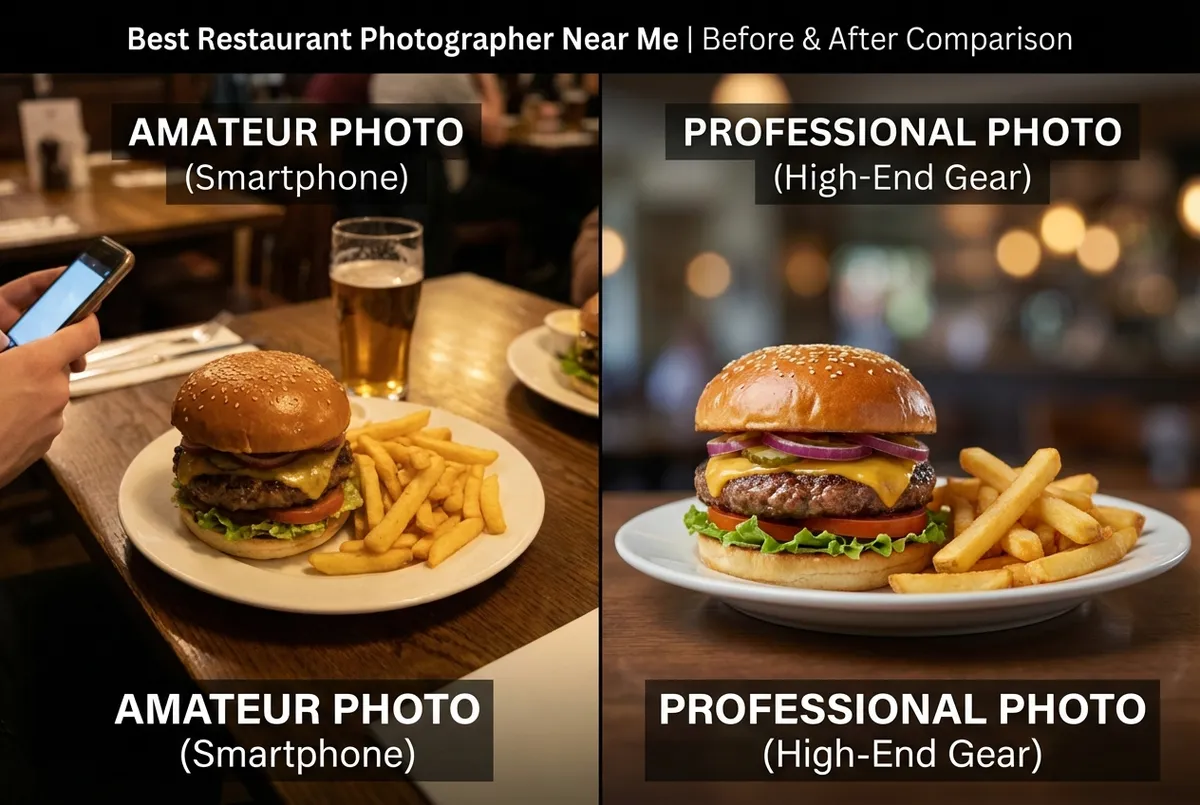
The difference between amateur and professional food photography is immediately visible
Before you start reaching out to photographers, use this checklist to prepare.
Restaurant Photographer Hiring Checklist
Before you reach out to any photographers, work through this checklist to ensure you're prepared:
- Define your needs: List which dishes need photographing and what you'll use the images for (social media, website, print)
- Set a realistic budget: Allocate £150-£250/hour or £600-£1,200/day based on scope
- Review portfolios: Find 3-5 photographers with restaurant-specific work matching your cuisine type
- Check availability: Confirm they can shoot during your quietest service times or closed hours
- Ask about inclusions: Clarify what's covered (editing, usage rights, travel, turnaround time)
- Request shot list help: Ensure they'll guide you on realistic expectations for your session length
- Verify usage rights: Confirm you can use images for all intended purposes (web, social, print, packaging)
- Book a test shoot: If budget allows, start with a 1-hour session before committing to a full day
- Prepare your space: Clean the dining area, check lighting conditions, and have dishes ready to plate
- Communicate brand style: Share examples of photography styles you like and colours that match your brand
Here's everything you need to remember when hiring a restaurant photographer.
Key Takeaways: Restaurant Photographer Near Me
If you run a restaurant and want to see how Local Brand Hub can support your marketing, explore our restaurant marketing tools.
What You Need to Know
Here's everything you need to remember. Finding and hiring the right restaurant photographer near you comes down to understanding what you're paying for and setting realistic expectations. These pricing benchmarks are based on current UK market rates from the Association of Photographers and verified industry sources.
Pricing benchmarks:
- Hourly: £150-£250/hour (shooting time only, check what editing costs)
- Day rate: £600-£1,200 for 6-8 hours + 30-80 final images
- Expect: 8-15 final images from a 1-hour shoot
What to look for:
- Specialist in food/restaurant photography (not a generalist)
- Portfolio that matches your cuisine type and vibe
- Clear communication about what's included in the rate
- Willingness to help you plan a realistic shot list
Red flags:
- No restaurant-specific portfolio
- Promises 50+ final images from a 1-hour shoot
- Doesn't ask about lighting, plating, or intended use
- Can't explain their editing or usage rights policy
The photographers ranking at the top of search results won't necessarily be the right fit for your restaurant. Focus on finding someone who understands food, works efficiently, and delivers images that actually fill tables, not just likes.
Here are the most common questions restaurant owners ask when hiring photographers.
Frequently Asked Questions
Here are answers to the most common questions restaurant owners ask.
Do I own the photos after a restaurant photography session?
Not automatically. Ownership depends on your agreement with the photographer. Some photographers sell full commercial rights, meaning you own the images outright. Others license the images for specific uses (social media, website) while retaining copyright. Always clarify usage rights before booking; otherwise you might pay for photos you can't legally use for print menus or packaging.
Should I hire a food stylist as well as a photographer?
It depends on your budget and the photographer's skills. Many experienced restaurant photographers handle basic styling (adjusting garnishes, wiping plates, arranging props). For high-end campaigns or product packaging, a dedicated food stylist might be worth the extra cost. For social media and website content, a good photographer can typically handle styling themselves.
How far in advance should I book a restaurant photographer?
Popular photographers often book 2-4 weeks in advance, especially for weekend or evening shoots. If you need photos urgently, some photographers offer rush bookings for an additional fee (typically 20-30% more). During busy seasons (pre-Christmas, summer wedding season), book even earlier to secure your preferred date.
Can I use the photos for advertising if I only paid for social media rights?
No. If your agreement specifies social media and website use only, you cannot legally use those images for paid advertising, billboards, print ads, or product packaging without negotiating additional licensing. Using photos beyond your agreed terms can result in copyright infringement claims. Always discuss your full intended use upfront.
What's the difference between a product photographer and a restaurant photographer?
Product photographers shoot items on clean backgrounds for e-commerce or catalogues. Restaurant photographers specialise in food styling, ambient lighting, and creating atmosphere that reflects your dining experience. A product photographer might deliver technically perfect images, but they'll likely lack the context and warmth that makes restaurant food look appetising and inviting.
Weekly Action: Find Your Restaurant Photographer
If you're ready to upgrade your restaurant's visual identity, start here:
Day 1-2: Search "food photographer [your city]" and review 5-7 portfolios. Save 2-3 that match your style and budget.
Day 3-4: Email your shortlist with your requirements (e.g., "Need 10 dishes photographed, prefer natural light, using images for Instagram and website"). Ask for their hourly/day rate and availability.
Day 5-7: Schedule a 15-minute call with your top choice. Ask the questions listed above and confirm what's included in their rate. If it feels right, book a 1-hour test shoot before committing to a full-day session.
If you only have 30 minutes a week to find a photographer:
- Day 1-2: Search "food photographer [your city]" and bookmark 3 portfolios that match your style
- Day 3-4: Email those 3 photographers with your requirements and ask for their rate sheet
- Day 5-7: Review responses, pick your top choice, and book a brief call to confirm details
You don't need a celebrity photographer. You need someone who makes your food look as good as it tastes, and helps you turn those images into more customers. Great images are only half the job, though: pairing them with a social post generator turns a single shoot into weeks of ready-to-share content.
Self-reflection moment: Before you book, ask yourself: Would I order from a restaurant whose photos look like mine? If the answer's no, professional photography isn't an expense; it's an investment in filling tables.
For UK restaurants
Ready to upgrade your restaurant's visual identity?
Once you've got professional photos sorted, the next challenge is using them effectively. LocalBrandHub helps independent restaurants turn great visuals into consistent weekly marketing: automatically scheduling posts, optimising for local search, and tracking what actually brings customers through the door. No marketing degree required. Start using your new photos to fill tables, not just feeds.
Start freeInfo
Related: Restaurant Social Media Marketing
Get More Marketing Tips
Practical marketing tips for UK business owners, straight to your inbox. No spam, unsubscribe anytime.
About the Author
Local Brand Hub
Empowering UK Businesses
Local Brand Hub provides comprehensive business management tools designed specifically for UK local businesses to streamline operations, automate marketing, and grow revenue.
More articlesRelated Articles
 Marketing Tips
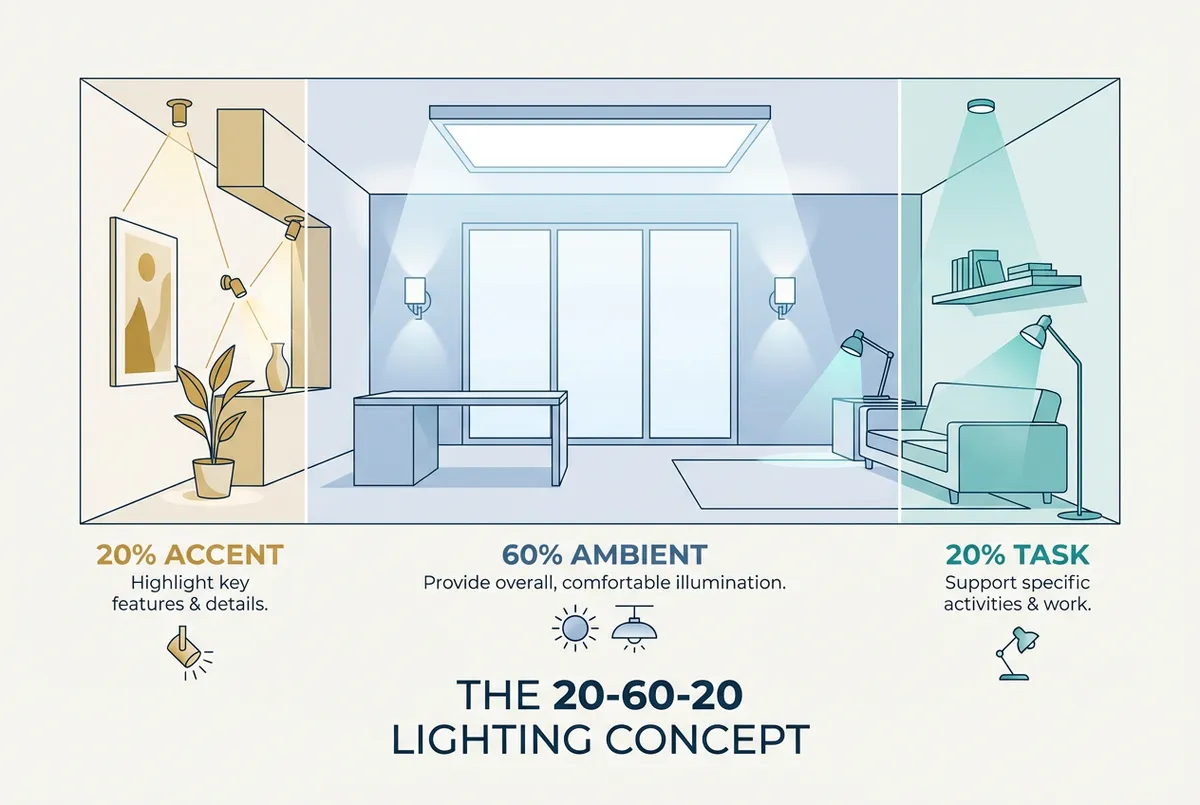
Restaurant Photography: Complete UK Guide (£150-£2,000)
Restaurant photography guide: market rates (£150-£2,000), lighting rules, shot list, when to hire pro vs DIY for UK venues.
 Marketing Tips
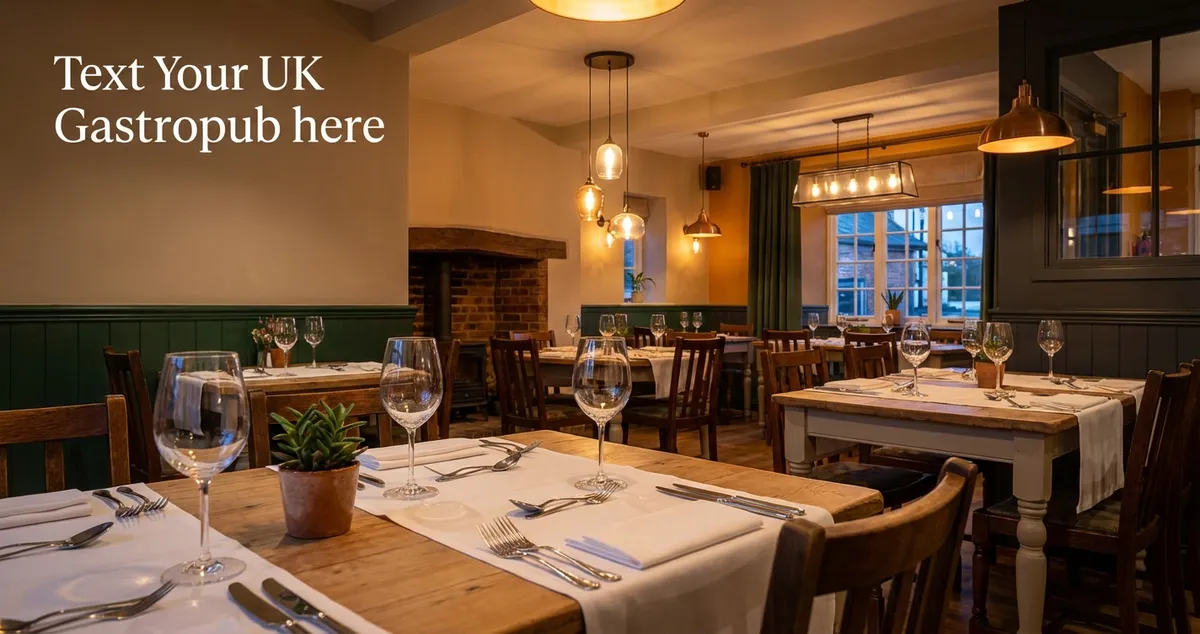
Restaurant Interior Photography: The Complete Guide for 2026
Photograph your restaurant interior like a professional. Covers composition rules, lighting setups, camera settings, and turning photos into bookings.
 Marketing Tips
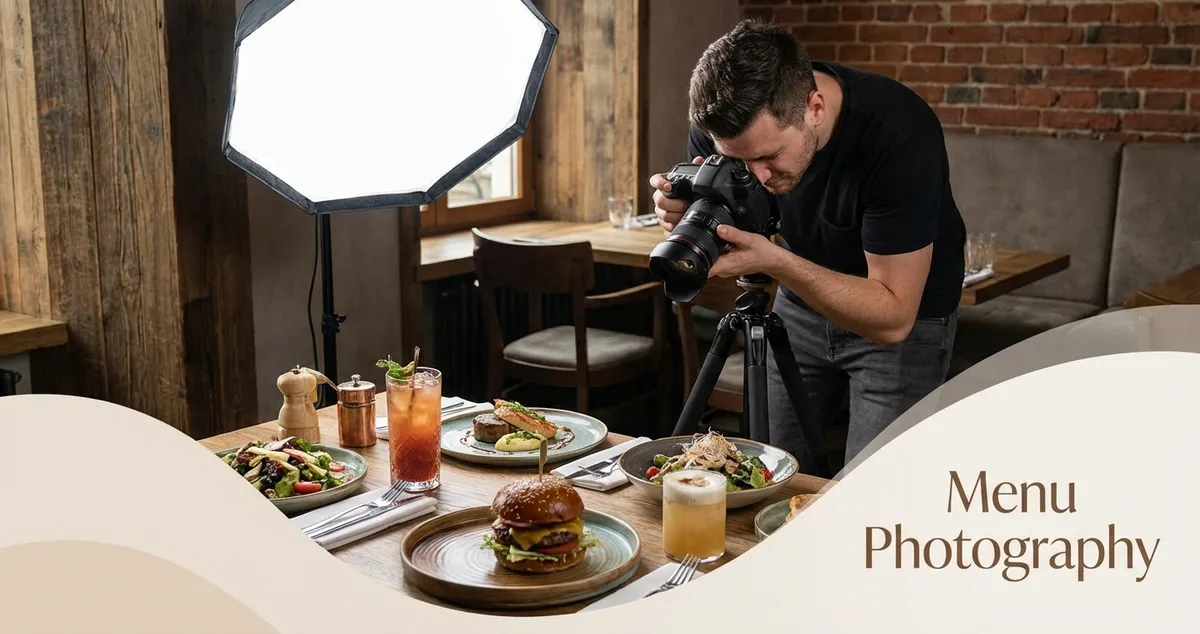
Restaurant Menu Photography: Techniques
Master restaurant menu photography with the 20-60-20 lighting rule and 3:1 ratio. Learn equipment, angles, and styling for UK restaurants.