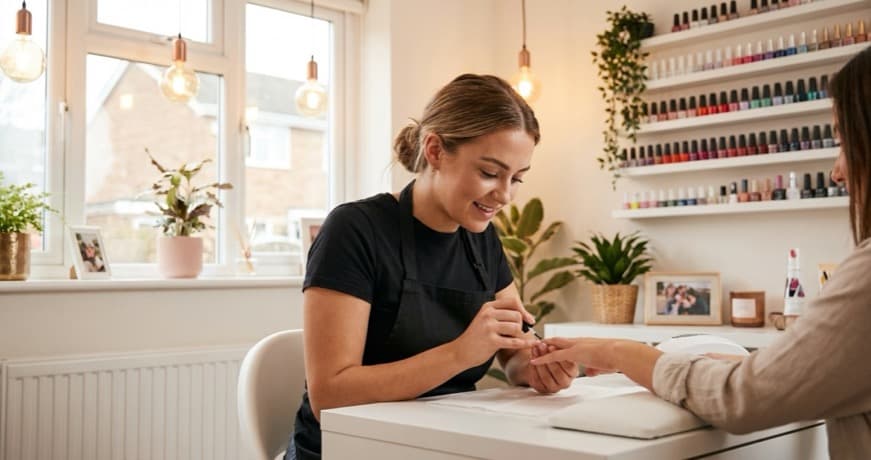
How to start a nail or lash business in the UK. Covers qualifications, startup costs, insurance, pricing, and building a full client base from scratch.
You're spending evenings practising on friends while other technicians are fully booked, and wondering why it isn't you yet. Starting a nail or lash business is more achievable than most people think: startup costs under £1,000, begin from home, and with the right foundations you can be earning within weeks of qualifying.
This guide covers the full picture for anyone starting a nail or lash business in the UK: which specialism suits you, what you legally need, realistic costs, and how to build a full client base from nothing. The information is based on current UK industry data from NHBF, BABTAC, VTCT, and gov.uk: the bodies that govern qualifications, insurance, and licensing for UK beauty technicians.
Related: How to Start a Nail Business | How to Start a Lash Business | Nail Technician Business
What you'll learn:
- Nail vs lash: which business model suits you better
- Which qualifications you need (and which you don't)
- Realistic startup costs for home, mobile, and salon setups
- How to get your first clients, and keep them
- The mistakes that trip up most new technicians
Why Nail and Lash Businesses Are Booming
The UK nail market was valued at £269 million and is growing at approximately 3.1% annually (IBIS World, 2025). That's steady rather than spectacular, but it's consistent, and it's driven by independent technicians, not chains. Around 53% of UK nail technicians are self-employed (NHBF, 2025).
That's the majority of the industry working exactly the way you're planning to.
Lash extensions tell a similar story. The global false eyelash market is valued at approximately USD 1.9 billion in 2025 and is projected to reach USD 2.8 billion by 2030 (Grand View Research, 2025). UK demand for trained lash technicians has grown sharply, partly because lash services carry strong repeat-booking rates.
A client who loves their lashes is back every three to four weeks, reliably. That's the kind of repeat income a nail client might not generate as quickly.
Both markets share a key characteristic: they're dominated by solo operators. When starting a nail business or lash business, you're not competing with chains. You're competing with independent technicians who have a loyal book of regulars and a waiting list.
For instance, a nail technician working from home in a mid-size UK town might see six clients a week and build a full diary within three to four months purely through referrals and Google reviews, without any paid advertising.
Nail vs Lash: Choosing Your Specialism
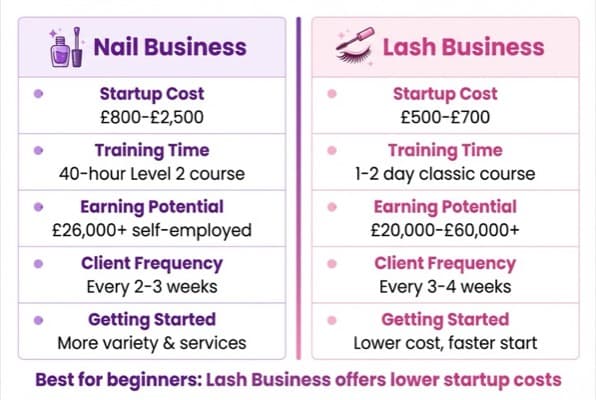
Comparing nail and lash businesses across the factors that matter most at startup.
You don't have to pick just one; many technicians offer both. But if you're starting out, focus matters.
Here's how the two compare across the factors that matter most when starting a nail or lash business:
| Factor | Nail Business | Lash Business |
|---|---|---|
| Startup cost | £800-£2,500 (home setup) | £500-£700 (home setup) |
| Qualification | VTCT Level 2 or NVQ | VTCT Level 3 Award (Single Lash) |
| Client frequency | Every 2-3 weeks for infills | Every 3-4 weeks for infills |
| Earning potential | £26,000+ self-employed (NHBF, 2025) | £20,000-£60,000+ depending on volume |
Choose nails if: You enjoy variety: gel, acrylics, nail art, pedicures. Nails allow more service diversification and a broader client base.
Choose lashes if: You want a tighter, repeatable service model with strong client retention. Lash clients tend to rebook consistently: once they find a technician they trust, switching is inconvenient and risky for them.
For most new technicians starting a nail or lash business, lashes offer the faster route to profitability: lower startup costs, quicker training, and high repeat-booking rates from day one.
Would you be satisfied rebooking 90% of your clients automatically, or do you prefer a varied daily service menu? That question often decides it.
Related: Nail Business | Lash Business | Brow Business Names
Qualifications and Training You Need
Here's what most people get wrong: there's no legal requirement to hold a formal qualification to work as a nail or lash technician in the UK. But in practice, you need one anyway.
Why? Insurance. No reputable UK insurer will cover you without a certificate from an accredited training provider. And without insurance, you can't legally work from commercial premises or with the public (BABTAC, 2025).
Nail qualifications
The standard pathway:
- Level 2 Certificate in Nail Technology: anatomy, health and safety, gel and acrylic application. Typically a 40-hour course (VTCT, 2025). Entry requires two or more GCSEs.
- Level 3 Diploma in Nail Services: advanced techniques and specialisms. Requires four or five GCSEs for college entry.
- Apprenticeship route: a Level 2 Intermediate Apprenticeship takes approximately one year, combining workplace experience with day-release study.
Online courses are acceptable if accredited by VTCT, ABT, or BABTAC and include tutor support and formal assessments.
Lash qualifications
- VTCT Level 3 Award in Single Eyelash Extensions: the primary professional qualification. Nationally recognised and fully insurable (VTCT, 2025).
- A classic lash course typically covers one to two days of practical training plus case study submission.
- Entry: no previous beauty experience required; must be 16 or older.
A VTCT Level 3 lash course typically costs £359 to £399 including certification fees, with an additional equipment kit of around £70 to £85 (London Lash, 2025).
Before Booking Any Course
Ask the provider directly: "Which accreditation body approves this qualification, and will it be accepted by UK beauty insurers?" If they can't answer clearly, that's usually a sign the course isn't worth the investment.
One rule for both disciplines: Confirm accreditation before you book anything. Unaccredited courses are useless for insurance purposes, and the beauty training market has plenty of them.
Related: Nail Technician Business | How to Start a Lash Business
Setting Up Your Business
Startup costs
Starting from home keeps costs low. Here's what to expect:
Nail home setup typically runs to around £800 to £2,500: covering equipment, core nail systems, prep products, tools, insurance, and training. The range reflects quality differences in equipment and how much training you've already completed.
Lash home setup typically costs £500 to £700: a beauty bed, quality lighting, a full lash kit, and VTCT Level 3 training and certification. This is one of the lower-cost routes into professional beauty.
If you move to salon-based working later, expect significantly higher costs for fit-out, furniture, and a premises deposit.
Business registration
Register as a sole trader with HMRC for self-assessment as soon as you start earning. It's free and takes about 15 minutes at gov.uk. You'll pay tax on profit above the personal allowance and submit an annual return.
If you're renting a chair or room in an existing salon, clarify whether you're an employee or self-employed: the arrangements differ significantly around tax and insurance.
Licensing
Some local councils require a licence for certain beauty treatments. Check with your local authority before you start: fees vary significantly by location (typically £200 to £900+ depending on council and treatment type; gov.uk, 2025).
Related: Nail Bar Business Plan
Building Your Client Base
The business side is where most new technicians struggle when starting a nail or lash business. You can be genuinely skilled at your craft and still find yourself with an empty diary three months in. If you're reading this thinking "I'm good at what I do, the clients will come": that's usually a sign you need a more deliberate client strategy before you launch.
Here's what actually works.
Start with people who already trust you
Your first ten clients should be people who know you. Friends, family, colleagues, neighbours. Offer a discounted rate in exchange for honest reviews and referrals. This isn't charity; it's market research and social proof.
For example, a new nail technician might offer friends a full set at £20 (versus their future rate of £45) in exchange for a Google review and an Instagram tag. Those first five reviews build credibility that converts strangers into paying clients.
Google Business Profile before Instagram
Most new technicians default to Instagram first. It's not wrong, but it's not the fastest route to local clients. Your Google Business Profile is. Set it up before anything else. Fill in your services, prices, location, and hours, then use our local SEO tools to keep that profile consistent as you grow. Ask your first clients to leave a review.
When someone searches "nail technician near me" or "lash artist [your town]", your profile shows in local results. Instagram can't do that.
Use a booking system from day one
Managing bookings via WhatsApp and DMs is a fast route to no-shows, double bookings, and missed messages. A simple booking system with automated reminders cuts no-shows significantly, and it looks professional to clients deciding between you and someone else.
There are affordable options built specifically for solo beauty technicians, many of which integrate with Google and Instagram so clients can book directly from your profile.
Pricing confidence
The reality is most new technicians undercharge for the first six to twelve months, and correcting it is harder than getting it right from the start. If you're only starting low and planning to raise prices later, you'll often find clients who booked at low rates resist increases; you're not alone in this pattern, but you can avoid it.
Set your prices based on your actual costs and the local market rate from day one.
Common Mistakes to Avoid
The most common errors when starting a nail or lash business aren't about technique; they're about the business side. If you're reading this thinking "I'll figure the business stuff out as I go", that's usually a sign to slow down and get these foundations right first.
Here's what to avoid:
- No insurance: not optional. A single allergic reaction or injury without cover could cost you far more than a year's premiums. Insurance for solo technicians starts at around £60 to £150 annually.
- Unaccredited training: confirm VTCT, ABT, or BABTAC accreditation before booking any course. If the provider can't tell you clearly, walk away.
- Skipping patch tests: lash glue and many nail products contain sensitising chemicals. Build patch testing into every new client booking automatically.
- Pricing blind: know your cost per treatment before setting a menu price. If your hourly effective rate falls below minimum wage, you're funding a hobby, not a business.
For example, a lash technician charging £45 per set but spending 2.5 hours per client, £5 in products, and £10 in hourly salon chair rental is earning around £10/hour before tax. That's not sustainable, and it's a pattern many new technicians fall into without realising until months in.
Social platforms: pick one and do it well. A neglected multi-platform presence looks worse than a focused single account.
If you're only posting occasionally you'll always lose to technicians who build content creation into their weekly operations from day one.
Ask yourself: would you book a treatment at your own salon based on your current online presence? If the answer isn't a clear yes, that's where to focus first.
If You Only Have 30 Minutes This Week
You don't need a business plan, a brand identity, or a full website before you start. Here's the minimum viable first week for starting a nail or lash business:
Day 1 to 2: Qualifications and insurance
- Research one accredited training provider for your specialism (VTCT/ABT/BABTAC-approved)
- If already qualified: get a quote for professional beauty insurance (from £60/year at BABTAC or ABT)
Day 3 to 4: Set up the basics
- Register as a sole trader with HMRC at gov.uk (free, 15 minutes)
- Set up a Google Business Profile with your location, services, and contact details
Day 5 to 7: Get your first bookings
- Message five people you know and offer a discounted first appointment in exchange for a Google review
- Set up a free online booking link and add it to your Google profile
That's it. Seven days, under £100 spent, and you're a functioning business.
Your Next Steps
Starting a nail or lash business is genuinely achievable with modest investment and the right preparation. The technicians who succeed aren't necessarily the most skilled; they're the ones who treat it as exactly that: a business. Accredited qualifications, insurance, professional pricing, and a system for getting and keeping clients.
The nail and lash market rewards consistency. For example, a lash technician with just 15 regular clients, each rebooking every four weeks, has a fully booked diary and a sustainable income without any ongoing marketing spend. Every infill appointment is a rebooking opportunity. Every satisfied client is a referral waiting to happen.
Ready to go deeper? Explore the full guide series:
- Nail Business: everything you need to know about running a nail business
- Lash Business: the complete guide to lash businesses in the UK
- How to Start a Nail Business: step-by-step nail business launch guide
- How to Start a Lash Business: complete lash business launch guide
- Nail Bar Business Plan: writing a plan that actually helps you
- Nail Technician Business: running the business side day to day
- Nail Business Names: choosing a name that works for branding and SEO
- Lash Business Names: naming your lash business the right way
- Brow Business Names: adding brows to your service menu
Explore our beauty salon resources for more guides tailored to the UK beauty industry.
For UK nail and lash businesses
Simplify Your Beauty Business Marketing
Local Brand Hub helps nail and lash technicians manage social media, track local visibility, and grow their client base, all in one place.
Try It FreeKey Takeaway
Starting a nail or lash business in the UK requires an accredited qualification (VTCT, ABT, or BABTAC), professional insurance, and HMRC sole trader registration. Startup costs are modest: £500 to £700 for lashes, £800 to £2,500 for nails from home. The technicians who build sustainable businesses focus on the commercial foundations first: professional pricing, a Google Business Profile, a booking system, and a deliberate strategy for their first ten clients. Lashes typically offer the faster route to profitability thanks to lower costs and high repeat-booking rates.
Get More Marketing Tips
Practical marketing tips for UK business owners, straight to your inbox. No spam, unsubscribe anytime.
About the Author
Local Brand Hub
Empowering UK Businesses
Local Brand Hub provides comprehensive business management tools designed specifically for UK local businesses to streamline operations, automate marketing, and grow revenue.
More articlesRelated Articles
 Business Growth
Brow Business Names: 30+ Ideas by Style
30+ brow business name ideas by style. Covers brow bar vs brow studio naming, threading bars, and UK name availability checks.
 Business Growth
Lash Business Names: 40+ UK Ideas by Style
Browse 40+ lash business names by style: glamorous, minimalist, quirky, and location-based. UK availability checks and trademark costs included.
 Business Growth
Nail Business Names: 50+ Ideas + How to Pick the Right One
Need nail business name ideas? Discover 50+ creative options, punny, elegant, contemporary, personal, plus how to check availability in the UK.