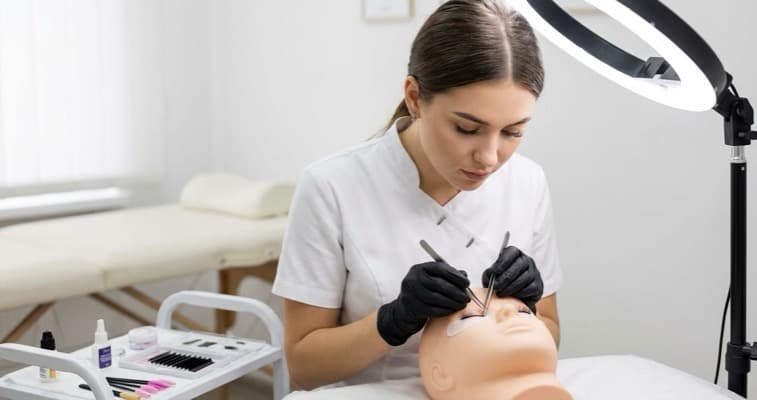
Learn how to start a lash business in the UK. Training, insurance, kit costs, pricing and getting your first clients: a complete step-by-step guide.
You've watched the before-and-afters. You've spent hours perfecting your technique on yourself and anyone willing to sit still long enough. Now you're ready to turn that passion into a business, but between training certificates, insurance, starter kits, and figuring out what to charge, it can feel like the paperwork never ends.
This guide cuts through the noise. If you want to know how to start a lash business in the UK, you're in the right place, whether you're planning to work from home, rent a space, or go mobile. Based on our research into UK training providers, insurance requirements, and real lash business costs, here are six practical steps, in order, with real figures and no fluff.
What you'll learn about how to start a lash business:
- Choosing and completing the right lash extension training
- Getting insured and legally sorted
- Building your starter kit on a sensible budget
- Picking your business setup
- Setting prices that reflect your skill
- Booking your first paying clients
Related: Starting a Nail or Lash Business: the complete guide to getting your beauty business off the ground
In this guide:
- Complete Lash Extension Training
- Get Insured and Registered
- Build Your Lash Kit
- Choose Your Business Setup
- Set Your Lash Prices
- Book Your First Clients
- Take Your First Step This Week
Step 1: Complete Lash Extension Training
The first step when you want to know how to start a lash business is getting properly trained. There is no single government-issued lash licence in the UK, but that does not mean you can operate without formal training. Insurance companies, local councils, and professional bodies all expect an accredited qualification. Without one, you cannot get public liability insurance. Working uninsured is not an option.
What accreditation to look for:
- VTCT Level 3: recognised vocational qualification, widely accepted by insurers
- ABT-accredited: accepted by many specialist beauty insurers
- BABTAC-accredited: industry-standard; opens access to BABTAC membership insurance
- CPD-certified: useful for continuing development, but less weight for initial cover
For most new lash technicians, a VTCT Level 3 Award in Lash Extensions is the most credible foundation. Expect to pay around £290 to £350 for a one-day course plus assessments. Online-only courses at the lower end (from £49) typically provide CPD certificates rather than vocational awards. Some insurers don't accept these, so always verify before booking. BABTAC maintains a directory of accredited courses you can check against your intended insurer.
For example, a lash tech starting out in Manchester might complete a BABTAC-accredited VTCT Level 3 course for around £340, then spend 6 weeks completing 40 practice models on friends before opening for paying clients. That timeline is typical, and realistic.
How much practice do you need?
Training gives you the technique. Consistent speed and quality come from 30 to 50 practice models before you open to paying clients. Build that time into your timeline.
If you're only looking for the cheapest online certificate, that's usually a sign you'll struggle to get insured, and you'll always lose to technicians who invested in accredited training from the start.
For a broader look at getting established in this industry, see our guide to starting a nail or lash business. You might also find our beauty salon industry page helpful for understanding the wider landscape.
Step 2: Get Insured and Registered
Now that you have an accredited qualification, the next step is getting properly covered. Every guide to how to start a lash business puts insurance near the top, and for good reason. A single allergic reaction or a claim from a client who develops an eye infection can cost thousands without cover.
What you need:
- Public liability insurance: covers third-party injury or property damage
- Treatment liability (professional indemnity): covers claims from lash treatments specifically
- Products liability: covers the adhesives and products you apply
Choosing a provider
BABTAC membership includes an insurance package designed for lash technicians, plus access to their training directory and industry resources. Standalone specialist providers such as Salon Gold, Insync, and SME Insurance also offer lash-specific policies. Annual premiums for comprehensive cover are typically modest: well under £300 per year for most setups.
For example, a home-based lash technician in Leeds might take BABTAC membership for combined insurance and professional standing. A mobile technician visiting clients would pay at the higher end of the range. Either way, the cost is minimal compared to the risk of operating without cover.
Alongside insurance, sort these:
- Register as self-employed with HMRC once you start earning (required by law)
- Check with your local council about home business rules, requirements vary
- Notify your home insurer if clients will visit your property
This is also the right moment to think about your business name. Our full guide to lash business names covers how to choose something that works both locally and online. If you're considering a brow-focused service too, see our guide to brow business names.
Step 3: Build Your Lash Kit
With your training and insurance sorted, here's where you invest in your tools. One of the practical hurdles when you learn how to start a lash business is knowing what equipment you actually need, and what's just marketing to beginners. You do not need to spend £1,000 on your first kit. You do need to spend enough to work professionally from day one.
Core starter kit contents:
- Classic or volume lash trays (a range of lengths and curls)
- Lash adhesive: fast-drying for experienced techs, slower for beginners
- Lash primer and a cleanser/degreaser
- Isolation and volume tweezers
- Under-eye gel patches and 3M micropore tape
- Jade stone for adhesive
- Gel remover
- Lash mapping stickers or paper tape for design planning
Professional starter kits covering classic and volume applications are available from UK suppliers such as London Lash and LashArt. Bundled kits save money versus buying individual items and ensure you have everything matched for your training level.
Beyond the kit, account for:
- A treatment bed or reclining chair (if working from home)
- Good lighting: a ring light or daylight lamp is essential for precision work
- Aftercare cards for clients
- A booking system (even a free option like Fresha works initially)
A realistic starting budget for equipment and supplies is a few hundred to around £700 to set up properly from home. This is not where to cut corners. Poor adhesive or ill-fitting tweezers directly affects your results and client retention.
Working with a limited budget
If you're looking at those figures and wondering how to make them work on a tight budget, you're not alone. Most new lash techs start without a business loan. Staging the investment (training first, then kit, then equipment upgrades) is a completely sensible approach.
For a broader overview of what your business needs beyond the kit, visit our lash business guide.
Step 4: Choose Your Business Setup
Now that your kit is ready, it's time to decide where you'll work. When you learn how to start a lash business, one of the biggest early decisions is your setup. Your setup affects your costs, your client experience, and your insurance requirements. There is no single right answer. It depends on your situation.
Home studio
Lowest overhead, most flexibility. You need a dedicated, clean treatment space, not the kitchen table. Check your tenancy agreement or mortgage terms; some require you to notify the landlord or lender. Expect increased home insurance costs.
Renting a space
Renting a treatment room or chair within an existing salon is a common route for new lash techs in the UK. A shared space typically includes bills and can run anywhere from a few hundred pounds a month upwards, depending on location. Higher in London and major cities, lower in smaller towns.
Mobile
Travelling to clients keeps fixed costs minimal but reduces efficiency. Travel time is unpaid, and portable kit quality matters more. Best as a supplement to a fixed base rather than a sole model.
For example, a new lash tech in Bristol might start from a spare bedroom, keeping costs down while building a client base, then move to a rented treatment room in a hair salon after six months, once she has a consistent weekly diary. That progression is common, and it works.
For most new lash businesses, starting from home then moving to rented space as bookings grow is the most sensible path. It keeps early costs low, then gives you a more professional setup as demand increases.
Whatever you choose, keep records from day one. A simple spreadsheet tracking income and expenses saves significant stress when your first self-assessment is due.
Step 5: Set Your Lash Prices
With your setup decided, next comes pricing. Ask anyone who has figured out how to start a lash business and they'll tell you the same thing: pricing too low is one of the most common early mistakes. Undercharging does not just hurt your income. It positions you as the budget option, which attracts clients who are most likely to push back on price increases later.
Setting your prices isn't about being expensive. It's about being sustainable.
UK lash extension price ranges (2025):
| Service | Typical UK range | London |
|---|---|---|
| Classic full set | £45-£75 | Higher |
| Hybrid full set | £55-£100 | Higher |
| Volume full set | £65-£120 | Higher |
| Infills | 50-65% of full set | Higher |
Source: UK pricing data from beautypricelist.com and professional lash suppliers, 2025.
Pricing your time correctly
Work backwards from what you need to earn. A classic full set takes around 1.5 to 2 hours. After product costs, you are netting a fraction of the service price per hour, and that margin gets tighter if you've priced too low. You need to be consistently booked to build a viable income, which is why pricing below market from the start makes it harder, not easier.
For example, a new lash tech in a small town outside Birmingham might start classic full sets at around £50 with a temporary model rate during training, then raise prices after 3 months once the diary fills up. That kind of planned increase is far easier to communicate than an apologetic mid-session conversation because you've been undercharging.
For most UK areas, starting classic sets at no lower than £50 is a sensible floor. Offer model prices during your practice phase, but make clear these are time-limited, not your standard rate.
If you're only competing on price you'll always lose to whoever charges less, and that race ends badly.
If you can't tell whether your pricing is attracting the right clients or just the cheapest ones, that's usually a sign you haven't set a proper going rate, and that everything needs to go up.
Step 6: Book Your First Clients
Finally, here's the part most people overthink. The final practical step of how to start a lash business is booking your first clients, and it starts closer to home than most people expect. Your first clients rarely come from Instagram. They come from the people already around you.
Offer friends, family, and colleagues discounted model sets (around £20 to £30) in exchange for honest feedback, before-and-after photos (with permission), and a Google or Facebook review. This builds your portfolio and gives you 10 to 15 documented results before you market to strangers.
For example, a new lash technician in Sheffield might spend her first month doing 12 model sets on friends and colleagues, building an Instagram portfolio of 24 before-and-after photos. By the time she opens her DMs to paying clients, she already has social proof and two Google reviews.
Getting visible locally
- Join local Facebook community groups and post your work: "Girls in [Town Name]" groups often convert better than Instagram at the early stage
- Set up a Google Business Profile: free, visible in local searches, and the first item on any local SEO checklist worth following
- Post 3 to 4 times per week on Instagram, mixing before-and-afters, process clips, and personality content. Use specific local hashtags (your town + "lash extensions") over generic ones
Protecting your time
Late cancellations and no-shows are a reality in lash bookings. A 24 to 48 hour cancellation policy with a deposit (typically 25 to 30% of the service price) protects your time and signals professionalism from day one. If you're only chasing new clients without protecting your existing bookings you'll always feel behind.
The first 3 months are the hardest. If you're reading this wondering whether it's actually possible to build a client base from nothing, it is. Most lash businesses build steadily after that initial period: through referrals, reviews, and consistent content. Not paid ads.
If you're also considering nail services alongside lash work, take a look at our guides to starting a nail business, nail business ideas, and becoming a nail technician.
Step 7: Take Your First Step This Week
Now that you have the full picture, here's how to move from reading to doing. The question of how to start a lash business often feels bigger than it is. Starting does not require everything to be perfect before you begin. It requires momentum. Ask yourself: if a potential client found your Instagram tomorrow, would what they see make them book?
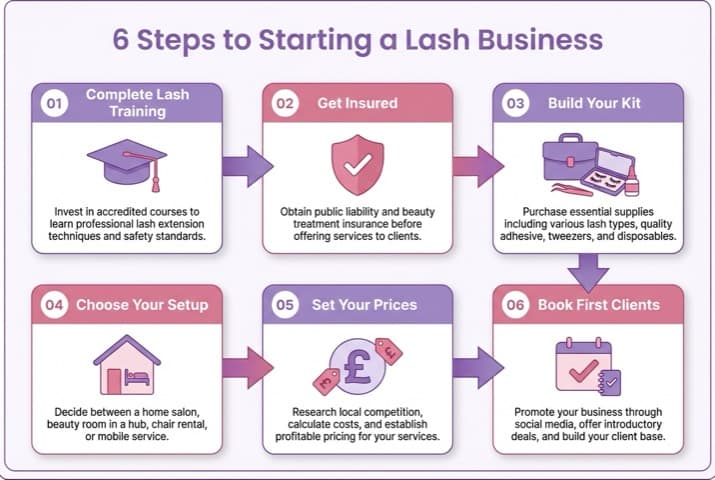
The six steps to launching your lash business
The fastest path to a full lash business is not a better Instagram feed. It is a completed qualification, proper insurance, and a portfolio built on real practice models.
If you only have 30 minutes a week to get started, do this:
- Day 1-2: Research VTCT Level 3 lash extension courses from BABTAC-accredited providers in your area. Compare two or three. Confirm which insurer you'll use and whether they accept the certificate.
- Day 3-4: Get a quote for lash technician insurance. Confirm cover before booking your course, not after.
- Day 5-7: Order a classic starter kit and message three friends to line up as practice models after your training.
Pre-launch checklist:
- Booked accredited lash extension training (VTCT Level 3 or equivalent)
- Confirmed insurer accepts your course certificate
- Registered as self-employed with HMRC
- Taken out public liability and treatment liability insurance
- Set up a Google Business Profile
- Built a portfolio of at least 10 before-and-after photos
- Set prices (with a clear model rate and a going rate)
- Chosen a booking system (Fresha or similar)
Once you are trained, insured, and have a portfolio of real results, how to start a lash business stops being an abstract question and becomes a practical checklist. Most of it is done by the time you take your first paying client.
A lash business is not built on a perfect Instagram feed. It is built on 40 practice models, a VTCT certificate, and the courage to charge properly from day one.
The lash techs who struggle are usually the ones who skipped the practice phase, not the ones who took too long to get their Instagram bio right.
For example, a lash tech who completes her training in week one, does 12 practice models over the following four weeks, and opens her books at £55 per classic set in week six is further ahead than someone who spent the same time planning branding while working unqualified.
Ready to go deeper? Read our complete guide to how to start a beauty business for everything from business structure to marketing your first treatments. You can also explore our nail bar business plan guide for practical planning advice, or discover creative nail business names and lash business names for inspiration.
Your next action this week: Search for BABTAC-accredited VTCT Level 3 lash courses near you, check the insurer will accept the certificate, and book it. That single step sets everything else in motion.
All costs and pricing data in this guide are based on UK market research from professional beauty suppliers, insurance providers, and industry sources. Consult a professional insurer and your local council for specific advice relevant to your setup.
Frequently Asked Questions
Do you need a licence to do lash extensions in the UK?
One of the most common questions when researching how to start a lash business is about licensing. The UK government does not currently issue a specific national lash licence. However, you need an accredited qualification to obtain professional insurance, and you should check with your local council about any local permits. In practice, working without accredited training means working without insurance, which is not a viable option.
How much does it cost to start a lash business in the UK?
Costs vary by setup, but in broad terms: training typically runs a few hundred pounds, annual insurance is modest (well under £300 for most), and your starter kit and equipment are a few hundred more. Total realistic starting budget: roughly £800 to £1,500 depending on whether you're working from home or renting space.
How long does lash extension training take?
Most accredited lash extension courses are one-day intensive courses plus assessments and a portfolio of practice models. Factor in several weeks of practice on models before you're ready for paying clients. Most new lash techs take 4 to 8 weeks from booking their course to opening their books.
Is learning how to start a lash business worth it?
Yes: a self-employed lash technician with a full diary can earn a strong income. With consistent client bookings at mid-market rates, product costs per service are low, leaving healthy net margins per appointment. The model works well as a solo or home-based business with relatively low overhead.
Can you start a lash business with no money?
Not quite, but the barrier is lower than many expect. Training, insurance, and a basic kit can be staged: complete training first, confirm insurance cover, then invest in the full kit once your first model bookings are in place. Starting from home eliminates the biggest cost (renting a space) and many successful lash businesses begin exactly that way.
Do you need experience to start a lash business?
You don't need prior beauty therapy experience, but you do need properly accredited training before taking paying clients. The qualification process gives you the foundation. Applied technique comes with practice models. Many lash technicians start with no formal beauty background and build a strong business from scratch.
For restaurants, salons, and local businesses
Need help with your marketing?
We help UK businesses turn social media into real results, not busywork.
Start freeKey Takeaway
Starting a lash business in the UK comes down to six clear steps: get accredited training (VTCT Level 3), sort your insurance and registration, invest in a quality starter kit, choose your setup, price your services properly, and book your first clients through your existing network. Most lash techs are ready for paying clients within 4 to 8 weeks of starting. The single best action you can take this week is to research and book an accredited lash extension course: everything else follows from that first step.
Get More Marketing Tips
Practical marketing tips for UK business owners, straight to your inbox. No spam, unsubscribe anytime.
About the Author
Local Brand Hub
Empowering UK Businesses
Local Brand Hub provides comprehensive business management tools designed specifically for UK local businesses to streamline operations, automate marketing, and grow revenue.
More articlesRelated Articles
 Business Growth
Brow Business Names: 30+ Ideas by Style
30+ brow business name ideas by style. Covers brow bar vs brow studio naming, threading bars, and UK name availability checks.
 Business Growth
Lash Business Names: 40+ UK Ideas by Style
Browse 40+ lash business names by style: glamorous, minimalist, quirky, and location-based. UK availability checks and trademark costs included.
 Business Growth
Running a Lash Business in the UK: Services and Growth
Run a lash business in the UK: classic, hybrid, volume and lash lift explained, realistic earning potential, infill cycles, and client retention.