Learn proven upselling techniques for UK restaurants including suggestive selling, menu pairings and server scripts. Boost average spend naturally.
Your tables are full on a Saturday night, but the average spend per head barely covers costs. Upselling techniques are the structured methods restaurant staff use to encourage customers to spend more per visit, from suggesting a premium spirit to recommending a side dish. Done well, they lift revenue without adding a single extra cover.
What You'll Learn
- What upselling techniques are and why they matter for independent restaurants
- The 5 suggestive selling techniques that work in food and beverage settings
- How to train servers to upsell without sounding scripted or pushy
- Menu engineering tactics that do the upselling for you
- A 30-minute weekly plan to build upselling into your operations
What Are Upselling Techniques in Restaurants?
So your covers are steady but profits feel flat. That gap between busy and profitable is exactly where upselling techniques come in.
Upselling techniques in restaurants are the structured methods staff use to guide customers toward higher-value choices. The term covers a range of approaches including suggestive selling, premium substitutions and add-on recommendations. Unlike cross-selling, which introduces entirely new items, upselling moves the customer up within a category they have already chosen.
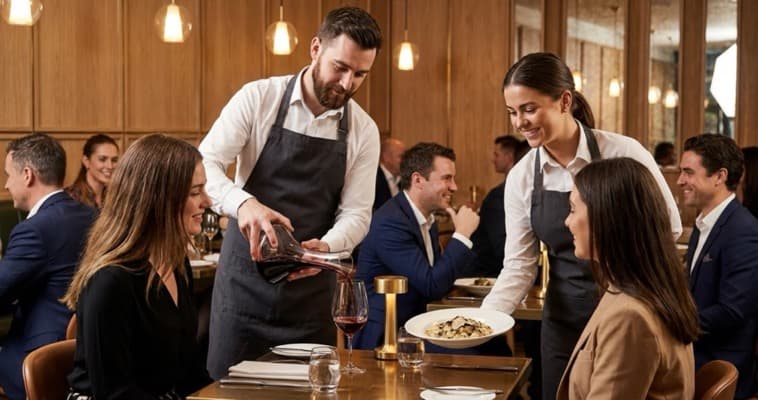
For example, a casual Italian restaurant might train servers to offer the house Chianti by name when a customer orders "a glass of red." That single suggestion turns a £6 house pour into an £8.50 recommendation, with no pressure, no hard sell, and a better experience for the diner.
Info
The core distinction: Upselling moves customers up within what they have chosen. Cross-selling adds items from outside their original choice.
If you're thinking "my staff already do this naturally," that's usually a sign it is happening inconsistently. Some servers upsell without thinking. Others never suggest anything beyond what was ordered. The difference between guesswork and a system is the difference between occasional wins and a measurable lift in average spend.
Why Upselling Matters for Your Profit Margin
With that foundation clear, let's look at the numbers. Based on our experience working with independent UK restaurant owners, even small increases in average spend compound quickly across a week of service.
Restaurants that implement structured upselling techniques often see a meaningful increase in average order value. For a UK restaurant serving 200 covers a week at an average spend of £25, a 15% uplift means an extra £750 per week, or roughly £39,000 per year. To see what a similar uplift could mean for your own venue, run the numbers for your covers.
That figure matters because it arrives without the costs of acquiring new customers. You are not spending on advertising, delivery commissions, or discounts. You are simply getting more value from the customers already sitting at your tables.
| Scenario | Avg Spend | Annual Uplift |
|---|---|---|
| No upselling | £25 | n/a |
| 10% uplift | £27.50 | +£26,000 |
| 15% uplift | £28.75 | +£39,000 |
Figures are illustrative estimates based on 200 weekly covers over a 52-week year.
The reality for most independent restaurants is that margins are already tight. A 15% increase in spend per head could be the difference between scraping by and building a genuinely profitable restaurant.
The 5 Suggestive Selling Techniques for Restaurants
Now that you can see the potential, here are the 5 core suggestive selling techniques that work across food and beverage settings.
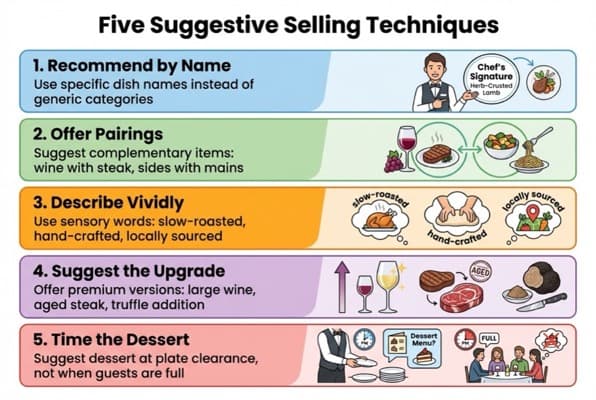
The five suggestive selling techniques that work across food and beverage settings.
1. Recommend by Name
Generic suggestions get ignored. Specific ones get ordered. Instead of "Would you like a starter?" train your team to say "The salt and pepper squid is excellent tonight: the kitchen just prepped a fresh batch."
Naming a specific dish signals confidence and personal knowledge. Specific recommendations from servers increase the likelihood of a customer ordering that item significantly.
2. Offer Pairings
Suggest items that complement what the customer has already chosen. This works particularly well with drinks and sides.
For example, a steakhouse server might say "The rib-eye goes brilliantly with the truffle fries, shall I add a portion?" The suggestion feels helpful rather than salesy because it is connected to the customer's own choice.
3. Describe Vividly
Use sensory language. "Slow-roasted for six hours until it falls apart" sells better than "it's nice." Brief, vivid descriptions create appetite.
4. Suggest the Upgrade
When a customer orders something with a premium alternative, mention it. "We also do the burger with aged cheddar and streaky bacon for just £2 more, it's our most popular version." The small price difference makes the upgrade feel easy.
5. Time the Dessert
Do not ask about desserts while clearing mains. Wait until the table looks relaxed, then bring the dessert menu or describe one specific option. Timing is everything: asking too early feels rushed, asking too late misses the window.
How to Upsell Without Being Pushy
So you have got the techniques. But what happens when servers feel awkward using them?
The fear of being pushy is the single biggest barrier to consistent restaurant upselling. Customers can tell the difference between a genuine recommendation and a recited sales pitch.
Most UK diners value personalised service as part of their dining experience. That means the right suggestion at the right moment actually improves satisfaction.
Here are the rules that separate helpful upselling from annoying upselling:
- Read the table first. A couple celebrating an anniversary is receptive to premium wine suggestions. A family watching the bill is not. Adjust accordingly.
- Suggest once, then stop. One recommendation per course is enough. If the customer declines, move on immediately. Pushing twice crosses the line.
- Use personal language. "I'd recommend" or "my favourite on the menu" feels different from "would you like to upgrade?" It shifts from transactional to conversational.
- Never lie. If a server recommends something they have never tried, customers can sense it. Let staff taste the dishes they are expected to suggest.
For example, a seafood restaurant server who has tasted the catch of the day can say "I had the sea bass at staff lunch, the lemon butter is incredible" with genuine enthusiasm. A server reciting a memorised line about the same dish sounds hollow by comparison.
Mystery Diner Exercise
Run a quick "mystery diner" exercise once a month. Have a trusted friend visit and report back on whether the upselling felt natural or forced. The gap between what managers think is happening and what customers experience is often wider than expected.
If you're only running upselling as a scripted routine you'll always lose to competitors who train their teams to read customers and respond naturally.
Menu-Based Upselling Techniques
With your team's approach sorted, let's look at the other half of the equation. Beyond your servers, your menu itself can do a significant amount of the upselling work. Good menu engineering nudges customers toward higher-margin items without a single word from a server.
Price Anchoring
Place a premium item at the top of each section. A £38 steak makes a £24 option feel like reasonable value by comparison. The premium item does not need to sell often: its job is to reframe the prices below it.
Descriptive Menu Language
Menus with vivid descriptions outsell plain-label menus. "Hand-battered sustainable cod with triple-cooked chips and mushy peas" outsells "cod and chips" because the detail signals quality and effort.
Strategic Positioning
Items placed at the top and bottom of a menu section receive the most attention. Position your highest-margin dishes in those slots. The middle of a long list is where dishes go to be ignored.
Add-On Sections
Create a dedicated section for add-ons near the bottom of the menu: extra toppings, premium sides, bread baskets. Restaurants using visible add-on sections see a measurable increase in extras ordered per table.
- Review your menu for price anchoring opportunities
- Rewrite your three highest-margin dishes with vivid descriptions
- Add a visible extras or sides section
- Position top-margin items at the start and end of each section
- Remove underperforming dishes that clutter the menu
When was the last time you sat down and read your own menu as if you were a customer seeing it for the first time?
Training Your Team on Upselling Techniques
Building on those menu changes, let's talk about the people delivering the experience. A strong menu helps, but your team is where upselling techniques either work or fall apart. The gap between a server who suggests and one who does not can be worth thousands of pounds per year in revenue.
The most effective approach to restaurant staff training for upselling is short, frequent practice rather than long classroom sessions. Industry experts consistently recommend brief pre-shift briefings over lengthy seminars: a 10-minute session works better than a two-hour seminar staff forget by the weekend.
Pre-Shift Upselling Briefing (10 Minutes)
- Highlight one dish: choose one starter, main, or dessert for staff to recommend that service
- Taste it together: let the team try it so they can describe it genuinely
- Practise the line: have each server say their recommendation aloud once
- Set a soft target: "Let's see if we can sell 15 portions of the squid tonight"
This sounds simple because it is. But most restaurants skip it entirely. Staff training consistency is one of the top factors separating profitable independent restaurants from those that struggle. If you are reading this thinking "I don't have time for a briefing before every shift," you are not alone. Start with three shifts a week. The consistency matters more than the frequency.
That's usually a sign that your team needs structure, not motivation. Servers who know what to recommend and how to describe it will upsell naturally. Servers left to figure it out themselves rarely bother.
For example, a pizzeria might feature the burrata starter one week. After two briefings, servers start describing the texture and how it pairs with the house focaccia. By Friday, burrata sales have risen noticeably compared to the previous week, not because of a promotion, but because the team knows what to say.
Track What Works
Keep a simple tally of featured dish sales per shift. Share the numbers with the team. Servers respond to visible progress, and gentle competition between shifts often drives more engagement than any incentive scheme.
Weekly Action
- Monday: Choose one upselling technique and one featured dish for the week
- Before each service: Run a 5-minute briefing on the featured dish and the technique
- During service: Note which servers use the technique and which skip it
- Sunday: Review featured dish sales, share results with the team, and pick the next week's focus
Small, consistent improvements outperform one-off training days every time.
If You Only Have 30 Minutes a Week
Consequently, here is the minimum viable version. You have read the full guide, but time is tight after a 12-hour shift. Here is a structured breakdown to get upselling techniques working this week.
Info
This week, build a basic upselling system:
- Day 1-2: Pick your three highest-margin dishes (one starter, one main, one dessert). Write a one-sentence recommendation for each that your servers can use word-for-word.
- Day 3-4: Run a 10-minute pre-shift briefing. Have each server practise saying the recommendation aloud. Let them taste the featured starter.
- Day 5-7: Track featured-dish sales for three services. Note which server sold the most and what language they used. Adjust the script based on what actually worked.
For example, a gastropub might discover that "The sticky toffee pudding is made in-house today, shall I bring one over?" converts far better than "Would you like a dessert?" That single phrase, repeated across 20 tables, could add £60-80 to a single evening's take.
Upselling techniques are not about grand strategy. They are about small, repeatable actions your team does every service.
If you run a restaurant and want to see how Local Brand Hub can support your marketing, explore our restaurant marketing tools.
Key Takeaway
Key Takeaway
- Upselling techniques are structured methods for increasing average spend per customer without adding covers
- Even a 15% uplift in average spend can add roughly £39,000 per year for a 200-cover-per-week restaurant
- The 5 suggestive selling techniques are: recommend by name, offer pairings, describe vividly, suggest the upgrade, and time the dessert
- Read the customer first: one suggestion per course is enough, and personalised recommendations outperform scripts
- Your menu does half the work: price anchoring, vivid descriptions, and strategic positioning drive upsells passively
- 10-minute pre-shift briefings are more effective than long training sessions
- Track results to see which techniques and which team members deliver the biggest uplift
Your competitors do not have bigger budgets. They have smaller gaps between intention and execution. Upselling techniques close that gap.
Your next step this week: Pick one dish per course to feature, write a one-line recommendation for each, and brief your team before the next three services. Track featured dish sales and adjust the language based on what lands. Then read our guide to upselling examples and scripts for ready-made language your servers can use tonight.
FAQ
What are upselling techniques?
Upselling techniques are the methods businesses use to encourage customers to purchase a higher-value version of what they have already chosen or to add extras to their order. In restaurants, this typically includes suggestive selling, premium substitutions, drink pairings and dessert recommendations. The goal is to increase average spend per customer while improving their overall experience.
What are the 5 suggestive selling techniques for restaurants?
The 5 suggestive selling techniques for restaurants are: recommending specific dishes by name, offering complementary pairings, using vivid sensory descriptions, suggesting premium upgrades for a small price difference, and timing dessert suggestions carefully. Each technique works best when delivered naturally and based on reading the customer rather than following a rigid script.
How do you upsell as a server?
Effective upselling as a server starts with product knowledge: you need to have tasted what you recommend. Use specific dish names rather than generic questions, suggest one item per course maximum, and use personal language like "my favourite" rather than "would you like to upgrade." Read the table before suggesting: a celebration dinner is more receptive to premium suggestions than a quick midweek meal.
How to upsell without being pushy?
The key to upselling without being pushy is to suggest once and then respect the answer. Use personal recommendations ("I'd go with the...") rather than transactional language ("would you like to add..."). Read the customer's mood and budget signals before suggesting, and never push a second time if they decline. Genuine enthusiasm for the food always lands better than a rehearsed script.
What is the difference between upselling and cross-selling?
Upselling encourages customers to choose a more expensive version of what they already want, such as upgrading from house wine to a named bottle. Cross-selling suggests additional items from a different category, such as adding a side dish or a cocktail to start. Both techniques boost average spend, but upselling typically feels more natural because it builds on an existing choice.
For restaurants, salons, and local businesses
Need help with your marketing?
We help UK businesses turn social media into real results, not busywork.
Start freeGet More Marketing Tips
Practical marketing tips for UK business owners, straight to your inbox. No spam, unsubscribe anytime.
About the Author
Local Brand Hub
Empowering UK Businesses
Local Brand Hub provides comprehensive business management tools designed specifically for UK local businesses to streamline operations, automate marketing, and grow revenue.
More articlesRelated Articles
 Business Growth
Restaurant Upselling Techniques: A UK Guide
Learn proven restaurant upselling techniques in this UK guide covering staff training, menu engineering and suggestive selling to boost profits.
 Business Growth
Upselling in a Restaurant: Ways to Lift Spend
Learn how upselling in a restaurant works with real examples, staff scripts and menu tactics to increase average spend per head in UK venues.
 Marketing Tips
Upselling Techniques Food and Beverage Teams Really Use
The upselling techniques food and beverage teams really use, with the exact words for starters, drinks and desserts and the answer each one invites.