Learn how digital marketing helps UK restaurants attract more customers. Covers the 4 P's, 70/20/10 rule, and practical strategies you can start this week.
63% of diners check a restaurant's social media before booking (TouchBistro, 2025). You're posting regularly, photos look good, yet the phone stays quiet while the chain down the road fills every table. Digital marketing for restaurants isn't about doing more: it's about doing the right things consistently.
Info
Related: See our comprehensive guide to restaurant digital marketing for deeper strategies.
What You'll Learn
- The marketing frameworks that actually work for independent restaurants
- How to divide your time and budget using proven digital marketing rules
- Practical digital marketing strategies you can implement with limited time
- A minimum viable plan for owners who can barely spare 30 minutes a week
What Is the 30/30/30 Rule for Restaurants?
The 30/30/30 rule is a framework that allocates roughly 30% of revenue to food costs, 30% to labour costs, and aims for 30% gross profit margin, leaving 10% for overheads including marketing.
Why does this matter for digital marketing for restaurants? Because it sets realistic expectations. That 10% overhead slice covers rent, utilities, and marketing combined, leaving most independent restaurants with a modest marketing budget.
Example: A gastropub in Manchester using this framework might allocate their marketing budget across boosted social posts for special events, Google Ads targeting local searches, and content creation tools.
If you're thinking "I don't even have that." You're not alone. The good news is that organic digital marketing costs time, not money. The question becomes: where do you spend that time?
So you understand the budget reality. But how do you actually structure your content efforts?
What Is the 70/20/10 Rule in Digital Marketing?
The 70/20/10 rule is a framework that divides your digital marketing efforts: 70% on proven content that works, 20% on new content types you're testing, and 10% on experimental ideas that might fail.
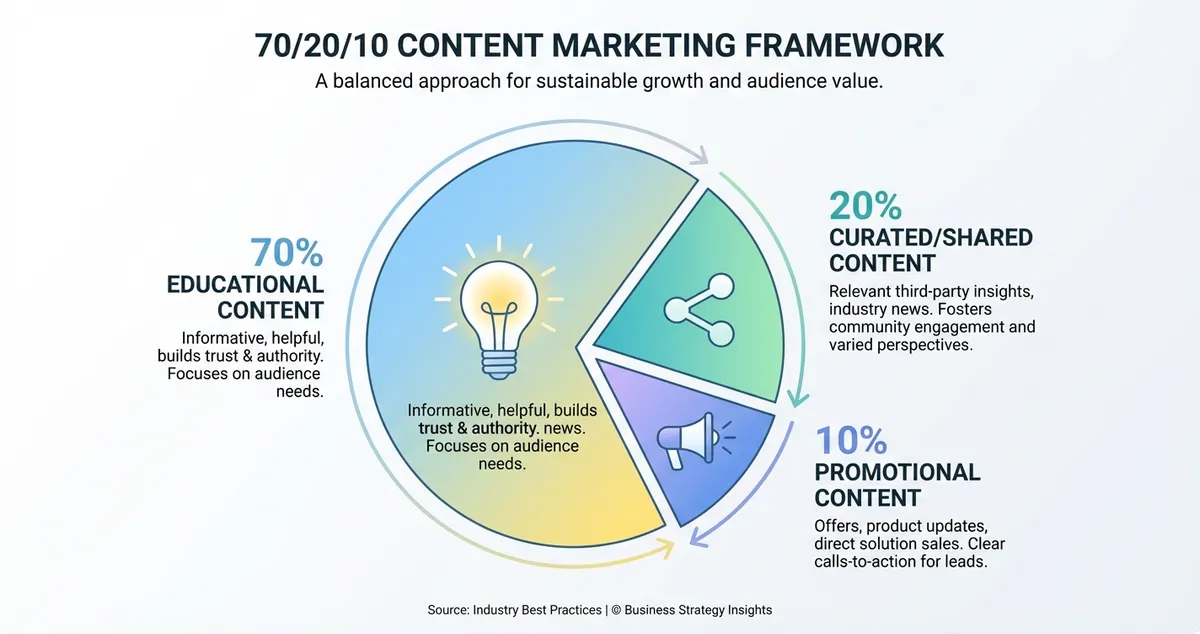
Allocate your content efforts strategically
For restaurant digital marketing, this means:
- Proven content (70%): Food photos, daily specials, kitchen shots
- Testing formats (20%): Reels, customer spotlights, staff intros
- Experimental ideas (10%): Trends, live sessions, opinion posts
For instance, a family-run Italian in Bristol might use the 70/20/10 rule by posting pasta-making videos (proven to get engagement), testing customer story features (new format), and occasionally trying a trending audio clip (experimental).
The beauty of this framework is that it reduces risk. That Saturday night when you're down two staff and someone suggests "we should do a TikTok dance." You can confidently say that's a 10% experiment, not your main strategy.
If you're only posting when it's quiet in the restaurant you'll always lose to competitors who treat digital marketing as part of operations, not an afterthought. That never works for building consistent visibility.
According to Meta for Business, restaurants that post consistently typically see higher engagement rates than those posting sporadically, regardless of content quality.
With content structure sorted, let's look at the fundamental marketing principles that underpin everything.
What Are the 4 P's of Marketing for Restaurants?
The 4 P's of marketing is a framework that organises restaurant marketing into four categories: Product, Price, Place, and Promotion. Digital marketing primarily affects the last P, but understanding all four helps you market more effectively. For example, a pizzeria might have excellent Promotion (active Instagram, regular posts) but poor Place (unclaimed Google listing), and wonder why bookings don't follow their engagement.
Product: Your menu, food quality, and dining experience. Digital marketing showcases this through photos, videos, and customer reviews.
Price: Your pricing strategy and perceived value. Digital marketing helps communicate value through special offers, meal deals, and loyalty programmes promoted online.
Place: Your location and how customers find you. Local SEO for restaurants, Google Maps optimisation, and "near me" searches fall here.
Promotion: How you communicate with potential customers. This is where much of digital marketing for restaurants happens: social media marketing, email marketing, online advertising.
Consider a seafood restaurant in Brighton: they might prioritise Place first (ensuring they appear for "seafood restaurant Brighton" searches), then Product (stunning photos of their catch-of-the-day), before investing in Promotion (paid ads for bank holiday bookings).
For most UK restaurants, the order of priority often works like this:
- Place first: Ensure you're found when people search locally
- Product second: Show what makes your food worth visiting for
- Promotion third: Only after the first two are solid
- Price fourth: Use strategically for slow periods
Now that the foundations are clear, what specific benefits does digital marketing actually deliver?
What Are the 5 Benefits of Digital Marketing?
Digital marketing for restaurants typically delivers five core benefits: cost-effectiveness, measurable results, targeted reach through local marketing, customer engagement, and competitive advantage. According to UK Government business guidance, digital skills are increasingly essential for small business success. This applies directly to digital marketing for restaurants, where online visibility often determines customer acquisition.
1. Cost-effectiveness
Traditional marketing like print ads or radio can cost hundreds per placement with no guarantee of results. Digital marketing for restaurants changes this equation: a well-targeted Facebook ad can reach thousands of local diners for under £50.
2. Measurable Results
Unlike a newspaper advert, digital marketing for restaurants shows exactly how many people saw your content, clicked through, and potentially made a booking. This data helps you invest more in what works.
3. Targeted Reach
With digital marketing for restaurants, you can target people within 5 miles of your restaurant, who've shown interest in dining out, during the hours you need to fill. Try doing that with a flyer.
4. Customer Engagement
Digital marketing for restaurants lets you respond to reviews, share customer photos, and build relationships that encourage repeat visits. This ongoing conversation builds customer loyalty.
5. Competitive Advantage
If your competitor down the road isn't using digital marketing for restaurants effectively, and you are, you're capturing attention they're missing. If they are using it well, you can't afford not to. For example, two curry houses in the same neighbourhood might serve identical quality food, but the one with 200 Google reviews and weekly Instagram stories will often appear more trustworthy to someone searching "curry house near me" at 7pm on a Friday.
If you can't tell whether your digital marketing brings bookings or just likes, that's usually a sign your strategy needs tightening.
Here's a question worth asking yourself: would you follow your own restaurant's social media account? If the honest answer is no, your customers probably feel the same way.
With the benefits clear, how do you actually put together a practical plan?
How to Build a Restaurant Marketing Plan
Building a digital marketing strategy for restaurants doesn't require a marketing degree. It requires understanding your customers and being consistent. Here's a practical framework.
Start With Your Customer Journey
Understand how customers find and choose your restaurant
Map how customers typically find and choose your restaurant:
- Discovery: They search "Italian restaurant [your town]" or see a friend's Instagram post
- Research: They check your reviews, look at your menu online, browse your photos
- Decision: They book or walk in
- Experience: They dine with you
- Advocacy: They leave a review or share their meal online
Your digital marketing for restaurants should strengthen each stage. Restaurants focused only on discovery often watch competitors win customers who they initially attracted, because those competitors nurture the research and advocacy stages too.
Choose Your Channels Wisely
Not every platform deserves your time. For UK restaurants:
| Platform | Often Works For | Who Uses It |
|---|---|---|
| Google Business Profile | Local search, reviews | Active restaurant searchers |
| Visual appeal, younger diners | Millennials, food enthusiasts | |
| Events, community building | Families, older demographics | |
| TikTok | Viral content, Gen Z reach | Under 25s, trend followers |
For most UK restaurants, Google Business Profile and Instagram typically offer a strong return on time invested. Start there before spreading yourself thin.
Create a Posting Rhythm
Consistency typically matters more than frequency in digital marketing for restaurants. A restaurant posting three times per week, every week, will often outperform one that posts daily for a fortnight then disappears for a month. For instance, a café that posts every Tuesday, Thursday, and Saturday (even simple phone photos) builds more recognition than one with sporadic bursts of professional content.
If you're only chasing followers without tracking bookings you'll always lose to competitors who measure what actually matters. Vanity metrics rarely convert to revenue.
That's the theory. Here's where it gets messy for most restaurant owners.
Minimum Viable Marketing: The 30-Minute Weekly Plan
If you're reading this after a brutal Saturday rush thinking "I don't have time for any of this." Here's your floor, not your ceiling. This is the absolute minimum to maintain an online presence.
This Week: Your 30-Minute Plan
- Day 1-2 (10 minutes): Take 3-5 photos of your best dishes during service. Good lighting, clean plates, simple backgrounds.
- Day 3-4 (10 minutes): Post one photo to Instagram and Facebook with a simple caption mentioning what the dish is and when you're open.
- Day 5-7 (10 minutes): Check and respond to any Google reviews. Thank positive reviewers, address negative ones professionally.
That's it. Three tasks, thirty minutes, spread across a week. It's not going to transform your business overnight, but it keeps you visible. And visible typically beats invisible.
If you only have 30 minutes a week, do this: one post, one review check, done. This digital marketing for restaurants approach lets you build from there when time allows.
Digital Marketing Channels Comparison
Now that you've got a minimum plan in place, let's assess where you currently stand. Understanding which channels work for your specific situation helps you allocate limited time effectively.
Actionable Checklist: Getting Started with Restaurant Digital Marketing
Use this checklist, or our quick marketing self-assessment, to assess your current digital marketing status:
- Google Business Profile claimed and fully completed
- Profile photos updated in the last 3 months
- Opening hours accurate (including bank holidays)
- Menu uploaded and current
- At least 10 reviews with 4+ star average
- Instagram business account created
- Facebook page created with accurate information
- Website loads quickly on mobile (under 3 seconds)
- Contact information consistent across all platforms
- At least one post in the last 7 days
If you've ticked fewer than half of these, focus here before worrying about content strategies or paid advertising. The basics of digital marketing for restaurants often matter more than fancy tactics.
Why Digital Marketing Matters for UK Hospitality
With those digital marketing for restaurants fundamentals covered, here's the bigger picture. The UK hospitality industry faces unique pressures. Rising costs, staff shortages, and changing consumer habits mean restaurants need every advantage. Digital marketing often provides a way to compete without massive budgets.
According to UKHospitality, the sector employs over 3.5 million people and contributes significantly to the UK economy. Yet many independent operators struggle with marketing.
The restaurants that thrive often share one trait: they've figured out how to stay visible online with limited resources. Sporadic marketing during slow periods won't build the recognition that consistent presence creates.
A café owner in Leeds, for example, might batch-create a week's content every Sunday morning, taking 30 minutes to photograph specials and schedule posts, rather than trying to create content during service.
Why This Matters
The reality for most independent restaurants is this: you're competing against chains with dedicated marketing teams and agencies. Digital marketing can level that playing field, if you're strategic about it.
This sounds great in theory. In practice, when you're dealing with a delivery that arrived late and a no-show on the pass, marketing falls to the bottom of the list. That's why having a simple, repeatable system matters more than having a clever strategy.
If you're reading this thinking "I know I should be doing more." That awareness is the first step. The second step is starting with something achievable, not perfect.
Key Takeaways
If you run a restaurant and want to see how Local Brand Hub can support your marketing, explore our restaurant marketing tools.
Key Takeaways
Building effective digital marketing for restaurants comes down to understanding a few core principles:
- The 30/30/30 rule helps set realistic marketing budgets within your overall costs
- The 70/20/10 rule structures your content so you're not constantly reinventing the wheel
- The 4 P's remind you that promotion only works when product and place are solid
- Consistency beats intensity: regular small efforts outperform sporadic big pushes
Your next step is simple: pick one thing from this digital marketing for restaurants guide and do it this week. Audit your Google Business Profile. Schedule three posts. Respond to pending reviews. Small actions compound into results.
Digital marketing for restaurants doesn't have to be complicated. It has to be consistent. And that starts with whatever you can manage today.
Weekly Action
This Week: Audit Your Foundation
- Day 1-2: Check your Google Business Profile: are photos current, hours accurate, and recent reviews answered?
- Day 3-4: Post one dish photo with a simple, engaging caption
- Day 5-7: Review your last month's posts: which got the most engagement? Plan more of those.
Info
Explore our detailed guides:
- Restaurant Digital Marketing - Comprehensive strategies
- Restaurant Social Media Marketing - Platform-specific tactics
- Restaurant Online Visibility - Getting found online
- Restaurant Digital Advertising - Paid promotion strategies
For UK restaurants
Need Help With Your Digital Marketing?
Local Brand Hub helps UK restaurants manage digital marketing without the complexity: social media, local SEO, and customer engagement in one simple platform.
Start freeGet More Marketing Tips
Practical marketing tips for UK business owners, straight to your inbox. No spam, unsubscribe anytime.
About the Author
Local Brand Hub
Empowering UK Businesses
Local Brand Hub provides comprehensive business management tools designed specifically for UK local businesses to streamline operations, automate marketing, and grow revenue.
More articlesRelated Articles
 Marketing Tips
Restaurant Digital Marketing: A Guide for UK Restaurants
Build a digital marketing plan for your UK restaurant with budget-friendly tactics, proven frameworks, and realistic cost breakdowns.
 Marketing Tips
Restaurant Digital Marketing Strategy: Complete UK Guide
Build a restaurant digital marketing strategy that fits your schedule. Learn the 70/20/10 rule, core strategies, and realistic weekly plan for UK owners.
 Marketing Tips
Restaurant Digital Marketing Tips for UK Restaurants
Restaurant digital marketing tips for busy UK owners. Budget-friendly tactics, time-saving strategies, and a 30-minute weekly plan.