Which restaurant review sites matter in the UK? Guide to Google Reviews, TripAdvisor, OpenTable plus a 30-minute weekly management system.
You're checking Google Reviews between services, replying to one TripAdvisor complaint during a quiet Wednesday night, and completely forgetting about OpenTable because who has the time. Meanwhile, a negative review you never saw is sitting there unanswered for three weeks. With 81% of UK consumers checking Google before choosing a restaurant, that unanswered review is costing you bookings.
Restaurant review sites are where customers decide whether to give you a chance. These platforms influence dining decisions, shape first impressions, and determine whether someone walks through your door or goes to the place down the road. If you're thinking "I can barely keep up with the reviews I know about," you're exactly who this guide is for.
What You'll Learn
- Which restaurant review sites matter most for UK restaurants
- How to choose the right platforms for your specific restaurant type
- Step-by-step processes for managing reviews efficiently
- The truth about the 30/30/30 rule (and why it appears in review site searches)
- A practical 30-minute weekly system that actually works
What Is the Best Website for Restaurant Reviews?
For most UK restaurants, Google Reviews is the best website for restaurant reviews. Google accounts for over 57% of all online reviews, making it the dominant platform for restaurant discovery (WiserReview). When someone searches "restaurants near me" or types your restaurant name into Google, your star rating appears immediately in the results.
That's not a technical detail. That's your first impression.
For example, a fine dining restaurant in London might prioritise OpenTable, while a local cafe in Birmingham focuses on Google. The "best" platform depends on your restaurant type.
For UK restaurants specifically, around 81% of people turn to Google when evaluating a local business (BrightLocal). Your Google Business Profile reviews can directly influence how high you appear in local search results, which is exactly what our local SEO tools help you improve. This aligns with Competition and Markets Authority guidance on online reviews, which emphasises the importance of authentic customer feedback for consumer protection (CMA).
The "best" platform depends on your restaurant type:
| Restaurant Type | Primary Platform | Secondary Platform |
|---|---|---|
| Tourist area restaurant | TripAdvisor | Google Reviews |
| Fine dining | OpenTable | Google Reviews |
| Casual neighbourhood spot | Google Reviews | |
| Takeaway/delivery | Google Reviews | Trustpilot |
| Urban trendy eatery | Yelp | Google Reviews |
A gastropub in the Cotswolds typically benefits from TripAdvisor because visitors often plan meals before arriving. A fine dining restaurant in Manchester usually needs OpenTable because reservations are expected. A local cafe in Birmingham benefits from Google because regulars often search "coffee near me" when they're already in the area.
If you can't tell whether your reviews are bringing in new customers or just validating decisions people already made, that's usually a sign you're spreading attention too thin across too many platforms.
Info
What Are the Top 10 Review Sites?
Now that you understand why Google matters most, let's look at the broader landscape. The platforms that matter most for UK restaurants in 2026 include a mix of global sites and UK-specific guides.
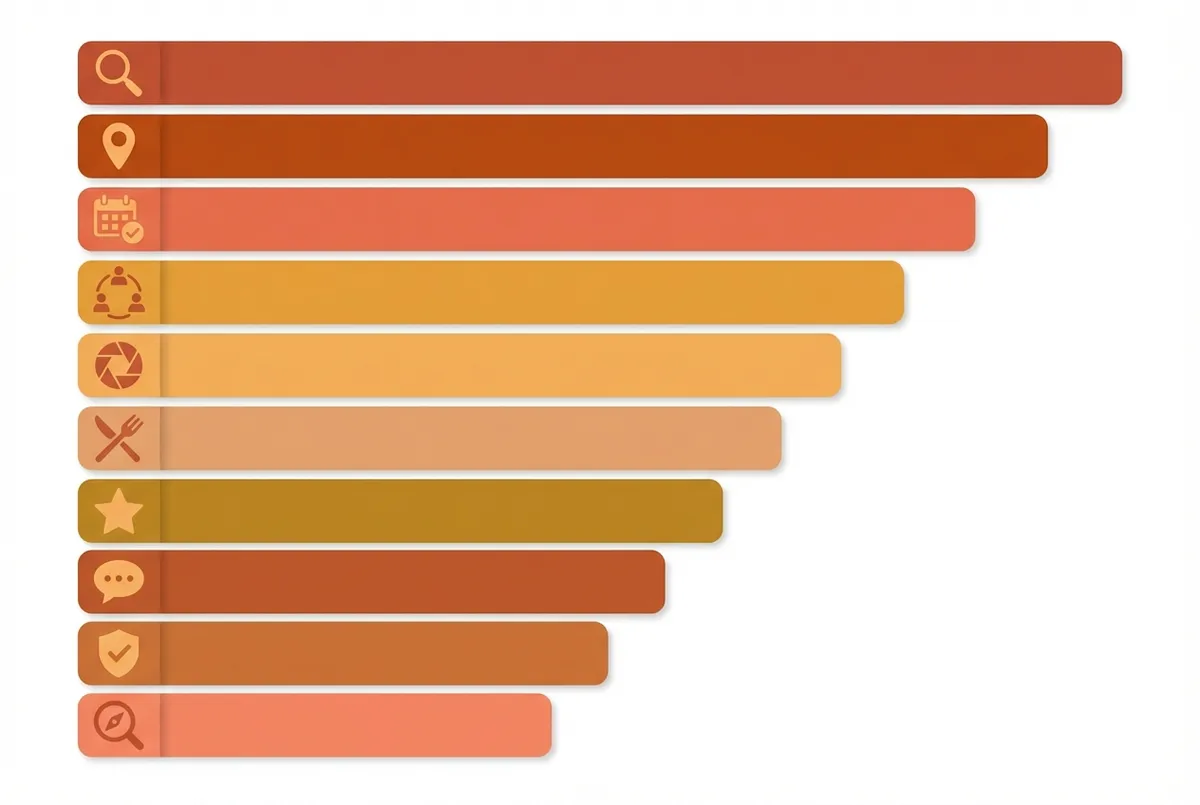
The top 10 restaurant review sites ranked by UK relevance
Here are the platforms worth your attention:
| Platform | Best For | Key Feature | UK Relevance |
|---|---|---|---|
| Google Reviews | All restaurants | Search + Maps integration | Essential |
| TripAdvisor | Tourist areas | Global reach | High |
| OpenTable | Reservations | Verified diners only | High |
| Community spots | Friend recommendations | Moderate | |
| Yelp | Urban, younger | Detailed photos | Moderate |
| The Fork | Discounts | Loyalty points | Growing |
| Hardens | Fine dining | Expert-curated | Niche |
| SquareMeal | Upscale UK | Editorial content | Niche |
| Trustpilot | Delivery | Business reputation | Moderate |
| Zomato | Discovery | Menu photos | Declining |
Note: UK relevance scores are generalised. Your mileage varies based on location and customer demographics.
Platform Recommendations by Restaurant Type
For casual dining and cafes, focus your energy on Google Reviews, TripAdvisor, and Facebook. These platforms typically have the widest reach and are relatively straightforward to manage.
For example, a cafe in Leeds might find that most of their online discovery comes from Google "coffee shop near me" searches, making Google their primary platform to monitor.
For fine dining and upscale restaurants, prioritise Google, OpenTable, SquareMeal, and Hardens. Diners researching special occasion meals tend to check multiple sources before booking.
For takeaways and delivery-focused restaurants, Google Reviews, Trustpilot, and reviews within delivery apps like Deliveroo and Just Eat often matter most.
If you're thinking "I can't possibly monitor all these sites", you're not alone. Most independent restaurant owners feel the same way. Start with Google and one other platform where your target customers actually spend time. Master those before expanding.
Which Review Site Is Best in the UK?
For most UK restaurants, Google Reviews should be your primary focus. The platform's integration with Google Search and Google Maps means your reviews appear exactly when customers are deciding where to eat.
Google is often where decisions happen. TripAdvisor is where tourists often plan. OpenTable is where diners book. But Google is typically where most people start their search.
For example, a neighbourhood bistro in Bristol discovered that 70% of their new customers mentioned finding them through Google, while TripAdvisor drove most of their tourist traffic during summer months.
UK-Specific Platforms
TripAdvisor remains particularly strong for restaurants in tourist areas. London, Edinburgh, Bath, York, and coastal destinations typically see substantial activity.
A restaurant owner in Bath shared: "During summer, 40% of our customers mention finding us on TripAdvisor. In winter, that drops to 10%."
For instance, a pub in York might find TripAdvisor crucial for summer tourists but often less relevant during November when locals dominate. Knowing which platforms matter seasonally helps you focus your limited time.
The Fork (owned by TripAdvisor) combines reservations with reviews and offers loyalty points. For restaurants looking to fill tables during quiet periods, its discount features drive bookings.
Hardens has published independent UK restaurant reviews since 1991. Many serious food enthusiasts and business diners consult it, particularly for London restaurants.
SquareMeal focuses on London and major UK cities with curated recommendations, often popular for corporate entertaining research.
The 80/20 Recommendation
For most independent UK restaurants: focus 80% of your effort on Google, with the remaining 20% split between TripAdvisor and one other platform that matches your specific customer base.
If you're only replying to reviews when it's quiet and you happen to remember you'll always lose to competitors who treat review management as part of daily operations rather than an afterthought.
Info
What Is the 30/30/30 Rule for Restaurants?
You might wonder why a financial rule appears in an article about review sites. The 30/30/30 rule is a budgeting framework for restaurants: allocate roughly 30% of revenue to food costs, 30% to labour costs, and 30% to overheads (Elite Financial Accounting). This leaves approximately 10% as profit margin.
For example, a casual dining restaurant with £500,000 annual revenue would aim for roughly £150,000 on food, £150,000 on staff, and £150,000 on overheads (including rent, utilities, and marketing).
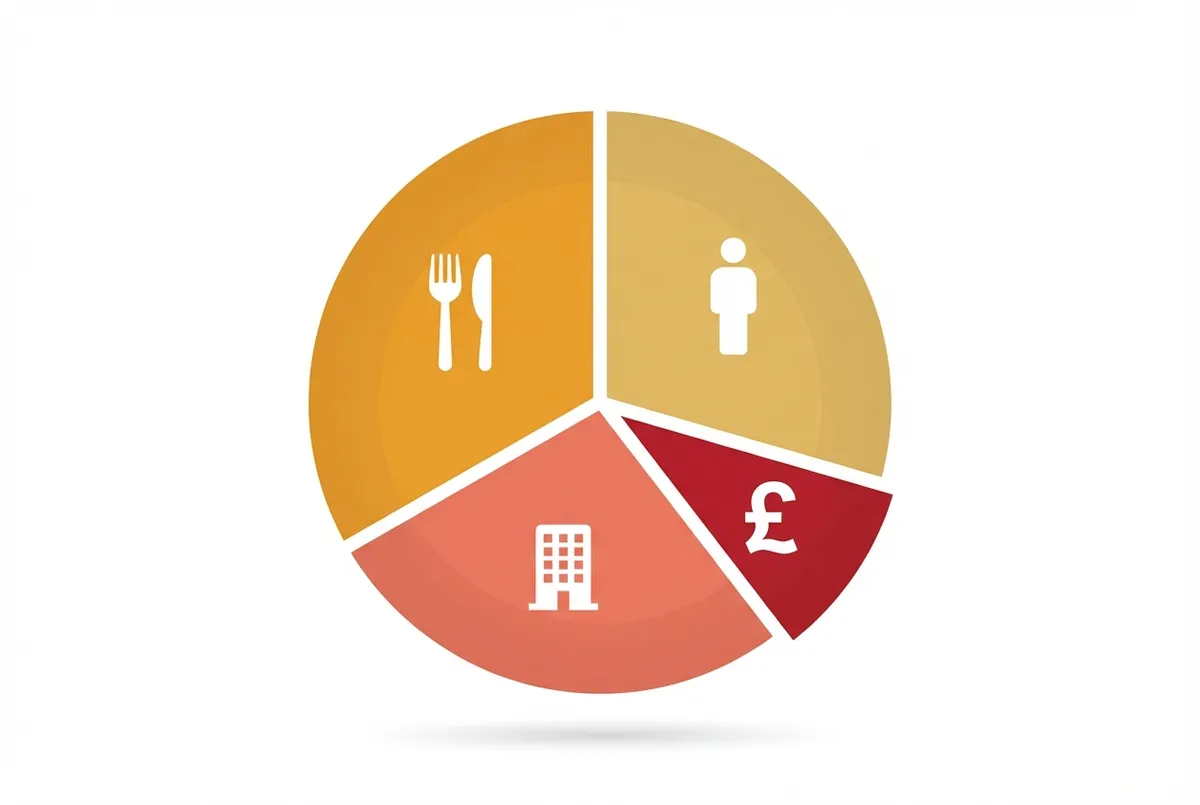
The 30/30/30 rule: a budgeting guideline, not a review strategy
Why does this appear in review site searches? Because restaurant owners researching review management often search for broader business advice, and Google's algorithm surfaces related topics.
Here's the practical breakdown:
- Food costs (30%): Ingredients, inventory, waste, and supplier costs
- Labour costs (30%): Wages, salaries, benefits, and staff training
- Overhead costs (30%): Rent, utilities, licences, insurance, marketing, and review management tools
The Modern Reality
The 30/30/30 rule is a guideline, not gospel. Modern restaurant economics have shifted considerably. Fast-casual restaurants often have different cost structures than fine dining. Rising minimum wages and food inflation mean the percentages rarely land exactly on 30%.
For instance, a neighbourhood Italian restaurant in Manchester might allocate different percentages to food, staff, and rent depending on their specific situation. The percentages rarely land exactly on 30%, which is why tracking your actual numbers matters more than following any formula.
A more practical approach: track your prime cost (food plus labour) weekly. If it consistently exceeds 65% of revenue, investigate before small problems become big ones.
Budget for Reviews
Review management falls under marketing within overheads. If you're not budgeting time for reviews, you're effectively budgeting zero for a channel that influences most potential customers.
How to Review a Restaurant on OpenTable
Understanding how customers leave reviews helps you understand what you're working with. OpenTable differs from other review sites because only diners who completed a verified reservation can leave feedback. This verification means OpenTable reviews tend to be more authentic than open platforms.
Typically fewer random angry people who never visited. Fewer competitors leaving fake reviews. Mostly verified diners sharing genuine experiences.
The reality for most independent restaurants is that you'll get fewer OpenTable reviews than Google reviews, but they'll typically be more reliable.
For example, a diner who booked Saturday dinner through OpenTable would receive an email Sunday morning asking about their experience, with ratings for food, service, and ambiance.
Step-by-Step Process
- Complete your reservation: You must actually dine at the restaurant through your OpenTable booking
- Wait for the email: After your visit, OpenTable sends an email inviting feedback (typically within 24 hours)
- Alternatively, log into your account: Navigate to "My Account" or "My Reservations" in the app or website
- Find your reservation: Look for "Leave a Review" or "Write a Review" next to the booking
- Rate your experience: OpenTable asks about food quality, service, ambiance, and overall satisfaction
- Submit your review: Your feedback becomes part of the restaurant's public profile
Why This Matters for Restaurant Owners
This verification system typically offers better protection against fake reviews. Unlike some platforms where anyone can post, OpenTable reviews usually come from confirmed diners.
For instance, a fine dining restaurant in Mayfair might rely primarily on OpenTable because their clientele often expects the reservation experience, and the reviews reflect genuine dining experiences from verified guests.
A London restaurant owner shared: "We had someone leave a nasty one-star review on Google that we couldn't get removed. On OpenTable, that type of review is much less likely to occur because only verified diners can post."
If you're getting reviews but your booking numbers aren't improving, that's usually a sign your responses lack the personal touch that converts browsers into diners.
Alternatives to OpenTable
| Platform | Key Difference | Best For |
|---|---|---|
| The Fork | Loyalty points, discounts | Filling quiet periods |
| Resy | No covers fee | Major cities |
| Direct booking | Full control | Avoiding commissions |
Info
Related: Restaurant Review Response Examples
What Happened to Urbanspoon?
Before we move to the practical management section, let's address a question that still appears in searches. Urbanspoon was a popular restaurant discovery app known for its "shake to search" feature. Users could shake their phone to get random restaurant suggestions. It was genuinely fun to use.
Zomato acquired Urbanspoon over a decade ago, purchasing it for approximately $50-60 million. Within months of the acquisition, Urbanspoon was discontinued entirely, with all traffic redirected to Zomato. The beloved shake feature disappeared. The Urbanspoon app vanished from app stores. The engineering team departed shortly after as Zomato closed multiple US offices.
What This Means for UK Restaurants
If you previously managed Urbanspoon listings, those either migrated to Zomato or disappeared. Zomato now operates in the UK primarily as a food delivery platform rather than a review-focused site.
The lesson: Avoid relying on a single review site. Urbanspoon had millions of users, a distinctive feature, and strong brand recognition. It still vanished relatively quickly when acquired. Your Google Business Profile and your own website are typically the most stable online assets you control. Other platforms can change terms, algorithms, or simply disappear.
Managing Multiple Review Sites Efficiently
You've seen the landscape, understood which platforms matter, and learned from Urbanspoon's demise. Now for the part that actually saves you time.
For example, a Birmingham cafe owner switched from ad-hoc review checking to a structured weekly system and doubled their response rate while cutting time spent. If you only have 30 minutes a week for review management, here's how to spend it:
Weekly Review Management System
Day 1-2 (10 minutes): Google Review Check
- Open Google Business Profile
- Read and respond to any new reviews
- Note recurring themes
Day 3-4 (10 minutes): Secondary Platform
- Check TripAdvisor, OpenTable, or Facebook
- Respond to reviews, especially negative ones
- Update any incorrect business information
Day 5-7 (10 minutes): Quick Audit
- Search your restaurant name on Google
- Click through first page results to spot missed reviews
- Set calendar reminder for next week
Review Response Templates
For time-pressed owners, having templates ready helps. Don't copy them word-for-word, but use them as starting points:
Positive review response:
"Thank you for dining with us, [Name]. We're glad you enjoyed [specific thing they mentioned]. Hope to see you again soon."
Negative review response:
"Thank you for your feedback, [Name]. We're sorry your experience didn't meet expectations. Please email [address] so we can understand what happened and make it right."
The key is consistency rather than perfection. A restaurant that replies to most reviews, even briefly, often signals professionalism that can influence booking decisions.
If you're down two staff and barely surviving the Saturday rush, you might think review management can wait. It can, for a week. But letting it slide longer means you're leaving your reputation to chance while competitors show up consistently.
Frequently Asked Questions
What is the most popular restaurant review site in the UK?
Google Reviews tends to dominate because it connects directly with Search and Maps. For tourist-heavy areas, TripAdvisor often comes second. See our importance of restaurant reviews guide for why this matters to your revenue.
Can I delete negative reviews on Google?
You cannot directly delete reviews left by customers. However, you can flag reviews that violate Google's policies. Responding professionally often matters more than removing them. See our guide on how to remove Google reviews for the full process.
How many reviews do I need to rank well?
There's no magic number. Quality and recency matter more than quantity. Focus on consistently generating new reviews weekly. See our guide on getting more Google reviews for a step-by-step system.
Should I ask customers to leave reviews?
Yes, but do it appropriately. A Manchester bistro includes a simple card with the bill: "Enjoyed your meal? We'd appreciate a quick review on Google." This gentle approach generates steady reviews without being pushy.
How quickly should I respond to reviews?
Aim to respond within 24-48 hours, especially for negative reviews. Speed shows you're engaged. See our restaurant review management guide for a time-efficient weekly system.
Do fake reviews affect restaurant rankings?
Fake reviews can negatively impact your business. Google's algorithm attempts to detect and remove fake reviews, and confirmed violations can sometimes result in penalties. The Competition and Markets Authority has taken action against businesses using fake reviews (Gov.uk). See our fake restaurant reviews guide for how to spot and report them.
Which restaurant review sites matter for takeaways?
For takeaway and delivery-focused restaurants, Google Reviews and Trustpilot typically matter most. Reviews within delivery apps like Deliveroo and Just Eat can also influence customer decisions significantly.
Is TripAdvisor still relevant for UK restaurants?
TripAdvisor remains relevant, particularly for restaurants in tourist areas like London, Edinburgh, Bath, and coastal destinations. However, Google Reviews has generally overtaken TripAdvisor for local decision-making, so prioritise Google unless you rely heavily on tourist trade.
Key Takeaway
Key Takeaway
Google Reviews is your priority: it accounts for over 57% of all online reviews and 81% of UK consumers check it before choosing a restaurant. Match your secondary platform to your audience: TripAdvisor for tourist areas, OpenTable for fine dining, Facebook for neighbourhood spots. Use the 80/20 rule: 80% of effort on Google, 20% on your secondary platform. The 30-minute weekly system (10 min Google, 10 min secondary platform, 10 min quick audit) is enough to maintain a professional review presence. Consistency beats perfection every time.
If you run a restaurant and want to see how Local Brand Hub can support your marketing, explore our restaurant marketing tools.
This Week's Action Plan
Day 1-2: Claim or verify your Google Business Profile if you haven't already. Go to business.google.com, search for your restaurant, and follow the verification steps. This takes 10-15 minutes.
Day 3-5: Respond to your three most recent reviews on Google, whether positive or negative.
Day 6-7: Pick one secondary platform (TripAdvisor, OpenTable, or Facebook) and claim your listing if you haven't already.
This single habit, maintained weekly, often does more for your online reputation than most other review strategies.
For UK restaurant owners
Manage All Your Reviews in One Place
LocalBrandHub aggregates reviews from Google, TripAdvisor, and Facebook into one dashboard, so you can respond to everything in minutes instead of hours.
Start FreeGet More Marketing Tips
Practical marketing tips for UK business owners, straight to your inbox. No spam, unsubscribe anytime.
About the Author
Local Brand Hub
Empowering UK Businesses
Local Brand Hub provides comprehensive business management tools designed specifically for UK local businesses to streamline operations, automate marketing, and grow revenue.
More articlesRelated Articles
 Marketing Tips
Google Restaurant Reviews: Complete UK Guide
Discover why 75% of consumers regularly check reviews before dining out. Get actionable tips to boost reviews, respond professionally, and handle fakes.
 Marketing Tips
Importance of Restaurant Reviews: A Complete Guide
Most UK diners check reviews before booking. Learn why restaurant reviews matter, how to offset negative ratings, and build your online reputation.
 Marketing Tips
Fake Restaurant Reviews: Spot, Report and Protect
Learn how fake restaurant reviews work, why they're illegal in the UK, and practical steps to protect your restaurant's reputation from fraud.