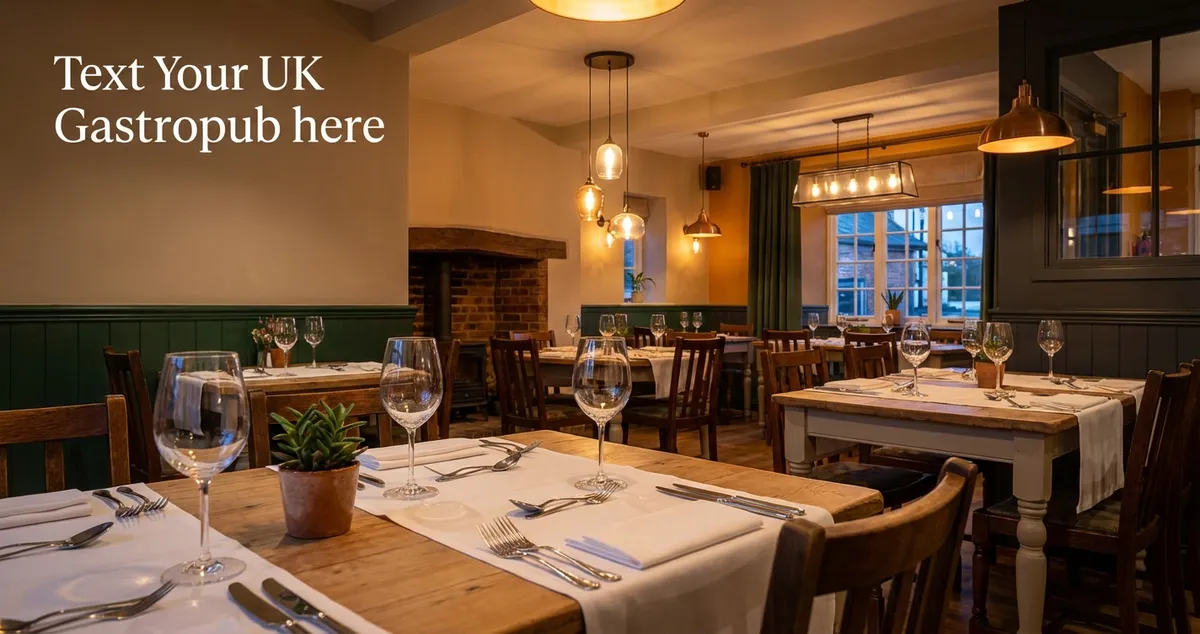
Photograph your restaurant interior like a professional. Covers composition rules, lighting setups, camera settings, and turning photos into bookings.
Why do your restaurant photos look flat when the space looks stunning in person? You've spent thousands on the dining room. Lighting's perfect at 7pm, tables spaced beautifully, but photos disappoint. Competitors with average interiors get queues because their images make people want to visit. Flat photos cost you covers.
Table of Contents
- What You'll Learn About Restaurant Interior Photography
- What Makes a Great Photo of a Restaurant's Interior?
- How to Get Straight Lines in Interior Photography?
- How to Design the Interior of a Restaurant?
- What is F&B Photography?
- How to Do Interior Photography?
- Common Interior Photography Mistakes
- Weekly Action
- Frequently Asked Questions
- Key Takeaways
What You'll Learn About Restaurant Interior Photography
This guide covers everything you need to capture professional restaurant interior shots:
- Composition techniques that make spaces look inviting and draw customers in
- Lighting strategies for both natural and artificial light in real dining environments
- Camera settings and equipment recommendations for different budgets (from smartphones to DSLRs)
- Common mistakes to avoid when photographing restaurant interiors
- Practical workflows for getting professional shots without closing for a full day
- F&B photography fundamentals and how interior shots fit into your marketing
By the end, you'll know exactly what makes a restaurant interior photo work, and how to get those shots without hiring an expensive photographer.
Info
Related: Restaurant Photography Guide
Let's start with the fundamentals.
What Makes a Great Photo of a Restaurant's Interior?
Before diving into technical settings, let's understand what separates great interior photos from average ones.
A great restaurant interior photo balances three elements: composition that draws the eye through the space, lighting that captures atmosphere without feeling staged, and enough context to help viewers imagine themselves there.
The best interior shots don't just show your space. They communicate what it feels like to be there.
According to industry research (2025), restaurant interior design trends in 2025-2026 prioritise "creating experiential spaces" where visual appeal directly impacts customer decisions. Your photos need to capture that experience, not just document furniture.
Start with perspective. Shoot from the height most customers see your space: standing or seated, not from above. A photograph taken at table height (around 75-90cm) feels more natural than one shot from eye level while standing.
Include layers. A strong interior shot has a foreground (a table setting), middle ground (the dining area), and background (architectural features or windows). This depth makes small spaces feel larger and large spaces feel intimate.
For example: A gastropub might shoot from a corner booth, with a perfectly set table in the foreground, the bar visible in the middle distance, and warm pendant lights creating depth in the background. This tells a story: "you could sit here, the bar's nearby, the atmosphere is warm."
The difference between a serviceable photo and one that actually fills tables is simple: does it make someone hungry to be there?
So you've got the composition right. But what happens when your walls look like they're falling over in every shot?
How to Get Straight Lines in Interior Photography?
Once you understand composition, the next technical challenge is maintaining straight vertical lines.
Keep your camera level using a tripod with a bubble level or in-camera grid display, position yourself parallel to walls rather than at an angle, and use lens correction tools in editing software to fix any remaining distortion.
Straight lines matter because tilted verticals (walls that lean in or out) make viewers uncomfortable, even if they can't articulate why. If you look at your restaurant photos and can't tell whether your walls look straight or just slightly off, that's usually a sign you need to use your camera's grid overlay or check with editing software.
Professional interior photographers use tilt-shift lenses to control perspective distortion, but you can achieve similar results with standard equipment and careful technique. According to the Royal Photographic Society, architectural photography demands precise technical execution. Modern restaurant interior design is heavily influenced by international aesthetics and features more geometric patterns and architectural details, which means wonky lines are more noticeable than ever.
If you're thinking "I'll just fix it in post," you're not alone, but tilted shots take 3-4 times longer to correct in editing than getting them right in camera.
Here's the practical approach:
1. Camera height and angle: Position your camera at roughly chest height (120-140cm for standing shots, 75-90cm for seated perspectives). Keep it perfectly horizontal: even a 2-degree tilt will make walls lean noticeably.
2. Distance from walls: Stand at least 2-3 metres back from your subject. The closer you are, the more distortion you'll get from your lens, especially with wide angles.
3. Parallel positioning: Face walls head-on rather than shooting from corners. If you must shoot at an angle, accept the perspective rather than trying to correct it: angled shots feel dynamic, but tilted verticals just feel wrong.
4. Grid overlay: Most cameras offer an in-viewfinder grid (rule of thirds or 3×3 grid). Use this to align vertical lines with the grid before shooting.
Example: A wine bar with exposed brick walls needs those bricks running perfectly vertical. Use your camera's grid to align the brick courses with the vertical grid lines: if they're even 3 degrees off, the whole wall looks like it's falling over.
If you're shooting with a smartphone, apps like ProCamera or Lightroom Mobile include built-in levelling tools. In post-production, both Adobe Lightroom and Capture One offer perspective correction sliders that can fix minor distortion without making images look over-processed.
Shoot Multiple Angles
Take three shots of every angle: one level, one slightly tilted left, one slightly tilted right. You'll always have at least one perfectly straight shot to work with in post-production.
Info
Related: Restaurant Photography Tips
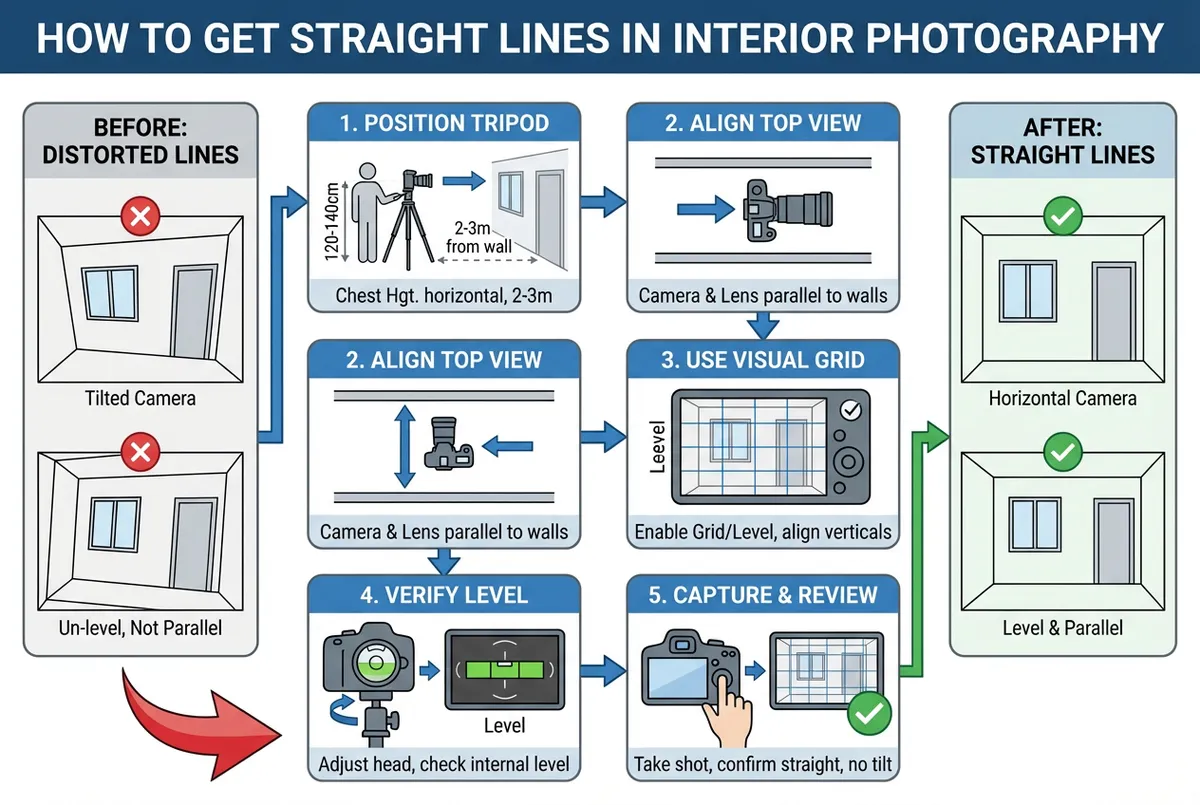
Straight lines diagram for interior photography
But before you photograph a space, you need a space worth photographing. That brings us to the design itself.
How to Design the Interior of a Restaurant?
With photography fundamentals covered, let's look at designing a space that photographs beautifully from the start.
Start by defining your concept and target customer, create a floor plan that balances capacity with comfort, choose a cohesive colour palette and materials that align with your brand, and ensure lighting works for both ambiance and photography.
Interior design isn't just about aesthetics: it's about creating a space that photographs well while still functioning as a working restaurant.
According to Seven Rooms' 2025 Restaurant Industry Report, 61% of restaurant decision-makers identified attracting new guests as their top challenge. Your interior needs to work as hard in photos as it does in person, because most customers make dining decisions based on what they see online.
Here's the step-by-step approach:
Day 1-2: Define your concept and audience
- Who are you serving? Families? Date nights? Business lunches?
- What feeling should your space create? Cosy? Energetic? Sophisticated?
- What does your target customer expect when they walk in?
Day 3-4: Create a functional floor plan
- Calculate capacity based on table spacing (1.2-1.5m between tables for comfort)
- Map traffic flow: kitchen to tables, entrance to seating, toilets to dining area
- Identify focal points (bar, open kitchen, feature walls) that draw the eye
Day 5-7: Choose materials and colour palette
- Pick 3-4 core colours maximum (neutrals + 1-2 accent colours)
- Select materials that photograph well: matte finishes over glossy, textured over flat
- Consider maintenance: what looks great in February 2026 needs to look great in February 2027
Example: An Asian fusion restaurant might choose charcoal grey walls (neutral), natural oak tables (warm texture), brass pendant lights (accent), and deep teal booth seating (accent 2). That's four colours, all photograph beautifully, and nothing will look dated by 2029.
This Week: Lighting design (the most important element)
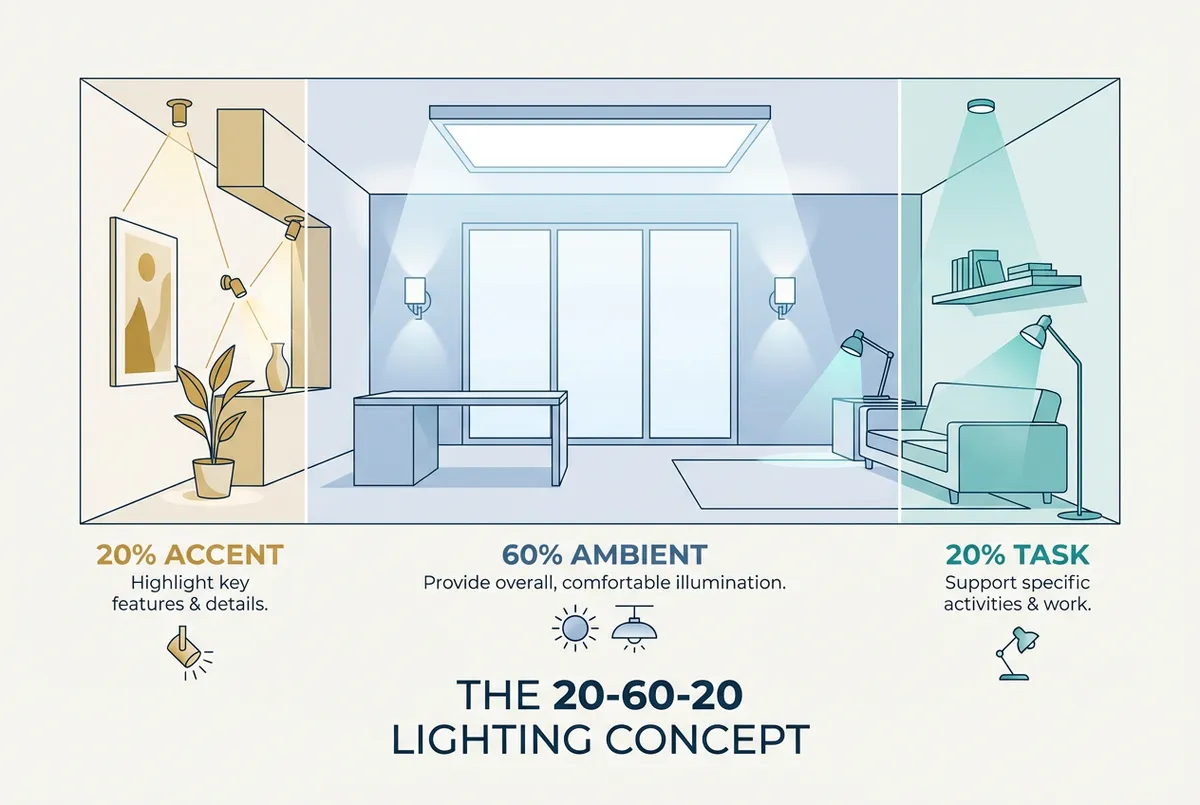
- Ambient lighting: overall room illumination (200-300 lux for dining areas)
- Task lighting: functional light for menus, food prep (500+ lux)
- Accent lighting: highlight architectural features, create depth
- Natural light: maximise windows, but have backup plans for evening service
Lighting tip for photography: Avoid direct overhead lighting that creates harsh shadows on faces and food. Side lighting or pendant lights at varied heights photograph better and create more flattering ambiance.
If you can't tell whether your lighting creates atmosphere or just illuminates, that's usually a sign you need to add accent and task lighting layers to complement your ambient lighting.
If you're working with a limited budget, prioritise lighting and seating comfort over decorative elements. A well-lit space with comfortable chairs will photograph better than an under-lit room with expensive artwork.
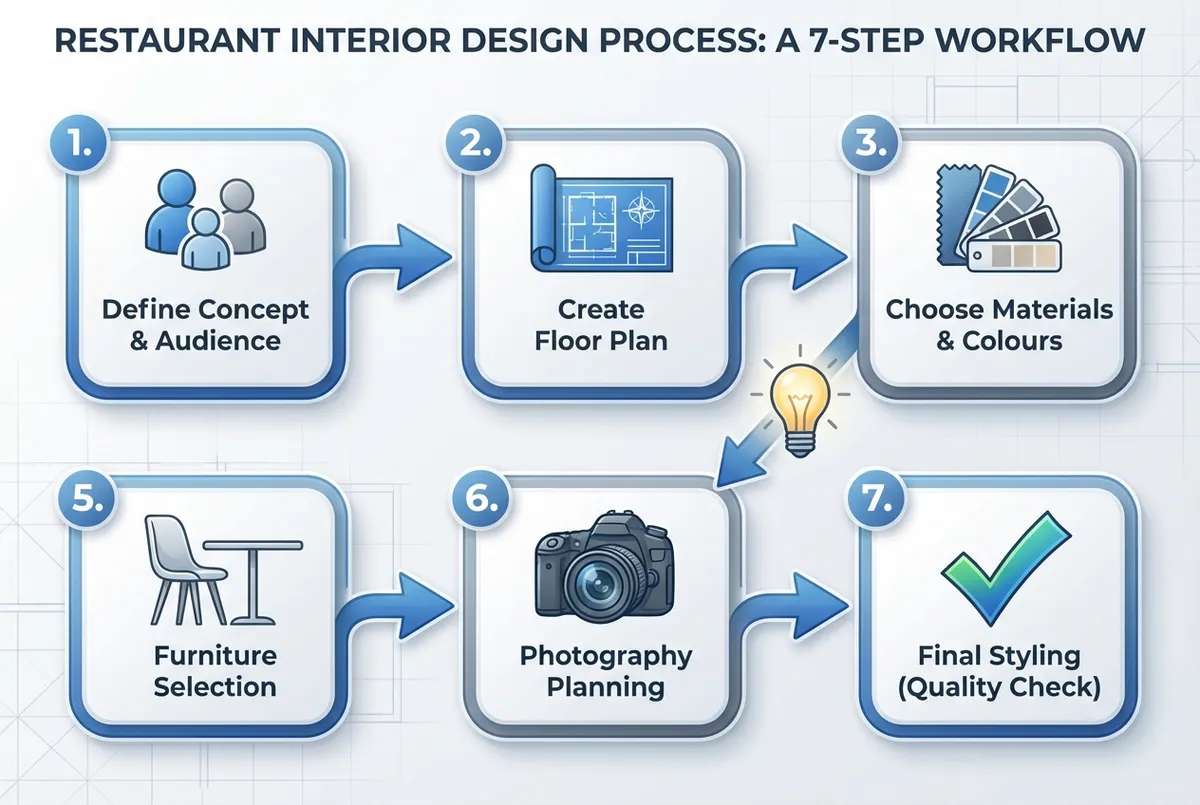
Restaurant interior design workflow diagram
Understanding restaurant design helps. But interior photography is just one part of a bigger picture.
What is F&B Photography?
To put interior photography in context, it helps to understand where it fits in the broader category of food and beverage (F&B) photography.
F&B photography is a framework that encompasses all visual content created for hospitality businesses (from close-up food shots to full restaurant interiors) with the goal of evoking appetite and atmosphere rather than simply documenting what exists.
Food & Beverage photography includes restaurant interiors, plated dishes, bar setups, and dining experiences. It's distinct from general product photography because it focuses on making people feel something (hunger, curiosity, desire to visit) rather than simply showing what exists.
Industry research shows that the way we visually present food and dining experiences has fundamentally changed how restaurants attract and retain customers. Your F&B photography isn't just marketing material: it's the first impression for most potential customers.
F&B photography breaks into several categories:
Food photography: Close-up shots of individual dishes, emphasising texture, colour, and presentation. These work for menus, social media marketing, and promotional materials, and they drop straight into posts built with our AI social post generator.
Beverage photography: Cocktails, wine pours, coffee art: anything liquid. These require fast shutter speeds to capture movement (pours, splashes, steam) and careful lighting to show liquid translucency.
Interior photography: What we're focusing on here: capturing the dining environment, ambiance, and spatial experience.
Lifestyle/experience photography: Diners enjoying food, staff at work, the buzz of service. These humanise your restaurant and show what it's actually like to visit, perfect for Instagram marketing and building your brand.
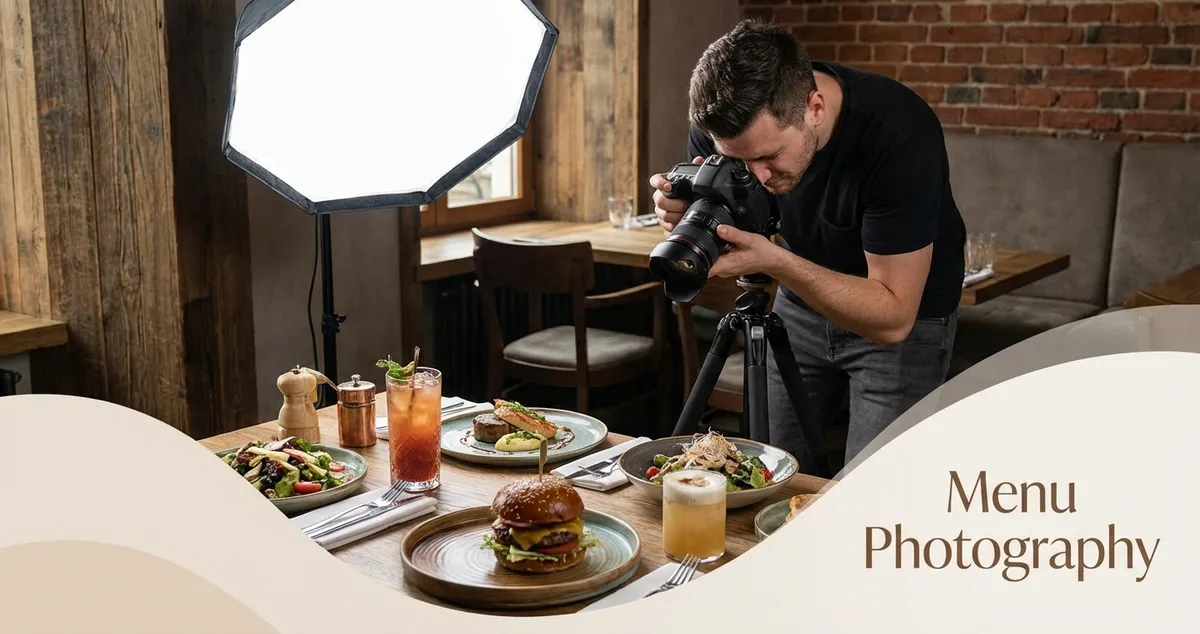
Menu photography: Studio-style shots of dishes with clean backgrounds, used for print menus or delivery platforms.
The goal across all categories is the same: make people want what they're looking at. For interiors, that means making them want to be in that space.
If you're hiring a photographer, look for someone who lists F&B or hospitality in their portfolio. General commercial photographers sometimes struggle with restaurant environments because they don't understand the pace of service, lighting challenges, or what actually sells.
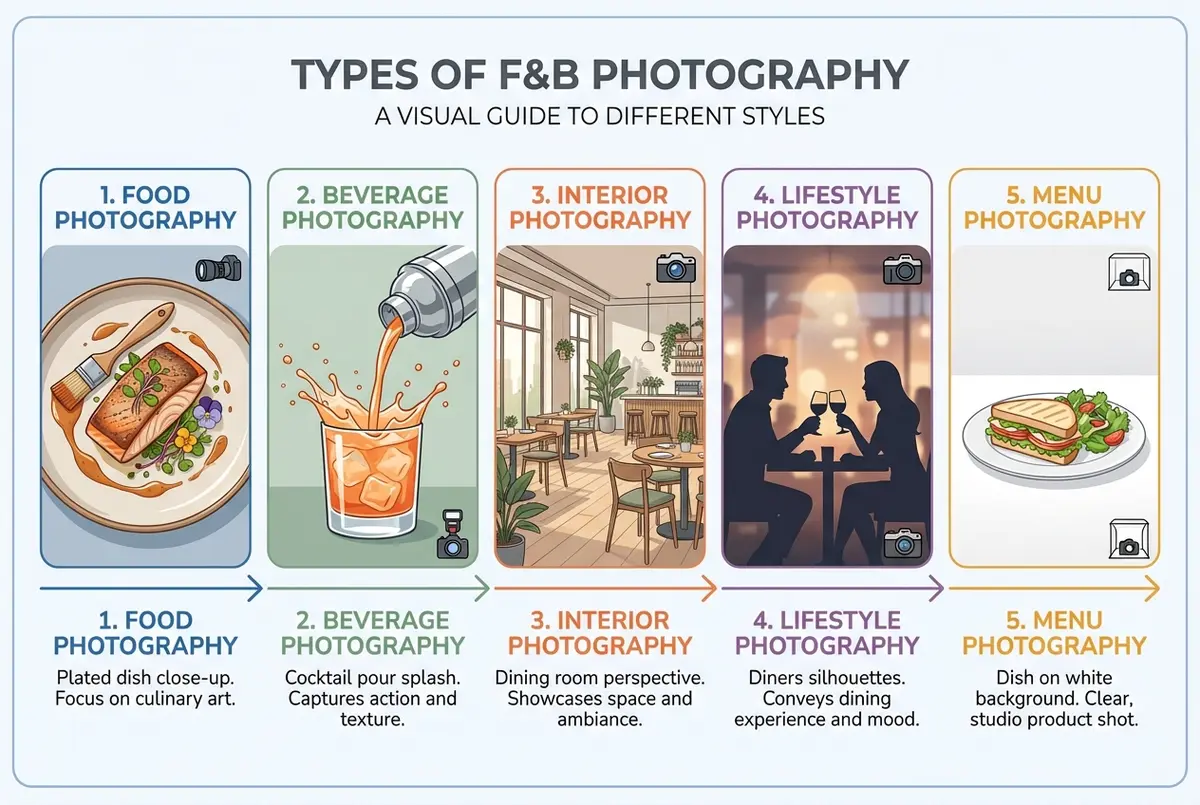
F&B photography types illustration
Theory's useful. But how do you actually execute this in your restaurant?
How to Do Interior Photography?
With all the theory in place, here's the practical step-by-step process for shooting your restaurant interior.
Use a wide-angle lens (16-35mm equivalent), shoot from tripod-mounted camera at consistent heights, bracket exposures to capture both bright windows and dark corners, and schedule shoots during the "magic hour" when natural light is softest.
Professional interior photography follows a methodical process, but the principles work whether you're using a £2,000 camera or a 2025/2026 smartphone.
If you're thinking "I don't have time for this", you're not alone. Most restaurant owners are juggling service, staff, suppliers, and everything else. But the reality is that bad interior photos cost you bookings every single day.
Equipment you'll need (at minimum):
- Camera with manual controls (DSLR, mirrorless, or 2025+ smartphone)
- Tripod (essential for low-light shots without blur)
- Wide-angle lens or smartphone wide lens
- Optional: external flash or LED panel for fill light
Pre-shoot preparation checklist:
- Schedule shoot during closed hours or very quiet period
- Clean all visible surfaces (tables, bar, floors, windows)
- Set 3-4 tables with perfect place settings
- Remove clutter (reservation signs, stacked chairs, cleaning supplies)
- Test all lights and adjust for best ambiance
- Charge camera batteries and clear memory cards
Budget reality: You can get professional-looking results with an iPhone 14+ and a £40 tripod. Don't let equipment become an excuse for not having decent photos.
Info
Why this matters: According to Statista hospitality data, the vast majority of diners check a restaurant's photos before making a reservation decision. Poor quality interior shots directly impact your bookings, regardless of how good your food is.
Before the shoot:
Schedule during closed hours or very quiet periods. You need time to compose shots without customers walking through frames. For natural light, shoot between 4-6pm in winter or 6-8pm in summer (golden hour) when light is warm and directional but not harsh.
Clear all clutter. Remove reservation signs, stacked chairs, cleaning supplies, and anything that says "we're not ready." Set at least 3-4 tables perfectly: you'll shoot the same ones from multiple angles.
During the shoot:
1. Establish your shooting list (30-45 minutes):
- Wide room shots from 3-4 angles
- Detail shots (bar setup, table setting, architectural features)
- "Hero" shots that capture the essence of your space
Example shot list for a 40-seat restaurant:
- Wide shot from entrance showing full dining room (hero shot)
- Corner booth with perfect table setting (detail + lifestyle potential)
- Bar from dining room angle (shows depth, context)
- Window seating during golden hour (natural light showcase)
- Architectural feature closeup (exposed beams, fireplace, statement wall)
2. Shoot in manual mode:
- ISO: Keep as low as possible (100-400) for clean, noise-free images
- Aperture: f/8-f/11 for sharpness throughout the frame
- Shutter speed: 1/15s to 1/60s (tripod required below 1/60s)
For instance: A dimly lit wine bar might need ISO 400, f/8, and 1/15s shutter speed with a tripod. The same settings in bright daylight would overexpose completely: adjust to ISO 100, f/11, 1/60s instead.
3. Bracket your exposures: Take the same shot at multiple exposures (one normal, one darker for highlights, one brighter for shadows). Merge them later in editing for balanced lighting.
4. Include people (if possible): Empty restaurants feel lifeless. A couple of staged diners in the background adds scale and warmth. Research shows that restaurants using lifestyle-focused interior photography see significantly higher engagement on social platforms compared to empty room shots.
If you're shooting during a quiet Wednesday night when you're already down two staff, this sounds impossible. Fair point. In that case, shoot the empty space perfectly lit, and save the lifestyle shots for when you have help.
After the shoot:
Edit for consistency, but don't overdo it. Images should have similar colour temperature, brightness, and contrast across your set. Slightly warm tones (2800-3200K) feel more inviting than cool blues.
Correct perspective distortion (those leaning walls we discussed), but don't over-process. Restaurant interior photos should feel authentic, not like CGI renders. This authenticity matters for your online visibility too.
Info
Related: DIY Restaurant Photography
Now you know the technical side. But what about the mistakes that ruin otherwise solid shots?
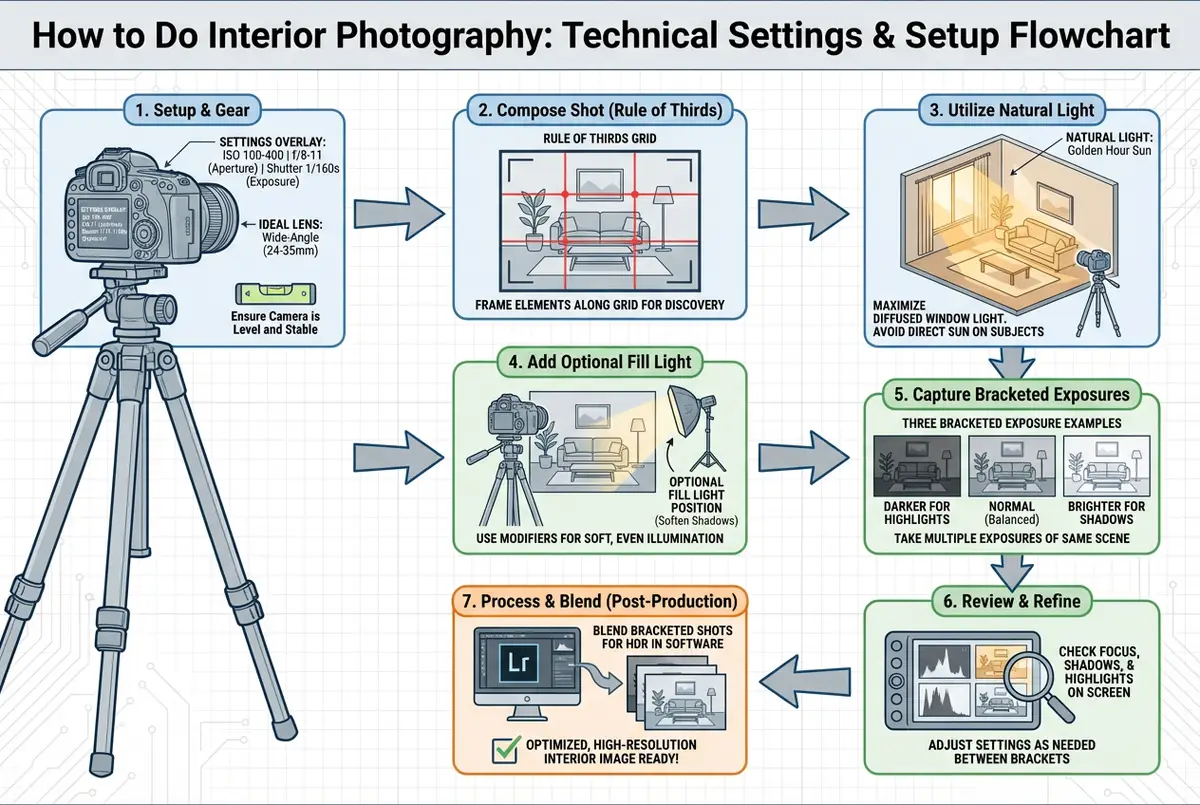
Interior photography setup diagram
Knowing the process helps. But what about the mistakes that tank otherwise decent shoots?
Common Interior Photography Mistakes (And How to Avoid Them)
Even with the right process, certain mistakes can ruin otherwise solid photography sessions. Here's what to watch for.
1. Shooting too wide: A 16mm lens shows everything, but it also distorts proportions and makes spaces feel impersonal. For most restaurant interiors, a 24-35mm equivalent gives better perspective.
Example: A 16-seat bistro shot at 16mm looks cavernous and empty. The same space at 28mm feels intimate and inviting, which is what you want.
2. Overhead lighting only: Relying solely on ceiling lights creates flat, uninviting images. Layer your lighting with accent lights, natural light from windows, and subtle fill light from below if needed.
If you're only using overhead lights you'll consistently lose to competitors who understand that layered lighting creates depth and atmosphere, two things that make people want to book.
3. No focal point: Every interior shot needs a visual anchor: a beautifully set table, the bar, an architectural detail. If you can't tell whether your photos draw attention to a specific element or just show a general space, that's usually a sign you need to identify and highlight a focal point. Without this, viewers don't know where to look.
4. Ignoring reflections: Windows, mirrors, and glossy surfaces create distracting reflections. Scout these during your location visit and plan angles that minimise or use reflections intentionally.
5. Shooting during service: Unless you're specifically capturing the buzz of a full restaurant (which requires different techniques), shoot when you have control over the environment.
If you're photographing your own restaurant for the first time, expect your first session to feel clumsy. Professional interior photographers spend 2-3 hours shooting a single restaurant: this isn't a quick 15-minute job. Based on our experience working with UK restaurant owners, the biggest breakthrough comes when they stop thinking "I need to document my space" and start thinking "I need to make someone hungry to visit."
Common Mistakes Comparison
| Mistake | Impact | Quick Fix |
|---|---|---|
| Shooting too wide (16mm) | Space feels impersonal, distorted | Use 24-35mm equivalent instead |
| Overhead lighting only | Flat, uninviting images | Layer with accent lights, natural light |
| No focal point | Viewers don't know where to look | Include a visual anchor (table, bar, feature) |
| Ignoring reflections | Distracting unwanted elements | Scout locations, plan angles that minimise reflections |
| Shooting during service | Loss of control over environment | Shoot during closed hours or very quiet periods |
You've learned what to do and what not to do. Now here's your practical starting point.
Weekly Action
Before you start shooting new photos, assess what you already have. Here's your action plan for this week:
- Audit your existing interior photos across all platforms
- Compare against competitors to identify quality gaps
- Delete your worst photos and schedule a reshoot
If you only have 30 minutes a week, do this:
- Day 1-2: Pull every interior photo from your website, Google Business Profile, and socials into one folder (10 mins)
- Day 3-4: Compare against three competitors: are yours brighter, with better depth, straight verticals? (10 mins)
- Day 5-7: Delete your three worst photos everywhere and schedule a 2-hour shoot for next month (10 mins)
Full weekly breakdown:
Day 1-2: Pull and review current photos (15 minutes)
- Screenshot every interior photo visible online: website, Google Business Profile, social media, listing sites
- Create a folder and collect them all in one place
- Note which platforms each photo appears on
Day 3-4: Competitive comparison (10 minutes)
- Find three local competitors' interior photos
- Compare specifically:
- Are your images brighter or darker?
- Do they show depth (foreground, middle, background)?
- Are vertical lines straight or tilted?
- Do they make you want to visit?
Day 5-7: Delete and prioritise (5 minutes)
- Identify your three worst photos and delete them from all platforms
- Mark the photos you'll replace first (start with homepage and Google Business Profile)
- Schedule a 2-hour shoot for next month (closed hours or quiet day)
This isn't about becoming a professional photographer overnight. It's about recognising what works and what doesn't, so when you do invest in new photography (DIY or professional), you get it right.
Still have questions? Here's what restaurant owners ask most often.
Frequently Asked Questions
Here are the most common questions restaurant owners ask about interior photography, with practical answers you can implement immediately.
What camera settings should I use for restaurant interior photography?
Use ISO 100-400 for clean images, aperture f/8-f/11 for sharpness throughout the frame, and shutter speed 1/15s to 1/60s. A tripod is essential for any shutter speed below 1/60s to avoid motion blur. Shoot in manual mode for consistent results across your photo set.
How do I make a small restaurant look bigger in photos?
Include foreground, middle ground, and background layers to create depth. Shoot from corners rather than straight on, use a focal length of 24-35mm (not too wide), ensure vertical lines are straight, and maximise natural light from windows. Avoid shooting too wide (16mm or less) as this distorts proportions.
Should I hire a professional restaurant photographer or do it myself?
If you have a 2025/2026 smartphone (iPhone 14 or later), a £40 tripod, and can follow basic composition and lighting principles, you can achieve professional-looking results yourself. Hire a professional if you need lifestyle shots with diners, have complex lighting challenges, or need images for major marketing campaigns where quality is critical.
When is the ideal time to photograph restaurant interiors?
For natural light, shooting between 4-6pm in winter or 6-8pm in summer (golden hour) typically works well when light is warm and directional but not harsh. Schedule during closed hours or very quiet periods when you have time to compose shots without customers walking through frames. Avoid shooting between 11am-2pm when light is harshest, and after 9pm when you're relying entirely on artificial lighting.
How many interior photos does my restaurant need?
Start with 8-12 core images: 2-3 wide room shots from different angles, 2-3 detail shots (bar, table settings), 1-2 architectural features, 1-2 window seating shots, and 1 hero image that captures your space's essence. Update these in Q2 2027 or Q3 2027, or when you refresh your interior design.
What equipment do I need for restaurant interior photography on a budget?
At minimum, you need a camera with manual controls (a 2025+ smartphone works fine), a tripod (£40-60 is sufficient), and good natural light. Optional extras include an external flash or LED panel for fill light and a wide-angle lens attachment. You can achieve professional results without expensive gear: technique matters more than equipment.
Now let's bring it all together.
Key Takeaways: Restaurant Interior Photography
If you run a restaurant and want to see how Local Brand Hub can support your marketing, explore our restaurant marketing tools.
Key Takeaways: Restaurant Interior Photography
Let's recap everything you need to remember about shooting professional restaurant interior photos.
Great restaurant interior photography captures experience, not just space. It requires attention to composition: foreground, middle, and background layers. It needs technical execution: straight lines, proper exposure, controlled lighting. And it demands storytelling. What does it feel like to dine here?
Whether you're hiring a professional or shooting yourself, prioritise these fundamentals: natural light when possible, consistent camera height, minimal clutter, and images that make viewers want to book a table.
Self-reflection question: If you found your restaurant on Google in February 2026 and saw only these interior photos, would you book a table? Be honest.
Start with an audit of the photos you're using in February 2026. Most restaurants are sitting on interior images that actively discourage bookings: fixing that doesn't require a big budget, just awareness of what works.
For UK restaurants
Need Help With Your Restaurant's Visual Marketing?
LocalBrandHub handles photography scheduling, image optimisation, and ensures your interiors look their best across every platform, without you spending weekends playing photographer.
Get Started FreeInfo
Check out our restaurant marketing guide for more ways to attract customers.
Get More Marketing Tips
Practical marketing tips for UK business owners, straight to your inbox. No spam, unsubscribe anytime.
About the Author
Local Brand Hub
Empowering UK Businesses
Local Brand Hub provides comprehensive business management tools designed specifically for UK local businesses to streamline operations, automate marketing, and grow revenue.
More articlesRelated Articles
 Marketing Tips
Restaurant Photography: Complete UK Guide (£150-£2,000)
Restaurant photography guide: market rates (£150-£2,000), lighting rules, shot list, when to hire pro vs DIY for UK venues.
 Marketing Tips
DIY Restaurant Photography: Complete Guide for UK Venues
Shoot professional-looking food photos with your smartphone. Step-by-step lighting, styling, and editing tips for UK restaurants.
 Marketing Tips
Restaurant Menu Photography: Techniques
Master restaurant menu photography with the 20-60-20 lighting rule and 3:1 ratio. Learn equipment, angles, and styling for UK restaurants.