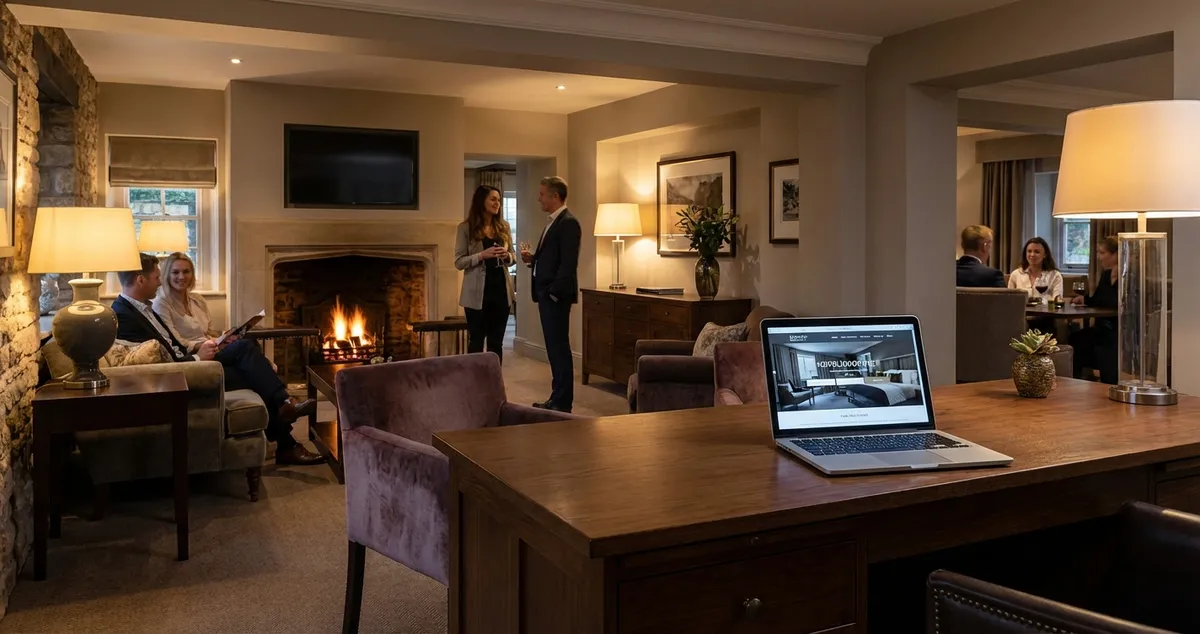
Master digital marketing for UK hospitality. Learn the five core channels, real examples from hotels and restaurants, and budget-friendly strategies.
You've poured everything into your hospitality business. The food is brilliant. Service is on point. Yet the tables stay empty on a Tuesday night while the chain down the road fills up. The difference often comes down to one thing: they've figured out digital marketing, and you're still relying on foot traffic and word of mouth.
Digital marketing for the hospitality industry has become essential for UK venues wanting to compete. Hotels and restaurants that prioritise digital channels see significantly higher direct booking rates and reduced dependency on third-party platforms.
The reality? You don't need a massive budget or a dedicated marketing team. You need the right priorities.
Info
Why this matters: Hospitality businesses that ignore digital marketing don't just lose customers - they lose them to competitors who understand how people find and choose venues online. That never works out well.
Related: Restaurant marketing for a complete overview of marketing fundamentals before diving into digital-specific tactics.
What You'll Learn
- Why digital marketing matters more than ever for UK hospitality
- The five core channels that actually drive bookings
- Real examples from hotels and restaurants seeing results
- A budget-friendly approach when money is tight
- How to measure what's working (and what's not)
What Is Digital Marketing for Hospitality?
So what exactly does digital marketing for hospitality mean in practice?
Digital marketing for hospitality is a framework that uses online channels to attract guests and drive bookings. Hotels, restaurants, pubs, and tourism businesses all use it. It's how venues get found online.
Put simply: it's every online activity that brings customers to your door. This includes Google, Instagram, email, and paid ads. The goal? Reach customers where they spend time, online.
For example: A family-run bistro in Bristol posts food photos on Instagram. They claim their Google profile. They send monthly emails with specials. Simple, but effective.
| Channel | Purpose | Often Best For |
|---|---|---|
| SEO | Get found in search | Typically long-term visibility |
| Social Media | Build awareness and engagement | Often brand personality |
| Email Marketing | Nurture relationships | Usually repeat bookings |
| Paid Ads | Immediate visibility | Often seasonal promotions |
| Website | Convert visitors | Usually direct bookings |
If you're thinking "I don't have time for all this," you're not alone. Most owners feel the same after a 12-hour shift. That's why focus matters.
Why Digital Marketing Matters for UK Hospitality
With that foundation in place, let's explore why digital marketing for hospitality matters so much for UK venues.
The UK hospitality industry has changed since the early 2020s. Customer behaviour has shifted toward digital discovery. People search online before they book.
Here's what's driving that shift:
1. Customers research before they visit
Most diners check reviews and menus online before picking a restaurant. Hotels? Even more research happens. Weak online presence means you're invisible when people decide where to book.
2. Direct bookings save money
Bookings through third-party platforms cost you commission. Hotels often pay 15-25% per OTA booking. Good digital marketing for hospitality drives direct bookings. That keeps more revenue in your pocket.
3. Local competition has intensified
The venues winning aren't always the ones with best food. They're the ones showing up when customers search. Local SEO gives you a real edge.
For instance: A fish and chip shop in Whitby that ranks first for "best fish and chips Whitby" will beat tastier rivals that don't appear in search results.
Related: Restaurant local SEO explains how to dominate local search results for your area.
4. Younger customers expect digital-first experiences
Millennials and Gen Z now make up most spending. They expect to find you on Instagram. They want to book online. If you're only posting when it's quiet you'll always lose to competitors who post daily.
The Five Core Digital Marketing Channels
Now for the channels that matter. Not every one deserves your attention. Here's where hospitality businesses see the best results with digital marketing for hospitality:
1. Search Engine Optimisation (SEO)
SEO helps your website appear when people search for venues like yours. A restaurant in Manchester wants to show up for "best Italian Manchester" or "romantic dinner Manchester."
What works for hospitality SEO:
- Claiming and optimising your Google Business Profile
- Building local citations across UK directories
- Creating location-specific website pages
- Earning reviews (Google, TripAdvisor, industry-specific sites)
- Publishing helpful content that answers customer questions
A gastro pub in Birmingham might target "Sunday roast Birmingham." They'd create a page with photos, booking options, and real customer reviews. If you're not sure where to start, working through a local SEO checklist covers the essentials in the right order.
Related: Restaurant Google Business Profile walks through optimisation step-by-step.
2. Social Media Marketing
Social media builds brand awareness and shows your venue's personality. Visual platforms like Instagram and Facebook typically work best for hospitality.
The 70/20/10 content rule works well here:
- 70% valuable content (food photos, behind-the-scenes, local area tips)
- 20% shared content (customer photos, local partnerships, reviews)
- 10% promotional content (offers, booking reminders, special menus)
For example: A boutique hotel in the Cotswolds might share property photos and local walking routes. They'd post about seasonal produce from nearby farms. This builds desire before any sales pitch.
Related: Restaurant social media marketing covers platform-specific tactics in depth.
3. Email Marketing
Email is often one of the highest-return channels for hospitality. Your list has people who already know you. They're far more likely to book than strangers.
Email opportunities for hospitality:
- Post-stay thank you and feedback requests
- Seasonal offers and events
- Loyalty programme updates
- Local area news and recommendations
- Booking reminders and confirmations
A restaurant might send a monthly email with the new menu and upcoming events. Include a booking link. Keep it valuable, not spammy.
Related: Email marketing for restaurants shows how to build your list and write emails that get opened.
4. Paid Advertising
Paid ads give you instant visibility. Use them for seasonal promos, events, or when you need quick results.
Common paid channels for hospitality:
| Platform | Best Use | Typical Budget |
|---|---|---|
| Google Ads | Capturing high-intent searches | From £300/month |
| Meta Ads | Brand awareness, local targeting | From £200/month |
| TripAdvisor Ads | Tourism-focused properties | Variable |
A hotel launching a new spa might run Google Ads targeting "spa hotel weekend break UK." They could add Meta Ads showing spa facilities to people interested in wellness within 100 miles.
Related: Google Ads for restaurants explains how to set up campaigns without wasting budget.
5. Website Optimisation
Your website is where digital marketing for hospitality converts into bookings. If your site is slow or hard to use on mobile, you lose customers. Simple as that.
Website essentials for hospitality:
- Mobile-responsive design (most hospitality searches happen on phones)
- Fast loading speed (under 3 seconds)
- Clear booking functionality
- High-quality photos and virtual tours
- Easy-to-find contact information
- Menu or service details prominently displayed
Not sure if your website works well? Try booking on your own site using your phone. If it's frustrating, your customers feel the same way.
Related: Restaurant website features covers the must-haves for hospitality websites.
Digital Marketing for Hospitality Industry Examples
Those are the channels. But how do real hospitality businesses apply digital marketing for hospitality in practice? Here are three examples from UK venues:
Boutique Hotel: Direct Booking Focus
Situation: A 20-room boutique hotel in York was paying high OTA fees. They wanted more direct bookings.
Digital marketing approach:
- Optimised Google Business Profile with professional photos and regular posts
- Created location-specific landing pages targeting "York city break" and "romantic York hotel"
- Built an email list offering 10% off direct bookings to subscribers
- Ran retargeting ads to website visitors who didn't complete a booking
Result: Direct bookings increased within six months. Commission costs dropped. Margins improved.
Independent Restaurant: Local SEO Success
Situation: A Thai restaurant in Leeds had great food and reviews. But chains dominated search results.
Digital marketing approach:
- Claimed and fully optimised Google Business Profile
- Encouraged happy customers to leave Google reviews
- Created a dedicated "Thai food Leeds" page with menu, photos, and booking
- Maintained consistent social media presence showcasing authentic dishes
Result: They moved from page two to the top three results. Their quiet midweek slots started filling up.
Pub Group: Email Marketing Wins
Situation: Five gastropubs wanted more repeat visits. They also wanted better event turnout.
Digital marketing approach:
- Added email capture everywhere (bookings, WiFi login, feedback cards)
- Segmented lists by location and visit history
- Sent personalised emails featuring local pub events and seasonal offers
- Automated post-visit emails encouraging reviews and return visits
Result: Email became their second-biggest booking channel. Only walk-ins beat it.
Building a Digital Marketing Strategy for Hospitality
So you've seen the examples. Now how do you build your own digital marketing for hospitality strategy?
If you're starting from scratch, here's a realistic approach. You don't need a dedicated team. You need the right sequence. For example, a new cafe in Liverpool might spend the first fortnight solely on Google Business Profile and mobile website fixes before touching social media.
Phase 1: Foundation (Weeks 1-2)
Focus: Get the basics right before anything else.
- Claim and optimise your Google Business Profile completely
- Ensure your website works properly on mobile devices
- Set up or audit your social media profiles (choose two platforms maximum)
- Create a simple system for requesting reviews from happy customers
Phase 2: Content and Visibility (Weeks 3-6)
Focus: Start appearing where customers are searching.
- Publish your first piece of location-specific content
- Establish a realistic social media posting schedule (three times per week is plenty)
- Begin building your email list with a clear value proposition
- Address any obvious website issues identified in Phase 1
Phase 3: Optimisation and Growth (Ongoing)
Focus: Measure what's working and do more of it.
- Track key metrics (website traffic, booking sources, email open rates)
- Test different content types and posting times
- Consider paid advertising for specific promotions or quiet periods
- Expand successful tactics and drop what's not working
Minimum Viable Marketing
If you only have 30 minutes a week, do this:
- Day 1-2: Reply to any new reviews on Google and post one social media update
- Day 3-4: Check website booking functionality and update any stale information
- Day 5-7: Send one email to your list or add five new email subscribers
That's the minimum viable effort. It won't transform your business overnight, but it maintains momentum and keeps you visible.
When to Hire a Digital Marketing Agency for Hospitality
At some point, you may wonder whether to get help. Handling digital marketing for hospitality yourself makes sense when starting out. But there comes a point where professional help delivers better returns.
Consider hiring a digital marketing agency for hospitality when:
- You're losing bookings to competitors with better online presence
- Managing digital marketing is taking time away from running your business
- You want to scale paid advertising but lack expertise
- Your website needs significant technical improvements
- You're planning a major launch, rebrand, or expansion
What to look for in a hospitality digital marketing agency:
- Real experience with hospitality (not just general marketing)
- Case studies showing measurable results for similar venues
- Clear pricing and scope of work
- Understanding of UK hospitality market
- Realistic promises (avoid anyone guaranteeing "page one in 30 days")
Budget expectations:
UK hospitality agencies typically charge £1,000-£5,000 per month. The price depends on scope and your business size. Some offer project pricing for specific work like website redesigns.
Key Takeaways: Digital Marketing for Hospitality
If you run a restaurant and want to see how Local Brand Hub can support your marketing, explore our restaurant marketing tools.
Key Takeaways: Digital Marketing for Hospitality
Let's bring it all together. Digital marketing for hospitality isn't optional for UK venues today. But it doesn't have to be overwhelming.
Remember these core principles:
- Start with foundations: Google Business Profile and a functional website come before everything else
- Prioritise ruthlessly: Better to do two channels well than five channels badly
- Focus on direct bookings: Reducing platform dependency improves your margins
- Consistency beats perfection: Regular average content outperforms occasional brilliant content
- Measure and adjust: Track what's working and allocate resources accordingly
Venues thriving in UK hospitality don't always have the biggest budgets. They show up where customers are looking. That's the real advantage of digital marketing for hospitality.
Related: Restaurant marketing plan helps you structure your overall marketing approach.
Frequently Asked Questions
What is digital marketing in the hospitality industry?
Digital marketing in the hospitality industry is a framework that uses online channels to attract guests and drive bookings. It covers websites, search engines, social media, email, and paid ads. Hotels, restaurants, and pubs all use these tactics.
How much should a hospitality business spend on digital marketing?
Most hospitality businesses spend 3-6% of revenue on marketing. Digital channels make up 50-70% of that spend. A restaurant turning over £500,000 might spend £15,000-£21,000 per year on digital.
What is the most effective digital marketing channel for hospitality?
The most effective digital marketing channel for hospitality is a framework that prioritises Google search, as it captures active searchers. This includes both SEO and Google Business Profile. Social media builds awareness. But search captures people ready to book.
Can small hospitality businesses compete with chains on digital marketing?
Yes. Local businesses have advantages in authenticity and local knowledge. Chains can't copy that. Consistent effort on local SEO beats bigger budgets.
How long does it take to see results from digital marketing?
Paid ads work fast. SEO takes 3-6 months to show ranking improvements. Social media and email build slowly. Expect 6-12 months before these channels drive real bookings.
Weekly Action
This week, audit your hospitality digital marketing presence:
- Search for your business on Google using terms customers would use. Where do you appear? What shows up in your Google Business Profile?
- Complete one missing element: whether that's adding photos to your Google listing, creating a booking button, or sending your first email newsletter.
Small consistent actions compound over time. That's the foundation of good digital marketing for hospitality. Start with what's missing, not what's perfect.
Get More Marketing Tips
Practical marketing tips for UK business owners, straight to your inbox. No spam, unsubscribe anytime.
About the Author
Local Brand Hub
Empowering UK Businesses
Local Brand Hub provides comprehensive business management tools designed specifically for UK local businesses to streamline operations, automate marketing, and grow revenue.
More articlesRelated Articles
 Marketing Tips
3 3 3 Rule in Marketing: Restaurant Framework Guide
Master the 3 3 3 rule in marketing for your restaurant. Focus on 3 messages, 3 audiences, and 3 channels for simpler, more effective marketing.
 Marketing Tips
7 P's of Restaurant Marketing: A Complete UK Guide
Master the 7 P's of restaurant marketing: Product, Price, Place, Promotion, People, Process, and Physical Evidence to attract more diners to your UK venue.
 Marketing Tips
12 Cafe Marketing Ideas That Actually Work in 2026
Try these 12 cafe marketing ideas used by top UK independents to grow footfall, boost repeat visits, and increase average spend.