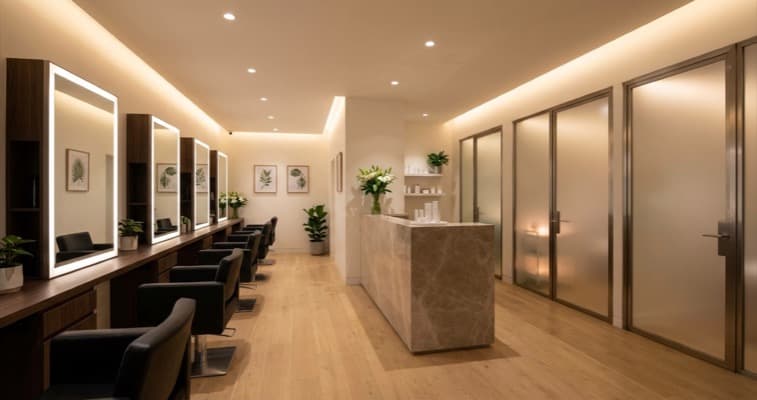
Should you run a combined hair and beauty business? Compare multi-service vs specialist salon models covering staffing, premises, and pricing.
A hair and beauty business is a salon offering both hairdressing and beauty therapy services under one roof: combining cuts, colour, and styling with treatments like facials, waxing, nails, and lashes to serve a broader client base from a single premises.
You've just finished a two-hour colour appointment. Your client looks amazing, and walks straight into the beauty salon two doors down for a brow wax and a gel manicure. That is another £45 you will never see. Running a combined hair and beauty business means those clients, and their spending, stay with you.
This guide covers the combined salon model: what makes it work, where it gets complicated, and whether it suits your situation.
What You'll Learn
- How a combined hair and beauty business differs from a specialist salon
- The real pros and cons of offering both services
- Staffing and qualification requirements for multi-service salons in the UK
- Premises layout and space planning for combined operations
- Pricing strategies that prevent your services from competing against each other
What Is a Hair and Beauty Business?
The hair and beauty business model is a framework that combines hairdressing services (cuts, colour, blowdries, extensions) with beauty treatments such as facials, waxing, nails, lashes, and sometimes aesthetic procedures. Instead of specialising in one discipline, you offer multiple services that complement each other.
The UK hair and beauty treatment market is valued at approximately £5.8 billion in 2025, according to NHBF industry data. Three-quarters of businesses in the sector employ fewer than five people (NHBF, 2025). That means most combined salons are small, owner-operated businesses, not large chains.
If you're thinking "I cannot compete with the big chains," you're not competing with them. You are competing with the three other independents on your high street, and a combined offering is one way to stand out.
Why this matters: A combined model does not just add services: it multiplies the reasons clients choose your salon over the one next door.
For example, a beauty salon owner who adds hairdressing chairs might attract clients seeking convenience. A hairdresser who brings in a beauty therapist for nail and brow services might increase average client spend without needing new footfall.
Related: Beauty Salon Business Plan
If you're thinking "this sounds complicated," that's usually a sign you're asking the right questions. The combined model is not for everyone, and understanding the trade-offs is more important than chasing a bigger menu of services. For a step-by-step walkthrough, see our guide to starting a beauty business.
Hair and Beauty Combined vs Specialist: Pros and Cons
Now that you understand what a combined model involves, the next question is whether it actually suits your situation.
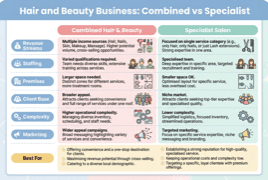
Combined vs specialist salon model comparison
The decision between running a combined hair and beauty business and staying specialist comes down to your capacity, budget, and long-term vision.
| Factor | Combined Hair and Beauty | Specialist Salon |
|---|---|---|
| Revenue streams | Multiple: hair, nails, beauty, lashes | Focused: one discipline |
| Client base | Broader appeal, one-stop convenience | Niche, loyal, targeted |
| Staffing | Mixed qualifications needed | Single skill set, easier hiring |
| Premises | Larger space required | Smaller footprint works |
| Complexity | Higher: different regulations per service | Lower: streamlined operations |
| Marketing | Wider appeal but harder to position | Clearer brand identity |
| Insurance | Combined policy needed, typically higher | Single-discipline cover |
For most people starting out, a specialist salon often makes more sense. You can always add services later once you have stable revenue and a team in place. If you are already established with a loyal client base, expanding into a combined model is a lower-risk move.
For example, a nail bar owner in a small high-street unit might struggle to fit hairdressing stations into 30 square metres. But a beauty salon with a spare treatment room could rent it to a self-employed lash technician and immediately offer a new service with zero recruitment cost.
Related: Self-Employed Hairdresser Guide
If you are only adding beauty treatments because your competitor does, that rarely works as a long-term strategy. Add services your existing clients are actively requesting. If you are considering buying an existing operation instead of building from scratch, our guide to beauty businesses for sale covers what to look for.
Staffing a Multi-Service Salon
With the model decision made, staffing is where combined hair and beauty businesses get genuinely complicated. Hairdressing and beauty therapy are separate disciplines with different training pathways, and you cannot simply ask your stylist to do facials.
Hairdressing qualifications (UK):
- NVQ Level 2 in Hairdressing: minimum for junior stylists
- NVQ Level 3 in Hairdressing: advanced cutting, colouring, salon management
Beauty therapy qualifications (UK):
- NVQ Level 2 in Beauty Therapy: facials, waxing, manicures
- NVQ Level 3 in Beauty Therapy: body treatments, electrical facials
- VTCT, CIBTAC, or CIDESCO diplomas: recognised industry standards (BABTAC lists accredited training providers)
A combined salon typically needs at least one qualified hairdresser and one qualified beauty therapist. With 60.5% of industry workers being self-employed (NHBF, 2025), many combined salons operate on a chair or room rental model rather than employing staff directly.
For example, a beauty salon offering hair services might rent two hairdressing chairs to self-employed stylists while employing a beauty therapist. This reduces payroll risk while still offering clients a combined experience. Our guide to room rental in a salon covers the owner's perspective, and chair rental in a hair salon explains the stylist's side of the arrangement. You can also compare rates in our hairdressing chair rental breakdown.
Pro Tip: Start with a chair or room rental arrangement before committing to employed staff. It tests demand with minimal financial risk.
If you're reading this thinking "I don't have the budget for multiple employees", you're not alone. The reality for most independent salon owners is that the combined model starts as a partnership between specialists, not a big hiring spree.
Related: Hairdressing Apprenticeship
Premises and Layout for Combined Hair and Beauty
You have got your staffing model sorted. Next comes the physical space. A combined hair and beauty business needs more space than a single-discipline salon, and the layout matters more than the total square footage.
Key layout considerations:
- Separation between wet and dry areas: hairdressing basins create moisture and noise; beauty treatments need quieter, calmer spaces
- Ventilation: nail services and chemical hair treatments both produce fumes that require adequate extraction
- Privacy: beauty treatments often require private or semi-private rooms; hairdressing is typically open-plan
- Reception flow: clients should not have to walk through one service area to reach another
A typical combined salon might need 50-80 square metres minimum: two to three hairdressing stations plus one or two treatment rooms and a shared reception. Larger operations with nail desks, a lash room, and multiple styling chairs can easily require 100+ square metres.
If you're thinking "my current space is nowhere near big enough for all that", the reality for most salon owners is exactly that. You do not need to do everything at once. Starting with one treatment room and one additional service is enough to test whether the combined model works for your client base.
Pro Tip: Before signing a lease, sketch your floor plan with furniture to scale. A 50 square metre space feels very different once you add two styling stations, a basin, and a treatment bed.
Your local council may require separate risk assessments for different treatments, particularly anything involving needles (such as acupuncture or micro-needling). Check your local authority's licensing requirements before signing a lease. The NHBF provides guidance on premises standards.
Related: Health and Safety for Beauty Salon
Pricing Strategy for a Hair and Beauty Business
With your premises planned, the next piece is pricing. Pricing a combined salon is trickier than pricing a specialist one. Your hair services and beauty treatments are competing for the same client's wallet, and getting the balance wrong means one side subsidises the other.
If you cannot tell whether your beauty treatments bring in profit or just fill quiet hours, that is usually a sign your pricing needs a proper review before you expand further.
Three approaches that work:
Bundle pricing: offer packages combining hair and beauty (for instance, "colour and brow shape" at a small discount). This increases average transaction value and encourages cross-booking.
Independent pricing: price each discipline based on its own costs, time, and market rate. This keeps margins healthy but requires clients to see value in each service separately.
Tiered pricing: offer standard and premium tiers across both disciplines. A client booking a premium colour service might also choose the premium facial, increasing spend naturally.
The industry average profit margin sits around 8.2%, according to IBISWorld UK data (2025). Combined salons can beat this if cross-selling works, but the margin drops if you are paying for unused treatment room hours.
The real secret is getting your pricing right before you scale.
So you have got the model figured out. But what happens when you need people to actually find your salon?
Marketing a Multi-Service Salon
With your pricing in place, the next challenge is getting people through the door. Marketing a hair and beauty business means resisting the urge to promote everything at once. A combined salon that tries to be "the best hairdresser AND the best beauty salon" ends up positioning itself as neither.
What works:
- Lead with your strongest service. If your hairdressing reputation is what brings clients through the door, lead with that. Introduce beauty services as an add-on, not a separate brand.
- Cross-promote to existing clients. A simple card at the hairdressing station offering 10% off a first beauty treatment converts better than any social media campaign.
- Use separate booking categories. Online booking systems like Fresha or Timely let you list hair and beauty separately, so clients searching for "nail salon near me" still find you.
For instance, a combined salon might run an Instagram reel showing a client getting a balayage and then walking straight into the beauty room for a brow lamination: one visit, two transformations. That kind of content sells the convenience angle better than any text post.
Pro Tip: Create a "combo transformation" highlight on Instagram showcasing clients who booked both hair and beauty. It is your most persuasive sales tool.
If you are posting on Instagram, alternate between hair and beauty content rather than posting three hair transformations in a row and nothing else. Planning your posts on a social media calendar makes that balance far easier to keep. For a full strategy, see our salon website and SEO guide.
Would I book both services in one visit? If the answer is no, your marketing is not showing the combined value clearly enough.
If You Only Have 30 Minutes This Week
- Day 1-2: List the top five services your clients ask for that you currently do not offer: this tells you whether a combined model is worth pursuing
- Day 3-4: Research qualification requirements for the new services and calculate the cost of hiring or partnering with a specialist
- Day 5-7: Sketch your current floor plan and identify where a treatment room or additional station could fit
If you are exploring the beauty industry more broadly, visit our beauty salons industry page for marketing tools and resources tailored to salon owners.
For restaurants, salons, and local businesses
Need help with your marketing?
We help UK businesses turn social media into real results, not busywork.
Start freeKey Takeaway
A hair and beauty business combines hairdressing and beauty therapy under one roof, broadening your client base and increasing average spend. The UK beauty sector is worth approximately £5.8 billion, with most salons employing fewer than five people. Hair and beauty require separate qualifications: NVQ Level 2 minimum for each discipline. Combined salons need careful premises layout separating wet areas from private treatment rooms. Pricing strategies like bundling and tiered pricing prevent your services from competing against each other. Marketing a combined salon works best when you lead with your strongest service and cross-promote to existing clients. Starting specialist and expanding later is often lower-risk than launching as combined from day one.
Get More Marketing Tips
Practical marketing tips for UK business owners, straight to your inbox. No spam, unsubscribe anytime.
About the Author
Local Brand Hub
Empowering UK Businesses
Local Brand Hub provides comprehensive business management tools designed specifically for UK local businesses to streamline operations, automate marketing, and grow revenue.
More articlesRelated Articles
 Business Growth
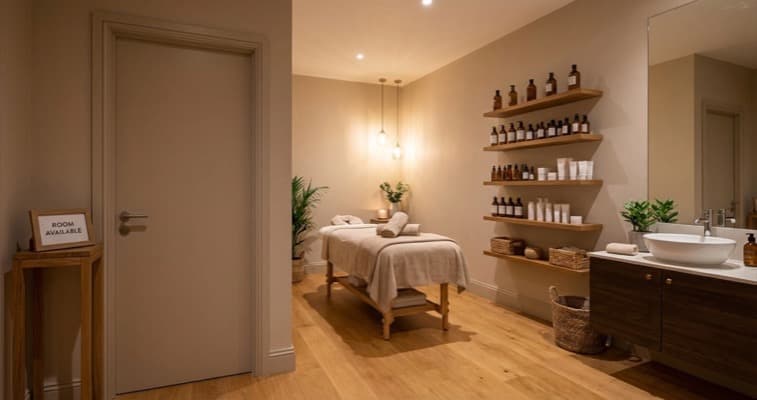
Room for Rent in Salon: Owner's Revenue Guide
Room for rent in salon explained: UK regional pricing benchmarks, essential contract clauses, and HMRC employment status rules. Practical owner guide.
 Business Growth
Chair Rental in Hair Salon: A Renter's Guide
Chair rental in hair salon explained: UK costs by region, what to check before you sign, contract must-haves and how to build your brand as a renter.
 Business Growth
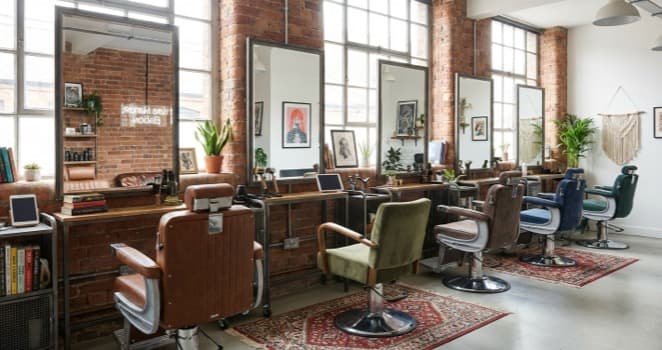
Hairdressing Chair Rental: UK Pricing and Legal Guide (2026)
Hairdressing chair rental in the UK: 2026 regional pricing, HMRC employment status rules, contract requirements and insurance obligations fully explained.