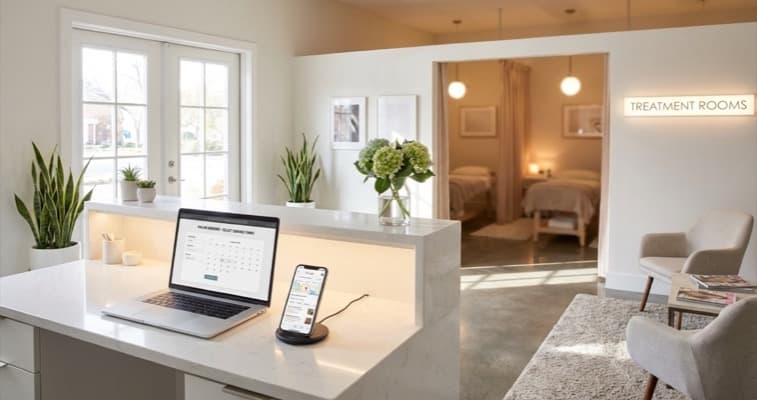
How to build a salon website and SEO strategy that ranks on Google and fills your diary. Design, templates, builders, and local SEO for UK salons.
A salon website and SEO strategy is how beauty salons get found online, convert browsers into bookings, and build a digital presence that works around the clock. From choosing the right website builder to optimising your Google listing, your online presence determines whether new clients find you or find your competitors first.
Your salon is gorgeous. Treatments are booked solid on Saturdays. But search "beauty salon [your town]" on Google and... nothing. Your competitor three doors down, the one with fewer services and a smaller team, shows up first. That's not a quality problem. It's a visibility problem.
If you're thinking "I don't need a website, I get all my clients through Instagram," you might be right for now. But 76% of mobile "near me" searches lead to a business visit within 24 hours (Google, 2025), and those searchers are looking at websites and Google listings, not Instagram feeds.
This guide covers everything you need to know about salon website and SEO strategy, with links to detailed guides on each topic.
What You'll Learn About Salon Websites and SEO
- Why a website matters even if your Instagram is thriving
- What pages every beauty salon website needs to convert visitors into bookings
- The basics of salon SEO, and why it's simpler than you think
- How to set up your Google Business Profile for local discovery
- Which website builder and template to choose
Why Every Beauty Salon Needs a Website
Instagram is brilliant for showing off your work. But it doesn't own your client relationships; Meta does. Algorithm changes, account restrictions, or a simple outage can make your entire online presence vanish overnight.
A website is the one piece of digital real estate you actually own. It works while you're doing a facial at 10am, and it's still there when Instagram changes its algorithm at 3am.
What a salon website does that social media can't:
- Ranks in Google. When someone searches "beauty salon near me," Google shows websites and Google Business Profiles, not Instagram accounts. With 46% of all Google searches seeking local information (Google, 2025), a salon website and SEO strategy is how new clients find you.
- Holds your treatment menu. Clients want to see services and pricing before they call. A clear treatment page with online booking removes the friction between "I'm interested" and "I've booked."
- Builds trust. Patch test policies, aftercare advice, therapist qualifications: these pages signal professionalism that a social media bio can't match. For example, a beauty salon offering lash extensions might include a dedicated aftercare page that answers the questions clients ask during every appointment, reducing no-shows and building confidence before they even walk in.
There are over 61,000 hair and beauty businesses in the UK (NHBF, 2025), with 75% employing fewer than five people. If you're a small beauty salon competing for local clients, investing in your salon website and SEO levels the playing field against bigger operations with dedicated marketing teams.
Pro Tip
If you can't tell whether your online presence is bringing in new clients or just keeping you busy, that's usually a sign you need to check your Google Business Profile: it's often the single biggest gap between salons that get found online and salons that don't.
For a step-by-step guide to building yours, read our complete guide to creating a website for your beauty salon.
What Makes a Great Salon Website
Not every salon website is created equal. The difference between a salon website and SEO setup that generates bookings and one that collects dust comes down to a few essentials. If you're reading this thinking "my website already exists but nobody finds it," you're not alone, and that's exactly what this section addresses.
The pages every beauty salon website needs:
- Treatment menu with pricing. List every service with clear descriptions and prices. No "prices from..." without context: clients want to know what they're paying before they contact you.
- Online booking. If a potential client has to phone you during treatment hours to book, you'll lose them to the salon that lets them book at 11pm on a Sunday.
- Portfolio or gallery. Before-and-after photos of lash lifts, nail art, or facial results build confidence faster than any written description.
- About page. Qualifications, specialisms, and a photo of you or your team. People book people, not businesses.
- Contact and location. Address, opening hours, a map, and a phone number. Make it effortless to find you.
A nail salon needs a design portfolio. An aesthetics clinic needs patch test information and consent forms. A beauty studio offering lash extensions needs aftercare pages. The details depend on your services, but the structure stays the same.
For design principles (colours, layout, mobile responsiveness), see our salon website design guide. Want to see what great salon website and SEO setups look like? Browse real salon website examples.
Salon SEO: How Clients Find You on Google
Now that your salon website structure is sorted, the next part of your salon website and SEO strategy is getting found. SEO (search engine optimisation) is how your website moves from page five of Google to the top of page one. It sounds technical, but for a local beauty salon, the fundamentals are surprisingly straightforward.
Salon SEO in plain English: it's making sure Google understands what you do, where you are, and why you're the best option nearby.
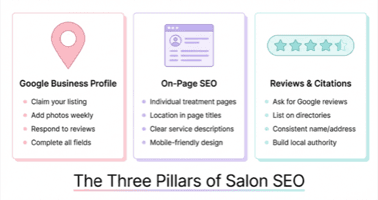
The three pillars of salon SEO
The three pillars of salon SEO:
Google Business Profile. This is the listing that appears in the map results when someone searches "beauty salon near me." Businesses that optimise their Google Business Profiles see 70% higher engagement than those that don't (Google, 2025). Claim it, complete every field, add photos weekly, and respond to every review.
On-page SEO. Each treatment page on your website should target a specific search term. If you offer gel nails, have a page called "Gel Nails in [Your Town]," not a generic "Services" page with everything lumped together.
Reviews and citations. Google trusts businesses that other websites mention. Get listed on directories like Yell, Treatwell, and Fresha. Ask every satisfied client for a Google review. For instance, a nail salon might add "Leave us a review" to their aftercare card, turning every appointment into a potential SEO boost.
"Near me" searches have surged over 130% since 2019 (Google, 2025). That's not slowing down. If you're only relying on word-of-mouth referrals you'll always lose to competitors who invest in their salon website and SEO, because those salons capture the clients who are actively searching right now.
Your salon website and SEO efforts compound over time: the salons ranking on page one in 2026 started their SEO six months before. For the full walkthrough, read our SEO guide for beauty salons. For Google Business Profile specifically, see our GMB setup guide. And if you'd rather work through the essentials as a simple list, our local SEO checklist covers each of these steps.
Your Website vs Social Media: Why You Need Both
So you've got the salon website and SEO basics. But this is the question that comes up in every treatment room: "Do I really need a website if my Instagram is doing well?"
Short answer: yes. But not because Instagram doesn't work, because they do different jobs.
| Website | Social Media | |
|---|---|---|
| Ownership | You own it | Platform owns it |
| Google ranking | Yes: appears in search results | No: Instagram posts don't rank for "beauty salon near me" |
| Booking | 24/7 online booking | Limited (link in bio) |
| Treatment details | Full menu, pricing, policies | Captions and highlights |
| Trust signals | Qualifications, aftercare, policies | Social proof, reviews |
| Longevity | Permanent: content stays indexed | Temporary: posts buried in days |
Think of it this way: social media is your shopfront window. Your website is the shop itself. One attracts attention; the other closes the sale. For example, a beauty studio might post a stunning lash transformation on Instagram, but the client who sees it books through the website because that's where the treatment menu, pricing, and online booking live.
For most UK beauty salons, the winning combination is a well-built website, an optimised Google Business Profile, and one social platform you post on consistently. That's it. You don't need to be everywhere; you need to be findable where clients are already looking.
Choosing a Website Builder and Template
With your salon website and SEO priorities clear, the next step is choosing your platform. If you're starting from scratch, the good news: you don't need a web developer. Modern website builders let you create a professional salon site in a weekend.
The main options:
- Wix: Easiest for beginners, strong salon templates, built-in booking tools
- Squarespace: Best design quality, excellent portfolio layouts for showcasing treatments
- WordPress: Most flexible, but steeper learning curve. Best if you want full control over your SEO
- GoDaddy: Simplest setup, limited customisation. Good if you just need a basic online presence fast
For most salon owners, Wix or Squarespace typically offers a strong balance of design quality, booking integration, and ease of use. If you're only comparing prices without checking booking integration you'll always lose time to platforms that don't fit your salon's workflow.
Don't pick a template and then try to force your content into it. Pick the right template based on what your salon website and SEO needs: portfolio display, online booking, and a clear treatment menu. For example, a beauty studio specialising in facials might prioritise before-and-after galleries and a skin concern quiz, while a nail bar needs a design portfolio and walk-in booking option. A hair salon website has different needs again: stylist portfolios, colour transformation galleries, and multi-stylist booking matter more than nail art displays.
For platform comparisons, read our salon website builder guide. For template recommendations by platform, see salon website templates. Hair salons have specific requirements covered in our hair salon website guide, and nail salons in our nail salon website guide.
If You Only Have 30 Minutes a Week
If you only have 30 minutes a week, do this. In practice, when you're between clients and your next late cancellation has freed up an unexpected gap, rebuilding your entire salon website and SEO presence isn't realistic. So start here:
- Day 1-2 (10 min): Search your salon name on Google. Do you appear? Is your Google Business Profile claimed and complete? If not, claim it at business.google.com: that single action is the highest-impact thing you can do this week.
- Day 3-4 (10 min): Check your salon's website (or Instagram bio) on your phone. Can a new client find your treatment menu, prices, and booking link within 10 seconds? If not, note what's missing.
- Day 5-7 (10 min): Reply to every Google review from the past three months. Yes, the positive ones too. Google rewards businesses that actively engage with reviews.
That's it. Three days, thirty minutes total. Next week, pick one spoke guide from this page and go deeper.
Info
Would you book a treatment at your own salon based on what comes up when you Google it? If the answer isn't an immediate yes, start with Day 1. Your salon website and SEO don't need to be perfect; they just need to exist and be findable.
See how Local Brand Hub's beauty salon tools can help you build a website and local SEO strategy that works around your treatment schedule.
FAQ
Do I need a website if I already have Instagram?
Yes. Instagram is excellent for showcasing your work, but it doesn't appear in Google search results when someone looks for "beauty salon near me." A website ranks in search, holds your full treatment menu, and lets clients book 24/7, things a social media profile can't reliably do. Think of Instagram as your shopfront window and your website as the shop itself.
How much does a salon website cost?
Most salon owners spend between £10 and £30 per month on a website builder like Wix or Squarespace, which includes hosting, a template, and basic booking tools. A custom-designed website from a web developer typically costs £500 to £2,000+ upfront. For most independent beauty salons, a DIY website builder typically offers a strong balance of cost and quality.
What is local SEO for a beauty salon?
Local SEO is a strategy that makes your salon visible in location-based Google searches, like "beauty salon in Manchester" or "nail salon near me." It involves claiming your Google Business Profile, getting client reviews, listing your salon on local directories, and making sure your website mentions your location and services clearly.
How long does salon SEO take to work?
Most beauty salons see noticeable improvements in local search visibility within two to three months of consistent effort: claiming and optimising Google Business Profile, publishing treatment pages, and collecting reviews. Competitive keywords may take six months or longer. The key is consistency: small weekly actions compound over time, just like client rebooking compounds your revenue.
Key Takeaway
- Your website is the only part of your online presence you fully own: social media platforms can change the rules overnight
- A clear treatment menu with online booking is the minimum viable salon website
- Salon SEO starts with three things: Google Business Profile, individual treatment pages, and client reviews
- 76% of "near me" searches lead to a visit within 24 hours: without a salon website and SEO strategy, you're losing those clients to competitors who have one
- You don't need to be on every platform: a website plus Google Business Profile plus one social channel covers most beauty salons
- Start with 30 minutes this week and build from there
For restaurants, salons, and local businesses
Need help with your marketing?
We help UK businesses turn social media into real results, not busywork.
Start freeGet More Marketing Tips
Practical marketing tips for UK business owners, straight to your inbox. No spam, unsubscribe anytime.
About the Author
Local Brand Hub
Empowering UK Businesses
Local Brand Hub provides comprehensive business management tools designed specifically for UK local businesses to streamline operations, automate marketing, and grow revenue.
More articlesRelated Articles
 Marketing Tips
SEO for Beauty Salon: How to Get Found on Google
Step-by-step SEO for beauty salon owners who want to rank on Google. Covers Google Business Profile, keywords, reviews, and local citations.
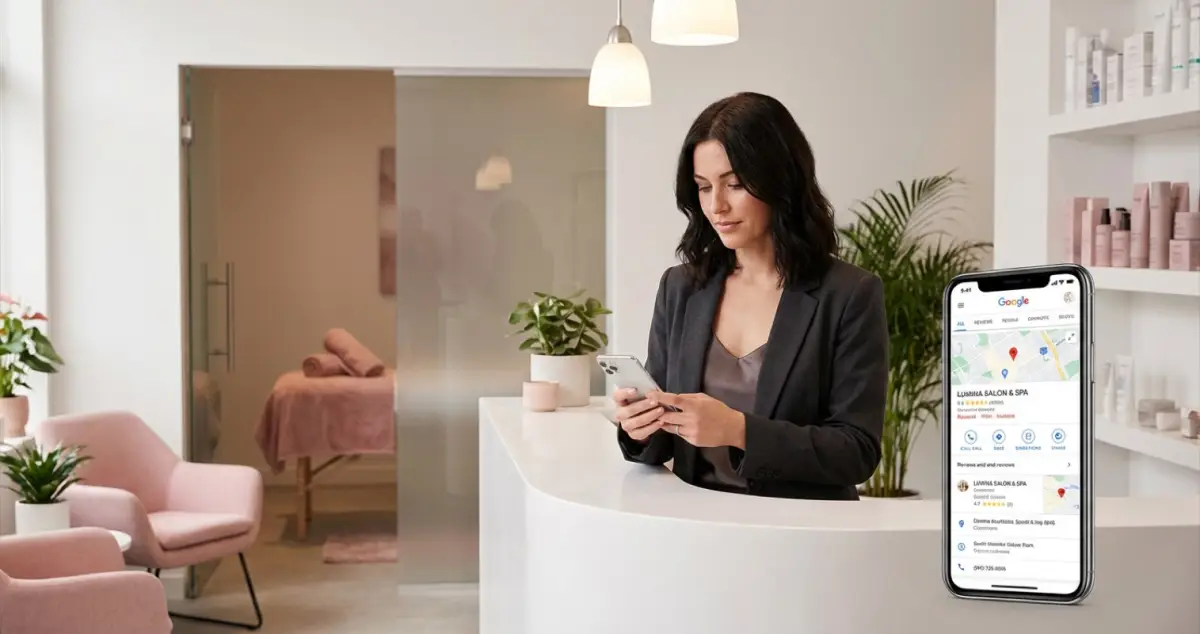 Tutorials
Beauty Salon Google My Business: Setup Guide
Set up your beauty salon Google My Business profile in seven steps. Claim, optimise, add treatments, upload photos, and get reviews. UK beginner guide.
 Marketing Tips
Salon Website Builder: Which One Actually Takes Bookings
Which salon website builder actually takes bookings? A UK guide to Wix, Squarespace, GoDaddy and WordPress, and what the plan price leaves out.